Dr. Molly Coye, Chief Innovation Officer, UCLA Health System

This week, Mark and Margaret speak with Dr. Molly Coye, Chief 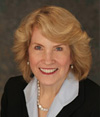 Innovation Officer of the UCLA Health System. Dr. Coye discusses broad reaching transformations underway at UCLA Health that are utilizing innovative technology and team-based medicine to yield better health outcomes for their patient population, while reducing costs within the system.
Mark Messelli: This is Conversations on Healthcare I am Mark Masselli
Margaret Flinter: And I am Margaret Flinter.
Mark Messelli: Well, Margaret it appears to be a week of perfect storms both
meteorologically and politically.
Margaret Flinter: That’s right and that is the perfect metaphor because in the
world of weather and politics it’s been a winner. First hurricane sandy batter the
East Coast this week and now of course the final few days of the presidential
campaign looks to be a wild and stormy ride as well.
Mark Messelli: Well, sandy has certainly rigged havoc all over the East Coast
and also into the Midwest. It’s also had a profound impact on the campaign
schedules. A number of those states are right in the pathway.
Margaret Flinter: And in all of those states we want to give a shout out to the
incredible emergency response teams and the folks who kept roads cleared,
people in their neighborhoods who watched out for each all around a great
humanitarian outpouring of help for people.
Mark Messelli: Our thoughts and prayers are with all of those who’ve been
impacted and thanks to those who are helping. Our guess today has been a
thought leader in using technology to help improve the patient experience. Dr.
Molly Coye is the Chief Innovation Officer of the Institute for Innovation in Health
at UCLA Health System.
Margaret Flinter: Dr. Coye is also the founder of the Health Technology Center, a
non-profit organization that has a mission of advancing the use of technologies
that can better serve the entire community in healthcare.
Mark Messelli: As the election draws near FakeChecks.org’s Lori Robertson
brings us another misspoken statement from the campaign trail.
Margaret Flinter: Mark, why do I think she might be looking forward to the end of
this campaign period? Her to believe that the election is only few days away and
that is still too close to call. But here at Conversations on Healthcare will keep
right, I’m bringing you the latest in healthcare policy innovation and reform and
you can hear all our shows by googling CHC Radio.
Mark Messelli: And there’s always if you have comments, E-mail us at CHC
Radio or find us on Facebook or Twitter we’d love to hear from you.
Margaret Flinter: We’ll get to our interview with Dr. Molly Coye in just a moment.
Mark Messelli: But first here’s our producer Marianne O'Hare with this week’s
headline.
Marianne O'Hare: I am Marianne O'Hare with this headline news. Well, it’s down
to final days in the presidential election with hurricane sandy causing dozens of
cancellations in several key swing dates. President Obama return to Washington
Sunday to be on hand for the federal response to the monster storm. And Mitt
Romney canceled several appearances that were scheduled in states being
impacted by the storm like Virginia and Ohio.
Healthcare has come round again in prominence as an issue in the waning days
of the campaign. The Republican National Committee launched again ad
campaign in swing states calling the affordable care act, huge tax increase.
Meanwhile, President Obama continues to tell the law’s strengths including
coverage for all Americans, ten of millions of whom lack access to basic primary
care due to lack of insurance.
But how is the message playing out to those key battleground states. States like
Florida were just expected to fall in Mitt Romney’s camp actually has the highest
number of uninsured residence. Many of the group is still unsure about the
healthcare law according to a recent poll. States like Ohio, Virginia and Colorado
will hold the key to who gets the keys to The Oval Office in January, the rest still
too close to call.
Meanwhile, as a meningitis outbreak continues to claim more victims in the
aftermath at the distribution of mold tainted steroids, word comes out that the
Massachusetts Pharmaceutical Company responsible for the drugs had been
sited in the past for violations but no disciplinary action had been taken. The
FDA and CDC are continuing their investigation. The death toll is rising.
As 10,000 baby boomers step into their senior year’s everyday food for thought
for the 65 plus crowd, you want to keep your brain from shrinking, keep moving.
Study out in this month’s issue of Neurology confirms what aging experts had
expected. Those who exercise more in a three years study had far less
shrinkage in the wide matter of the brain. Regular exercise like walking, yoga,
weight training had more impact on brain health than mental exercises.
I’m Marianne O'Hare with this headline news.
Mark Messelli: We’re speaking today with Dr. Molly Coye, Chief Innovation
Officer for the UCLA Health System and Director of the Institute for Innovation in
Health at the University of California. Dr. Coye is the founder of Health
Technology Center, a non-profit forecasting organization for emerging
technologies in healthcare. She’s the former Director of Health Services for the
State of California and then Dr. Coye co-authored the ground breaking reports to
err is human and crossing the quality chasm. She sits on numerous boards
including the American Telemedicine Association. She’s been named as one of
the top hundred most influential people in healthcare. Dr. Coye, welcome to
Conversations on Healthcare.
Molly Coye: Thank you.
Mark Messelli: You’ve been that forefront of promoting innovation in the
healthcare system for a couple of decades and then we all know healthcare is
very slow to adopt to change it and yet there are big changes of food as we enter
the era of the affordable care act. What’s your vision of where healthcare should
be going and what do you think that healthcare system in the future should look
like?
Molly Coye: Well, it’s exciting moment now with health reform both the pressures
and the private sector and the leadership and the governmental sector really
raising the stakes and raising the possibility for us to reorganize the way care is
delivered and the way people experience healthcare.
So it’s very exciting and it’s important that we have some common shared vision
of where we’re trying to head in order to redo some of the noise and the chaos. I
would say in addition to the Triple Aim and you had Don Berwick, Dr. Berwick in
on as your guest before I know who really is the father of the Triple Aim which is
a overall policy statement that we want to improve the health of all the people we
want to have the experience of actual healthcare delivery very good and we want
it to be affordable.
I like to take it down to the individual patient, the person in the community and
their family, what do they want? I’m not sure they would express it and knows
terms. And I think of it is 3 things. First of all, they want the system that they’re
getting care from to be trusted. They want to be able to just assume its high
quality and to not have it be fragmented and confusing. Care they have
confidence in, where they need it, when they need it.
The second thing is they really do need it to be affordable. But in addition to not
having cost barriers they need to make sure that whatever language they speak
or whatever culture they live in that it’s not only affordable but that it’s accessible,
so that’s the second part.
And the third part is kind of a hard thing to describe because I personally don’t
like the word empowering. It sounds like sort of wonky kind of word. But the
word in healthcare is usually to make healthcare satisfying. What’s the
satisfaction rate for patients? That’s very passive. That’s sort of what -- were
people nice enough to you that day? And really what we’ve seen is that very
good healthcare can make you feel so good about yourself and your ability to
manage your healthcare. So I hope that we will also build a health system that
helps people feel good and safe and confident at their doing what they need to
for themselves.
Margaret Flinter: Dr. Coye, you use the word safe there a minute ago and you
were instrumental in writing the ground breaking institute of medicine report
along with Dr. Don Berwick to err is human. Certainly, that was a report that put
a glaring spotlight at least for the healthcare folks on the American Health Care
System and the issues with safety. You’ve had experienced writing both public
and private health institution so when you look at safety which I think we’d
probably all agree is of all the things you mention the one that consumers would
most likely assume was there for them in healthcare. We have made all the
progress that we want to, what you see is that 2 or 3 key barriers to achieving the
kind of safety in healthcare that we’d all like to see.
Molly Coye: Well, I think the greatest barrier is the fragmentation of healthcare. I
use to run state health departments in 2 states and you can regulate forever.
You can investigate, you can do all the inspections you want to but it really isn’t a
problem of just stamping out bad apples. What you need is just organize system
of care so that the doctors, the hospitals and nurses and the patients can share
information and work together with confidence knowing what each of them is
doing. When you have that, then you have the chance to really have smooth
hand offs and not have the big quality problems.
Mark Messelli: Yeah, Dr. Coye before joining the COA you were the founder and
CEO of Health Technology Center also known as Health Tech Non-Profit Entity
that became the premier forecasting organization for emerging technologies and
healthcare and you’ve advised a numerous healthcare organizations and
hospitals. So based on your expertise what should healthcare systems be doing
to achieve a significant improvements in the patient experience?
Molly Coye: I think that the most important part of it is also the part that most
rewarding and fulfilling which is basically to help patient’s move we say in
healthcare upstream meeting get the care to them and the support to them
before they get really sick. It’s a form of prevention and so what that really
means is moving the care out of the hospital into not just into the primary care
physician’s office or clinics but actually into the home and the community. And
that’s very real, very doable, their health systems that are doing it at UCLA for
example. Many of our patients have a huge number of medications balancing. If
you’ve got 1 or 2 or 3 chronic diseases, you might usually have 8 or 9 different
medications you’re taking. And many patients get confused about that so we
now are training people from the community to visit patients in their home and sit
down with them and look at all the medicines they are taking, record them, check
remotely because they can use a tablet computer to check with the pharmacist
and help them straighten out so they actually are taking the meds that they ought
to be taking. It’s a small example of how much you can do when you move the
care out to meet the patient where they need it.
Margaret Flinter: Well, Dr. Coye that also would seem like a good approach to
contributing to the AAA and you’ve said we have to be able to talk about our
health care systems and not only in terms of how to make care better but also
how to make it less expensive or cheaper, a word we don’t always use in
healthcare.
Molly Coye: Yeah.
Margaret Flinter: And, you know, beyond what you’ve just referenced, you’ve
also talk about some specific trends in how we deliver healthcare and healthcare
systems that might also bring cost down significantly one I know you’ve identified
is the spread of the retail clinic model and the second you’ve talked about is the
increased used in the expansion of community health centers and the third is the
reliance on telemedicine. Tell us about these transformative trends, how do you
see them really bending the cost curve, what’s their contribution?
Molly Coye: Well, the health centers are really the largest single example of
organize primary care in the country. They were initially build for a about a
hardship conditions to try and meet the needs of underserved communities and
what they did along the way was actually build a system of coordinated care
that’s very effective and does reduce the costs that can result when patients don’t
get good care so that patients go the emergency room or they’re hospitalized just
because they couldn’t get good primary care.
But there’s another example I think of this kind of approach which is in palliative
care. We all know the figures about the enormous amount of the share of the
health expenditures that are actually used in the last year of life. And, so many
hospitals now are starting to have a palliative care team in the hospital. But,
there’s a much better approach to go upstream and actually sent teams of social
workers and educators and physicians to the home of patient when they’re
starting to be seriously ill, on the verge of being terminally ill but before they wind
up in the hospital, to go in and meet not just with a patient but with their family
and the caregivers and have a calm conversation about what they want and
which direction they should had that has actually been shown and we’re very
excited about this UCLA. This has been shown to reduce the total cost at care in
the last year of life by a third has a huge impact. And it also makes the
experience of the last year so much better for the patients and for their families.
So, I think that there’s a kind of virtuous circle here where what you do to reduce
cost actually can improve the patient experience and the clinical outcomes and if
you do it well what you do to improve the clinical outcomes will reduce cost.
Mark Masselli: We’re speaking today with Dr. Molly Coye, Chief Innovation
Officer for the UCLA Health System and Director of the Institute for Innovation
and Health at the University of California. Dr. Coye is the founder of Health
Technology Center, a non-profit forecasting organization for emerging
technologies in healthcare. Well I want to pull the thread a little on that concept
of prevention and get your thoughts on how systems like UCLA and community
health centers will be rewarded for their work in terms of dollars. Has the
reimbursement system caught up with all of the changes and transition that are
going on in the healthcare delivery system?
Molly Coye: Well, I’m more than hopeful. I’m actually seeing it happened. We,
for example, have applied for one of the ACO which is sort of the opportunities to
work with medicare patients giving them full choice of providers but working with
them where we get to understand the pattern of their care and try to get some
savings by doing prevention and keeping them out of the hospital. Now, that
doesn’t always make a lot of sense for the people who run hospital. And even
they really do care about trying to provide better medicines so, they’re added to
this slowly changing, they’re saying, “Well, if you actually are willing to -- hey, for
keeping people healthy, we can reorient the system.” But, it’s a heavy lift, you
know, and we’re not there yet. We’ve seen the first, I would say, the first quarter
of the pathway and it’s very, very exciting because this is really what my
backgrounds in public health and this is what we’ve been waiting for so long as to
have the reimbursement system really help you stay healthy.
Margaret Flinter: Dr. Coye, along those lines you’ve talked about technologies
and obviously you’ve had a fascinating history with the development of health
technologies and you’ve said the single defining characteristic of technologies
that can be easily moved forward are ones that touch the consumer and change
the experience for the consumer and that this might make a real contribution to
better care, better quality, and lower cost. And you’ve also said that these new
devices and applications are just gizmos unless there’s a system in place to
effectively use them and how are you at UCLA and in your work looking at how
we motivate consumers to begin to take advantage of this and to motivate
healthcare providers to recommend them and to take the time to help people
figure out which one’s might make sense for them?
Molly Coye: One of the most convincing things to most consumers and patients
is to have their own physician, say, you know, for managing your hypertension;
you really ought to think about using this tool or this gizmo and I can work with
you on it. Now, that’s really hard if it’s an individual physicians in their office and
they have to know everything about all of these new gizmos and ran them all
themselves, that’s pretty hard.
But we can see in the veteran administration where 10 years ago they made a
decision that they were going to do this kind of support for the veterans who had
chronic diseases. That has been tremendously successful, there are over
200,000 patients that are getting medicare in part in their home remotely, and
that’s very important because the third of the veterans live in fairly remote
communities, who don’t have a lot of access to healthcare but that can be a huge
convenience even if you lived downtown in the middle of a city.
The difference is that it wasn’t just go to the drug store and buy your
hypertension monitor, consumers do buy home blood pressure monitors, but
what this is, is have it hooked up so that your doctor gets an alert if all of a
sudden your blood pressure starting to go up. And have a way that a nurse or
someone on the health system man can get in touch with you and say, “Is there
something going on?” and the patient can say, “Oh, yeah. My family came for
visit last week and we ate way too much sodium but I’m back on the right path,
just keep watching and I’ll be okay in a couple of days.” That’s a kind of service
relationship you need so that it’s not just a gizmo.
Mark Masselli: Dr. Coye, after running State Health Institutions and analyzing the
healthcare industry on a national level, you’re now based at teaching institution
and so tell us a little more about the institute for innovation at UCLA and I was
just thinking about the comment that you made, it sort of suggested it might be a
heavy lift for the healthcare delivery system to be responsive to social media or
to be the input that comes back from your cellphone, they’re way behind the
curve healthcare is in adapting technology. So, you’ve got a big challenge ahead
of you and you’ve got a great courage to do it, you’re in UCLA Health System so,
tell us about the experience at the institute about transforming the system for the
next generation of health professionals.
Molly Coye: Oh, it’s been tremendously exciting and there’s lots of different
meanings for innovation but what we’re using and I think a lot of people are in the
context of health reform are using the definition of innovation is really the
accelerator, it’s the thing that can jump start to in trying to make those changes to
make healthcare better for patient. So, the things that I’ve mentioned like
palliative care in the home or being able to communicate with the patient in the
home about their chronic diseases like hypertension or asthma or diabetes and
to be able to get that information and track it, all of those systems actually exist
out there. They are available, what’s changing now is the interest of places like
the UCLA Health System and lots of providers systems, and how do we put these
all together so that it’s not a big hassle for the patient. We need to be able to
support the patient so these things are easier than using your toaster to use the
technologies and I think that process is working. It’s very exciting and we have
some leaders like the Veteran Administration to look at but we have a wireless
health institute here that’s affiliate with our institute and they’ve come up with a
terrific approach for rehabilitation that tremendously increases the speed of
recovery for patients after a stroke simply because they get their own feedback
by wearing a little monitor strap to their ankle and they can tell how they’re doing
and for the first time they don’t have to wait for the doctor to tell them. They
actually know themselves, so it’s -- there’s quite a lot out there and the job
innovation is to sort through it and find the accelerators that really will make a
difference.
Margaret Flinter: Well Dr. Coye we’ll remember that phrase as easy as your
toaster when we think about health care technologies going forward. We’ve
been speaking today with Dr. Molly Coye, Chief Innovation Officer for the UCLA
Health System and Director of the Institute for Innovation and Health at UCLA.
Dr. Coye is the founder of the Health Technology Center and on the Boards of
the America Telemedicine Association and the Aetna Foundation and you can
find out more about Dr. Coye’s work by going to UCLA Institute for Innovation
and Health website. Dr. Coye, thank you so much for joining us today on
conversations on healthcare.
Dr. Coye: Thank you.
(Informal Talk)
Mark Masselli: Lorrie, what have you got for us this week?
Lorrie Robertson: Well, Mark and Margaret, Illinois Republican Representative
Joe Walsh made some controversial comments on abortion recently. He claimed
that with “Modern technology and science, there wasn’t one instants where
abortion would be necessary to save the mothers life. But the American college
of obstetricians and gynecologists said that more than 600 women die each year
due to complications from pregnancy and child birth and more would die if they
didn’t have access to abortion. Now Walsh’s back down from this comments
saying that he does support medical procedures during pregnancies that might
result in the lose of an unborn child. He is turning for re-election against
Democrats Tammy Duckworth.
So what types of conditions might threaten the mother’s life during pregnancy?
Well the Centers for Disease Control and Prevention reported to that about ,1300
pregnancy related death had occurred in 2006, 2007 those are the most recent
statistics available and these were just within a year of pregnancy, the causes
were really numerous they included Cardiovascular disease, hemorrhage,
hypertension, infections and embolisms. 5.6% of these women died from
unknown causes. There are also ectopic pregnancies where the seeds has
developed outside the uterus those effect about 64,000 women a year and the
National Institute for Health says that ectopic pregnancies are life threatening
and the pregnancy can't continue to birth, and that’s my fact check for this week.
I’m Lorrie Robertson, Managing Editor of Factcheck.org.
(Informal Talk)
Margaret Flinter: Each week conversation highlights a bright idea about how to
make wellness apart of our communities and everyday lives. We’ve all heard
that the senior population is the fastest growing group of users of the internet and
that’s great news, but the Pew Internet and American Life Project estimate that
only 53% of Americans over 65 used the internet and that number dropped
sharply after age 75. A number of organizations hope to close that gap,
government agencies like the Institute on Aging, the National Institute of Libraries
of Medicine and AARP are spear heading programs aimed at training seniors to
navigate computers and surf the web.
A non-profit organization in New York City has a particularly unique approach
older adult technologies services or OATS offers free computer labs for seniors
and English and Spanish to help them become comfortable in navigating the web
and there’s an added benefit the program matches teenagers with the seniors in
an intergenerational media literacy program. The seniors learn the basics of web
surfing gaining access to online information related to their health and they
connect with their teenage teachers in a meaningful way that often plus long
pass the run of the course.
As more health services are available online, the world of eHealth is opened up
for these participants who then have more tools to manage whatever chronic
diseases or health problems they’re dealing with, a program that facilitates
access to health services on the web for seniors who’ve previously been out of
the electronic lube now that’s a bright idea.
(Informal Talk)
Margaret Flinter: This is conversations on healthcare, I’m Margaret Flinter.
Mark Masselli: And I’m Mark Masselli, peace in health.
(Informal Talk)