Ed Cantwell, Executive Director of the Center for Medical Interoperability

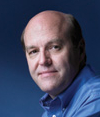 This week, hosts Mark Masselli and Margaret Flinter speak with Ed Cantwell, Executive Director of the Center for Medical Interoperability, whose purpose is to optimize patient care by providing a platform for supporting rapid and sustained interoperability of medical technology.
(Music)
M ark Masselli: This is Conversation s on Health Care, I'm Mark Masselli.
Margaret Flinter: And I'm Margaret Flinter.
Mark Masselli: Well Margaret, we ’re starting to see some breakdown of the number of
folks who are newly ins ured under the affordable care act , report by the Urban Institute s
Health Reform Monitoring Service showed that by March 7 th of t his year 5.4 million
Americans who had previously been on insured gain coverage.
Margaret Flinter : Well, Mark what this report shows it so important is how many
un insured Americans have now got on coverage under this .
Mark Masselli : And it’s important to know that the Medicaid ex pansion had an e ffect on
the un insured rate , not surprisingly those state that choose to expand Medicaid saw
the ir uninsured rate drop dramatically during the open enrol l ment period , about 4%
where state who didn’t expand Medicaid also s aw 1.5% drop in the number of
uninsured.
Margaret Flinter : Those are the state s that still have a relatively high rate of uninsured
residence as a result of failing to expand Medicaid over 18% o n average , and that is just
a shame for those little income folks who will still have a difficult time navigating and
getting access to health care.
Mark Masselli : In those states th at expanded Medicaid , the uninsured rate drop ped
down to 12.4% , so, a real significant difference in those communities.
Margaret Flinter : The Urban Institute r eport really provides an inter esting snapshot of
the national break down of the health care laws beneficiaries , and how difficult the
experience has been for American s based just on where they live in the country.
Mark Masselli : So, the wrap - up numbers say and still counting 7 .1 million Americans
who gain coverage on the insurance exchanges and more than 3 million Americans
gain coverage th rough Medicaid expansion . Anyone who qualifies for Medicaid can
sign up through the year.
Margaret Flinter : All and all , more than 10 million Americans are now co vered , and that
is a very empowering thing.
Mark Masselli : Our guest today is seeking to empower hospitals and their quest to
create some kind of interoperability among their medical devices , many o f which come
from multiple stakeholders and are not design ed to communicate easily with other
systems feeding into the electronic medical records.
Margaret Flinter : Ed Cantwell is the executive director of the center for medical
interoperability and has an exten sive background in developing efficient
tele communication systems and he has a very interesting perspective on how th is all
might work better.
Mark Masselli: We get another visit from Lori Robertson, managing editor of fact
c heck . org .
Margaret Flinter : But no matter what the topic you can hear all of our shows by going to
CHC Radio.
Mark Masselli : And as always if you have comments please email us at CHC
Radio. Com or find us on Facebook or Twitter , because we’d love hearing from you.
Margaret Flinter : We’ll get to your interview with Ed Cantwell, in just a moment.
Mark Masselli: But, first here ’s our producer Marianne O ’ Hare , with this week ’s
headline news.
(Music)
Marianne O Hare: I’m Marianne O ’ Hare with these Health Care headlines . Advantage -
- Medicare Advantage , under enormous pressure from insurance industry lobby as c en d
those representing seniors in the medical profession. The centers for Medicare and
Medica id servi ces announce d the re will not be drop in Medicare Advantage plans
payments as originally plan ned under the Affordable Care Act . Instead payments are
schedule d to go up about 1% . Proposed cuts to Medicare Advantage p lan s which s erve
16 million seniors about 30% of all Medicare beneficiaries. Then government
subsidi z es the coverage , and insur ers generally offe r dozens of different plans in every
market. Initially the health care law sought to reduce funding for Medicare Advantage
by $150 billion over 10 years , launching one of the biggest lobbyin g campaign s ever
from the insurance industry . Big insure s see ti d y profits from th ese plans , and
government pays a high er premium to practitioners , than reimbursements they provide
for traditional Medicare. The American Medical Association has decided not to go to
court over the CMS decision to release medical billi ng information for c lose to 900, 000
physicians , though it ’s still strongly opposes the measure . The Medicare claims
database has been off limit s to the public for decades, b lock ed in the Courts by
physician group s who argue its release will do more harm than good. Media
organizations and consumer groups interested in physician quality ha ve been pressing
the government to open up those files . Last week the Obama Administration
announced, it would do so. Drug overdoses now kill more adults t h a n car accidents
about 16,000 per year. And the worst c ulprit other than heroin or op ioid s’ and
prescription drug abuse. The Food and Drug Administration approved the long a wa ited
emergency drug over dose treatment that family or community members can easily u se
to treat someone who is over dose d. The device is called the S v O a pocket sized auto
injector fill ed with the o pioid a ntidote n aloxone . It’s a pproval is a boon for drug
ad vocates who’ve long ed sought fast er response options for drug over overdo ses .
Naloxone is already the standard treatment for overdose , but existing versions of the
drug have to be administer ed via syringe , and generally only employed by trained
medical professionals. I’m Marianne O ’ Hare with th ese health care headlines.
(Mus ic)
Mark Masselli: We’re speaking today with Ed Cantwell , executive director of the Center
for Medical Interoperability , which was launch ed by Garry and Mary West Foundation,
West Health Institute . The center ’ s purpose to optimize patient care by advancin g the
safety quality and affordability by serving as a focal point for hospitals and health
systems to drive rapid widespread interoperability of medical technologies . Mr.
Cantwell i s consider ed a pioneer in the global in - building wireless space, and f o r m er
director of 3M Corporation ’ s wireless business unit . Mr. Cantwell help ed spent 12 years
as a fighter pilot flying F 15 . Mr. Cantwell graduated from the University of Michigan ’s
Executive Training Program . He holds a Bachelor of Science Degree and Mechanical
Engineering from Duke. Mr. Cantwel l we ’re happy that you’re here with us on
Conversations on Health Care.
Ed Cantwell : Oh, thank for the opportunity to speak with you.
Mark Masselli: And at the West Health Institute , and the institute d etermine that the
lack of interoperability between the electronic devices operating within a health care
setting waste about $ 30 billion per year. You just recently put o ut a white paper that
the re are relatively few hospitals , it always surprising across the country that have got
interoperability right. So, maybe for our listeners could be lay the scope of the problem
out force and to find interoperability if , you will and what are the biggest challenges in
making th e s e devices talk to e ach other?
Ed Cantwell : Well the best definition of interoperability is ability for health information to
be s eamlessly shared across medical devices , in enterprise system for the purpose of
optimizing health care. And it’s not so much that hospitals and h ealth systems have not
gotten it right . It’s more that hospitals and h ealth system s had not had the opportunity
to embrace interoperability , because of the lack of standard based technic al platforms
and architectures t hat would allow it. You know, w hat I love about the m ission of the
center is a t its core its patient center ed . We are the unit economic of health care, the
patient. And if you think about the continuing of patient data - flow whether you are at
home, whether you are at work , you want yo u r data to flow from device to system to
electronic medical record to health information exchange . S o , that care is optimized
and safety is the number one priority. I think everybody understand s that our US health
care system we ’ve allow and eco system th at has limited adoption of standards , which
has led to pervasively proprietary eco system where equipment is the proprietary and
data is held hostage to those proprietary systems . We have a dilemma of the
imp ra ct icality of government mandates. But what was eviden t to us in our study is that ,
in event interoperability is achieve d the hospital and h ealth system s will be the biggest
beneficiary. So, that is why we’re t rying t o rally them to step up to -- not only creating
the d emand for interoperability , b ut backing with the procurement of the equipment.
Margaret Flinter: Well, Ed you ’ve flow n fi ghter plan e s in you r car e er system that
requires a tremendous amount of interoperability and its fairly li f e or dea th . And our
health care system of c ourse is so hard to change as an entire system across the
country , I wonder when you think about the changes that are needed to bring about this
interoperability , where does it come from ? But I think or where we were 12 years ago
when the Offices of The N ational Coordinator took on the challenge of moving providers
not so much the hospitals even but providers in practice from paper records to
electronic health records . And you could see where an entire system across the
country began to move forward . Wha t are you r analogous changes to bring about the
interoperability that we need in healthcare ?
Ed Cantwell : Well, I ’ll use m y military f lying days to -- is a very simple analogy . The
U.S Air Force o r the U.S Navy did not l eave it up to the vendors on what kind of air
plane to deliver, or what kind of ships to buy. There was a fulltime dedicated resource
within the services . To define exactly w hy fighter or what ship was needed? So, that’s
a very analogous to health care . And then when then competition actually occurred ,
th at was a very scripted way to test and certify that you actually made the requirements.
So, there’s been so much work done o ver the last 10 years by the government. We feel
it’s now time for the leaders of our hospitals and h ealth system , which have the
responsibility to deliver care , to take a more proactive role in creating and driving
medical interoperability . So, if you look at critical infrastructure . Whether it’s electricity
or whether it’s the telephone in dustry , virtually all other critical infrastructures have
achieve the point of which there ’s an agreed upon master architecture that is based on
standards and it has a prov en path to show compliance of those requirements. So,
imagine if electr icity did not have that ability was he alth care transitions from a tethered
health care environment to un - tethered , we need that same type of discipline.
Mark Masselli: I always thought that HL7 was sort of part of that platform to make
things interoperability . It still doesn’t seem like we’ve gotten the type of results that we
want . You talk ed about the military and the sort of the alignment that they have with
what they ’re trying to do , and we seem ed to have missed that across the board. We ’ve
done a show on La Carte Vitale in France, where they simply so r t of spec t out here’s
what we ’re going have for EMR’s and – but, I do want to talk a little bit about the work
that you’ve done also on wireless system. You’ve develop ed a hospital wireles s
system , tell us how that functions ? And how does it work differently than others?
Ed Cantwell : Well the use of wireless in a hospital environment is the most complex
and life critical of any wireless environment on the planet. If you think about a hospital ,
it has three main use of the wireless, use by the consumer, the enterprise of health care
has to use wireless to run their enterprise , and then we are s ee ing the explosion of
medical de vices that want to untether , you know, from the law that have a medical
radius . So, as a young entrepreneur , I was just amazed that there was no established
infrastructure specification for how do you employ wireless inside of th at environment.
So, imagine if you will , what if there were no plumbing standards or e lectrical standards
that a hospital owner could rely on to make sure that the vendors deliver the platform
network with assurance . So, in the last three years when Gary and Mary establish ed
the institute , you know, I was a very v ocal advocate , that health care needed to stand
up and make wireless and medical gr ade utility. So, that the power of wireless across
consumer enterprise and medical uses could be fully explo ited . And the ne at thing is
when you do that you can master wireless in the h ospital , then you more likely to trust it
out of hospital on the way to your home. And then inside you r home you ’re watching
wire less absolutely transform the way we live and , that power needs to be applied to
health care. So, let’s get the people that c an define it and embrace it that will eventually
procure it, and let’s drive it to become the next base building standard like electricity .
And if that could be done , you are the so much of the risk , you improve safety , and you
allow innovation to f louri sh .
Margaret Flinter: And somebody has to watch you . And obviously you’ve brought some
of those folks together at the institute . But, you know, I can’t help thinking that we’re
only a week out from another little foray in health care down a dead - end, which was the
conversion to the ICD - 10. Which was we have to do it , if the rest of the world has done
it. We’re absolutely doing it . There will be delays and then we kick ed the can down the
road for another year . What’s the driving urgency at the institute ? And maybe you
c ould share that who is coming together at the institute who want s to embrace it?
Ed Cantwell: So, to be precise within the West Health Institute to the last three years
we ’d studied the m a cro level problem . It’s a political pr oblem , it’s an eco system
problem . And because of the generosity of Gary and Mary West who really challenge d
us to go after something big. So, from an interoperability point of view , we felt like if a
force could be establish ed to really champion interoperability that would have the
greatest i mpact per a $30 billion per year potential saving s . So, when the Center for
Medical Interoperability was conceive d, it wasn’t conceived as a West Health Institute
activity , but th is has to be and will be a se parate non - profit entity whose members are
the hospitals an d h ealth system executives , so that the industry it s elf like all other
industries steps up and takes control of it. The cable in dustry did this about 30 years
ago , and they have tak en their indust ry through wa ves of innovation , and it’s a very
financial excel model. So, like the military forces if they don’t demand it via
procurement the free market won’t delivere.
Mark Masselli: We are speaking today with Ed Cantwell , executive director of the
Center for Medical Interoperability . Give us a little more global sort of look . Are there
are care delivery systems around the world that are better integrated , because they
have a national health systems or they have the alignments that you’re talking a bout
and are the y emerging in third - world markets , poised to sort of lea pfrog over us ?
E d Cantwell: Well, certainly interoperability is a global issue . Business models and
regulatory environment s are different all over the world . Also culture s are dif ferent in
the way decisions are made. And obviously more centralized government s, you know,
we have the wonderful engineers from HS who jus t , you know, look at this and say why
d idn’t the government just mandate it . But we also know that we don’t want to throttle
innovation . So, I am not sure that any country has a ced interoperability , even the new
ones that aren’t hamstrung by legacy problem , perhaps that the US has , and can start
anew . Find themselves where they could produce a very co nnected pervasively
wireless environment , but unless the devices allow the data to flow from the device to
the HR, then all that connectivity really is for k not. So, I believe it ’s a global problem .
But like the global telecom industry , it takes the glob al industry overt ime to come
together so that we can , you know, if you land in London and you have a medical
emergency , it’s your data flows right the re with you . So, we will focus p ervasively on
solving the U S’s problem , and then certainly we’ll learn from other countr ies, and share
what we learn ed with others.
Margaret Flinter: Well, back in the US for solving our national permit , wonder if you just
opine for us on the role of the policy and regulations here in the country with regard to
this area . That we had a guest from FDA , or our guest speaking about the FDA recently
with their new roles governing Apps , which have exploded into the tens of thousands o f
medical health care related Apps and tracking devices . Have you engage d those policy
folks wi th your work at the institute ? And what do you see is some of the key sort of
regulatory policy areas that are going to be developing over the next couple of years?
Ed Cantwell: We certainly have engaged across the board the reg ulatory agencies ,
because we know that they are critical to the success of interoperability. You know the
pace of changing complexities inherent to health care technology , and to the challenge
of developing those same policies and regulations, and striking the right balance
betwe en protecting patient ’s safety , and f o stering innovation w ill remain essential .
Remember the mission of t he FDA is do no harm. It’s not to do innovation s . So, we
have to struggle in the unique relationship with the FCC and the FDA as it relates to use
of wireless , is really an emerging industry . We need to purchase that focus on of
learning health care system , where timely feedback mechanism s shared responsibility .
So, we ’re a big believer that it’s going to take the .gov’ s, the .com , and the . org ’ s working
together to optimize our health care system . We also know that a care structure in the
US contributes to it , because most people really don’t know what anything cost s,
because of the lack of transparency . We now mal practice reform s credentiali ng are
also big buckets . So, in the formation of the Centre for Medical Interoperability we
spent a good two years with the regulatory agenc y’s understanding what role could the
centre play , so that the government could play its role . If instantaneously Congress
mandated interoperability , there would be no way to test and certify to it . So, it really
takes the eco system coming together , the government playing their role , and the
vendors playing their role and achieving it .
Mark Masselli: We have been s peaking to say with Ed Cantwell , executive director of
the Center for Medical Interoperability . You can learn more about their work by going to
medical Interoperability.org . Ed thank you so much for joining us on Conversations on
Health Care today.
Ed C antwell: Thank you.
(Music)
Mark Masselli: A t Conversations on Health Care we want our audience to be truly in
know when it comes to the fact s about health care reform and policy . Lori Robertson is
an award winning jo urnalist and managing editor of Fact Check.org a non - partisan,
nonprofit consumer advocate for voters that aim to reduce the level of deception in U.S
politics. Lori w hat have you got for us this week ?
Lori Robertson: Well, we spotted a fa lse attack in West Virginia , in an Ad ‘ The
Cle an’s[PH] Republican Evan Jenkins, “Vow to repeal bl a ck lung benefits ”. Jenkins
didn’t do that. Instead he v owed to repeal th e Affordable Care Act. Repealing the ACA
would make it more difficult for some minors and surviving spouses to prove eligibility to
the eligibility for the Federal Black Lung Benefits program. But it won’t repeal the
benefits . Those were created under a separate law. The Ad comes from the House of
Majority pack, a super pack dedicated to returning the democra ts to power in the
House. We could fin d no record of Jenkins ever saying , he would repeal black lung
benefits , as a they Ad claims. A spokes man for the pack argues that Jenkins support
for repealing the ACA is the equivalent of support for repealing blac k lung benefits. We
disagree. I f the Black Lung Benefits Act that provides monthly payments and medical
benefit to minors found to be totally disable d from black lung diseases caused by
working in or at coal mines. Repealing the ACA wo uld n’t change th ose payments.
Howe ver , the ACA included t wo Byrd amendment s, named after the former Democratic
Senator, West Virgi nia that made it easier from mines and surviving spouse’s to get
benefits. The a mendment s shifted the burden of pro of in some cases from the min ers
to the mining company , and ended a practice of requiring a widow to re - apply for
surviv or benefits after her husband died. But the Ad leaves viewers with a false
impression that Jenkins would abolish all black lung benefits , that ’s not true. And that’s
my Fact C he c k for this week. I’m Lori Robertson , managing editor of Fact Check. Org .
Margaret Flinter: Fact Chek.org is committe d to factual accuracy from the countr y’s
major political player s, and is a project of the Annenberg Pub lic Policy Center at the
University of Pennsylvania. If you have a fact that you would like check ed, email us at
CHC Radio. Com, we’ll have Fact Check . Org’s Lori Robertson to check it out for you
here on Conversations on Health Care .
(Music)
Margaret Flinter: Each week Conversations highlights a bright idea about how to make
well a part of our communities and everyday lives. When Chef Carl Guggenmos grew
up as a kid and p ost - was Germany , he lived on a diet of organic and locally ground
foods. Now, he ’s the Dean of Culinary Arts Program at Johnson & Wales University in
Rhode Island . And he realized that he has responsibility to teach the next generation of
chefs how vital natural and sim p le ingredients are , not just to creating good food , but to
the health of the population as well. He watched the obesity epidemic take hold in this
country , and decided to use his platform to create a new approach to chef - training. He
teamed up with a Professor Medicine at Tulane University of Medical School in New
Orleans . And together they create d what they believe is the first course in c ulinary
medicine in the United States , teaching chefs and forth year medical students , how to
understand the syne rgy between healthy eating , good food , and good health.
Carl Guggenmos : We just created this program w h ere our students are actually going
to Tulane Medical School for an internship , and they work side by side with medical
students and physician s using an evidence d based approached to this whole idea of
c ulinary medicine r ather than anecdotal .
Margaret Flinter: So, in addition to learning k nife skill s , sauté and poaching techniques ,
fourth year medical students are giving a lesson in food paring s , learning which foods
are most poise d to foster good health and to com bat obesity .
Carl Guggenmos: The medical students , they hav e their own class work that w e help
them develop . And they identify in gr e dients a s to their relationship to h ealth. They then
start basic introduction to cooking from knife skills to basically how to sauté , how to
poach the roast, and then they do recipe conversions , and then have to do research .
And our students are their helping in to engage , working , writing articles bei ng part of
this whole program , working side by side with the medical students and learning and
exchanging information and techniques for each other . The results and the responses
are incredible . We are hoping to continue that Dr. H arlan and I ’d been out speaking
about this as a joint -- this collaboration between the chef and a physician is really
unique and it’s one of its kind , and I think it’s the first around the world , and we are
getting more and more interaction about this.
Margaret Flinter: He st rongly believes in the idea that chefs will be the pharmacis t of
the future. A Dean of a reputable culinary program teaming up with a medical school to
train future doctors , armed with the skills and information to assist their patients in
healthier eating , fostering the development of health conscious chefs who are train ed to
feed the next generation well with foods that can prevents obesity . Now that’s a bright
idea.
(Music)
Margaret Flinter: This is Conversations on Health Care , I'm Margaret Flinter --
Mark Masselli : And I am Mark Masselli , peace and health.
(Music)
Conversations on Health Care, broadcast from the campus of WESU at Wesleyan
University. Streaming live at www.wesufm.org and brought to y ou by the Community
Health Centre.
(Music)