Carolyn Miles, President and CEO of Save the Children

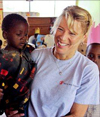
(Music)
Mark Masselli: This is Conversations on Health Care. I am Mark Masselli.
Margaret Flinter: And I am Margaret Flinter.
Mark Masselli: Well , Margaret, the Federal Insurance Exchange Healthcare.gov
is gaining a new leader. Kevin Counihan , CEO of Access Health Connecticut ,
and a recent guest in this show is going to be running the Federal Exchange
which was fraught with so many problems during its opening run , and caused the
administration no small amount of headache.
Margaret Flinter: We ll , Kevin did a terrific job of rolling ou t the exchange here in
our home state Mark , and he has had significant experience in the exchange
arena before coming to Connecticut. He helped Massachusetts when that state
opted for universal coverage. So , I th ink healthcare.gov is in very capable hands
and congratulations to Kevin.
Mark Masselli: Kevin ’s a great communicator , and the administration needs that ,
because it wants to make certain that it doesn’t repeat the problem plague initial
roll out. I thin k , we’ll see a system that works more smoothly , and efficiently once
open enrollment begins on November 15 tn, just two months away.
Margaret Flinter: You know , Mark , we are also seeing some and maybe a new
tune from the insurance side of things. United Healthcare , which only
participated in the exchange in four states this year , is expanding to 24 states
next year. The market does seem to be responding to this new online insurance
marketplace.
Mark Masselli: And more states are finding creative ways to expand coverage
for low income residents. The State of Pennsylvania , which had held out on
implementing the Affordable Care Act is using federal funds to help some half
million residents per just private insurance. So , it is a different approach to th e
expansion of Medicate to expand this coverage.
Margaret Flinter: Well , a number of the nation’s Republican Governors refused
to expand Medicate on principle. Pennsylvania’s Tom Corbett has become the
9 th GOP state leader to buck that trend, perhaps se eing the wisdom of utilizing
federal dollars to h elp more of the state’s flow income, residence gain access to
coverage and healthcare , which also supports his health care institutions in that
state.
Mark Masselli: We also have a significant milestone to know Margaret the
nation’s second largest pharmacy chain is no longer in the business of pedaling
tobacco.
Margaret Flinter: CVS has kicked the habit , and is no longer selling cigarette
products, the single leading cause of preventable death in this cou ntry with
roughly half a million tobacco related deaths every year.
Mark Masselli: It’s a major step in the right direction.
Margaret Flinter: And speaking of preventable deaths . The International
Organization ‘Save the Children’ is tasked with the mi ssion of helping to ensure
the safety of the world’s children. CEO , Carolyn Miles is joining us today to
speak about some of the latest challenges they are facing.
Mark Masselli: Lori Robertson stops by to uncover another false claim about
health policy spoken in the public arena.
Margaret Flinter: But no matter what the topic, you can hear all of our shows by
going to chcradio.com.
Mark Masselli: And as always, if you have comments, please email us at
chcradio.com or find us on Facebook or Twitter; we would love hearing from you.
Margaret Flinter: We will get to our interview with Carolyn Miles of ‘Save the Children’ in just a moment.
Mark Masselli: But first, here is our Producer, Marianne O’Hare w ith this week’s
Headlines News.
(Music)
Marianne O’Hare: I am Marianne O’Hare with these Health Care Headlines.
There is a dramatic shift underway in the pharmacy world. CVS Caremark the nation’s second largest pharmacy chain is officially out of the business of selling cigarettes to customers. CVS , which is increasingly going to be a consumer hub
for healthcare customers , is rebranding its name to C V S Health , and it will
promote smoking cessation programs to its customers. Smoking remains the leading cause of preventable deaths , killing roughly half a million people in this
country every year . And e - cigarettes have found a niche market , which has
World Health Organization concerned. The WHO issued strict guideline recommendations , governing the sale , and use of e - cigarettes , which has quickly
become a $3 billon a year industry , contrary to industry advertising. A new report
by the WHO finds electronic cigarettes pose significant public health hazards because of toxins emitted from the devices. The agency recommends countries adopt e - cigarette rules to prevent misleading marketing of the products , and to
educate the public about the potential health risks involved. A Federal Judge in Austin, Texas has blocked a stringent new rule that would have forced more than
half of the states remaining abortion clinics to close. The latest administering of c ourt decisions that have at least temporarily kept abortion clinics across the
South from being shuttered. The Texas rule of acquiring all abortion clinics to
meet the building , equipment , and staffing standards of hospital style surgery
centers, admin ha s had to yet take effect in recent days . And music , and the
mind a re cent North Western University study showed , at risk children exposed
to free music lessons for at least a 2 - year period of time , actually saw
improvements to the parts of their brains de aling with language comprehension
and learning. The ir first study did show th at biological impact on the brain of
music training in early learners -- the study showed a length between the
exposure to that early training over a protracted period of time , a nd improved
academic performance abilities as well. I am Marianne O’Hare with these Health
Care Headlines.
(Music)
Mark Masselli: We are speaking today with Carolyn Miles, President and Chief
Executive Officer of ‘Save the Children’ . An independent nonprofit international
organization dedicated to meeting the needs of over a 143 million children in 120
countries , including the US. Ms. Miles first joined ‘Save the Children’ in 1998.
She serves on numerous international boards and the University of V irginia’s
Darden School of Business where she also earned her MBA. Carolyn welcome
back to Conversation on Health Care .
Carolyn Miles: Thank you , Mark.
Mark Masselli: You were on this show a couple of years ago , and speaking to
some of the more pressi ng issues undermining the quality of life for children
around the globe . And as an organization that serves the needs of close to a
150 million children around the globe, what do you see the biggest threats to
childhood wellbeing in 2014 ? And how does yo ur mission at ‘Save the Children’
seek to address these challenges?
Carolyn Miles: You know ‘Save the Children’ really works on making sure that
every child has a healthy start, that they have an opportunity to learn , and that
they are protected from harm. So , right now there are a lot of difficult things
going on whether you are talking about the Ebola virus in West Africa or kids that
are displaced by war in places like Syria and Iraq, or the kids right here in the US
on our borders that are fleeing violence from Central America. We are working in
all of those areas . And in addition to emergencies, we also spend a lot of our
time as you might expect as a organization called ‘Save the Children’ making
sure that no child dies from something that’s preventable. So , we also spend a
lot of our time with moms and newborns. So , those are some of the things that
we are up to and some of the things that we focus on . But it has been a really
tough summer I have to say in terms of kids.
Margaret Flinter: I’d like to if we could -- your reference d the humanitarian cris i s
that has impacted us right here at home, the recent arrival on our borders of
thousands of children fleeing, strife and violence in Central America . And I
understand you recently spend some time at the border. Could you give us a bit
of an update on this crisis? Tell us about the condition of the children , and
maybe a little more for our listeners , little more specifics about what your
organization is do ing in this crisis?
Carolyn Miles: Sure. I was down in Texas. The vast major ity of these kids are
fleeing some really horrible circumstances in their home country of Honduras, or
Salvador, Guatemala . And, you know , I sat with one little boy who was 12 , and
told me , you know , about getting beaten up on a very regular basis every couple
of weeks from older boys who wanted him to join a gang. You know , the drug
trafficking in these countries, we have done a great job as a country to help in
places like C olumbia , really shut down the drug trade , but it’s shifted to many of
these Central American countries . And, you know , many of these kids are
coming on their own and are being sen t by their parents , because the conditions
in their countries are so bad . A nd frankly , I don’t think as a country we are doing
enough to take care of these children once they do come to our borders. We
have been able to visit the detention centers in Texas , and New Mexico . And,
you know , frankly the conditions there for childre n are not what we all would like
to see, granted the numbers are very, very large , and our Customs And Patrol
Border folks are not , you know , it is not their job to take care of thousands of
children . But we have been trying to do more in the detention ce nters , and not
been able to , and that’s been really frustrating . But the work that we are doing in
these transition centers where kids go after they have been through the detention
process continues to go on in Texas , and providing kids there with -- a lot of
these kids left without anythin g. So , they are getting clothing, they are getting
food, they are getting , you know, some hygiene supplies . But, you know , we
have to do a better job at the border , and we also hav e to make sure that these
children get due process , because they are in many, many circumstances , they
are fleeing really horrendous conditions in their country , and they need -- their
stories need to be heard.
Mark Masselli: Well , does the father of a 1 2 - year old even more so in Israel , and
Gaza , and you recently were , the n unless there is a massive intervention and
rebuilding of the destroyed infrastructure in Gaza , including hospitals and schools
and municipal services like water , that even bigger huma nitarian crisis is
looming, how to ‘Save the Children’ help rebuild infrastructure?
Carolyn Miles: I was actually in Gaza before fighting broke out , and it’s a very
difficult place in the best of circumstances. It’s very crowded, the infrastructure is
-- it was not great in terms of hospitals and health facilities for children
particularly . Now much of that is destroyed. So, there is going to have to be a
big rebuilding process , rebuilding process in Gaza . And, you know, it ’ s things
like safe drinking water, really, really important for children. Obviously , getting
kinds back into school , particularly after such a horrendous emergency that’s
alway s really , really important , and ’ Save the Children ’ has been working in Gaza
for about 30 years . So, we have a lot of experience there , and we ’ll certainly be
engaged in rebuilding there , and obviously that war has killed many, many
children , and that’s s omething that has ‘Save the Children’ we have to stand up
and say something about . So, we have been doing that.
Margaret Flinter: I am sorry the list is so long that we almost can’t remember a
time when there were so many , enormously hotspots Iraq and Syria are on our
minds where 7 million , and half residents have fled their homes in the wake of
the most recent campaign by the group ISIS, as well as , in fleeing serious civil
war. The problem is obviously much larger than a nyone organization c ould
address adequately . Maybe we could sh are with us, how has ‘Save the Children’
partnering with other organizations to address these crisis ? And how do you
coordinate all of these entities that are attempting , and wanting to help r efuges in
need ?
Carolyn Miles: Yes , about half of those 1.5 million refuge e s are children under
the age of 18. So , it is really huge crisis for kids. And ‘Save the Children’ is
working inside Syria , and then we are working in the 5 surrounding countrie s.
So , Lebanon, Jordan, Iraq, Eg ypt and Turkey, and in all of those places , we work
together with both UN agencies . So, in a place like Jordan, for example , there is
a very large refuge e camp there. The UNHCR runs the camp . ‘ Save the
Children ’ provides food everyday to the 90 , 000 inhabitants of that camp. We
work on preschool for the younger kinds , so , there is something for them to do.
UNICEF works on elementary school program . So, there is a huge amount of
partnership , because it’s a huge crisis. But our work is really about making sure
that kids and families have places to go , and they are getting the basics, sort of a
place to sleep, access to school for kids , which again were three and half years
into this crisis in Syria . So, you can’ t have children out to school for 3 and half
years or they will probably never go back.
Mark Masselli: We are speaking today with Carolyn Miles , President and Chief
Executive Officer of ‘ Save the Children ’ and meeting the needs of over a 143
million chil dren in a 120 countries including the US . And Carolyn t he US is also
an are a of focus for ‘ Save the Children ’. And you recently release a report on
American’s re a diness to respond to another disaster , it’s been 9 years since
Hurricane Katrina , and yet 75% of those American parents felt that we as a
nation are still ill - equipped to handle such event. So , tell us about the findings of
‘ Save the Children ’ 2014 disaster report , and what distresses you most about the
results ?
Carolyn Miles: Ther e was both good news and bad news. We look at these 4
critical factors in terms of keeping kids safe in school , and childcare
environments . And the good news is that when we started doing this report there
were 4 states that met these 4 criteria. There are now 29 states that meet the
criteria, but there are still 21 that don’t. You know, everyday 69 million children in
the United States leave their parents , and go to either school or childcare, it ’ s
really important that those facilities are prepared fo r emergencies . And so , the
US is I think , third on the list of countries as the most disaster prone countries in
the world . So, and we really have to do a better job at making sure that we are
keeping our kids safe.
Margaret Flinter: How are you conti nuing to promote the access to the basic
essentials . and to health services in these countries that grapple with other
disasters that gives children a health y start despite these crisis that keep rolling
over on top of them. A big intervention that we do around the world is we train
community health workers. Most of the places where we work , and the people
that we serve , they just usually have a basic educati on , but they can diagnose
pneumonia, for example , which is a huge killer of children all around the world.
They can provide oral rehydration salts to dehydrated children from diarrhea.
Again , a huge of killer of children. They can help moms make up plan s for their
delivery , and we do spen d a lot of our time to sure up the health systems in these
poor countries.
Mark Masselli: You know, sort of going into the in ternal workings of an
organization , they don’t run on just good will. The budget, since you have been
on h a s triple d to $ 700 million a year , 90% of the funds are raised for ‘Save the
Children’ go to fund actual programs such a significant portion of the dollars you
raise d. Tells about the funding mod e l ? How you sustained it ? And maybe sort
of what the projection for the need is ?
Carolyn Miles: Yes , we do put a lot of focus on accountability , and a lot of fucus
on measuring where those dollars go and how. And more importantly how
effective they were in terms of the program that we do? So , we do measure all of
our programs in terms whatever that project is about , and what we are trying to
do. Whether its get kids into school , and make sure that they learn and pass
through the fifth grade or whether its train more health workers. So , a lot of time
is spent on that tracking of those programs to make sure that we -- not only that
the dollars have been well - spent , but that we are learning on what works the
best. And we are learning also where things are not working , and being able to
make the m better. So , our funding mix is actually one of the things that I think is
really terrific about ‘Save the Children is that we have a philosophy that anyone
who cares about kids can get involved in the organization . And so , we have
donors from $ 10 .00 do nor or kids that bring in their piggy bank s to , you know, an
individual who gives us $ 10 million. So , we get about 30% of our funding through
t he US g overnment through USAID , and then about 70% of it is from
corporations, foundation s, and everything from a $ 10 .00 donation to a $ 10 million
dollar donation. A lot of our partners like the Gate’s Foundation for example pick
a particular area that they really want to work on , and will ‘Save the Children’ in
that area with Gates as newborn survival. And so , we have been working with
them for 10 years . And we are in that for long - term , and are really trying drive
down the number of kids that die in that first month. So, I would say our fund ing
model is quite diverse. We spen d a lot of time fund raising , be cause the needs
frankly are always far outstrip the resources that you have . So, I certainly spend
time fund raising , and we have a group of people that ’s really what their job is all
about . And as again , what I think is great about ‘Save the Children’ i s that there
is a place for everybody to help in our organization.
Margaret Flinter: Carolyn you blog g ed earlier this year about your meetings with
Bill Clinton Global Foundation at The United Nations , and you suggested that
there is still too much talk about what needs to be done to address the global
needs of children . And maybe there are to be more shouting about the need s to
confront preventable causes of death , and disease in children around the globe .
We are in September now, I know the convening of the UN general assembly
underway probably more talks. What are the policy initiatives that you are
advocating more strongly for?
Carolyn Miles: Well , we are going to try to do some more shouting in September
certainly . And I think there is a couple of things on our agenda. One is the Syria,
which we talked about earlier, which I think is typically with these kind of very
long drawn out civil war type of situations , like Syria people do tend to forget.
And they tend to think there really isn’t anything that we can do anymore about
Syria . And so , we will certainly be talking about what’s happening to kids in
Syria , and reminding people that there are things that we can do both for people
that are still inside Syria , and also for the refugees that are outside , and whether
that’s providing school or continuing to make sure that these families , you know,
have a roof over their head, they are there, they still need help , and so , we’ll be
certainly pushing on Syria , and trying to get people to remember about Syria.
The other piece I also mentioned was on new borns . And, you know, one of the I
think the most successful things that the world has done is around child surviv al .
And if you look at the number of kids that die every year of things that we can
prevent that number has almost gone down by 50% since 1990 , and that’s quite
a dramatic drop . But again newborns are still the biggest part of that number ,
and there are still 6.6 millions kids every year that die of things we can prevent .
And in many countries that 50% of that number is kids in that first month of life.
So , what can we do around newborns? We have been pushing with various
countries to put together some thing called ‘Every newborn action plan ’ . So , they
actually have put together a plan in Ethiopia , that says here is the things that we
have to do for newborns in our country , and here’s what the Ministry of Health is
committing to do . And so , almost ever y country now -- certainly the ones are
critical in terms of child survival have put together those plans , and now it ’ s time
to actually , you know, do the work . And so , we ’ll be spending time at the UN
General Assembly when leaders of these countries are in town to really push that
piece as well. So , th ose are just two of the things we ’ll be talking about in couple
of weeks.
Mark Masselli: We have been speaking today with Carolyn Miles , President and
Chief Executive Officer of Save the Children , indepen dent nonprofit international
organization , meeting the needs of over a 143 million children in 120 countries
including the United States. You can learn more about their work by going to
savethechildren.org. You can follow her on her blog, Login Miles , an d on Twitter
at Carolyn Save. Carolyn , thank you so , much for joining us on Conversations.
Carolyn Miles: Thank you both so much. I really enjoyed being with you.
Thanks.
( Music )
Mark Masselli: At Conversations on Health Care, we want our audience to be
truly in the know when it comes to the facts about healthcare reform , and policy.
Lori Robertson is an award - winning journalist and managing editor of
FactCheck.org, a nonpartisan, nonprofit consumer advocate for voters that aim to
reduce the level of deception in U.S. politics. Lori, what have you got for us this
week?
Lori Robertson: Well, in the run up to the November mid - term elections, we are
seeing Republicans claiming that their Republican primary opponent s support
Affordable Care Act. But the claim s used out of context quotes , and
exaggerations. In Georgia , in a contentious health raise, Republicans Bob
Johnson and Buddy Carter are both opposed to the Affordable Care Act , and
have called for its repeal . But you would n’t know that from their competing ads.
Johnson’s ad claims that Carter said ObamaCare was ‘ Not so bad’. That’s a
cherry picked quote. Carter said that ‘ Some of the things that have happened so
far are not so bad ’ . But he immediately added that ‘ The worst part is yet to
come’. Johnson’s campaign website further claims that Carter left the door open
to ObamaCare’s Medica id e xpansion in Georgia , and it highlights part of an op
ad Carter had written , but that too was out of context. Carter w as explaining the
views of others who favored the Medica id expansion saying he disagrees with
them. A Carter ad meanwhile says that Johnson has ‘ Membership in and
endorsement from groups that support ObamaCare’. The ad doesn’t say this but
it’s referring to Johnson’s membership in the American Medical Association ,
which is generally in support of the Affordable Care Act. Johnson is a surgeon.
But Johnson like Carter has called for repeal of the law. As the AMA President
said in an interview on C - Span t his s ummer, some members of the AMA support
the healthcare law and some do not. The Carter campaign say its other medical
groups that support Johnson , but those associations don’t change the fact that
Johnson has been opposed to the healthcare law. And t hat’s my Fact Check for
this week. I am Lori Robertson, managing editor of FactCheck.org.
( Music )
Margaret Flinter: FactCheck.org is committed to factual accuracy from the
country's major political players , and is a project of the Annenberg Public Poli cy
Center at the University of Pennsylvania. If you have a fact that you would like
checked, email us at Chcradio.com, we will have FactCheck.org's Lori Robertson
check it out for you here on Conversations on Health Care.
( Music )
Margaret Flinter: Each week, Conversations highlights a bright idea about how
to make wellness a part of our communities , and everyday lives. The flu doesn’t
just exact a toll on public health; it packs a meaningful punch on the economy
every year as well. Comprehensive vacci nation programs have had an impact
on curtailing flu outbreaks, but there is still a lot of room for improvement. In
2011, an estimated 100 million workdays , and close to $7 billion in lost wages
were attributed to the flu, largely because many employees without paid sick
leave are more inclined to work while sick. An estimated 80% of those who
come down with flu - like symptoms ignore doctors’ orders , and go to work leading
to more widespread co - infections. In a first of its kind study, researchers at the
University of Pittsburgh School of Public Health decided to analyze the impact on
flu outbreaks in the workplace , and to ask what would the difference be if there
were universal access to paid sick leave. Lead researcher Dr. Supriya Kumar
says their stud y showed a pretty dramatic link between access to paid sick leave
and a reduction in flu outbreak in the workplace. They also created another
option, what if there were new sick leave category focusing just on flu days.
Their model showed that if those w orkers, specifically diagnosed with flu, were
guaranteed just one payday off to recuperate, there would be a 25% reduction in
the spread of flu. And when workers were guaranteed two paydays off, the
numbers went up to a 40% reduction in co - infection. A u niversal paid leave
program for all workers that has the potential to greatly reduce flu co - infection in
the workplace, positively impacting both public health while saving billions of
dollars in the overall economy, now that’s a bright idea.
Margaret Fli nter: This is Conversations on Health Care. I am Margaret Flinter.
Mark Masselli: And I am Mark Masselli. Peace and health.
Narrator: Conversations on Health Care, broadcast from the campus of WESU
at Wesleyan University, streaming live at w esufm.or g and brought to you by the
Community Health Center.