Dr. Marci Neilsen, CEO of the Patient Centered Primary Care Collaborative

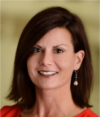 This week, hosts Mark Masselli and Margaret Flinter speak with Dr. Marci Neilsen, Chief Exectutive Officer of the Patient Centered Primary Care Collaborative, a consortium of over a thousand stakeholders across the health care industry dedicated to promoting the comprehensive care provided in Patient Centered Medical Homes to improve primary care delivery.
(Music)
Mark Masse ll i: This is Conversations o n Health c are . I am Mark Masselli.
Margaret Flinter: And I am Marg a ret Flin ter .
Mark Masselli: Well Marg a ret , changes are underway in the White House. Dr.
Karen Dasilva a recent guest on this show is lea ving her post as the National
Coordinator for Health IT to become Acting Assistant Secretary of Health. She
will be reporting to the new ‘Ebola czar’ recently named by the President.
Margaret Flinter: Well Ron Klain was named to that post of czar. He i s a
Washington i nsider with significant experience as Chief of Staff for Vice
President Biden but critics saying that he didn’t enough direct experience in
healthcare or in public health for the position.
Mark Masselli: That can't be said of Dr. Karen Da silva who has a terrific
credential and experience. She is an internist. She earned her medical degree
as well as her Masters in Public Health from Tulane University having taught
there as well.
Margaret Flinter: And Dr. Dasilva was also the health com missioner for the city
of New Orleans , Mark , where she oversaw the transformation of that city’s public
health system.
Mark Masselli: The potential threat of such a deadly virus in this country is
offering policy makers a new experience in the public hea lth arena , and ready
response team at the highest level is a good thing for this country’s health and
security.
Margaret Flinter: Absolutely Mark. She has some very interesting ideas for
moving that agenda forward and you can find our interviews with bo th Dr. Dasilva
and with Dr. (inaudible 1:19 ) on our websites chcradio.com made for some
interesting listening looking back over recent history.
Mark Masselli: And it really does. And our guest today is focusing on improving
primary care, utilizing a Pat ient Centered approach. Dr. Marci Neilsen is the
Chief E xecutive Officer of the Patient Centered Primary Care Collaborative
dedicated to transforming the healthcare system by building a strong foundation
of primary care.
Margaret Flinter: Well , Dr. Neil sen has really been an expert and a leader in the
development of Patient Centered Medical Homes which are increasingly gaining
favor across the country as a way to improve overall health by promoting Patient
Centered care in the primary care setting.
Mark Masselli: Well Lori Robertson will join us who looks into more false claims
spoken about health policy in the public domain. But no matter what the topic ,
you can hear all of our shows by going to chcradio.com.
Margaret Flinter: And as always , if you have comments , please e - mail us a t
chcradio .com or find us on Facebook or chcradio on Twitter ; we love to hear from
you. Now we will get to our interview with Dr. Marci Neilsen in just a moment.
Mark Masselli: But first , here is our producer , Maria n n e O ’ Hare , with this week ’ s
Headlines News.
(Music)
Maria n n e O’ Hare : I am Maria n n e O’ Hare with the se Healthcare Headlines. The
G OP takeover of both houses of Congress boards ominous for some aspects of
the healthcare law. Senator Mitch McConnell , the heir apparent to the majority
leader post is already offering prescriptions for repeal of Obama Care and
Medica id expansion looks unlikely in states like Florida, Wisconsin , or Kansas
where contested GOP governors won reelection. Governors Rick Scott of
Flori da, Brownback of Kansas , and Walker of Wisconsin while in continued
opposition to the expansion of Medica id Coverage. In Florida alone, some
850,000 residents would gain coverage under such expansion which is covered
entirely by the Federal Government ove r the first three years of the program.
Meanwhile , there were other healthcare related issues on balance around the
country. In Arizona, voters as expected supported a right to try ballot measure
that would allow but not require drug makers to provide no t yet approved drugs to
people with terminal illness. Meanwhile in California, proposition 45 went down
in defeat. It would have imposed the same public notice and transparency
requirements for health insurance premium rates as voters approved for auto a nd
home loan insurance in 1988. The proposal was fiercely opposed by the Health
Insurance industry which raised 50 million dollars to fight it. But proposition 46
would also have made California the first state to require random drug and
alcohol testing for physicians. That part of their proposal prompted many
editorial boards to turn against it. Berkeley California has become the first
municipality to pass a tax on soda and sugary drinks , consumption of the high
fructose corn syrup laid in beverages li nked directly to increased obesity and
diabetes. I am Maria n n e O’ Hare with the se Healthcare Headlines.
(Music)
Mark Masselli: We are speaking today with Dr. Marci Neilsen, Chief E xecutive
Officer at the Patient Centered Primary Care Collaborative, a co nsortium of
stakeholders dedicated to transforming the healthcare system by building a
strong foundation of primary care. Prior to that , Dr. Neilsen served as Vice
Chancellor for Public Affairs at the University of Kansas School of Medicine
Department of Health Policy and Management. She serves on numerous boards
including the American Board of Family Medicine. She earned her Masters in
Public Health at George Washington University , and her PhD in Health Policy
from Johns Hopkins School of Public Health. Dr. Neilsen welcome to
Conversations on Healthcare .
Dr. Marci Neilsen: Thank you so much for having me.
Mark Masselli: Yeah . You know your collaboration is a consortium of over a
1000 members. It’s a really big tent [PH] that you have hospitals, pr ovider
groups, consumer groups, labor unions, policy organizations, all dedicated to the
notion that Patient Centered Medical Home is the cornerstone of a successful
health industry transformation and posting primary care is a way to managing
population he alth and reverse the trends of costly care and poor outcomes. We
are hearing the term more and more lately as PCMH model is central to the
recent health transformations. Can you tell our listeners more about the key
components and objectives of the Patie nt Centered Medical Home?
Dr. Marci Neilsen: I want to start with pointing out that the Patient Centered
Medical Home as you point out is really a model of care, focused largely on
primary care , operating within a well - functioning medical neighborhood. It is
foundational to overall delivery reform. Primary care most of don’t realize it’s just
five to six percent of what we spend on healthcare altogether. But it drives about
50 to 60% of all healthcare decisions because primary care physicians and nurse
practitioners etcetera send folks to special ty care, send fo lks to hospitals. S o
primary care really is the heart of where transformation can happen.
Margaret Flinter: Well Marci, you point out how vital it is that the patient actually
be at the centre of this Patient Centered Medical Home model as the name
would imply and one of the points that you make and it is the average patient a
week 5000 hours a year maybe with their provider for 4 hours a year. So this
space in between the visits , all of that additional time is when patients need to be
activated and engaged and empowered around their own healthcare and you
said for the PCMH model to work, the providers really need to think about
improving care delivery in five key areas to help patients to enti ce them to be
better consumers and masters of their own healthcare. What are those five key
areas the providers need to be focused on?
Dr. Marci Neilsen: It’s more than just thinking about a patient as a person who
needs healthcare services. It’s reall y about a partnership and a relationship
between that person and their family together with their clinician making
decisions about how to respect the patients wants and their needs and their
preferences making sure that the patients have all the education and tools that
they need to make the decisions on their own behalf. So they are not just
passive recipients of an improved healthcare system , but they have a seat at the
table when we are making decisions about how to reform a medical practice or a
hospit al and that’s a fairly new concept. So patient centricness is first and it’s
key and the second piece of this is comprehensive. First of all, a comprehensive
set of providers who working with that patient can give the patient all of those
services at the right time and the right place and quite frankly for the right price.
Sometimes we don’t need the physician to spend an hour with the patient, talking
about diabetes education but maybe it would be better to have a health educator.
We still often think of individuals as disease states or diagnoses when we are
healthcare providers. It’s how we’ve been trained to think about healthcare and
what we ought to be doing is switching that paradigm and thinking about
comprehensive whole person care and the circu mstances in which they are
trying to live their lives are often far more complicated than yes I have got
diabetes and I need to watch my blood sugar, that diabetes is actually also
impacting my happiness. So I am depressed. So comprehensiveness is second
and the third piece of this is accessibility. We of the healthcare system around
what’s most convenient for the provision of services versus building a health
system that’s most convenient and practical for patients. It includes thi ngs like
24 x 7 acces s, we know that lots of patients prefer to do things online whether
that’s following up with a lab test, whether that is communicating with their
providers in an e - mail format. Two final things then is care coordination. We
know when patients are well an d healthy, convenience is really important but
when you are not well, when you have got a chronic illness, what a primary care
practice can do when it’s a Patient Centered Medical Home is put care
coordination at the top of their priority list making certa in that that patient knows
who they need to connect with in the health system and how and really helping
quarterback that process so that the patient is very clear about what their
expectations are, that the health system is really designed to work around them
and the primary care provider is helping to coordinate all that care across
Healthcare providers but also with that patients so that they can help drive their
own care.
Mark Masselli: You also have the concept of Medical Neighborhoods and also
Accou ntable Care Organizations . I think our listeners need to know how they all
come together, help our listeners understand how the Patient Centered Medical
Home, The Medical Neighborhood or the Accountable Care Organizations matter
in t heir life?
Dr. Marci Neilsen: There is a misunderstanding that somehow Medical Homes,
PCMH’s are somehow different or in competition with Accountable Care
Organizations or ACO’s and really one of an extension of the other. If most folks
get the majority of their healthcare i n a primary care setting, that’s the Patient
Centered Medical Home. When those Patient Centered Medical Homes partner
together with specialists and hospitals, pharmacists, home health, now you are
talking about a Medical Neighborhood and when they have a contractual
relationship with one another so that they have decided together as a team of
healthcare providers, we are going to be responsible for a population’s health.
Now that’s called an Accountable Care Organization. So if we are really focused
on h ealth system transformation, we ’ve got to think about the partnership
between primary care and specialty care and the last piece most folks are in the
healthcare system or in a clinician’s office most of their waking hours . So who
else needs to be at the table partnering with primary care when we think about
keeping folks as health as possible , and we have done years and years of
research on the social det erminant of health . We know that the kinds of things
that impact health include employment and access to healthy food and
transportation. For the other folks who really are part of this overall medical
neighborhood are schools, employers, state based organizations , and the new
members of the PCPCC include the YMCAs, Meals On Wheels, The American
Heart As sociation, Health is not synonymous with health. We are going to be
focused on our overall health.
Margaret Flinter: We are certainly seeing increasing awareness among policy
makers. I think this is kind of getting back on the agenda in Washington as w ell
that access to such vital services as behavioral health is an essential part of
being able to respond to all of the needs of the patients, but how do we move
forward with advancing disintegration more broadly across the entire primary
care system.
Dr. Marci Neilsen : There was a paper that came out last week in an important
journal that pointed to the accountable care organizations and how many of them
are really starting to embrace behavioral health as part of overall Healthcare
delivery. A connectio n between behavioral health and physical health issues is
huge. People who are depressed are far more likely to suffer from other chronic
diseases. So the connection is the part of what they have to manage in their
everyday life, but we have delivered a Healthcare system to them that case for
the services separately and so often there isn’t a good working relationship
between those two systems because the payments have been broken and our
care is unfortunately so fragmented so we need a better equipped pr imary care
practices that integrate behavioral health but more and more we are seeing
behavioral health specialist actually located together with primary care and so my
office as a behavioral health specialist might be, right down the whole way from a
prim ary care specialist and that can offer lots of benefits in terms of really trying
to address the problem that is stigma. We still struggle with folks who need
mental health services there is a stigma attached to that that is important for us
to grapple , a nd then a final model of care that is terrifically promising was lots of
research to support it. It ’ s been literally in bad folks from the behavioral health
system into primary care. So it’s that behavioral health specialist is right on my
team , and I wo rk with them each and every morning we huddle and go through
our list of patients and recognize that there may be some of the patients who are
really struggling with some of their chronic illness actually could do some mental
health and behavioral health s ervices as well. But the key here is we got to be
able to pay for that. Community health centers like yours have been doing this
for decades and have much to teach the rest of the health system and The
Affordable Care Act provides us with some new real r equirements around
behavioral h ealthcare -- thing for pilots for us to test the best way to integrate this
kind of care.
Mark Masselli: We are speaking today with Dr. Marci Neilsen, The Chief
Executive Officer at t he Patient Center ed at Primary Care Coll aborative
Consortium of Stakeholders Dedicated transforming the h ealthcare systems by
building a strong foundation of primary care. She has also served as the
Executive Director of the Kansas Public Health Authority under then Governor
Kathleen Sebelius. C ertainly your former boss was a very key member of the
Obama t eam in passing the affordable act and now we are headed into the
second phase of open enrollment, but tell us how are health lawyers living up to
its promise and where improvements might be ma de.
Dr. Marci Neilsen : Well of course The Affordable Care Act passage of that
landmark legislation was the most important thing from a h ealthcare delivery
perspective to happen in really 30 years , mean since 1965 with passage of
Medicare and Medicaid, we have been struggling for those individuals who can’t
afford health insurance but we were still paying for them because of course they
get access to Healthcare through emergency departments and so they are
incredibly expensive to treat and we do a poor job of managing chronic illness
from emergency room s, and we will see continued improvements with not only
enrollment , but folks learning to use health insurance but those h ealthcare
services that still need a fair amount of reforms and that’s where we come i n.
And the delivery reform piece is still in an early stage and the affordable care act
invested literally millions of dollars in testing out new out new models of care that
would be more efficient and we are just starting to see some early results from
t hose privates and the good news is we now have commercial sector, patient
centered medical homes all across the country. Medicaid was the leader in
many ways long before the affordable care act passed in pirating some of these
programs, but of course the nugget that it’s so hard to crack is all this is so
terrifically complicated for the average American and we are learning a lot about
how to engage consumers. But the most important thing I think that we have yet
to do is figure out the language and their priorities of the average consumer so
that they too are as invested in their health and the communities in which they
live create the space for them to be healthy. I am amazed that we would suspect
that we have lived any differently than we do when you l ook at how much we are
bombarded with messages about better health on one hand that are dwarfed by
the message s that we get from advertising about food , and just the many
messages that we have got to balance in our own lives that don’t lead to healthy
beha vior. So g overnment is one piece of what needs to be resolving our broken
health system around h ealthcare delivery , but it can’t make Americans healthy on
to itself. We need everybody else at the table and that includes the same folks
that I mentioned be fore, folks in the community but certainly employer’s pub l ic
health, health plans and most importantly it includes the consumers themselves.
Margaret Flinter: We are speaking today with Dr. Marci Neilsen, The Chief
Executive Officer at The Patient Center ed Primary Care Collaborative. A
cons ortium of stake holders dedicated to transforming primary care through the
development of patient centered medical homes. You can learn more about her
work by going to pcpcc .org or follow them on Twitter at PCPCC. Marci , thank
you so much for joining us on Conversations on Healthcare today.
Dr. Marci Neilsen : Thanks you for having me, really appreciate it.
(Music)
Mark Masselli: At Conversations on Healthcare , we want our audie nce to be
truly in the know when it comes to the facts about h ealthcare reform and policy.
Lori Robertson is an award winning journalist and managing editor of
FactCheck.org, a nonpartisan, nonprofit consumer advocate for voters that aim to
reduce the lev el of deception in US politics. Lori, what have you got for us this
week?
Lori Robertson: We are seeing plenty of claims in recent years that the
Affordable Care Act is a job killer. And in the final week of the midterm campaign
a health candidate in N ew Mexico made a version of this claim in a TV ad. The
ad from Republican Mike Frese showed a video of his opponent representative
Michelle (inaudible 20:26 ) saying that ACA is a job creator . A s she speaks
viewers see the words between April and October , New Mexico lost more than
20000 jobs , implying that the Affordable Care Act was to be blame, it wasn’t .
T he figures are for April through October 2013 and not this year and the losses
were not as large as initially reported once they were finalized. Plu s there is
evidence that the ACA is creating jobs in New Mexico. The ad placed a news
report from December 2013, that cited the initial job loss number. T he article
quoted an expert from The Bureau of Business and Economic Research at the
University of N ew Mexico who said the g overnment sequestration an uncertainty
about the Federal Government were the reasons for the job decline. New
Mexico is particularly vulnerable to Federal Budget cuts. That same expert told
us that the large jo b loss of 20 thousan d was later revised by The Bureau of
Labor Statistics. It actually was less than 3000 . P erhaps more important she
told us that the ACA this year was adding some jobs in the states insurance and
h ealthcare sectors. From January to September , New Mexico s aw an increase
of 1500 finance jobs which would include insurance and an increase of 3700 jo b s
in the education and healthcare sector. Experts have long projected that the
ACA may cause a small loss of low wage jobs but a rise in job s in the healthcare
an d insurance industries. T hat’s my FactCheck for this week; I am Lori
Robertson, Managing Editor of FactCheck.org.
Margaret Flinter: FactCheck.org is committed to factual accuracy from the
country’s major political players and is a project of the Annenbe rg Public Policy
Center at the University of Pennsylvania. If you have a fact that you would like
checked, e - mail us at chcradio.com . W e will have FactCheck.org’s Lori
Robertson check it out for you here on Convers ations on Healthcare .
(Music)
Margaret Flinter: Each week Conversations highlights a bright idea about how to
make wellness a part of our communities and everyday lives. It ’ s no secret that
baby boomers are aging in large numbers and that means th ose s uffering from
age related dementia around the rise as well. Four million Americans live with
Alzheimer’s disease and we know that number will double by 2025. Dan
(Inaudible 22:47 ) has device a tool that is improving the experience for these
patients whos e quality life declines along with loss of brain function. He
wondered what will happen if you provide iPads for patients in Nursing Homes
that are loaded with their own playlist of the songs they loved when they were
younger. In his first pilot program called music and memory , the patients in a
nursing home were given the iPads with their own personalized song list and the
results instantly noticeable. The patients went from being non - communicative
and disengaged to being animated and engaged. Patients like Henry featured in
this documentary on the program called alive inside.
Interviewer: Do you like music?
Respondent: Yeah I am crazy about music. And you played beautiful music.
Beautiful sound.
Interviewer: What was your favorite music when yo u were young?
Respondent: I guess (inaudible 23:34 ) would be my number one band, the guy I
liked .
Interviewer: What’s your favorite (inaudible 23:38 ) song?
Respondent: Ohh -- (Inaudible 23:39 ).
Margaret Flinter: Cohen explains one of the theories a s to why this program
worked so well.
Cohen : See reality is because our memories of music are collocated in the brain
with our autobi ographical memories, when you play a song that is familiar, they
are kicking off memories that you had.
Margaret Flinter : The results from the music and memory program were so
impressive that Cohen’s personalized iPad program is now being used in 50
nursing homes throughout North America and many more are lining up.
Cohen : We have done some research and feedback from the frontline, from the
Nursing Home, the staff is that their ability to provide care is facilitated and so
that allows them to get the ir job done to pay attention to all the residents as much
as possible and that’s a big win as well.
Margaret Flinter: A si mple personalized application for a readily available piece
of technology that could dramatically impact the quality of dementia , patient’s
lives now that’s a bright idea.
Margaret Flinter: This is Conversations on Healthcare , I am Margaret Flinter.
Mar k Masselli: And I am Mark Masselli. Peace and health.
Conversations on Healthcare , broadcast from the campus of WESU at Wesleyan
University, streaming live at www.wesufm.org and brought to you by the
Community Healt h Center.