Jim Daley, ICD10 Expert and Immediate Past President of WEDI

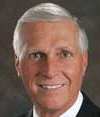 This week, hosts Mark Masselli and Margaret Flinter speak with Jim Daley, Immediate Past Chair of the Workgroup for Electronic Data Interchange or WEDI, a leading authority on the use of health IT to improve health care delivery and efficiency created by the Department of Health and Human Services. Mr. Daley discusses the industry challenges of switching to ICD 10 coding for health billing, and why the switch is so vital to improving outcomes.
Music)
Mark Masselli: This is Conversations on Health Care. I am Mark Masselli.
Margaret Flinter: And I am Margret Flinter .
Mark Masselli: Well Margaret, moreover changes at the top of the Department of
Health and Human Services, Susannah Fox has be en named Chief Technology
Officer at HHS, she replaces outgoing Bryan Sivak both of whom have been
guest on our show.
Margaret Flinter: Susannah Fox is a self described geek but beyond her
substantial abilities understanding health information technology and the impact
of the internet on modern healthcare . S he really understands how that data
translates to the human experience.
Mark Masselli: You know she spend more than a decade the Pew R esort C enter
doing longitudinal studies and how computers and in ternet have impacted human
behavior highly respected entity in the data world.
Margaret Flinter: But also HHS Secretary Sylvia Mathews Burwell, lot of
disappointment saying that Fox will bring her commitment to effective and
responsible use of technology throughout the healthcare sector.
Mark Masselli: And Fox says she plans to advance the open health data,
initiative at HHS as well as generate more innovation through the idea lab.
Margaret Flinter: And speaking of health data and health information t echnology
the nations practices are preparing to switch October 1 from the long used I CD - 9
coding system to the I CD - 10 which is expected to bring much rich or more
specific health data into the spotlight.
Mark Masselli: We are going to highlight the work of WEDI which is the Work
Group for Electronic Data Interchange. W e have with us, today Jim Daley who is
the immediate past chair, the organization was created by the department of
Health and Human Services to find ways to improve the use of health IT t o
facilitate better health information exchange . He'll talk about the challenges to
getting the medical establishment to embrace the switch over to I CD - 10.
Margaret Flinter: And Lori Robertson will check in, the Managing Editor of
Factcheck.org i s always on the hunt for misstatements spoken about health and
health policy in the public domain.
Mark Masselli: But no matter what the topic he can hear all of our shows, by
going to see to chcradio.com as always if you have comments please e - mail us
at [email protected] or find us on F acebook or twitter we love hearing from
you.
Margaret Flinter: We will get to our interview with Jim Daley in just a moment.
Mark Masselli: But first , here is our producer , Marianne O 'Hare with this week’s
Headline News.
(Music)
Marianne O'Hare: I am Marianne O'Hare with these Health Care Headlines.
South Korea is attempting to clamp down on an outbreak of MERS a virus that
first emerged in the Middle East that is particularly dead ly . A largest outbreak
outside the Middle East and hundreds of schools in that country have been
closed as a precaution. Several people have died in the outbreak so far, states
are raising for decision from the Supreme Court and the King vs, Burwell case
which challenges the legality of the tax subsidies being used offset purchase of
insurance , an estimated 8.2 million Americans could lose cover age across the
country. If a high court decides in favor of the plaintiffs.
Los Angeles has launched a program aimed of getting chronically ill patients who
are homeless into better care management that actually saves money by
providing them housing in a newly erected facility . They're also gives these
expensive patients access to better preventive care, star apa rtments funded by
the Skid Row Housing Trust gives the chronically ill homeless an apartment and
access to care coordination to better manage their conditions and keep them
from costly hospital visits. Currently 700 have received such housing in the pilot
program another1500 are slated to be housed next.
Today’s teens are living, what might be happily described is a virtual life
spending a good portion of their time online . S o it's natural, that’s where they go
and searching for health information . T he report teens health and technology
took an expensive look at teen internet behavior and found well , four in five teens
used the internet t o research various health conditions they aren’t likely to
believe that information. Where did they think to most rel iable health information
comes from ? F rom their parent even in the digital age mama still knows best. I
am Marianne O'Hare with these Health Care Headlines.
(Music)
Mark Masselli: We are speaking today with Jim Daley immediate past chair of
the Work Gr oup for Electronic Data Interchange or WEDI leading authority on the
use of health IT to improve health information exchange , improve efficiency and
reduce cost in healthcare . Mr. Daley is an expert on ICD - 10 readiness as well as
HIP A A compliance issues . He's clearly serving as the D irector of IT for
BlueCross , BlueShield of South Carolina . H e also serves BlueCross nationally
ad founded the BlueCross corporation information security counsel, Mr. Daley
received his degree in engineering at the University of Connecticut and served as
a commission officer in the US army, Jim welcome to C onversations on He alth
C are.
Jim Daley. Well thank you Mark. It's pleasure to be here today.
Mark Masselli : Yeah , you know , I'm going to sort of set the stage because yo u
know WEDI is formed back in 1991 by then secretary Sullivan out of the
Department of Health and Human Services to explore ways to enhance health
information systems . C an you tell our listeners give us the sort of bigger picture
fill in the details of ho w the mission is evolved and as we enter now a much more
sophisticated digital age in health care./
Jim Daley: WEDI has a diverse membership we have over 300 corporate
members . O ur memberships are providers , software vendors , health plans
government age ncies such as CMS Department of Defense, state M edicaids and
many industry associations . O ur mission was and it's s till is to provide an
unbiased consensus based industry pos ition on how best to move information
healthcare in efficient in effective manner w hile protecting a privacy of
individuals . O ne of the first challenges we face w as to have the industry adopt
standardized electronic transactions for things such as claims, noted to reduce or
eliminate the use of paper forms and phone calls .
W ith the p as ses of HIPAA and the subsequent regulations the transformation
th
was set in motion. In 2013 on the 20 anniversary of the 1993 WEDI report
which really kicked all us off we published a new report looking at what the
industry had accomplished in the last 20 years taking into account that many
things have changed since 1993. The players essentially t he same and much of
the information is the same . But now there's an increase focus on the patient,
and of course there's an abundance o f new technology such a s mobile devices .
But r egardless of all that our mission is still to make all this work smoothly and
securely.
Margaret Flinter: But now we have got another challenge on the horizon in front
of us and I know this has been an important topic for you . Th is is this issue of
the pending switch to the ICD - 10 health billing codes , this is really the nature of
how we describe what it is that the patient has, what the condition is with real
specificity . A nd w hile most developed countries in the world already u se ICD - 10
codes, the switch over in this country is about 30 years behind the times and h as
been delayed . S o you have been analyzing and writing about the need for ICD -
10 coding since the early 200 0 s , tell us why you saw this a s such a vital issue so
earl y on?
Jim Daley: The current ICD - 9 coding system as you indicated is over 30 years
old . In that time many new surgical techniques have been developed, new
diseases have been identified, such as AIDS for one, W est N ile virus things of
that nature . ICD - 1 0 captures that new information includ ing any underlying
causes and severity of diseases, so that a dds to greater understanding of what’s
actually causing that particular disease to occur. One other example the
diabetes category has been expanded to provi de a much more detailed
description of the type and c ause of the illness for the facilitate population health
studies which will lead to identifying better treatments, by understanding the
specifics of the patient ' s condition . ICD - 10 also going to provide detail needed to
track outbreaks of new diseases and to facilitate a more rapid response, Ebola
being one of those items . Many of the new codes in ICD - 10 were created to
allow capture basic information and talk about how many codes on ICD - 10 . B ut
some b asic things like laterality, left side or right side, but that’s something basic
th at should already be included in clinical documentation. Many of the ICD - 10
enhancements were made it to request a physicians because they wanted to
capture this more detai led information is important in treatment as a patients.
Mark Masselli : You know, there's sort of s eems to be some controversy within
the industry we have the director of the American Health Information
Management Association on talking about the nations practices, spent time and
money on this . B ut she said a majority of the practices were prepared to do so
but your organization WEDI has been conducting ICD - 10 readiness surveys for
the past several years . A nd according to your surveys many practices rea lly
aren’t ready to make the switch , give our listeners the sense of the sort of
complications in cost around what -- what is the difficult issue to understand but
you know may be give some flavor for what’s happening there amongst
healthcare organizations .
Jim Daley: Just several main barriers but one it's a very large effort for some
organizations particularly the physicians groups don’t see the value and it
certainly not in a immediate value in it you don’t implement ICD - 10 on Monday
and on Tuesday all of a sudden your finances are better or you have more time
to treat patients or something like that . S o it's a longer term benefit so without
that short term gain there is reluctan ce to move forward, and everyone seems to
be dealing with a multitude of o ther mandate whether it's a implementing the
Affordable Care Act or quality measures meaningful use of the electronic health
records . N ow the larger organizations they have continued to m ove forward and
have completed or nearly completed their work, they are doing final testing with
their trading partners . B ut it's a matter of priorities and resources, physicians
they are focused on other mandates and they still have the hope that the da ta will
change again, but I crossing them don’t bet your business on that.
Margaret Flinter: Jim , I want to talk about another area of interest at WEDI and
that’s supporting the growth of an infrastructure that supports health information
exchanges . A nd most of the nation ' s hospitals and practices now have switched
to el ectronic health records which is remarkable in and of itself but we still have
this issue of communicating information systems that aren’t really equipped to
talk to each other and th ere's illusive concept of interoperability . A nd one of the
excuses peopl e give for lack of interoperability is concerned over violating HIP A A
regulations what you see is the hurdles to achieving this interoperability and the
exchange of information and what are you doing to advance and support that , if
you have any best practi ces that you 'd like to share with our listeners.
Jim Daley: The primary issue is the systems are not interoperable, as you
mentioned even within the same facility, some facilities have over 100 systems
and they don’t talk to each other . There's two aspe cts to interoperability, first you
have to be able to send the information from one point to another , but secondly
and equally important it must be understandable and useable by the receiver. So
health care terminology and the data needs to be standardize d so the sender
and receiver can communicate effectively. Our 2013 WEDI report identified data
harmonization a s a major area for action , and WEDI 's working with Louis W .
Sullivan Institute for Healthcare innovation to form a work group to examine this
fur ther but it's going to be been an industry initiative not just a WEDI initiative we
all need to work together on this.
Mark Massel l i: We are speaking today with Jim Daley, immediate past chair of
the Work Group for Electronic D ata Interchange or WEDI a l eading authority on
the use of health IT to improve health information exchange . Mr. Daley is an
expert on ICD - 10 readiness as well as HIP A A compliance issue s. He's currently
serving as the director of IT for BlueCross BlueShield of South Carolina, Jim l et’s
take a look at the exploiting world of health information technology . Y ou know
health care this whole area is still emerging and it raises a number of problems
because it doesn’t have really the sophistication that the banking world does , it
raises a whole another set of issues and we have seen this, there ha ve been
major data breeches some of the nations largest healthcare and insurance
providers . C an you give an assessment how is the health IT industry
recalibrating to handle the growing demands of health information technology,
and the very real cyber security issues that have emerged from sort of a new
industry.
Jim Daley: First of all as a m ind of information increases exponentially there is a
corresponding amount of information at risk . D on’t be alarm of this but I always
say the best way to totally secure information is to turn off your computer and
place it in the secur e lock f acility. Even then of course i t could still be
compromise if the device w as stolen. The award is a benefit of hav i ng the
information being able to share it and use it , the risk could be disclosed all sorts
of destroyed . B ut to mitigate that to a several methods and one of the primary
ones is to encryption.
But there 's other methods like having effective processes to control access to the
information. In the past, primary cause of data breaches was human behavior
like losing your computer or smart phone , just countless devices left in airports
when you go through security, they leave their smart phones or laptops the re.
But recently, very recently, malicious hacking surpassed that for the first time.
Bigger organizations, they have got special software to identify and block these
attempts to look at network device behavior and set off an alarm that something
strange occurs like an unusual amount of information being uploaded to an
Internet site. But it's important for everybody to be weary of scams like links and
suspicious e - mails . P eople should avoid using public Wi - Fi if they intent to
access anything confidenti al or enter your passwords and login names, and I do
want to reemphasized the importance of using encryption. The more difficult you
make it someone to steal your information the less likely they will be successful .
Margaret Flinter: Well, now that we h ave terrified everybody with the n efarious
possibilities around their electronic health records, I want to go back up to the big
visions and goals . A nd may be on a positive note ask you to comment on the
elements of transition to this ICD - 10 that really a re about the greater good . A nd
the compelling reason that has been put forward repeatedly about th e switch to
the ICD - 10 is it really stan ce to make a contribution to public health to global
health and to health quality, what’s the connection, how is it g oing to do that?
Jim Daley : The World Health Organization created the ICD c ode to classify
th
diseases, and ICD - 10 is their 10 version of that classification. But other
countries including the U.S. have created more detailed expansions of that of
that ba se set, our version is called ICD - 10 - CM to show it's our Clinical
Modification, but it's still based on that WHO base set of codes. We also created
a separate set of codes ICD - 10 - PCS to identify surgical procedures. With this,
we can now identify things like implanted devices, surgical complications, and a
lot of other clinically significant detail s that we couldn’t captured in the ICD - 9. By
using the common set of codes into national community, they can share
information that will lead to better outcome . And importantly as well , you can
track disease outbreaks like the recent Ebola crisis and (inaudible 15:17) to take
quick r e action . W e can identify who, where, when someone has a disease and
link up together to say an outbreak is occurring, it looks li ke it started here, and
these are the points where it's manifesting itself across the country or across the
globe. And again, as times goes on, we will be able to measure the
effectiveness of various treatments and compare them to international results
an d identify what’s really the best way to treat specific diseases.
Mark Masselli: Jim, you have just mentioned that the World Health Organization
and they are obviously already working on ICD - 11, and while we are still
struggling here in the United States , they get through ICD - 10. Some have
suggested that we skip ICD - 10 . S o are there things we should be thinking now
about in terms of ICD - 11 that are being overlooked with a current struggles to
implement ICD - 10?
Jim Daley : Well, ICD - 11 is still a long w ay off. Once it becomes available ,
currently it's projected for 20 17 , but the U.S. will make its clinical modifications to
add the details we need, and then you need the regulatory process to begin to
propose adoption go through all of that. Some estimat e that that entire process
could take well over a decade which at a minimum would places at 2027. ICD - 10
is necessary step in moving to ICD - 11. So well, industry need to focus efforts on
completing ICD - 10 implementation , it would be worthwhile for some g roups to
take a look at what’s been propose for ICD - 11 and be involved in that dialo gue .
Margaret Flinter: Well Jim, when we look to the future, obviously, health
information technology is just fueling so exciting in dramatic change and so many
facets of the industry, and particularly around patients being engaged in their
own care through remote monitoring and communication , T elehealth. Now I
understand at WEDI th at you assisted the U.S. Government Accountability Office
on the potential of one such inno vation using electronically readable Medicare
cards, what was the outcome of that particular study, and what other potential
game changing technologies do you see as poised to help streamline care
delivery, make care better for patients, providers and the society as a whole?
Jim Daley : The purpose of the study was to determine if it was feasible to use
electronically readable cards to replace the paper cards that have your Social
Security Numbers on the front, using the electronic method to reduced a pote ntial
for fraud would help protect people by removing display of their SSN. The study
concluded the benefits would depend on what processes could or would be
automated by using the cards. But eventually, we may not need these ID cards
per s e if people st art to use smart phone s, tablets, we ar a ble devices. So
everything we need to store or share or may be handled through one of those
devices, may be a single device that we choose. Recently saw a credit card
computer , credit card size, you can put in your wallet, and it can do some basic
functions.
W EDI with the Sullivan Institute we are working together to do something called
the Virtual Clipboard Project to develop a mobile app and eliminate the manual
capture of ID card information and use a clipboards. When you visit the doctor, a
lot of times you have to enter your demographic and medical history information
(inaudible 18:20 ) every time you visit, and you may not even consistently enter
the same data . T he Virtual Clipboard eventually can be integrate d into the
providers’ workflow, trigger an eligibility request and subsequent says this we
plan to incorporate features such as medication list and allergies, all of that good
information you won’t have to enter remember and provide to the provider.
Our i nitial stage is schedule for later this year, beyond the traditional encounter
we may have our health continually monitored through we arables or even
implantable devices, and we can receive an alert if something looks suspicious.
Now much of this technolo gy is not really available but may not be in widespread
us e at this point. Many people they are very willing to use these we ar a bles to
monitor fitness activity, but are they willing to have a device that tell s them they
have had too much sugar already and shouldn’t have desert. That’s the big
question. So it's certainly is exciting time to be in health care and I look forward
to what might be coming down the road .
Mark Masselli: We have been speaking with Jim Daley, Immediate Past Chair of
the Workgrou p for Electronic Data Interchange or WEDI. You can learn more
about their work by going to www.wedi.org or you can follow them on Twitter at
WEDI online. Jim, thanks so much for joining us on Conversations on Health
C are today.
Jim Daley: Thank you for inviting me. It was my pleasure.
(Music) Mark Masselli: At Conversations on Health Care, we want our audience to be truly in the know when it comes to the facts about health care reform and policy. Lori Robertson is an award - winning journalist and managing editor of
FactCheck.org, a nonpartisan, nonprofit consumer advocate for voters that aim to reduce the level of deception in U.S. politics. Lori, what have you got for us this week? Lori Robertson : Lawmakers of both parties have made misleading claims about
the government interfering with women’s ability to get mammograms. The claim stem from new draft recommendations from the U.S. Preventive Services Task
Force , the task force examin es peer reviewed evidence a nd makes
recommendations to help doctors and patients make decision s on preventive
services. The task force has latest draft recommendations on mammography are
virtually unchanged from its 2009 recommendation. The y recommend biannual
mammography for wome n ages 50 to 74 who are not at high risk of breast
cancer. For women age 40 to 49, the decision to have a mammogram “should
be an individual one,” and the task force says there was insufficient evidence to
evaluate benefits and harms for women 75 and olde r. The recommendation for women in their 40s was controversial to some lawmakers and cancer groups who recommended yearly mammograms. But there is a new wrinkle in how they
impact the Affordable Care Act .
The law ties the task force ’s recommendations to requirements on insurance
companies to cover certain preventive services with no cost sharing. If the draft recommendations become final, insurers no longer would be required to cover
annual mammograms for free for women age 40 to 49. That doesn’t mean that insurance companies wouldn’t cover mammogram, the ACAs requirement s are
minimum standard and plenty of insurers covered mammograms for 40 - year - old
women before the ACA but with co - pays. Some of the claims we have seen
misplaced the blame for a change in insurance requirements on the preventive
services task force which doesn’t issue any kind of insurance mandate. Instead
it was lawmaker who added a provision to ACA tying the task force as the future
recommendations to coverage requirements in the law . And that’s my fact check
for this week. I am Lori Robertson, Managing Editor of FactCheck.org.
Margaret Flinter: FactCheck.org is committed to factual accuracy from the
country's major political players and is a project of the Annenberg Public Policy
Center at the University of Pennsylvania. If you have a fact, tha t you would like
checked, e - mail us at www.chcradio.com . We will have FactCheck.org's Lori
Robertson check it out for you here on Conversations on Health Care.
(Music) Mark Masselli: Each week , Conversations highlights a bright idea about how to
make wellness a part of our communities and everyday lives. Depression is
extremely common among adolescents in this country, but it's often hard to diff erentiate between typically teen angst in a clinical condition that requires more
intermediate intervention . Suicide is the third leading cause of death among 10
to 24 - year - olds, a population that almost ubiquitously uses texting as a form of
communicatio n . Nancy Lublin is the CEO of Crisis Text Line an instant texting
service design to encourage teens in crisis to reach out for health which they receive instantly.
Nancy Lublin: Texting is a fantastic way to commu nicate with young people so it
has a hug e open ra tes and it's really fast . B ut has it's one way of side effect
where we are the only brands that they text with. You know, you really only text
with your family and friends, and so and us and do something . An d so because
people text ed with us th ey felt really comfortable , and they started sending us
things that we were shocking like I don’t want to go to school tomorrow because I
am being bullied or about being cutting.
Mark Masselli: All they have to do is the text the numbers 741741.
Nancy L ublin: So if you ' r e someone who is in pain you texted us, and then the
councilor on the other side is not working from a phone they are on the screen
that almost looks kind of like Facebook or Gmail . W hen messages come in with
certain keywords in them th ey automatically get tagged as high risk. So we don’t
take them chronologically. If you are at risk for suicide, you are automatically bumped up in the queue and you are like the code red, you have flagged in o ur system.
Mark Masselli: Since she founde d crisis text, the word has spread like w ild fire .
They receive an average of 15,000 text per day from kids experiencing everything from typical teen dilemmas such as a fight with the boyfriend, to kids
contemplating suicide.
Nancy Lublin: And the super visor would determine whether or not this person
with the eminent harm , whether they have (a) a plan and (b) the means then we
will trigger an active rescue.
Mark Masselli: Crisis Text Line, an instant age appropriate intervention available
free of charg e at 24x7 to give kids in crisis a lifeline. Now that’s a bright idea.
(Music)
Margaret Flinter: This is Conversations on Health Care. I am Margaret Flinter.
Mark Masselli: And I am Mark Masselli, peace and health.
Conversations on Health Care, br oadcast from the campus of WESU at
Wesleyan University, streaming live at www.wesufm.org and brought to you by
the Community Health Center.