Dr. C. Michael Gibson, Founder and Chairman of the WikiDoc Foundation
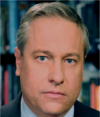 This week, hosts Mark Masselli and Margaret Flinter speak with Dr. C. Michael Gibson, interventional cardiologist and Founder and Chairman of the Board of the WikiDoc Foundation, the world’s largest open source texbook of medicine designed to make medical knowledge free and accessible to all.
320 - MONDAY, FEBRUARY 29, 2016 C. Mic hael Gibson
[ Music ]
Mark Masselli: This is Conversations on Health Care, I'm Mark Masselli.
Margaret Flinter: And I'm Margaret Flinter.
Mark Masselli: Well Margaret I find myself thinking a lot about e quality and equity lately.
You know, there was a recent report in the Washington Post which revealed a very
alarming statistic, more than half of America ’s school children now live in poverty.
Margaret Flinter: Well alarming Mark and I have to say I found it shocking, what a
telling report more than 50% of America ’ s children pre K through 12 grad require some
kind of food assistance every day, that's a important benchmark as it allows us to
understand the challenges that so many of these young learners and their families face
th at go far beyond the classroom but reall y have a direct impact on what happens in the
classroom, outside the classroom and on their future opportunities down the road.
Mark Masselli: We've seen in our own communities and we've learn ed how much we
can do to improve the situation at a local level with our full service school base d health
centers for children that we serve this is the first real interacti on with primary care
behavior al health and dental services.
Margaret Flinter: It is so excit ing to see these children become more health literate .
Being little consumers of health care in a really wise way, the Affordable Care Act has
helped to close the gap but it just doesn’t address all of these threats to overall health
including chronic hunger and poverty.
Mark Masselli: As a nation we must do more to protect our nation's greatest asset, the
future generation, equal access to health care nutritious food, safe drinking water all
imperatives if we're to succeed.
Margaret Flinter: But our guest today is somebody who's also concerned with equity
and equal access. Dr. C. Michael Gibson is a Harvard based cardiologist and he's also
Founder and Chairman of the Board of the WikiDoc Foundation, his goal make all the
world's medical textbooks available for free online so that everyone in pursuit of hi gher
medical learning can have access to the knowledge that's out there, very ambitious
project.
Mark Masselli: We're looking forward to that conversation Margaret. Lori Robertson,
Managing Editor of FactCheck.org also stops by but no matter what the top ic is you can
hear all of our shows by going to CHCRadio.com.
Margaret Flinter: And as always if you have comments please email us at
[email protected] or find us on Facebook or Twitter @CHC Radio, we love to hear
320 - MONDAY, FEBRUARY 29, 2016 C. Mic hael Gibson
fr om you. Now we'll get to our interview with Dr. C. Michael Gibson the Founder of the
WikiDoc Foundation in just a moment.
Mark Masselli: But first here is our producer Marianne O'Hare with this week's headline
news.
[Music]
Marianne O'Hare: I'm Marianne O'Hare with these Health Care Headlines. After almost
a year of waiting the Senate has finally confirm ed the President's nominee to run the
Food and Drug Administration Dr. Robert Califf a cardiologist and long term researcher
at Duke University join the FDA a year ago and was selected to replace outgoing FDA
Chief Margaret Hamburg . Opposition came from both sides of the aisle including
Senator Bernie Sanders who felt his ties to the pharmaceutical companies who funded
Duke R esearch would keep him from b eing impartial. Dr. Califf has vowed to support
good science and drugs and devices that work.
The announcement came on the heels of the President's Precision Medicine Summit at
the White House, representatives from the NIH and research institutions, patie nt entities
from around the country joining forces to accelerate the pace of precision medicine
utilizing the power of personal genomics. The precision medicine initiative seeks to
have at least 80,000 participant s sign on by the end of 2016 to make their genomic
information, their health status and other personalized information available for bio
banking and broader research.
The Centers for Disease Control and Prevention, the World Health Organization and
National Institutes of Health all join forces on the expanding Zika pandemic now listed in
over 30 countries in South and Central America and the Caribbean. Recent data on
pregnant American women who became infected with Zika while traveling to the region
of the nine known cases two had miscarriages and one baby was born with
microcephaly the birth defect linked to the Zika virus.
A Florida court has upheld the state's waiting period for women seeking to have an
abortion the appellate court upheld the state's contested 24 hour waiting period before a
wom en would be allowed to end the pregnancy. Law passed by the republican
controlled legislature last spring require women seeking abortions in Florida to make
two visits to a clinic with a mandatory 24 hour waiting period between and the Cleveland
Clinic is just successfully performed the first uterine transplant in the US. The nine hour
surgery done a 26 year old patient a Swedish women gave birth earlier last year after
being the first successful recipient of a donated uterus. I'm Marianne O'Hare with th ese
Health Care Headlines.
[Music]
320 - MONDAY, FEBRUARY 29, 2016 C. Mic hael Gibson
Mark Masselli: We're speaking today with Dr. C. Michael Gibson, Founder and
Chairman of the Board of the nonprofit WikiDoc Foundation and the world's largest open
source textbook of medicine. Dr. Gibson is an Interventi onal Cardiologist and
researcher who served as Director of the Coronary Care Unit at Beth Israel Hospital at
Harvard Medical School where he's also a professor. He's also earned numerous
awards and distinctions including being named one of America's top d octors by US
news and world report. He received his BS, MS and MD from the University of Chicago.
Dr. Gibson welcome to Conversations on Health Care.
Dr. C. Michael Gibson: Very well thanks for having me on the show today.
Mark Masselli: Yeah, you know , we have a saying at our organization that health care
raise a right and not a privilege and as founder of WikiDoc you seem to be saying that
access to medical education is a right and not a privilege and can you tell our listeners
about the origin of thi s idea?
Dr. C. Michael Gibson: I think you're right that really access to up - to - date medical
education and content should also be a right, but unfortunately so much of that
information is cloistered away or hidden away behind pay wall so that only those w ho
can pay can access the information. This, you have something that could help
someone with a life threatening condition, why wouldn’t you be willing to share it for
free? In the United States I think we have the perception that many health care
provide rs are very well paid, that's certainly not the case around the world because
there are countries where physician makes maybe a $100 a month and the cost of
access on the computer let's say $500 a year so they're really locked out of getting up -
to - date med ical information. So we do serve an international audience and one of our
goals is to assure that not just the US but developing countries also have access to the
same kinds of information. Many young people who want to become doctors have to
pay $1500 f or a few months of access to questions to help them prepare for those test
that allow them to qualify to become a doctor and we are about to release 18,000 free
questions that they can all use to prepare to take those examinations. So we want to
make sure both patient and doctors and trainees all of them have unfettered access to
critical information.
Margaret Flinter: Well Dr. Gibson it seems inevitable almost that you'll come up against
some powerful forces and companies that have proprietary control ov er medical
textbooks and research articles and the like and wonder if you could share with us a
little bit about what you've called your copy left approach to gathering and disseminating
all this information written by others to counter the copyright infri ngement or potential
infringement issues.
320 - MONDAY, FEBRUARY 29, 2016 C. Mic hael Gibson
Dr. C. Michael Gibson: Copyright began when we have the printing press. Suddenly
you can make many thousands of copies of something and became -- it became very
nervous that oh my gosh what if someone says someth ing bad about the team, now
they have a way to distribute it very rapidly and they decided they needed to give
people the right to copy that's why it's called copyright and still until recently the people
who owned the printing press owned the content. We ll now that we're in the internet
age and the cost to distribution is negligible we now have very easy ways to distribute to
content to millions of people very simply and freely. In the copy left doctrine it says this,
you're able to share that content as long as you give attribution. So seeing how angry
I'm making everyone I think I must [overlap]
Mark Masselli: You're doing a great job.
Margaret Flinter: It's a good measure.
Mark Masselli: You know, Margaret mentioned that the -- they're rapidly chan ging
medical knowledge I think, you know, obviously you have an enormous task at WikiDoc
to keep timely information up and -- you know, I'm wondering if you could tell our
listeners how you manage to do this open source editing on over a 160,000 pages that
you have on WikiDoc, illuminate us on how old this gets managed on issues that are
obviously vital importance to them.
Dr. C. Michael Gibson: Wikipedia is more of a general information source. Sometimes
it’s a little too complicated for patients and tha t's why branched out to have wiki patient
which is written at an eighth grade level for patient and then we have WikiDoc which is
for doctors which is written at least is it to level of a general ist if not a specialist but for
instance with one disease it may have, I don’t know, 15 to 20 chapters. So, you know,
we talked about the pathophysiology as a chapter, the diagnosis, the treatment, you see
how one disease can get multiplied into 15 to 20 micro chapters and what we've done is
we've assembled a team of 20 people who just wrapped up the project of going to the
FDA labels creating the content straight from verified credible information. We also
have content from the National Library Medicine written at the eighth grade level for
patients and drugs are one of the most widely looked up things and so we've made a lot
of efforts to make sure we have very credible drug content. On the disease side I kind
of divide the world into two phases, the first phase is kind of building the Eifel Tower and
the second phase is painting it repeatedly and we're getting to the point where we've
created the Eifel Tower, world experts and those around them to keep the content green
or updated. So we're about to complete the base content, it's taken 10 years. We've
had a 10 0 full time, they do nothing but work on this full time volunteers working with me
here in Boston. People making a million edits for the content over those 10 years. We
review everything that every single person is working on so, you know, that's how we do
all that we can to assure that the content is accurate.
320 - MONDAY, FEBRUARY 29, 2016 C. Mic hael Gibson
Margaret Flinter: You've talked about the democratization of the medical information
and the democratization of access or the next I guess area of democratization is
medical education. Can you sh are your vision for WikiDoc and its role on this larger
picture and how you think this might disrupt in an innovative way the status quo for both
medical education and also even the continuing medical education unison all health
care professionals are requ ired to maintain overtime.
Dr. C. Michael Gibson: Doctors learn by looking things up but I think the main way you
learn is when you have a problem you go and you search and you look up everything
related to that problem. We want to give doctors credit fo r the time that they're
spending researching and learning and what we call micro CME or micro medical
education, why not give someone one minute and 13 seconds of unbelievably intense,
you know, time that they're looking something up and learning as credit , and you build
the bank where you say, you know, Dr. Smith got one hour and 13 seconds today, three
minutes 43 seconds tomorrow looking up topics and that's how you major a doctor's
engagement in the continuing education process. So we hope to shift away from CME
to micro CME. Obviously on the larger issue of education kind of massive online
educational efforts are gaining a lot of momentum and both my sons attended MIT I
know a lot of the content you can get for free at MIT. I also wondered that either of
them ever go to class, watch online. I think you'll see a growing movement in that
regards but I do think what you'll end up paying for in the future is more the piece of
paper the certificate whereas hopefully the true content itself will hopefully b e free.
Mark Masselli: We're speaking today with Dr. C. Michael Gibson Founder and
Chairman of the Board of the nonprofit WikiDoc Foundation. Dr. Gibson served as the
Director of the Coronary Care Unit at Beth Israel Hospital at Harvard Medical School
wh ere he's also a professor. Let's just take a look at some of the research being
conducted in new ways and across the spectrum we're seeing the rises in things like
Patients Like Me and the Apple new research kit and you've been conducting
longitudinal stu dies on cardiac protocol in multiple countries around the world, what kind
of potential do you see from this increase in patient engagement in new and improve
data sharing technologies?
Dr. C. Michael Gibson: Well I think the potential is massive. Sadly, every time when we
do -- we do one of these trials that I lead that's a 800 centers around the world, we have
to redesign the whole thing, we have to start all over again, we have to create a
database and, you know, that cost $10,000 for every question th at you want to ask and
it's millions of dollars just to design the study. The idea that we would be able to use the
same infrastructure over and over and over again is very, very appealing because it's
much more economical and we do have these registries in different societies where the
data's already being entered so we can tap into it. All we need to do is then randomize
someone to one treatment or the other. I think the problem comes in where you begin
320 - MONDAY, FEBRUARY 29, 2016 C. Mic hael Gibson
to have issue surrounding governance, you know, w ho owns this data, what's the role of
the patient and deciding who's going to get randomized to what. So it's going to be an
interesting conversation, and then Big Data sounds very attractive but unless you do
research in a way where you're asking a quest ion where you're randomizing people by
chance to one strategy or the other it becomes very hard to make causal inferences
about what's going on. So Big Data doesn’t mean that you get the right answer, you
can have unbelievable certainty because of the num bers of people and reach the wrong
conclusion. You know, my son works in genetic, quantitative genetics in the P value or
the number of zeros that proceeds that final number has to be 50 digits before they
reach a statistical conclusion because they're do ing so many test. So, great tool but it's
like a Ferrari you got to know how to drive it.
Margaret Flinter: Well, Dr. Gibson you've been able to conduct hundreds of global
studies certainly with the support of the research community at Harvard, cardiovas cular
disease is a leading killer in this country and around the world. What in your estimation
were some of the most exciting potential breakthroughs for treating cardiovascular
disease?
Dr. C. Michael Gibson: I've been really lucky to participate in so me of the trials related
to stents, you know, the things that pop the arteries open and keep them open and the
blood thinners things that make your blood not clot and that's been very rewarding over
the past 20 to 30 years, we've improve mortality by about 30% with all that we do now
compare to just 10 years ago. However, putting a stent in or going on a blood thinner is
a little bit like putting your seat belt on after you've had the car accident. There's
already a problem when you're having a stent put in, there are some new class of drugs
called the PCSK9 Inhibitors which dramatically lower your cholesterol levels down to the
gosh 30 to 50 range, you know. Bringing us back to where we were as hunter
gatherers. So lower bad cholesterol will be more and more achievable, on the other
hand I'm running a trial where we're actually going to be infusing real true human good
cholesterol. The good cholesterols like the dump trucks that take away all the fat in
your arteries, we're going to be giving people goo d cholesterol, good garbage trucks
and see, you know, if we can improve -- improve the outcomes dramatically, and then
heart failure that's another big area we need to work on.
Mark Masselli: Dr. Gibson let's talk about a word that seems to come up quite a bit in
your world and that's collaboration in -- you say in the old days the credo with medicine
was to publish or perish and the new mantra is to collaborate or perish, but tell our
listeners how this new paradigm is altering the landscape in medical ed ucation, the
practice of medicine in general and perhaps most especially in accelerating the pace of
research.
320 - MONDAY, FEBRUARY 29, 2016 C. Mic hael Gibson
Dr. C. Michael Gibson: Well it wasn’t too long ago that things work like this, you know,
someone made an interesting observation then they worke d with industry to say what if
we made this mousetrap, what if we make this innovation and the industry said yes let's
do that and at a single hospital they would deploy that innovation like a stent and the
guy at the single hospital would publish his expe rience with that new technology. That
is so 1990s you know, we've move from single center observation and trials now to
multicenter and multinational trials because the numbers of patients that are required to
really show benefits at this point are very l arge 10 to 20,000 of patients. So in order to
make, you know, bold claims it requires a lot of bold data and a lot of big data as we've
just been talking about from around the world and, you know, if you're going to try and
enroll 20,000 patients in a tri al to answer a question it takes a lot of collaboration.
Margaret Flinter: We've been speaking today with Dr. C. Michael Gibson, Interventional
Cardiologist, Founder and Chairman of WikiDoc the world's largest open source
textbook of medicine. You can le arn more about his work by following him on Twitter @
C. Michael Gibson or going to WikiDoc.org. Dr. Gibson thank you so much for joining
us on Conversations on Health Care today.
[Music]
Mark Masselli: At Conversations on Health C are, we want our audien ce to be truly in
the know when it comes to the facts about health care reform and policy. Lori Robertson
is an award - winning journalist and managing editor of FactCheck.org, a nonpartisan,
nonprofit consumer advocate for voters that aim to reduce the leve l of deception in US
politics. Lori what have you got for us this week?
Lori Robertson: The genetically modified mosquitoes cause the Zika virus outbreak in
Brazil, no, despite those rumors GM mosquitoes may actually be able to help control the
viruses sp read. The Zika virus likely spread to Brazil around August 2014 and Brazilian
authorities have estimated between a 500,000 and about 1.5 million cases of Zika
infection have occurred since then. The disease is spread by the Aedes mosquito
which also spre ads dengue. To reduce Aedes mosquito populations and combat such
viruses a British biotech company called Oxytec genetically engineered Aedes mosquito
male Aedes mosquitoes to produce offspring that die before they reach adulthood. This
technique has bee n shown to reduce mosquito populations by 95% in some areas
where Oxytec release the GM mosquitoes. So where does the rumor come from that
GM mosquitoes caused the Zika outbreak? It started with a Reddit contributor who
posted to a subreddit geared towar ds conspirac ies . The contributor claimed that the GM
mosquitoes were released in the same area as Zika's epicenter, that's not true. Oxytec
released its GM mosquitoes 400 miles away from Zika's epicenter and the Aedes
mosquito has a lifetime flight range of only a quarter of a mile. The Reddit contributor
also claim that some GM mosquito offspring will survive and pass on their genes but
320 - MONDAY, FEBRUARY 29, 2016 C. Mic hael Gibson
only a small percentage survive roughly 4% in the laboratory setting. It's unlikely that
rate would hold in field cond itions cross only female mosquitoes bite people transmitting
the virus. The Reddit contributor then claimed that GM mosquito and Zika genes will
mix resulting in a super virus that causes microcephaly a sign of abnormal brain
development but there are no known ways for mosquito gene to infiltrate those of Zika
and that's my fact check for this week I'm Lori Robertson Managing Editor of
FactCheck.org.
Margaret Flinter: FactCheck.org is committed to factual accuracy from the country's
major political player s and is a project of the Annenberg Public Policy Center at the
University of Pennsylvania. If you have a fact, that you would like checked, email us at
www.chcradio.com we'll have FactCheck.org's Lori Robertson check it out for you here
on Conversations on Health C are.
[Music]
Mark Masselli: Each week Conversations highlights a bright idea about how to make
wellness a part of our community and everyday lives. Falling is a common experience
among the elderly and that is not good news.
Drew Lakatos : If you're over 65 and you fallen and broken your h ead , 25% of them will
die within 12 months, another 25% will never be able to live independently and a full
75% will never regain full mobility.
Mark Masselli: That statist ic got former airbag executive Drew Lakatos thinking what if
you could apply the technology used in airbags to create wearable devices that protect
a person from the impact of falling.
Drew Lakatos : So similar to the auto industry what I'm suggesting is w e make that
same strategic shift that the auto industry did and we begin focusing on intelligent
protection of our elderly.
Mark Masselli: So they did their research and found a combination of accelerometers
and other sensors on the band worn around the w aist could deploy within six
milliseconds of sensing an imminent fall and protective bags unfold around the hip joints
before impact with the floor.
Drew Lakatos : We can assure that these people that need that inevitable and movable
object which is the fl oor cannot only survive the accident, they can walk away.
Mark Masselli: He found that active protect technologies and while his initial focus was
providing a significant barrier to devastating injury in adults, he has additional potential
markets as well .
320 - MONDAY, FEBRUARY 29, 2016 C. Mic hael Gibson
Drew Lakatos : We can protect against concussions, we can now protect Coumadin
patients , we can protect our military soldiers from IEDs.
Mark Masselli: A simple, retooling of airbag technology in a wearable device that could
greatly reduce the devastati on of hit fractures leading to better health outcomes and
better quality of life, now that's a bright idea.
[Music]
Margaret Flinter: This is Conversations on Healthcare, I am Margaret Flinter.
Mark Masselli: And I am Mark Masselli, Peace a nd Health .
Con versations on Healthcare, broadcast from the campus of WESU at Wesleyan
University, streaming live at www.wesufm.org and brought to you by the Community
Health Center.