Nurse Practitioners: A Growing Opportunity
Originally broadcast December 12, 2024
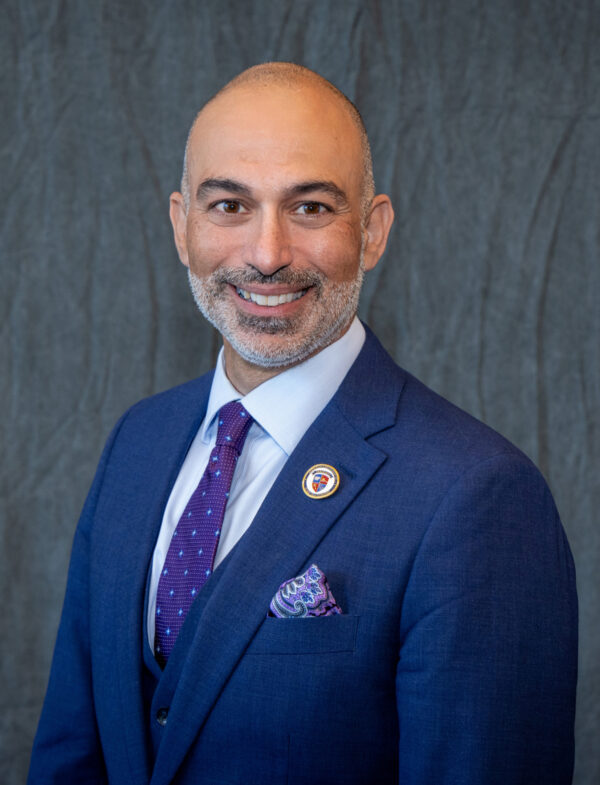
Nurse practitioners, at 385,000 strong in the U.S., are increasingly seen as a key part of the solution to the primary care provider shortage. What are the challenges and opportunities to ensure everyone can get the care they need when they need it? Our guest is the president of the American Association of Nurse Practitioners, Stephen Ferrara, DNP. He also serves as the inaugural associate dean of artificial intelligence and a professor of nursing at the Columbia University School of Nursing.
Hosts Mark Masselli and Margaret Flinter (who has been a family nurse practitioner for many years) discuss the opportunities for Ferrara and his members as they seek to expand what’s called “scope of practice.” In fact, the percentage of medical visits handled by health care providers other than physicians nearly doubled between 2013 and 2019, with many of those patients seen by nurse practitioners.
This transcript was exported on Jan 22, 2025 - view latest version here .
Mark Masselli ( 00:04 ):
Did you know that the percentage of medical visits handled by healthcare providers other than
physicians nearly doubled between 2013 and 2019? Many of those patients saw nurse practitioners.
Stephen Farrara ( 00:19 ):
I myself am a family nurse practitioner, so that means I could see patients from very young to the very
old. And it varies based on the program that the nurse practitioner goes to. And today we have 385,000
nurse practitioners practicing across the US.
Margaret Flinter ( 00:37 ):
Our guest today is Dr. Stephen Ferrara. He holds a doctor of nursing practice degree and is currently
serving as the president of the American Association of Nurse Practitioners. Dr. Ferrara has been a
practicing nurse practitioner for over two decades, as well as faculty at Columbia University School of
Nursing. Served as the director of the Nurse Practitioner Association of New York State where he led the
work to remove many statutory barriers to practice. And now he's helping lead his profession.
Stephen Farrara ( 01:03 ):
What doesn't make sense to many people who are advocates for full practice authority is that there's no
fundamental difference between a nurse practitioner in New York and one in Texas, for example. Yet
what we can do as nurse practitioners is going to differ from that state law.
Margaret Flinter ( 01:21 ):
This is Conversations on Healthcare.
Mark Masselli ( 01:32 ):
Well Stephen, welcome to Conversations on Healthcare.
Stephen Farrara ( 01:35 ):
Thank you so much for having me.
Mark Masselli ( 01:37 ):
Yeah, and of course NPs have been part of the healthcare landscape for close to 60 years or so, but not
all of our listeners may be up to speed on the education and training pathways to becoming a nurse
practitioner. Just to be sure we're all on the same page, I'm wondering if you could just take a few
minutes and explain the kind of education and training one goes through to become a licensed and
board certified as a nurse practitioner.
Stephen Farrara ( 02:03 ):
Sure. Nurse practitioners are registered nurses first. So they have undergraduate degrees as a
baccalaureate prepared nurse and are licensed in their states as a registered nurse. Those nurses that
want to become nurse practitioners apply to graduate school and they go back to school and enroll in a
nurse practitioner program. The programs are anywhere from two to three years. And it varies whether
it's a master's or doctoral levels. Both of these degrees are currently offered. And while the student,
Transcript by Rev.com
This transcript was exported on Jan 22, 2025 - view latest version here .
now RN student, the nurse practitioner student is going for education they're getting clinical rotations
that they're doing in their primary specialties and they're getting additional education.
( 02:56 ):
Upon completion these now graduates are taking national board certification exams and can prescribe,
diagnose and treat patient conditions for which the specialty that they are licensed in. So our specialties
are a little bit different than medicine. When we talk about specialties, we talk about family specialty,
adults, women's health, psychiatric mental health. These are some of the specialties that nurse
practitioners go to school for. I myself am a family nurse practitioner, so that means I could see patients
from very young to the very old. And it varies based on the program that the nurse practitioner goes to.
And today we have 385,000 nurse practitioners practicing across the US.
Margaret Flinter ( 03:51 ):
I've been a family nurse practitioner for decades myself and have seen firsthand the tremendous impact
NPs have had on practice and healthcare in the US and also the gradual expansion of what we think of as
scope of practice based on the research and the evidence of safety and quality of care. Now, when you
are the executive director of the New York Nurse Practitioner Association, you succeeded in gaining full
practice authority for NPs in New York state. Now 27 states in the District of Columbia grant full practice
authority. But the question is why not all 50 states? What's the evidence for full practice authority? And
what do you see as the obstacles to getting the rest of the states on board?
Stephen Farrara ( 04:29 ):
Yeah, that is a great question. There is robust evidence in the nearly 60 years that nurse practitioners
have existed in this country that supports that nurse practitioners provide high-quality, cost-effective
care. The challenge is that when it comes to the Nurse Practice Act, and I won't get too far into the
weeds, but each state has to pass an act a law that allows that profession to practice. And it's at the
state level and it varies based on state. Now, what doesn't make sense to many people who are
advocates for full practice authority is that there's no fundamental difference between a nurse
practitioner in New York and one in Texas, for example. Yet what we can do as nurse practitioners is
going to differ from that state law.
( 05:25 ):
So the evidence is robust. We know that there has been white papers written. National Governors
Association has written in support of full practice authority. And the evidence. There have been peer-
reviewed studies. There have been systematic reviews that have all supported full practice authority.
The challenge is inertia. This is somewhat different. And we have to convince lawmakers, stakeholders
that the evidence supports this practice and that it should be in all 50 states.
Margaret Flinter ( 06:04 ):
Well Stephen, thanks for that. And a quick follow up. We just recently celebrated Veterans Day and for
all our veterans out there, we thank you. And for all the NPs who practice in Veteran Affairs, we thank
you. And I understand that NPs and Veterans Affairs have full practice authority across the country
regardless of the state. Is that accurate that they are across the country wherever they are enjoying full
practice authority?
Stephen Farrara ( 06:29 ):
Transcript by Rev.com
This transcript was exported on Jan 22, 2025 - view latest version here .
Yes, that is correct. And that is a relatively recent change that took a lot of effort on those individuals
who were advocating for it. Previously if the VA facility was in a state that did not recognize full practice
authority, they had to follow the laws of that state. But as of this regulatory change the VA is looked at
as one continuous system across the US and it no longer is impacted by your state licensure. You still
need to be state licensed, but the VA recognizes for the most part NPs to have that full practice
authority. And when I'm talking a lot about full practice authority, I think it's important to underscore
that nurse practitioners have the education and competency to practice in this way. It's just sort of how
those laws were written in those states and that's what impacts practice. So we're not looking to do
more or less than what we've been prepared to do. We want to be able to ease the burden on the
healthcare system and increase access to healthcare.
Mark Masselli ( 07:41 ):
Well, while the two of you are nurse practitioners and I'm not we are all celebrating this week because
it's National Nurse Practitioner week, and it is really a great time to celebrate and thank the NPs. And
really to continue and inform the public about NPs practice. But not surprising the American Medical
Association argues that, quote, "Patients deserve care led by physicians the most highly trained
healthcare professionals." The AMA of course fights for physician-led care nationwide at the state and
federal level. I'm wondering what your reaction is to their position.
Stephen Farrara ( 08:18 ):
Well, I don't comment on another organization's position.
Mark Masselli ( 08:22 ):
A smart move.
Stephen Farrara ( 08:24 ):
I will comment in our position. AANP's position is that patients deserve the choice to select their
provider. And if that needs to be a nurse practitioner they should be able to do so without any sort of
unnecessary barriers themselves. So patients need access. AANP has recently completed a survey on the
state of primary care in the United States. We found that a third of people surveyed have not seen their
healthcare provider in the last year. A quarter of them are not up to date on their screenings and
immunizations. This is critical. This is not one profession versus another. This is all hands on deck, the
right people at the right education level, at the right time and the right place should be able to provide
the care that's necessary to keep this country healthy and be healthier going forward.
Margaret Flinter ( 09:24 ):
Great. Well, that's a great philosophy to approach it from. And Stephen, on the show we're sometimes
talking big broad strokes in healthcare and sometimes we focus on some of the minutiae that is of
interest to people when we surface it. And one of those as I would describe it is that a few decades ago
Medicare, and many commercial insurers follow their guidelines, established a policy of reimbursing the
same service when provided by a nurse practitioner at 85% of what they would've paid if it was being
offered by a physician. And this has all sorts of consequences about how we look at data and measure
outcomes and so forth. Is this on your agenda at the association to try and perhaps impact in this time,
as you say, when we need all hands on deck?
Stephen Farrara ( 10:09 ):
Transcript by Rev.com
This transcript was exported on Jan 22, 2025 - view latest version here .
Yeah, we definitely look at pay parity across the spectrum when it comes to services provided by
providers. And we know that there's the difference of the 85%. And what we're seeing also in real time,
and I know you all talk about this, is the change from the fee for service model to the value model. And
I'm a believer personally that the direction is going to shift into this new realm. We've been talking
about it for years. It still hasn't necessarily happened yet. And I think the conversations we're going to be
having is not reimbursing for that one visit, but it's reimbursing based on the value and the complete
picture of patients, not just that one episode in time. But to be very clear to answer your question, yes
pay parity is something that we do look at. And we want to make sure that it is equitable across the line.
Primary care is a difficult space for any provider to be in these days because of the time constraints, the
lack of access. We believe that providers should be getting paid for the services that they're providing.
Mark Masselli ( 11:28 ):
Stephen, one of the programs that we operate out of our health system is the Weizmann Institute
Research Institute, really focused in on implementation and improvement science. I know that's so
important to you because you're part of the faculty at Columbia University School of Nursing have a
great team of nurse researchers there. And we're proud to say one of them, Dr. O'Reilly Jacobs,
completed her NP post-grad residency and fellowship training at our community health center. And she
and her team at Columbia have done really some really very interesting and fascinating research looking
at the complexity of patients and their health outcomes of Medicare recipients cared for by NPs. And I'm
wondering if you could just share a little of those findings with our audience.
Stephen Farrara ( 12:14 ):
Yeah, it's important research, and when I spoke earlier about the decades of research that exists, this is
part of it. What my colleagues at Columbia have found is that there is cost efficiency delivered by nurse
practitioners. So it's not costing the system more for nurse practitioners to care for patients. So that's
always a concern. We can't be more expensive than the alternative. We find that there is quality parity
amongst the nurse practitioners and other providers. And I really don't like when we have to compare
one set of providers to another, but-
Mark Masselli ( 12:56 ):
It's just data.
Stephen Farrara ( 12:57 ):
It's just data.
Mark Masselli ( 12:59 ):
It's just data. It's not personal, it's professional.
Stephen Farrara ( 13:03 ):
Exactly. And this is what we've used as putting quality metrics out in the world. But we know that the
quality is there, the cost efficiencies are there. We know that when states went to COVID emergency
orders when COVID was really full in effect across the country many states relaxed their requirements
for nurse practitioners. And what we found during that time was that nurse practitioners care's quality
did not suffer. When the laws were modernized for nurse practitioners temporarily quality of care did
not suffer. So that's amongst some of the research that's been done. And we look at that and we use
Transcript by Rev.com
This transcript was exported on Jan 22, 2025 - view latest version here .
that when we are speaking to our lawmakers and to our legislators to help make the case for full
practice authority across the board.
Margaret Flinter ( 14:01 ):
Well Stephen, as you may know our organization played a leadership role in developing the model of
graduate NP and residency fellowship programs for new NPs who chose to complete one. There's now
over 500 programs around the country. FQHCs, veteran Affairs, but also as I think you mentioned early
on, people often don't realize psychiatry and mental health, acute care, specialty care, etc. Initially there
were questions on the part of many of the NP organizations about the need and value of these
programs. What are your thoughts now almost 20 years down the road since the first program started?
Stephen Farrara ( 14:36 ):
I personally believe that there's a role for these fellowship programs for these residencies. I know
there's varied names depending on organizations and what they're called. I know that from our AANP
perspective we believe that these programs as long as they've been post licensure are absolutely fine.
There should be more opportunities. And personally, I sit on a few advisory boards for some of the
fellowships and residencies that have been funded by HRSA, by the federal government. So I see
firsthand the value. I see it as not a repeat of nurse practitioner school, but it's really, "How can we work
effectively with this population over the course of the next 12 months?" And most of them that I'm
familiar with are about 12 months in length. I think they're popular. I wish there's more funding for
them. And that's one of the things that I constantly am speaking with individuals about, "How do we get
more funding on the nurse practitioner side?" That it's very, very limited compared to medicine.
Mark Masselli ( 16:01 ):
Stephen, we lead a large primary healthcare system, the Moses Weizmann health system. And as health
systems do, we have a real broad and deep team of healthcare providers, physicians, nurse
practitioners, behaviorists, dentists. A whole array of people. I know that sort of one sort of unifying
factor everyone is worried about workforce burnout, stress. And staff well-being as they work to keep
up with the demands of practice. Ever since COVID the post-COVID world has really put a lot of strain on
it. I'm wondering what you and your colleagues at AANP as well as Columbia are looking to in terms of
strategies to help address this very important issue around burnout, but also more importantly about
promoting wellness and to some degree or another, bringing joy back into the practice?
Stephen Farrara ( 17:03 ):
It has to be something we do more than just talk about, because that is not going to solve the
challenges. And I am looking forward to the technology that's on the horizon that is going to help with
some of this. And when I say that, I'm talking about some of the new AI tools that have been introduced.
And my new role at Columbia is associate dean of AI at the school of Nursing. So I very much have an
interest in this area. And I think that we know that the electronic health record was supposed to be this
one-stop shop that you could document and find everything you need to know about your patient. The
problem is they are so vast and there is so much information in there that it's virtually impossible for an
individual clinician to go through every episode that's been recorded in there.
( 17:58 ):
And we know that... And I talk about primary care a lot, because I myself am a primary care provider.
That once the day is over for a primary care provider they may be finished seeing patients, but their
Transcript by Rev.com
This transcript was exported on Jan 22, 2025 - view latest version here .
documentation is something that they're probably doing up until late at night when they get home. This
has to change. It has to change. And I do believe that some of the AI solutions that have been proposed
and that are coming will help that. It's not going to be perfect. And AI is never going to take your place.
I'm going to say that. AI is never going to take the place of a human being clinician, because there's just
too many nuances to taking care of a human being that an AI can replace.
( 18:44 ):
But I'm hopeful that these newer technologies can summarize the data that we have access to, could
help to ease documentation burden. And I do believe that that's going to help us mitigate some of these
burnout and good clinicians leaving the profession, because they can't work 18 hour days anymore with
no breaks. So I'm hopeful. We have to do a lot more than just technology. The whole way of our health
systems tend to be very, a lot of administrative red tape. And I'm hopeful when I'm in meetings and
hearing some healthcare executives talking about these things that they are putting resources there and
trying to make a difference towards it.
Margaret Flinter ( 19:32 ):
Well, very well said. And I can hear heads nodding as they listen to the podcast across the country,
because it is such a truism. And yet we've had too few tools to do anything about it. But I wonder in this
role inaugural dean of artificial intelligence. First person I've met with that title. I know you also want to
focus on patient outcomes with AI in the patient centered approach to healthcare that is so much of
what you advocate at the university and what NPs generally do. Can you give us a concrete example for
our audience about how you're looking to focus on this?
Stephen Farrara ( 20:07 ):
Yeah, so we want to be able to empower patients, first of all. Because we know patients are using AI
today. They used to go into Google and put in their symptoms and it was very crude that way. You're not
getting a full breadth of what is possible. So now patients have turned to AI. And AI is fairly decent in
some situations. I would never tell a patient to only rely on AI for their diagnoses. But I think we want to
empower patients. And we want to have informed patients and informed family members of patients.
And if we can help bridge some of that gap and that divide, I think there's an AI literacy aspect that is
beholden to the health professions to teach patients on how to use.
( 21:02 ):
And the better informed patient, the better informed a provider, we can sort of meet that patient's
expectations and goals together and ultimately have those better health outcomes. There's a lot of
intelligent people working on this across the country. And we talk about the quadruple aim, reducing
costs and increasing quality and reducing burnout. These are all parts of the very complicated picture
today. So I think that AI is going to be important. I think it's important for us as trusted healthcare
professionals to guide our patients, to walk hand in hand with our patients down this road. And it's
ultimately for me, for us collectively, how do we get better outcomes?
( 21:54 ):
And I think we have to be cautious too, right? Because I know there's concern amongst healthcare
providers that, "Well, if we're so much more efficient then there's going to be the pressure to see more
patients, or to do more with less." And we can't go down that road. We have to be able to intelligently
use the technology to the best of our abilities to leverage our providers working at the top of all of their
licenses, not just nurse practitioners, but all of the healthcare team. And ultimately, how can we best
provide patient care and patient outcomes in a country where our outcomes are not so great, especially
Transcript by Rev.com
This transcript was exported on Jan 22, 2025 - view latest version here .
compared to the amount of money that we spend. So I have to be hopeful. And I've seen that there is
brighter days ahead.
Mark Masselli ( 22:49 ):
Talk to us a little bit about how Columbia has organized its AI work. Obviously you're a dean there that
they view that importantly. What's your AI work look like with your other colleagues? And what's
Columbia up to that folks might be interested in this particular area?
Stephen Farrara ( 23:09 ):
Yeah, it's multifaceted. And so at the school of nursing it is my role to integrate AI into our three pillars
which are research, clinical practice, and academics. So from the academic side we want to make sure
that our faculty are utilizing and are aware of the latest AI and know some of the disadvantages of AI
when it comes to teaching. That's the faculty side. On the student side, we stood up a student advisory
council. Students are very, very much into this technology right now. And how can we bring faculty and
students together and change expectations or at least set new expectations. We know that some of the
technology can do things better than students can, which is going to force us to reevaluate how we
evaluate students. May not be that term paper. We may have to do some more oral exams. We may
have to go to AI and say, "Give me all about this disease." And then the student will have to critique that
output. And this is how we can understand what the student can comprehend or has comprehended. So
that's on the academic side.
( 24:30 ):
We've been lucky at Columbia that we have some nurse researchers that have been using natural
language processing and machine learning before it was AI. And we'll continue to support and augment
that work. One brief example there is that we have a researcher who's looked at nursing home notes
and has been able to use machine learning to go through the nursing home notes and predict when a
resident of the nursing home is going to have a urinary tract infection before they show symptoms of
that UTI. So that's some of the work that's been done. And then the clinical practice. Again, integrating
some of the ambient listing, the ambient scribes. How do we coalesce and summarize the information
that's in a vast electronic health record? And how can we best utilize that to make decisions for our
patient and patient care?
Margaret Flinter ( 25:31 ):
Stephen, we've just wrapped up a monumental election. And we won't ask you to get into the politics of
the outcome, but any tea leaves to read about what the incoming administration will do or can do on
issues of concern to the association and to the profession?
Stephen Farrara ( 25:47 ):
On behalf of the association, I can say that we've worked with various administrations in the past and
have been able to move forward with the agendas of modernizing nurse practitioner laws and
regulations. So we look back to our past and say, "We're going to continue our work." We're going to
work very, very hard on making sure that nurse practitioners can practice at the top of our licenses. And
the nuance here is that state law, as I mentioned earlier, is going to dictate full practice authority. But
there are laws at the federal level that also arbitrarily restrict what nurse practitioners can do. So we will
work with all branches of government to make sure that our priority items are addressed. And we'll
continue doing that. In AANP, have a health policy conference. It'll be in March of '25, and we'll have
Transcript by Rev.com
This transcript was exported on Jan 22, 2025 - view latest version here .
hundreds of nurse practitioners go to the conference and then ends with going to the hill and going in
groups and speaking with lawmakers and legislators and making sure that they understand some of the
challenges that exist and how to fix them.
Mark Masselli ( 27:03 ):
Tell us a little more about AANP, what you might find on your website, how people can join. How big is
the membership? You talked about the conference that you're holding annually. What else can you
share with our listeners?
Stephen Farrara ( 27:20 ):
Yeah, so AANP is over 100,000 members across the US. We've actually just opened up international
membership, because we see that the nurse practitioner profession is spreading beyond the US and
Canada, where it has been pretty much from the beginning. And there's a lot of lessons that we can
learn from other countries, implementation of the nurse practitioner role. Certainly a lot of countries
are looking to the US and see what we've done and how we've been successful. So that's one aspect of
AANP membership. There's continuing education, there's advocacy and mentorship. These are all the
types of things that we exist to support the practicing nurse practitioner today of all specialties. From
family nurse practitioners, to acute care, to women's health, to psychiatric mental health. You will find
continuing education and all things relevant and pertinent to all these specialties of nurse practitioners.
So we're happy to exist and be able to support the profession.
Margaret Flinter ( 28:36 ):
Thank you Dr. Stephen Ferrara for joining us. And thanks to our audience for being here. And just a
reminder be sure to subscribe to our videos on YouTube. Find us on Facebook and X with our account
name CHC Radio. And as always, you can go online to CHCradio.com to sign up for email updates. And
don't forget you can also share your thoughts and your comments about this program with us. Take
care. Be well. Thank you so much. Dr. Ferrara.
( 29:05 ):
This copyrighted program is produced by conversations on healthcare and cannot be reproduced or
retransmitted in whole or in part without the express written consent from Community Health Center
Inc. The views expressed by guests are their own. And they do not necessarily reflect the opinion of
conversations on healthcare or its affiliated entities.
Transcript by Rev.com