“Unbearable: Five Women and the Perils of Pregnancy in America”: Author Conversation
Eighty percent of maternal deaths in the United States are considered preventable. So why do they keep happening?
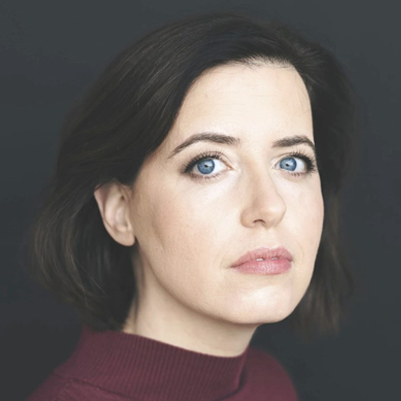
On this episode of “Conversations on Health Care,” hosts Mark Masselli and Margaret Flinter are joined by award-winning journalist and New York Times bestselling author Irin Carmon for a thoughtful conversation about pregnancy, care, and what gets lost when she says systems stop listening.
Carmon’s new book, “Unbearable: Five Women and the Perils of Pregnancy in America,” draws on 15 years of reporting and the stories of five women navigating very different parts of the American maternal health system. Rather than a political argument, the discussion focuses on lived experience, reporting and what compassion and accountability can look like in maternal health care.
“Pregnancy can be a gift. But nothing can truly be considered a gift when it comes wrapped in coercion or paternalistic silence,” Carmon wrote.
Through these stories, Carmon explores why preventable tragedies still occur, even in places with advanced health care, and what she has learned by listening closely to patients, families and clinicians.
“We know what makes a difference. Listening when someone says something doesn’t feel right is as sophisticated as you need to get.”
The episode touches on maternal mortality, postpartum care, midwifery models and why improving outcomes starts with recognizing the humanity of the person who is pregnant.
(00:00)
[instrumental music playing]
Mark Masselli (00:04)
Is the entire American reproductive and maternal health system broken? And if it is, how do we fix it? Those
questions are at the heart of a provocative new book from a New York Times bestselling author.
Irin Carmon (00:17)
There Was also a kind of structural racism that, the way in which the massive inequality between the resources
at one hospital versus another, and, and thinking about how this brought to life, the research that shows that a
huge percentage of, the gap, the racial gap in maternal mortality can be attributed to the hospital. That if you, if
a black woman goes to a hospital that primarily serves other black women, she's likely or to lose her life. again,
because of this pattern of, disinvestment of, fear of, just abandonment, that has persisted and that we've allowed
to tolerate.
Margaret Flinter (00:56)
Our guest today is Irin Carmon, who has been praised for bringing a comprehensive understanding to women's
health and justice issues that goes beyond the usual talking points. She's the author of Unbearable Five Women
and the Perils of Pregnancy in America.
Irin (01:12)
One of the starting points of the book was, the ways in which all these different experiences of pregnancy, care
and healthcare are deeply interconnected, even though they've been separated out. And so, if you're reading a
headline about somebody being forced to go septic before they can get access to an emergency abortion for a
wanted pregnancy, and you're thinking, what? Like, what does this have to do with anything? It's because, the
complexity of medical decision making and also the ways in which, these are political categories and not
medical ones to say, you know, this is an abortion. That's okay. This is an abortion. That's not okay. I do think
that that powerfully drew people's attention.
Margaret (01:51)
This is Conversations on Healthcare.
(01:53)
[instrumental music continues]
Mark (02:03)
Well, Irin welcome to Conversations on Healthcare.
Irin (02:07)
Thank you so much for having me.
Mark (02:09)
You know, you write in your book, pregnancy can be a gift. It can be well worth the physical and emotional risk
and transformations, but nothing can truly be considered a gift when it comes wrapped in coercion or
paternalistic silence. Those are strong words, and I'm wondering if you, would further explain your views on it.
Irin (02:30)
Of course. Well, so the inspiration for the book came out of my, now 15 years of reporting on reproduction in
America. Primarily, I focused on the American battle over access to abortion. I've reported, on what's facing,
healthcare provision on the experience of patients a lot on the Supreme Court and how the Supreme Court has
puzzled over these issues. And it wasn't until I actually became pregnant myself during COVID the first time
and the second time when Roe v Wade was overturn, that I began to see the interconnection between what I'd
been covering as a reporter. This almost kind of narrowly siloed issue of abortion that's treated as separate from
Mother healthcare, and the rest of pregnancy care, that as you know, for, for reasons that are both, medical
economic but mostly political, have been separated out. And so, I, I was actually six weeks pregnant and about
to go on live television, on M-S-N-B-C to talk about something, that had been proposed in the Senate that day
when the Dobbs decision leaked. And I had to react, in a matter of seconds to what was happening live on the
air with Chris Hayes on M-S-N-B-C. What's now Ms. Now? And, when I had the chance to actually read what
Justice Alito had written at a time when I myself was six months pregnant, he describes week by week fetal
development. He's quoting the Mississippi law that is, was at issue and was used as the vehicle to overturn 50
years of abortion jurisprudence. He describes the development of a fetus, and he says that at a certain point, you
know, the fingernails, all of these different, important physiological progressions. And he says, at a cer- at, at 12
weeks, the unborn child has taken on, the, form of a, excuse me, has taken on the human form in all relevant
respects. And it was interesting to me as sitting there, my very bones being moved happily, voluntarily. I was
having a textbook pregnancy. I was so lucky in so many ways to have been able to choose to be pregnant, to get
pregnant when I wanted to get pregnant, to have access to decent healthcare, to not have it destroy me
economically or physically. At the same time, pregnancy is such a profound human experience in any context.
It's an experience inherently of transformation. And the idea to me that that would not be written into Justice
Alito week by week accounting, that he would completely disappear what pregnancy can mean to the individual
who is pregnant. It filled me with outrage. And I, and during COVID, I had started to report on what was
happening in hospitals around pregnancy and those immediate early days of really just kind of figuring out what
to do with this new virus. And at the same time as, I was covering the fallout from the Dobbs decision, I went to
get an ultrasound, and I was kind of looking at, at this image again, I was, I was very happy to be pregnant with
who is now my, my second daughter. And, and the ultrasound tech heard me say to my husband, oh, she's, she's,
she's starting to look more like a person now. And this person turned to the image of the fetus on the ultrasound
and said, you were a person from day one. And so what it crystallized to me is that although this person, you
know, you know, didn't have much power over me or my pregnancy, it was an instantiation of how when you
become pregnant in the United States, the law has an opinion on the way it's going to go where you live depends
on the kind of care you have access to. And, and that that recognition of the humanity of the pregnant person is
so foundational, and that includes the right not to be pregnant. And it also includes the right to be treated with
care and respect when you choose to continue a pregnancy.
Margaret (06:35)
Well, thank you for sharing, your personal story as well as how you came, to write this book. Based on, on your
experiences and your many years of reporting, one of the things that you highlight is that the Centers for Disease
Control, and prevention, have, released their reports that 80%, 80% of maternal deaths are preventable. And that
for average, for black women, on average 50, people will die for every 100,000 who are pregnant. you bring
these numbers to life with real stories in your book. I think this is an area where people's true stories are very
helpful to people's understanding. So, share with us, if you will, the story of perhaps one of the women that you
profiled, and the outcome.
Irin (07:21)
Of course. So, what, what I described was really the genesis of the book, but it is not a memoir, and it is not a
polemic. It is ultimately the story of five different women experiencing different pieces of the American
reproductive system. And I wanted them to show different parts of a kind of broken pie or a broken story. And I
knew that that would mean writing about the American South. In the end, it was Alabama, a place that's really
foundational in American history, writing about a place that we think of as really restrictive, when it comes to
access to reproductive healthcare, perhaps maternity care deserts. All of these are really important factors, in the
maternal, in the unforgivable rate of maternal death in this country. But I also wanted to write about New York
City, and I wanted to write about the place where I live because it is the wealthiest city. It is a blue jurisdiction
where every law that a progressive would dream of is in place. And yet it is a place where the racial disparity in
maternal mortality is starker than any other place I wrote about in Alabama. And of course, you know, these
numbers vary year by year. They are too large, but they're relatively, you know, sensitive to, to changes in year
by year. And, but during the years that I wrote about, and, and, and New York has remained, year over year, has
remained having a higher rate of racial disparity in maternal mortality than the country at large. So, it's usually
around three or four times. a black woman is three or four times likelier to die, for a pregnancy related cause in
the United States. During the time that I was writing this book, it was between nine and 12 times likelier here in
New York City. And I wanted to explore why that was the case. And I was interested in the public hospital
system here in New York City because during my reporting on hospitals during COVID, I learned that despite
the fact that among a certain group of people in New York City, public hospitals are considered, oh, don't go
there unless you really have to. But that there were, pockets of a local hospital near me, Woodhull Hospital in
Brooklyn, that were known for having a different standard of care for maternity. And that was specifically that
the threshold care that you received was from midwives who were really committed to their patients, and they
were seeing primarily Medicaid patients and, that everybody would get a private room, which you know, is not a
given in the New York City healthcare system. And as, and during COVID, this felt very relevant. And so, I was
considering going to this hospital because another insane factor about being pregnant in 2020 was that, there
were, there was a curfew and there were checkpoints relating to the protests that were happening that summer.
And I was 39 weeks pregnant, and I needed to get through potentially a checkpoint on my way to have this
baby. Gosh, yeah. The, the check the checkpoint was listed like mere days before I had my daughter. So, I ended
up staying with my plan, but, and not transferring to this other hospital Woodhull, which was, would've not
required me crossing a checkpoint. But two weeks after, I had my daughter, a young black woman, Sha-Asia
Semple, died in a completely preventable anesthesiologist, what's the word? Malpractice, you know, this is a
person who was later stripped of their license, but who had a pattern of poor care, negligent and harmful care.
And I was crushed. And I, I thought, is this the way that we- is understanding what's happened at this hospital,
which I have been told, offer something that many people have said is the key to solving these racial disparities,
which is to say that the threshold care that people are getting is midwifery. That midwifery is integrated into the
hospitals. But then why could, how could something like this happen? and then it was, you know, what was
described was that she needed an induction and that she was pressured into getting an epidural. And then the
epidural was so poorly administered that it cost her her life. And so, I wanted to investigate Woodhull, but I
needed to figure out how. And what ended up happening is that by the time I had really constructed this book, it
was two years after Sha-Asia Semple. I met a woman in my community, a parent at my daughter's school, who
told me that she had nearly died at Woodhull, and she was white, and she had been seeking a different kind of
birth. She'd gone to a birth center, she'd ended up transferring to Woodhull because of the relationships that the
midwives had. And then, a, a mistake in her c-section that she ended up needing, caused her to have a full body
hemorrhage, a a, excuse me, have a, a hemorrhage that resulted in needing a full body blood transfusion. And
this obviously shocked me to my core. And I, you know, she didn't even know that I was working on a book
where I was in conversations to try to interview folks at Woodhull where I really wanted to embed. But as
shocking as the story was, she had made it out alive and mere months after we had that conversation, a young
woman named Christine Fields, a perfectly healthy 30, 30-year-old mother, who had given birth without
complication before at Woodhull Hospital, had a similar, circumstance with, with an unplanned c-section, with
an incision that was not properly closed with a hemorrhage that was completely undetected. And both of these
women had male partners who called for help, who, said that something was wrong, who wanted to be at their
side. But when Christine's partner, Jose called for help, security was called on him. He's Latino. Christine is
black and, had described a pattern the entire day of feeling ignored and overlooked when she felt like something
was wrong with her pregnancy. She was first completely abandoned, and then everybody rushed in and started
screaming at her about a c-section. She started having panic attacks. Jose was not allowed into the room during
her c-section. So, there was a pattern of events where, of course, there are differences always, when it comes to
medical care, there are difficult decisions that are being made. But suddenly, I had in front of me a story that
told at least a piece of the story behind those statistics, which is that you had two healthy women who came to
have c-sections due to arrested labor. in, in Christine's case, I think it was a fetal heartbeat issue, and how a
failure to listen, a failure of follow up. Christine was left alone completely without checkups. The, the error, in,
in the c-section was he attempted to repair it, but he never, reported it. This pattern of neglect and both
interpersonal racism and structural racism that left doctors who were known to be poor providers, out of the fear
that they wouldn't be able to get anybody else, left them to harm women and to end their lives as well. And so,
one of the things that I do in the book is that I explore, that, you know, we tend to think of this as the kind of
obvious interpersonal racism of, you know, of the story of Jose, which is, you know, why, why did they call
security on him if he wasn't actually all he was doing was trying to be at his partner's side during a pivotal
moment and trying to support her. that that's kind of, you know, a classic example of interpersonal racism. But
there was also a kind of structural racism that, the way in which the massive inequality between the resources at
one hospital versus another, and, and thinking about how this brought to life, the research that shows that a huge
percentage of, the gap, the racial gap in maternal mortality can be attributed to the hospital. That if you, if a
black woman goes to a hospital that primarily serves other black women, she's likely or to lose her life. again,
because of this pattern of, disinvestment of, fear of, just abandonment, that has persisted and that we've allowed
to tolerate.
Mark (15:38)
Thank you so much for shining a light on that. And, and it was heart, heart wrenching stories, that really tell, tell
a bigger story. And Margaret, just thinking back, we've been providing maternity care for women for close to 40
years who live in poverty, and we do it through mobile vans and through midwives and the importance of that.
And here in Connecticut realize that, you know, the, the, the structural, disconnect for so many women in
getting healthcare is, is, is pronounced. And, just wondering as you pull the thread on that in terms of, of policy,
uh Medicaid policy or other financial support, have you given thought to that of what, what fundamental
package should be in place, for women as they're trying to get the best quality care, and certainly the, a access to
hospital data about outcomes, so important. We see that in so many different cases and wondering what thoughts
you've put into thinking about it from not only the personal side, but on the policy side.
Irin (16:49)
Well, you know, I, I have heard from the reporting from the people that I've spoken to in the course of my
reporting, of course, better integration of midwifery, but also, you know, making sure that when somebody does
need a higher, more specialized level of care, that the doctors that are there, that there's accountability for them,
that, you know, people are not just being shuffled around the system, which is something that took place in the
places that I reported on. higher rate of reimbursement for midwifery was something that came up again too. It
just in terms of making this kind of work sustainable, because it is so time intensive. Currently, at least in New
York City, hospi- we do not know the rate of maternal death by hospital. We only know the aggregated data.
And, you know, there is some sensitivity among the, the public hospitals that, you know, they have become
scapegoated because the private hospitals have the ability to make these stories go away. you know, just by, by
settling immediately, or by having PR people who are really skilled at making these stories go away. So, I
would be very interested in seeing that data disaggregated by hospital. Because I suspect that it would make
hospitals and, and also, you know, severe maternal morbidity, because I suspect that we would see more
accountability and not just rhetoric when it comes to this. but, but I, I do think that we, it's unfortunately, it's just
sort of a story that we keep having to retell. You know, we've been telling it for a long time, and I think it needs
to, you know, especially as the national policy is, you know, I'm talking about, about, you know, places that are
already trying to solve this problem. I'm really struck by the fact that, you know, as we speak, the Hep B vaccine
has just been, the recommendation has just been removed. You know, that the country is being run by people
who are talking about, trying to force women to have more babies, whether it's by removing access to
contraception or abortion, or throwing them off Medicaid before they become pregnant. it, it's, it's, I wish I, I
feel like we actually do know many solutions, but that the national policy, everything is sort of driving towards
making it more difficult, more coercive, having less information about it. I mean, I talked about desegregating
information from hospitals, you know, prams, the, the reporting on maternal mortality being frozen right now.
the collection being frozen, I can't help but link that to the fact that the people running the government right
now, just want women to have more babies or certain women to have more babies. so, you know, unfortunately
we're rolling backwards so quickly that a lot of this feels very pie in the sky.
Margaret (19:33)
You know, the, the, I think one of the things that we anchor on here is that we do know a lot about what makes a
difference, right? We do know a lot. you, you talked about the importance of, some of the midwifery nurse
midwifery models, with, longstanding relationships, support during pregnancy, getting your questions answered,
having people listen when you say something doesn't feel right, that's as sophisticated as you need to get. Really,
something doesn't feel right. listen. Right. And, and yet, And it's- time is care. Right? The only, it's only, you
know, I would say in, in recent years that we've really zeroed in on the fact that the most dangerous time may be
after pregnancy, after a delivery, after a healthy delivery, in terms of complications. And that coverage kind of
ends for most people at six weeks. That's now being extended in some states for up to 12 months. We know the
problem with hypertension and not, really aggressively, I would say, inadequately treating hypertension. I
wonder, as you've, been engaged in this study, have you found yourself expanding this period of time? Have
you begun to look at that postpartum year, and, and see if we have similar issues, what happens with the
transitions to primary care? Tell us, tell us where else this has taken you in your journey.
Irin (20:52)
Well, I mean, I, I, I wanna exercise humility because I mostly wanna hear from you guys what, what you think
would be a solution. I, you know, the, the postpartum story in my book, unfortunately, is the one in which
criminalization is the factor where, you know, due to Alabama's, classifying an embryo and a fetus as a person
for the purpose of child abuse, the woman that I read about Hailey, instead of getting, and, and somebody who
has struggled with postpartum depression, I might add winds up being arrested six days postpartum in her son's
hospital room, and, and sleeping on the floor of a jail is not anyone's idea of postpartum care, unless, of course,
you are somebody who the state has decided needs to be punished. you know, and I I, I'm also just really struck,
I, we, I mentioned ways in which it's getting worse. You know, there's, I as you say, we know the solutions. One
of the solu- one of the solutions is not criminalizing abortion care, which is not a problem in, in Connecticut or
New York, but I'm struck every day by fresh reporting about how emergency care, and extremely high-risk care
is being imperiled by, by, restrictions on abortion. as you say, we do know what to do when it comes with to
this. But, but I think also, you know, I remember reading a CDC, sorry, a state maternal health mortality,
maternal mortality investigator described the postpartum period as, the, the, the postpartum person being treated
as a candy wrapper to be thrown away. and unfortunately, I think that that exemplifies the attitude that a lot of
she was describing, of course, an attitude she didn't endorse. but I think that that describes a lot of the way this
country treats people. And, and one of the things I've really wanted to do, if I ever end up writing a sequel to
Unbearable is a more solutions oriented book, having, you know, really exposed the problem, that would go to
other countries, to see what they have done and, and, and wraparound care that doesn't just begin and end, you
know, when you have a confirmed pregnancy care, things like Medicaid expansion, some of this is just political
will, it's not really a mystery, right? But I think there are ways in which other countries have have just figured
this out. They just don't have these problems.
Mark (23:12)
Well, I wanna move from the policy, the politics, and we were talking about political will. We, we look at the
polls about the most important issues to voters, and healthcare rarely, is at the top of the list. Economic issues
are usually number one. it, it's, it's about the economy stupid, right? I mean, and the Gallup Poll found nearly
half of the women say issues related to their health are not a priority at all among elected officials. I'm
wondering, do you think political leaders have the willpower to fix things when they're not listening?
Irin (23:46)
Hmm. I mean, I, you know, I think that they'll listen if people ask them to listen. There was a brief period I felt
like after, the Dobbs decision where the public was deeply engaged on this issue, writ large…
Mark (23:59)
For a couple, for a couple years, right? There was all the res- yeah.
Irin (24:03)
Yeah, that there was, there was political will on this. There was, at, at least in Blue States, there was some
accountability in red states. There were state referenda. And I think also, you know, as people were noticing, the
impact of restrictions, they were also learning more about other kinds of maternity care. I think, you know, one
of the starting points of the book was, the ways in which all these different experiences of pregnancy care and
healthcare are deeply interconnected, even though they've been separated out. And so, if you're reading a
headline about somebody being forced to go septic before they can get access to an emergency abortion for a
wanted pregnancy, and you're thinking, what? Like, what does this have to do with anything? It's because, the
complexity of medical decision making and also the ways in which, these are political categories and not
medical ones to say, you know, this is an abortion. That's okay. This is an abortion. That's not okay. I do think
that that powerfully drew people's attention. I think unfortunately right now, we live in a environment where the
people who are hearing those stories are probably the people who are already predisposed to be upset about it.
And I do really worry about our information environments providing a kind of confirmation bias where, people
aren't hearing stories that, that, countervail their narrative and focus 'em. I really do worry that we live in an
environment of so much chaos that it's, impossible to figure out where to be, where to focus your attention. and
so I, I do think that that the kind of work that you're doing and, and the kind of work that is, local and direct, like
the people that I write about, like Jose Perez, Christine's widower, who is, actually working as a doula now
through a program for dads, to focus with men and men of color, or like Dr. Yashika Robinson, who is
providing maternal healthcare, really at, at an incredibly high level, despite enormous challenges. it, it feels like
showing up and doing that work right now is one of the most powerful things that you can do while also trying
to focus people's attentions on the crisis. It hasn't gone away just because it's gone away from the headlines. I
mean, unfortunately, sometimes it just takes Trump saying something to focus people on it, and even then, it
feels like it's for 15 seconds. But I, I, I, my only hope is that this too shall pass because people are experiencing
this in their own lives. I mean, pregnancy, for example, is something that, you know, I was astonished by this,
even now when we hear all this panic about the birth rate, that the completed fertility rate, the com, the number
of people who have reached their end of their, the percentage of people who have reached the end of their
reproductive age and have had a given birth is still 80% among women. And so, this is an experience that's still
the most common reason that women are hospitalized. And so I think when people, regardless of their politics
are out there experiencing, a, a system that could be so much better than it is, So that that's a, that's A great only
hope, that even though they're tired and they're busy and they're distracted, that they can also try to imagine that
it doesn't have to be that way, that it's not inevitable.
Margaret (27:17)
But if people are picking up your book, and I have a feeling your book is being picked up, not just by women,
but by lots of different folks, lots of different phases and stages of life. What's your hope for what people are
going to do? There's obviously personal political policy. But what, what is your hope for the impact that the
book will have on people picking it up?
Irin (27:39)
I mean, I, I hope that they will have more compassion for people who, are not necessarily in the same situation
as them. They might think, oh, well, I would, it would never happen to me. I would never be addicted to drugs
during my pregnancy, or I would make all of the perfect decisions about what kind of healthcare to pursue at
any given time. Whereas in reality, it's, it's a bigger systemic issue, that is born out of a fundamental disrespect
of, and that there are people out there who are trying to do something better, and that we should be supporting
their work and lifting up their work.
Mark (28:11)
Well, thank you so much for joining us today. the book is titled “Unbearable” and the publisher is Simon and
Schuster. Thank you all for listening today, and just to be a reminder to subscribe to our videos on YouTube and
find us on Facebook or X. You can also share your thoughts and comments about this program, take care, and be
well.
(28:31)
[instrumental music playing]
Margaret (28:34)
This Copyrighted program is produced by conversations on healthcare and cannot be reproduced or remitted in
whole or in part without the express written consent from Community Health Center, Inc. The views expressed
by guests are their own, and they do not necessarily reflect the opinion of conversations on healthcare or its
affiliated entities.
(28:56)
[instrumental music playing]