Kathleen Sebelius Ran HHS. Now, She’s Tackling Rural Health
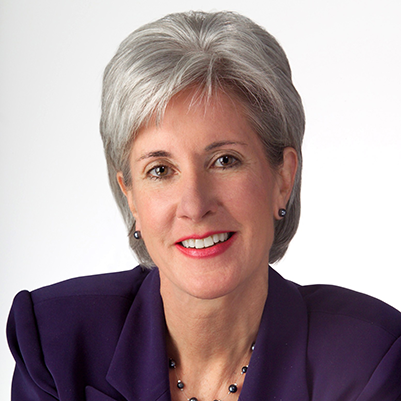
Kathleen Sebelius was in charge of the U.S. Department of Health and Human Services when the Affordable Care Act became law. Now, she and a bipartisan group are putting their best thinking forward for how to fix rural health care. Their report from Aspen Institute’s Health Strategy Group calls the rural mortality gap a “moral failing and a crisis that cannot be ignored.”
Three of their big ideas are:
- Update payment systems for rural health care because the country’s current financial model was not designed for them
- Build rural economic development around health and health care
- Create support for behavioral health in rural America
She says the path forward depends on solutions that are designed with rural communities in mind from the start, supported by state leadership, and grounded in the realities of access, workforce, and infrastructure.
(00:00)
[instrumental music plays]
Mark Masselli (00:04)
She led a state that is one-third rural and then went on to become the Secretary of US Department of Health and
Human Services. That makes the Honorable Kathleen Sebelius a perfect fit to serve as co-chair of a group
looking at how to meet the health needs of rural America.
Honorable Kathleen Sebelius (00:20)
We've really felt it was important to do a deep dive. The more we got into the facts and statistics, the more kind
of outrageous it became, because there are failings at every point along the way, failings from government,
failings from states looking at economic development. But 50 million Americans live in areas that are defined as
rural.
Margaret Flinter (00:45)
Their report is from the Aspen Institute's Health Strategy Group, which is comprised of an impressive bipartisan
group of leaders who are committed to closing the gap between the 50 million Americans who live in rural areas
and those who do not.
Hon. Kathleen Sebelius (01:00)
What was really interesting is the bill was being debated and passed during the course of our meeting together.
So, we were physically in a room. We were not intending to actually comment on what Congress was doing, but
the timing was such that it's like, we're here talking about this topic, and Congress is debating a bill which could
be increasingly devastating to rural healthcare.
Margaret (01:25)
This is "Conversations on Health Care."
Mark (01:38)
Well, Secretary Sebelius, welcome to "Conversations on Health Care."
Hon. Kathleen Sebelius (01:42)
Thank you for having me.
Mark (01:44)
Well, this is such an optimistic report, in that it says America needs rural America to be healthy and positive
because it can be done. But also, the report calls the rural mortality gap a moral failing, which sounds like it's
frank in strong language. Why did you feel it was important to frame it that way?
Hon. Kathleen Sebelius (02:06)
Well, let me start kind of at the beginning. The Aspen Health Strategy Group has been focusing on one topic a
year for a decade, and the idea is bringing together a large bipartisan group, involving experts who have studied
these issues for a long time, and trying to identify key healthcare issues across the spectrum. So rural health was
a topic that we chose for the report for 2025, in large part because it affects so many people, and I think there's
so much misunderstood about rural America and the definition of rural America. So, we've really felt it was
important to do a deep dive. The more we got into the facts and statistics, the more kind of outrageous it
became, because there are failings at every point along the way, failings from government, failings from states
looking at economic development. But 50 million Americans live in areas that are defined as rural, and it's a
much less heterogeneous group than one would think. It is old and young people in every state in the country.
So, we thought it was time to kind of sound the alarm. But, if you will, the death mortality of living in rural
America, meaning that you're going to live sicker and die younger than if you lived in urban America, I think
can be reversed. The trend has really only started in the last 40 years, and while that sounds like a lot, there are
steps that can be taken quickly and aggressively to begin to reverse that trajectory.
Margaret (03:53)
Well, that is a good, powerful statement to make right up front. We're going to pick up on some elements of
that, but in more recent times, we of course, had COVID. And the report states that COVID was so devastating
for rural America that it wiped out 30 years of improvements in mortality among men, which is a pretty
shocking figure. That happened in many other places in the country as well. But we note, or you note in the
report, that there's been historically a lower uptake of preventive services in particular, not just something like a
COVID vaccine, but all preventive services. Do you think that the Rural Transformation bill is going to
significantly change that? There's a lot of factors that contribute to why people don't use preventive services.
How will it make a difference, do you think?
Hon. Kathleen Sebelius (04:44)
Well, I think unfortunately, two things were done simultaneously. So, the Rural Transformation bill was actually
an investment of $50 billion into rural health communities. The bad news is that the global bill, the big,
beautiful, so-called big, beautiful bill passed by Congress, took $147 billion out of Medicaid. And Medicaid
spending in rural communities is incredibly important. It is the lifeline of a lot of hospitals. It helps to support
individuals' healthcare. So first, the math doesn't add up. Three times as much was lost as was invested. And the
second unfortunate feature of the bill, and I think members of Congress are currently debating and working on
trying to change it, is that nothing in the new resources can be used for infrastructure. So, if a hospital is about to
close its doors, while the Transformation Act may provide money for some new project, some high tech use of
AI, it's not going to keep the hospital doors open because you can't use it for operating expenses. And every
rural health expert we heard from, particularly people running small hospitals in very isolated areas, small
clinics in isolated areas, said the real issue is keeping the doors open, paying for the infrastructure that they
have, paying for staff, and none of that is eligible for money under the new federal bill. So, there's a real
misconnect. The math doesn't add up, and the dollars needed are not necessarily being directed in the right
place.
Mark (06:35)
Margaret, we've heard that-
Hon. Kathleen Sebelius (06:35)
Other than that, it's a great idea.
Mark (06:38)
How was the play, Mrs. Lincoln? We've heard from a number of people that we've had on the show really talk
about that disparity between what was cut and what is out there. 50 billion sounds like a lot, but it really comes
up short, and in part because there wasn't an ability to have a bipartisan solution in Congress. But you have a
bipartisan committee. You co-chair the initiative with former US Senator Bill Frist, who's a Republican. So, I
guess I want to ask about the section of the report that states the cuts to Medicaid, as you indicated, included in
the administration's One Big Beautiful Bill, are alarming and threatening to the stability of rural hospitals, as
you just said, and other rural providers. Did you find it difficult to come to conclusion with this politically
diverse group on that topic?
Hon. Kathleen Sebelius (07:28)
Not at all. In fact, what was really interesting is the bill was being debated and passed during the course of our
meeting together. So, we were physically in a room. We were not intending to actually comment on what
Congress was doing, but the timing was such that it's like we're here talking about this topic, and Congress is
debating a bill which could be increasingly devastating to rural healthcare. So, the proposal, the language that
Bill and I co-authored a letter to key committee chairman and then included a portion of the statement in the
report, and he actually authored the language. It was probably tougher than I would've proposed, just because I
was trying to be sensitive to the fact that we had people on the Republican side who might not be as comfortable
with really tough language. But former majority leader, Senator Frist, my co-chair, was the one who said,
"Absolutely not. We need to make this very clear that this is a big step backward. It is a big step in the wrong
direction." So, one of the things that we talked about a lot in the report, and in so it was ironic that this debate
was going on, was how the federal policies in place, payments for Medicare, incentives for new ways that health
providers come together, a whole series of things, are really not aimed at rural communities. Often, the formulas
don't work in rural communities. The population numbers are too high. You can't qualify if you're a doctor with
a small rural clinic, you don't qualify as an accountable care organization. So, there's a lot of mismatch already
in federal policies. And while the Congress has often taken steps to then correct it, they're looking in the rear
view mirror. So, a bill is passed, and five or 10 years later, they pass a correction, and then a second bill is
passed, but it's never forward-thinking. We were hoping, not successfully, that maybe some of these comments
would actually change some of the formation of the transformation grant or the bill itself. That did not happen.
But I think Congress is paying more attention, and if they act, they may act more quickly to look at solutions. In
the meantime, I think we're hoping a lot of the recommendations can be implemented and advocated and put
together at the state level. And that can go on regardless of what the debate is in Washington.
Margaret (10:15)
Well, it certainly sounds like from reading the bill, and we've tried to stay current on both what was written in
the bill and also what the states are now sending out. There's an effort to try and hold true to it being the states
that decide what the priority is to try and do things which have durability, right? That change things enough that
you're on a new pathway or a new glide path going forward, and certainly a big focus on access. Although, as
you say, if the doors of the hospital close, that's a real problem in terms of access. Perhaps investments in other
areas, workforce recruitment of people to states that perhaps have seen all the training efforts happening at the
urban, big academic medical centers and obviously technology and so forth. Are there any elements of those
five or six big core areas that you think do have promise to make a substantive difference going forward? I
know you skew to the optimistic side of the house, despite all of your- ... many years of experience governing.
I'm a Democrat in Kansas. I have to be optimistic. That's right. Where do you see some hope, or have you seen
some states that you think can grab this and run with it in a positive way?
Hon. Kathleen Sebelius (11:31)
Well, I do think, again, hopefully there'll be features of the bill that will focus more on- One of the issues is
getting the money to rural areas, even within a state. That's not guaranteed. The way the bill is designed, it is
not- it's like every state gets a little bit of money, and every state gets to do some things that are cool and
inventive that may not match at all the gaps in the rural area in that state. And that's why it's so important for
states to be able to weigh in around a definition of rural and say, "Here are the three or four things that need to
go on in Kansas or in California." Every state has a rural area, but they all don't need the same things. They all
don't have the same gaps. There's distance requirements. There are transportation needs. If you think about the
so-called social drivers of health and transportation, food issues, air and water quality, the impact of social
drivers in rural areas is sometimes heightened because people live farther distances away. So, you may have a
doctor, but if you're living 50 miles away and you don't have a car, that's not access. You may have a clinic, and
the clinic is connected, again, to a hospital, but if you can't get a provider to work in the clinic, that's not access.
So, there are gaps in services that are desperately needed to be filled. I think some of the workforce issues are
critical. And a lot of states, including a state like Kansas, has the kind of give back program where medical
school debt is forgiven if you will practice in a rural area, and scholarships for rural areas, and internships in
rural areas. And what we found through just the Kansas program is that a lot of people would love to go back to
their hometowns would feel very mission-oriented by being able to practice there if there is an opportunity to
make a living and some way to pay off, if they're coming out of school with a couple hundred thousand dollars
in medical school debt, going to work in a rural area is probably not a great way to try to pay that off. So those
programs really can have a dramatic impact. There's a similar program at the federal level that can be beefed up
and- Perfect ... I think help open a pipeline of workers. Keeping the doors open in hospitals is both about access,
but also hospitals in rural areas tend to be the largest employer in the area. They tend to be a social center in the
area. So, one of the ideas in the report, which I think, again, can be done at the state and local level, is having
rural economic development start with healthcare. Looking at that as the access issue, rather than building a
factory or doing something else, make it about healthcare. Because the reality is people will not live in a
community if they don't have easy access to healthcare. And so, if you have a strong, viable, vital healthcare
system that's accessible, that can be the hub. And so, there's a possibility at the federal level to direct economic
development funds into healthcare, to keep those doors open, to make sure there are providers, to make sure you
group services around a healthcare system the way in urban areas sometimes it's grouped in a school. The
hospital does a whole lot more than treat patients. Often it is the nursing home- ... capacity. So, you have a
whole variety of services, the Right largest employer, access issues all stemming from that hub. And looking at
it as the vital hub of a community, I think not only provides ongoing healthcare to patients, but can be a vitality
issue for the community.
Mark (15:42)
I guess there's no way to control about this, and this may be too nerdy or in the weeds, but you were saying
about let's get the money into the rural communities. Let's make sure it's about healthcare and economic
development. Are we worried that it might get in the wrong hands? Which is to say, you started off talking
about how disabling the cuts have been to rural institutions, and I would just wonder, not that there's a lack of
sophistication, but if you're trying to keep the doors open, you may not be thinking about the new idea. And I
won't say a city slicker-
Hon. Kathleen Sebelius (16:12)
That’s absolutely right.
Mark (16:12)
... but somebody might come in and say, "Hey, we can do this," and they're not wrong, but it's also not getting to
the institutions that vitally need this support. What do you think about that scenario, and what might we do?
And I know it's a 50-state solution here. What might be an answer?
Hon. Kathleen Sebelius (16:30)
Well, there are a lot of people smarter than I am who have spent a lot of time looking at the details. Let's start
with the fact that the transformation grant was put together, I would say scrambled together in a big hurry, as an
attempt to try and have some funding to stop the bleeding that was going to occur with this massive cut to
Medicaid. Cutting people off of services, cutting healthcare. In a small rural community, the provider's payment
is often directly tied to Medicaid. A senior's payment. You have a larger disabled community in rural areas.
Their services, their home health services, tied to Medicaid. Medicaid pays for half the births in the country. So
those cuts have real impact on the populations who live in rural areas, who often have a lower income level and
are not in a workforce position that comes with health insurance. So, it has these multiple effects. So, you put
together a pot of money, and unfortunately, the way Congress often does things, particularly when they're doing
it in a hurry, is say, "Everybody gets some. We don't want to make anybody mad, so we're not going to try and
identify problems and issues or states or anything else. We're just going to say, 'All 50 states get some of this,'
and it's got to go to new and exciting things. "And as we've talked a bit about, that's wrong on so many fronts.
So, I hope that there's a regrouping. Lots of states said, "Wait a minute, this makes no sense to us. You have no
state involvement in a resource identification, where the gaps are. You have no input from our healthcare
community; you have no input from our rural community." So, I think there are ways to write the rules and regs
to direct money to the appropriate sources, to have it flow through some state apparatus that has criteria around
it, and that helps to eliminate, if you will, the bad actors. It helps to make sure that there's some verification of
who actually is eligible to get this money, some kind of Good Housekeeping seal of approval that this is the real
deal. We saw COVID money attempting to keep small businesses in place be pushed out the door very quickly,
and unfortunately, some of it was pushed into the wrong hands. If you could come up with a criteria, there are a
lot of smart people out there who can write a grant in a heartbeat and identify themselves in any way, shape, or
form. So, the more you have local verification, local input, identification of who these folks are and what's going
on, I think those are the guardrails both that get the money into the right hands and make sure that the
identification of where the health gaps are in communities matches where the money goes.
Margaret (19:47)
Well, call me a hopeless optimistic but I have to say, reading what's coming out from the states, looking for their
RFPs sounds to me like you have at least good intent in the states as they go out there and try and identify
specifically. They're very unique in terms of the things the states seem to be prioritizing. So, I'm going to chalk
that one up in my optimistic column. But I wanted to-
Hon. Kathleen Sebelius (20:13)
And I think that's right. One of the things that we call for in the report is letting the local communities lead that
don't have a one-size-fits-all. Fifty million people are involved, but rural areas look very different state to state.
They have different gaps; they have different challenges. So, if the plan for improvement of health in rural areas
comes out of the rural area and then bubbles up through a state system and into the federal government, that's
much more likely to match the needs than some national design that is a little bit of everything- ... for
everybody.
Margaret (20:55)
Right, right. But I- sorry, the flip side of that is, it's my understanding that you had some recommendations for
an updated payment system for rural areas exactly because of what you just said. Something like Medicaid gets
cut back and the ripple effects are enormous. What were the principles of the updated payment system for rural
areas that you would like to have seen?
Hon. Kathleen Sebelius (21:17)
Well, a lot of the principles really involve the Medicare system, which is the primary payer to hospitals. Most
hospitals rely on Medicare as a payment system. And what has been done traditionally, again, after the fact, in
the rear view mirror, is the notion that the payment systems were designed for large hospitals. And then they
said, "Well, we need rural access center." "Well, we need emergency rural access centers." And again, it's sort of
after the fact. So, what we're really calling for is a sort of new design based on areas in the country that could be
specifically called out. And there's several ways to do this. There's already a survey that is underway nationally,
updated nationally, that is underserved areas. Some are rural, some urban, so you could use that rural definition.
You could use a population center definition. You could identify the communities where hospitals have closed.
Three hundred hospitals have closed in rural areas in the last number of years. There are various ways to
identify where it is. And it's really then a payment system designed to keep the essential services in that hospital
running and flowing, recognizing that the smaller the scale, the higher the costs are likely to be on a per capita
basis. Right. But you still need essential services, or you don't have a hospital. So, you need to be able to treat
people as they come in. You need transportation to get them to a trauma center. You need certain kinds of
providers. You need access to a rural regional center where you may deliver babies and have high-level trauma.
It doesn't need to occur in every rural community, but that needs to be a spoke-and-hub model that actually is
supported financially, so hospitals don't have to scramble and put it together themselves.
Margaret (23:27)
Well, we've certainly been struck by if 300 hospitals have closed, three times that many maternity labor and
delivery units have closed-
Mark (23:36)
Come offline.
Margaret (23:37)
... which is a real crisis.
Mark (23:38)
Margaret, one of our favorite groups of people and places to be is at Aspen Ideas: Health. And we saw the
secretary there in 2023 on a panel with Alex Azar who served in the first Trump administration as HHS
secretary. You clearly have a sincere desire to reach across the aisle. I'm wondering, have you been in touch
with Secretary Kennedy, and would you have any advice to share with him as he navigates these many intense
situations, and particularly around rural health?
Hon. Kathleen Sebelius (24:09)
The answer is no. I had several visits with Bobby Kennedy before when I was secretary, and he was an
advocate, and he came to my office a number of times. I know his family. His sister and I are friends. Three of
his nieces worked for us in HHS. But he has not reached out. I'd be glad to talk to him about any number of
things. I have been alarmed by the massive cuts that have occurred across HHS that have a pretty devastating
effect on a lot of programs, a lot of infrastructure, and particularly at the CDC, which has really been devastated.
I gather that they've made a new nomination finally for a CDC head. But I think the vaccine policies, and as you
said, Margaret, earlier, what we find in rural areas is a real disconnect between what's available with preventive
care and what people are accessing. And some of that is misinformation and disinformation, and it's
unfortunately been driven from the bully pulpit of the White House, casting some doubt on scientific
information and who the experts are. And we have a health secretary now who is a vaccine skeptic. I never
thought we'd live in an era where we had the health secretary with a career having sued vaccine companies and
suggesting things that are not at all scientifically proven, and that's really what his early visits to me were about.
That he insisted that the various studies that he was familiar with should be promoted by the department. And I
read them, I had experts read them, I looked at them, and I was very candid with him, saying, "They're not fact-
based. They're not based on anything that scientists have discovered or can link together. And it's actually
harming people." So I'm afraid that we're in an era now, there are certainly some policies that deal with healthier
eating and taking on some of the corporate food companies, which I applaud and think may be a good plan, but
it's hard to mix and match information when you're told measles vaccines may not matter, we have a cure for
measles, none of which is true, and taking red dye out of maraschino cherries, it's kind of not the same health
impact.
Margaret (27:09)
I know we have many more questions and not too many minutes left, but I wanted to give you an opportunity. I
know behavioral health has been a big concern of yours in terms of the health of our population across the
United States, but was there a particular strategy that your group wanted to advance in terms of addressing the
behavioral health needs of rural America?
Hon. Kathleen Sebelius (27:33)
Well, whatever challenges we have with behavioral health in this country are just, again, amplified. Any health
issue that is a health issue any place, I think is tougher in a rural community. So, the stigma issue is higher.
Access to providers, particularly providers dealing with children. A lot of telehealth has been helpful, and
helpful reducing stigma and- Access ... connecting people with experts. Unfortunately, there's still lots of rural
communities in America without high-speed broadband. Right. So, you have this series of challenges.
Transportation issues. Again, having a community that has access to experts, whether that's through telehealth or
in-person, paying for that realistically. Rural areas may need different rules about specialty access than urban
areas do because it's just different if you can only contact a specialist by computer, and they need broadband
access. So, it's a multiple challenge, but we certainly identified and called out the need for infrastructure, roads,
transportation, and broadband in many of these communities is healthcare access. It's not the same in a lot of
urban areas, but that's the only way to get to a doctor, to see a doctor, to get advice from a doctor, and those are
essential.
Mark (29:16)
Well, thank you, Secretary Sebelius, for joining us. Thank you to our audience for being here. Just a reminder to
be sure to subscribe to our videos on YouTube. Find us on Facebook and X. You can also share your thoughts
and comments about this program. Take care and be well.
(29:31)
[instrumental music plays]
Margaret (29:34)
This copyrighted program is produced by Conversations on Healthcare and cannot be reproduced or
retransmitted in whole or in part without the express written consent from Community Health Center, Inc. The
views expressed by guests are their own, and they do not necessarily reflect the opinion of Conversations on
Healthcare or its affiliated entities.
(29:56)
[instrumental music plays out]