Why is a Health Innovator Growing Fresh Veggies Year-Round? Mark Masselli’s Next Big Vision
Medical experts know that fresh vegetables play a very beneficial role in health but if you can’t afford them, you’re mostly out of luck.
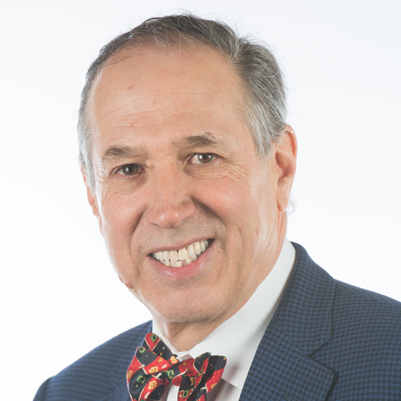
Fixing this situation is the latest passion of Mark Masselli, co-host of “Conversations on Health Care” and president, CEO, and founder of Moses/Weitzman Health System.
In this special episode, co-host Margaret Flinter asks Mark to explain the new initiative to tap hydroponic farming (growing year-round in water, without soil) for providing fresh food to families in economically challenged neighborhoods.
This is all growing as we celebrate Mark’s milestone birthday (he just turned 75!).
We’re taking the opportunity to also ask Mark to reflect on:
- The added benefits of community building in a stressful world
- “Conversations on Health Care” guests who inspired him and all of us
- The public policy changes he’s experienced and the critical role research will continue to play in policy creation
(00:00)
[instrumental music plays]
Margaret Flinter (00:05)
Today, we have a special guest. For those of you who tune in regularly, you know that we look around the
country and the world to talk with individuals who are leaders in their field and have a unique perspective on
health and healthcare, and policy.
Mark Masselli (00:18)
When we rally together, come together as people, and build projects locally, I think that gives us a sense of
strength and resilience to deal with all the changes that have happened in the past and will continue to happen.
Margaret (00:33)
We're talking to "Conversations" own Mark Miceli, President and CEO of the Moses Weissman Health System,
which includes the Community Health Center Inc, that he founded in 1972 as a 20-year-old community activist
right here in his hometown of Middletown, Connecticut.
Mark (00:48)
We've got an exciting program that we're really going to try to develop, like we did with primary care. We said,
"How can we develop a system that's there all the time for people who need it to use it?"
Margaret (00:59)
This is "Conversations on Health Care."
(01:01)
[instrumental music plays]
Margaret (01:11)
Well, Mark, many thanks for agreeing to do this, first of all. And I'm not going to go with a retrospective to
begin. We're going to start with the present day, get to history in a bit. But for context, what are the current
roles, initiatives, partners, and projects you're most excited about right now?
Mark (01:27)
Well, Margaret, thanks for inviting me here. I'll remember not to have big birthdays. But there's so many. It's a
little like asking which of my children I like best because the health system has so many important elements to
it. I think the couple things that are animating them, certainly, school-based health center the work that we're
doing there. The work that you've led on workforce development, right? Where psychologists, nurse
practitioners, physician assistants, and many more. And one I'm quite interested in right now is thinking about
food production, food as medicine, a whole raft of things that relate to the needs that are happening throughout
our country.
Margaret (02:14)
Well, those are perfect because, as it happens, I'm probably going to ask you to talk more about each one of
those areas that you just identified, and we'll get to those in a minute. But think of the flip side of what are you
most excited about. What are you most worried about when it comes to what's going on at a national level
around the health of the people in the communities that make up our country, and also our readiness as a country
from a policy perspective to meet those needs?
Mark (02:39)
Yeah. If I look back, we started back in the Nixon administration. We've always been at odds with
administrations, some Republican, some Democrat. And yet, if you look back, over time, there's still a large
number of people who lack health insurance who face food insecurity issues, where obesity is an issue, where
the opioid epidemic is hitting them, right? And those have coursed through time. And in some administrations,
we might be more worried. I think I worry most about that people remind themselves that they wake up in the
communities that they live in. And I think you can get disabled if you think you're waking up in Washington,
DC. Under whatever administration, this has always been the case. So, my worry is that people are not really
fully engaged in the pursuit of the aspirations they have because they're worried about the national landscape.
I'm not telling people not to worry about the national landscape. But I am telling them to be focused in on
building community. I think about the Community Health Center. The first word in it is community. And we are
very focused in on that. I think when we build, when we rally together, come together as people, and build
projects locally, I think that gives us a sense of strength and resilience to deal with all the changes that have
happened in the past and will continue to happen today and going forward.
Margaret (04:13)
What couple of other people I've heard you talk about over the years that really were instrumental in really
getting it launched and sticking with that mission?
Mark (04:21)
Yeah. Well, there were so many. I think about Reba Moses and Jerry Weitzman, the Moses/Weitzman Health
System. Reba grew up in Pimlico, South Carolina, just outside of Florence, in the 1920s. Father, sharecropper.
Great-grandmother, grandfather were slaves. During that great migration that happens when so many African
Americans moved up from the South to the North, she found her way through New York City to Middletown,
Connecticut. And then Jerry Weitzman, who was a local pharmacist. Family's escaped Eastern Europe from the
pogroms, came to New York City, found their way to Middletown, Connecticut. There must be something about
New York City. Or Middletown. But they were both very important. They were both about 20, 25 years older
than I was. But there was a whole group of other Black women, many of them, Adella Howell, Jessie
Highsmith, Edie Barnes, and others, who were part of a community that supported 18, 19-year-old, at that point,
when I met them, to dream big and understand the value of community action. So, both Reba and Jerry, we've
named the Weitzman Health System named a couple things the Weitzman Institute, which you formed after
Jerry, have been influential. I had the opportunity over the years to work with some remarkable people. Came
involved in the Tibetan issue and was able to travel with His Holiness the Dalai Lama, thinking about somebody
who exudes a sense of humility and power at the same time. Very important. I was less interested in Buddhism,
more interested in their political plight, but you can't help but be immersed in the world of-- It's kind of an
interesting focus that he had, is not about proselytizing about his religion. He said, "I can help you be a better
Catholic if that's who you are, a Muslim, a Jew. Whatever religion you have, I'm going to help you make that
better versus having to take on my own faith." And then Bishop Tutu, in terms of the struggles in South Africa,
another religious person, right, who was so optimistic.
Margaret (06:58)
Yeah. When you look back, what are some of the key policy initiatives that really made it more possible for us
to do this work at scale of making healthcare a right and not a privilege, especially primary care?
Mark (07:10)
Well, it came from a surprising place which was a very conservative Texas representative who ended up as
President of the United States, Lyndon Johnson, who in 1965 creates Medicaid and Medicare. They did not
exist. Think about it. A third of our country, prior to Medicare coming on board, had no health insurance at all,
right? The number of elderly people who lived in poverty. You look at what that program did, the Office of
Economic Opportunity. So many community action programs they formed. And then a little thing called the
Neighborhood Health Centers which started off as a pilot program in Bayou- Bayou in Louisiana and up in
Massachusetts.
Margaret (07:57)
Mississippi. Yeah, yeah.
Mark (07:58)
Mississippi. Came about and that was Ted Kennedy, who in '66 actually made about $50 million available for
neighborhood health centers as a test model. And then later on, I think in '75 the 330 program came about which
helps fund community health centers. But look at that policy of, it was only five years later that we were starting
to think about, and I think because of the momentum, starting to think about forming a community health center.
Five years later, it's 1971, we're getting ready for a meeting in January of 1972 in Washington, DC, of the free
clinics who were mounting. So, in '71, we're looking at this opportunity and saying, "Let's come together." I
think such momentum. That was a large pebble that got dropped into the lake that rippled across all the shores in
America, right? Medicaid, Medicare, they did. And there have been subsequent ones. I certainly say the ACA
mirrors up. The Accountable Care Act really helped transform it, but I really get back to Medicaid and Medicare
and what a difference it did. I still think, prior to that, just the number of people, it was a charity model, who had
no health insurance. It was-
Margaret (09:23)
City welfare. City welfare. We used to call it town welfare.
Mark (09:26)
Yeah. Yeah. It was not there. So, we've seen the importance of policy. I think at the end of the day, though, and
I think this is true for the work that gets done in health centers, it's about the delivery system. Ultimately, it's
about how this gets translated, how policy gets translated, right? From the conceptual model to the actual model,
right? So, there was a concept of, hey, we can start providing health insurance, but it wasn't until really the
health center movement came about, and then you see this large growth of health centers to today, we're 30
million plus, I say close to 50 million, are impacted by community health centers. That's the importance of
policy, and it's execution of the policy.
Margaret (10:09)
And the rules. Policy has its rules, and I think if we look at the health center movement, the Consumer Majority
Board of Directors-
Mark (10:16)
That's right ...
Margaret (10:17)
so critical. Lillian Reba Moses and Jerry Weitzman being two board members of the past, but also the concept
of a fair deal and not a free deal, a sliding fee scale. These were things that somehow have survived through all
the changes. Those have really endured and made a huge difference.
Mark (10:33)
But let me get back to the implementation of that, because this is one which has bipartisan support. The
Republicans liked it because it had local control. The local people were on the board of directors. The
Democrats liked it because it provided access to people who were underserved and in need. Bipartisanship is so
important in healthcare. And we are at a divide at this point, but we've been at those divides over time. And
health centers are really the glue that keeps communities together but also keeps a national landscape around
healthcare transformation together.
Margaret (11:13)
Ted Kennedy used to say, "We got it right back then," and it's why this has survived all those essential elements.
We could make a list of the challenges, but there's not paper enough or room enough in the world to list all the
challenges of starting and running these kinds of operations. But everything that we've been engaged with
prepared us in some ways to contribute when needed in new and different ways, and I look back over the
decades here. Certainly, the AIDS epidemic, one that arrived in our communities, the COVID pandemic six
years ago, the escalating rates of obesity, epidemic of loneliness that we've read about, concerns for the mental
health of our young people. When you look back, maybe what are some of your most compelling memories and
lessons learned from any of those pivotal periods that really influenced a change in how we did things
differently going forward?
Mark (12:06)
Well, there are probably a lot of them. Certainly, the AIDS epidemic was one that… It just was so devastating to
our community all across the country. Friends would perish and nobody had a real clue of what happened. And
then all of the work that came about in terms of trying to address the problems, the community support groups
that formed, and then on the scientific side, the development of intervention models. And obviously today, it's
almost a miracle of what's able to happen. COVID was a huge challenge for the country as well. We tried to do
our part by shining a light on what the facts were and also being engaged in the deployment of people to do the
testing and do the vaccinations. That was certainly important. But I think that just the day-to-day struggles,
those are the big ones, and they certainly catch everybody's eyes. But the importance of being organized for the
day-to-day work that needs to be done to serve the underserved population, really serve all populations who
come through our doors.
Margaret (13:22)
2009, and we're racing over every week to Wesleyan University's student radio, right?
Mark (13:30)
WESU.
Margaret (13:30)
WESU. Brought to you by WESU, to record only on radio, our first episodes of Conversations on Health Care,
and we did that for several years. It really laid the groundwork for the podcast that we have here. Maybe share
with our audience the why for that program and pick any two interviews that really stood out for you over the
years. It's been a while.
Mark (13:54)
A while. My God. I think Renée Fleming is one that certainly talks about-
Margaret (13:59)
Out of the box.
Mark (14:00)
…soprano singer. She's talking about mind in music and how they work together and what doors they can open
up. And then I think we had-
Margaret (14:12)
And partnering with Francis Collins, right?
Mark (14:13)
And Francis Collins.
Margaret (14:14)
From the NIH.
Mark (14:15)
Absolutely. Jack Andraka, 16-year-old, comes on our show. The youngest guest earliest guest that we had.
Came up with, I think, a discovery for pancreatic cancer early detection or something like that. And obviously
we've had surgeon generals, we've had secretaries of various departments, we've had noted scientists, Eric
Topol, we've had so many. Lewis Sullivan.
Margaret (14:44)
Tony Fauci multiple times.
Mark (14:45)
Fauci. So many people. But those two were kind of a little different. Part of our show is really about opening
doors for people that they didn't realize connect back to the work that they're so excited about, right? And so, we
always wanted to do that. And we learn so much from the people who come on. It's a real blessing for both of us
to have the opportunity to do that.
Margaret (15:08)
AI is what's on everybody's mind today, and how we'll use it. And I understand you've been experimenting, as
you always have, with its potential to democratize knowledge, make new ideas and information more readily
available. What are you seeing that you're excited about?
Mark (15:23)
Well, there's much to be excited about, much to be-
Margaret (15:27)
Worried about?
Mark (15:28)
worried about in terms of the AI world. But it is a new portal into framing up the information that, hopefully we
have it and we haven't been able to access it. And I think about a couple of things that we're doing. One is we
have 820 shows that we've done.
Margaret (15:48)
That’s right. Conversations.
Mark (15:49)
820 now called podcasts. And we don't really have an easy way for people to really access what the interviews
were about or framing up questions around public health or other issues. And so, we've now developed a tool
that allows us to have an interactive conversation. It happened to have my voice cloned, but it could have
anybody's voice cloned and talk about what was novel about those conversations or anything that you're
interested in, because we touched on so many topics. And so, that's one that's safe because what we've done is
we've taken just that information and put it into a silo. So much of the problem with AI is, well, it's making up
things. And that's because it's not been given the right definition or prompts. So, we're excited about some of the
things that our AI folks are dealing with internally. But I also think it's going to have an impact. We were
talking about earlier about provider retention and the struggles that there are for providers. One of the things is
the EHRs, which have never been what they were promised. They have been a burden too often. And today,
we're seeing the ability for people to sit in a room and have a conversation with somebody, look at them versus
looking at the laptop, and having that framed up and captured into the electronic health record. That, I think,
could be transformational. Let's hope. And yet, some of these really are in the test phase that is going on. So, I
think we're looking across the board about the work that's going on. We've got an AI work group and an AI
leadership group, and yet we're keeping everything sort of in a sandbox until it can be tested out and proven. But
I think we're going to see a lot of transformation in the technology area. I think that's important. As somebody
who's been a note taker since I started the organization, accessing sort of the historical elements of it not just by
our archivist who we have, who works here and really pulls up that information. We've got to find a pathway for
people to figure out: was this a miracle that somebody did? Or no, was it just blocking and tackling?
Margaret (18:01)
That's right. And here are the fundamentals. You can do this work. Right? This is not a miracle handed down in
tablets to a secret society. This is available to everybody, and we're trying to shine a light on the simplicity
behind some of the work. And also, when there's a complexity, how do we work through those issues? I think
AI can help capture some of that information, help with the transformation that's going on.
Margaret (18:28)
Nationally, you're now the president of the School-Based Health Alliance.
Mark (18:31)
Chair. Chair.
Margaret (18:32)
Chair, sorry. Chair of the School-Based Health Alliance. Tell me about that organization, why that one has
captured your attention as something to really put a lot of your time and energy into.
Mark (18:43)
Sure. Well, it's always about leadership, and Robert Boyd, who is the executive director, president of the
School-Based Health Alliance, is really an enlightened leader. He's really framed up the challenges that our
school faces across the country, some of those being Title I schools, but all schools, and the lack of access to
primary care that is being provided there. And they have worked very hard to try to provide support to states all
across the United States to help them cultivate the school-based health initiatives that really need to happen.
And certainly, one of the main problems that young people are facing today are mental health issues. And we
see it in our own health center, our health system, where we are in about 140 schools, 140, 150 schools
providing these services. But the School-Based Health Alliance is small but mighty. And it has a representative
board of people from all walks of the health system industry around schools, and they're really looking to
transform it in that they've been certainly rewarded well by some of the philanthropy groups. But they were
doing the good work before they got recognized, and they continue to, I think, make a difference in thinking
about policy and how that can help support schools. And remember, some of that comes from Washington, but
mostly schools are state based.
Margaret (20:13)
That's right.
Mark (20:13)
So, you've really got these incubators states are, and they are for school-based health centers, and the alliance is
working hard to provide that support.
Margaret (20:25)
And I hope the whole Rural Health Transformation initiative underway will deliver some more resources maybe
out there to the…
Mark (20:30)
Yeah. And that-
Margaret (20:31)
...rural communities-
Mark (20:32)
Yeah ...
Margaret (20:33)
because school-based is so important there.
Mark (20:34)
Yeah, and as I said before, the stats on what's happening in rural America are quite sad, and I think it's the place
where some of the technologies come into play. Certainly, telehealth is a force multiplier in rural America. The
work that we're doing in providing e-consults to rural communities, so often it's a four or five-hour drive to see a
specialist. Being able to use telehealth and e-consults is an important force multiplier. But I think in solving the
rural health problem, America will benefit. We'll be stronger. And I would think this is an application, maybe
some AI is in there, but I think some blocking and tackling of things that could be done. Workforce training is
important in those communities as well.
Margaret (21:28)
Well, about 25 years into the life of the Community Health Center, we envisioned a new dimension for the
health center, a center that would be about research and not ceding research only to the universities, but doing it
at the community level, and that is now known as the Weitzman Institute and part of the health system. When
you reflect on all the work and contributions of the staff and the faculty of the Weitzman Institute, what are
some of the contributions that stand out, and what's the lesson nationally for primary care about really
embracing primary care research and education and training?
Mark (22:04)
Well, I think you framed it well, and as the founder of the institute, you really came up with this notion that we
have the patients, we have the questions, we really need the methodological tools to be able to put them together
to develop a research institute focused in on primary care and all the sort of associated issues around primary
care, and to shine a light on that work, and not to be the only ones who are engaged in that work which is the
important thing. We're proud of the fact that we're early adopters in this particular area, but the reality is we're
starting to see community health centers, safety net providers thinking about research. Because if you're going to
be, as we said before, engaged in the provision of primary care, you've got an opportunity and obligation to
improve, and you can't do that without research. Research helps the policymakers so often.
Margaret (22:58)
Well, for all the obstacles and challenges we've encountered over the decades in delivering on this promise of
healthcare as a right and not a privilege, we've had the great satisfaction of pursuing our ideas and turning them
into reality. And I think one of your current projects, I'll loosely call it the greenhouse, really embraces so much
of this. Community, food secure as a healthcare issue, food as medicine as a health issue, and so much more. I
think it's a great metaphor for all the big lessons that we've learned about what's fundamental to a healthy
community and society. I'd love for you to take a few minutes and share. Why has this one really captured your
imagination and determination to build something new and different as part of a primary healthcare system and
community health center?
Mark (23:46)
I wonder if it's genetic. I'm thinking both sides of my family were farmers.
Margaret (23:50)
That might be it.
Mark (23:51)
Back in Italy.
Margaret (23:51)
Back in Italy.
Mark (23:52)
And that's all they did for generations is nobody doing anything but that.
Margaret (23:57)
Perfectly good explanation.
Mark (23:59)
But I think we've been talking about the issue of food insecurity, and we realize that in our patient population
right now food security, 15% of the population, food security is a real challenge. I go back, though, to the
beginning days of the community health center movement. 1965, a young guy, Jack Geiger out of Harvard, is
one of the early physicians working at the health centers, and he has a farmacy, F-A-R, farmacy where they can
get both medicine and also Jack was prescribing food for people, and it really goes back to our roots. We had
Jack here. We honored Jack at the Weitzman-
Margaret (24:41)
So glad you had him here.
Mark (24:42)
... we were so-- My God, we have a beautiful tree planted in his name. But Jack, that's our roots that food health,
food security is healthcare. Right? And-
Margaret (24:54)
Or as Jack famously said, "When they criticized me for doing it, I said, 'Well, the last time I looked at my
textbooks the prescription for malnutrition was food.'"
Mark (25:02)
Was food. So, we go back to the roots of this is an important work, but like so many things that I've been
engaged in, it's about leadership. Ran into a young kid up in Hartford. Heard about his project and went up and
visited him three or four years ago. Christian Hayden, 30-something probably, at LEVO International, and he
was working on hydroponics, and he'd, as a Eagle Scout, had just developed a whole hydroponic system. And
he's refined that. He's done all the things that we've done. He's put the science into it. "How do I make this
better? How do I make it as efficient as possible?" And so, using hydroponics, you can get 11-fold increase in
food production using that. And I'm a soil person but hydroponics works. It's good. It's good for you. And so out
of that, we said, "Well, look, let's do what we know is important to do. Let's build a test incubator." And we're
building a large greenhouse to show people. And food is something that connects everybody. Right? Everybody
has some thought about the importance of food in their family, how it brings people together, and how it
separates them when you don't have food, right? And when you're starving, and I think people relate to this so
powerfully. And so, we've got an exciting program that we're really going to try to develop, like we did with
primary care. We said, "How can we develop a system that's there all the time for people who need it to use it?"
And we're going to try to create a food production system that might be the backbone to help the SNAP program
which unfortunately only delivers about $6 a day in food for people. But to develop that system across the state
of Connecticut so that we can feed, 12 months a year, the food pantries with leafy greens. Now, they can get
them in a short period when the summer happens, and we love our local farmers. We love the people who
contribute. But what's the system in place? That's the charity model that exists, which we remember in the
healthcare days when, prior to Medicaid and Medicare, the doc would see somebody and say, "Pat myself on the
back."
Margaret (27:21)
It's okay. Yeah.
Mark (27:22)
"I'm doing you good work here, and don't worry about it." It happened very infrequently. And we have to figure
that out, and then we need to tie it back to Food is Medicine. The work that gets done by our great dieticians,
our physicians, and it's also part of an alternative healthcare, complementary alternative medicine, where people
are thinking about food. So many people can connect with this. And we've seen nothing but positive response.
Margaret (27:53)
People glaze over when we talk about some of the healthcare issues. Nobody glazes over while we talk about
this.
Mark (27:59)
And, right, opportunities for vocational training for young people. So many people today. You think about when
we were growing up, a degree from Harvard or Yale meant something. Today, they're not getting a job after,
which is a real tragedy, and you read about this all the time, about this generation coming out where there aren't
any opportunities. And people are looking into vocational school, people who are cost-conscious said, "I can't
send my kid to NYU. I can't send my kid to Wesleyan," and who are thinking about it, and kids are thinking
about whole different series of pathways to build their own careers, and I think vocational training is going to be
an important part of that. So, there are so many elements about this. We're also going to do, part of this will be
sort of a horticultural section. We're trying to attract... One of the things, and you know this, we have a dance
hall. We're going to have a greenhouse. We've got a lot of doors that people will come into the healthcare
system. They won't necessarily always come in through the doctor's Right door. Right? The nurse practitioner
door, the physician assistant door. They'll come in through different ways, and I think that's where you have to
be creative. The greenhouse will be another way that people can come in from all walks of life. We need
everybody. The intellectual capital. It's not the financial capital. We need the infusion of intellectual capital, and
that really gets back to those leaders that we are inspired by. It gets back into the staff who come every day with
new ideas and new concepts, and I hope we'll have a new generation of people who will come and say, "I can
relate to you now." This is something that's on my mind.
Margaret (29:37)
Well, Mark, thank you for being one of those inspiring leaders and taking this time with us. And thank you to
our audience for being here. Just a reminder, be sure to subscribe to our videos on YouTube, find us on
Facebook and X, and please share your thoughts and your comments about this program. Take care and be well.
(29:54)
[instrumental music plays]
Margaret (29:57)
This copyrighted program is produced by "Conversations on Healthcare" and cannot be reproduced or
retransmitted in whole or in part without the express written consent from Community Health Center Inc. The
views expressed by guests are their own, and they do not necessarily reflect the opinion of "Conversations on
Healthcare" or its affiliated entities.
(30:19)
[instrumental music plays out]