The Nurse at the Laundromat: An Innovative Model
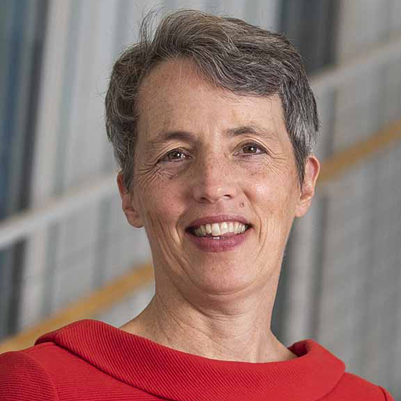
A nurse in a Baltimore laundromat might be testing one of the most important ideas in American health care: what if care started before you ever needed the emergency room?
Organizations from NPR to the Milbank Memorial Fund are closely watching the Neighborhood Nursing program that the top-ranked Johns Hopkins School of Nursing has brought to some of Baltimore’s most challenging areas.
“The only thing everyone has access to is calling 911 and going to an emergency room…the only thing we can all do should be something much more minor, where you can ask someone a question, get a house call or understand how your body works,” says Sarah Szanton, Ph.D., Dean of the Johns Hopkins School of Nursing.
Neighborhood Nursing is designed to fill that gap, offering earlier, more accessible support before a crisis begins.
“The neighborhoods right near Johns Hopkins said, ‘We want to come to you. We want to make sure we trust you.’ So we started off in senior center lobbies, laundromats and libraries, and let people come to us,” Dean Szanton explains to hosts Mark Masselli and Margaret Flinter.
That trust-first approach is what makes the model work. Nurses and community health workers meet people where they are, helping address not just medical needs, but the everyday challenges that shape health, from access to food and transportation to navigating complex systems of care.
The goal is simple but powerful: connect earlier, intervene sooner and reduce the need for emergency care.
(00:00)
[instrumental music plays]
Mark (00:04)
A new initiative is trying to turn primary care on its head and deliver it in a way that's unexpected by many and
is getting national acclaim for its healthcare. Neighborhood Nursing is now operating in parts of Baltimore.
Dr. Sarah Szanton (00:17)
The only thing we can all do should be something is much more minor, and you can ask someone a question, or
get a house call, and understand how your body works.
Margaret (00:27)
Joining us is Dr. Sarah Szanton, a board-certified family nurse practitioner who received her PhD from the
Johns Hopkins School of Nursing and now serves as its dean. She's also a leader of the prevention effort called
Neighborhood Nursing.
Dr. Szanton (00:43)
But at first, the neighborhoods right near Johns Hopkins said, "We want to come to you at first. We want to
make sure we trust you. We want to make sure that this is what we want." And so, as you mentioned, we started
off in senior center lobbies.
Margaret (01:00)
This is "Conversations on Health Care."
Mark (01:13)
Dr. Szanton, welcome to "Conversations on Health Care."
Dr. Szanton (01:16)
Thank you. I'm so excited to be here.
Mark (01:18)
Well, that's great. And maybe we should start out asking you to explain the Neighborhood Nursing, how it
provides health visits to patients right in their home and neighborhoods, including in senior citizens' libraries,
everywhere, including laundromats. Kind of interesting. Tell us, is this really a new initiative?
Dr. Szanton (01:37)
Well, that is a great question. So, it's old as the hills, really. And the nurses and other providers have always
done house calls and always cared about the neighborhoods people were in. I would say the last 50 to 80 years
have really been what's a bit unusual, that specialty care has taken over more and more, and people have needed
insurance rather than trading chickens or pigs or a fresh meal for providers. And really, nurses have been going
door to door in tenements and on the streets really forever. And also in Costa Rica, which is where we got the
particular inspiration to try to do this really from a policy standpoint, is Costa Rica divides up the whole country
into small geographies, into areas that have a nurse and a community health worker. In their case, they also have
a doctor and a pharmacist. And the technical term, they call it geographic empanelment, meaning you are
empaneled to a team based on where you live. We talk about it as like a school nurse for the neighborhood is
one way to understand it, or concierge care for the neighborhood. And so, the idea is that the health of our
citizens is our real infrastructure. On top of that, we've got infrastructure like clean water and regulations for
clean air, but the health of our people is our real strength. And, as you said, try to turn primary care on its head
so that everyone has access to it. Right now, the only thing everyone has access to is calling 911 and going to an
emergency room. And as we all know, anyone who's listening to this knows that that doesn't make sense, that
that's the only thing we can all do. The only thing we can all do should be something is much more minor, and
you can ask someone a question, or get a house call, and understand how your body works. So, we started by
listening to communities. We started by listening. I assumed we would want to do house calls because as
Margaret mentioned, I'm a nurse practitioner. I've done decades of house calls. And I also have a PhD, so in
design models of care and test them and evaluate them. But at first, the neighborhoods right near Johns Hopkins
said, "We want to come to you at first. We want to make sure we trust you. We want to make sure that this is
what we want." And so, as you mentioned, we started off in senior center lobbies and laundromats and libraries
and let people come to us. And as we started to do that, wonderful things happened.
Mark (04:13)
Well, that's what a great partnership of both going internationally, Costa Rica and then going local to the
neighborhoods and putting the two of them together.
Margaret (04:22)
And I want to come back to that in a little while. Sarah, we have a lot of questions for you. But one of the
elements, as I understand it, correct me if I'm wrong, is that unlike so much in healthcare, this is not something
that people have to get an order for, a referral for, a prescription for. That they can seek you out, they can sign
up on their own. Is that correct, or is that oversimplifying it?
Dr. Szanton (04:44)
No, that is correct. There are actually QR codes for people who know how to use their camera or smartphone to
do that, to request a visit. There's nothing required. It's just if you're a human and you're in this neighborhood;
you have access to it. Now, that doesn't mean we're fully in every neighborhood or fully covering the
neighborhoods that we're in. We're in a pilot phase right now. I mentioned we had a listening phase. We're in a
pilot phase now. And just starting to do what we call asset mapping, understanding what the assets are in a rural
area also. We've been in Baltimore. The rural area is on the Eastern Shore of Maryland, Somerset County. And
University of Maryland School of Nursing also provides Neighborhood Nursing in West Baltimore. And
Baltimore is very divided between East Baltimore and West Baltimore. It's almost like they're different cities.
And so, our neighborhoods are in East Baltimore.
Mark (05:37)
Tell us a little bit about the results. This is a very important program. It also ties back to some things that have
been happening traditionally, right, in public health, in terms of the outreach that public health nurses have
made. But what are you seeing in terms of outcomes, any publications that you've had around this?
Dr. Szanton (05:57)
Right. So, to be able to measure full neighborhood outcomes, for example, fewer 911 calls or fewer preventable
hospital admissions, was going to take a few years to make it a whole neighborhood impact. What I have
currently, besides we've published about the idea of it in the Milbank Quarterly, and we've published about our
approach to working on the policy aspects as well as the implementation, as well as the educational aspects. But
the impact that I can tell you now is more stories. I'd love to tell you a few situations that that really describe
well what we're up to. So one is, so it's a nurse and a community health worker, and the nurse is an RN. And
Margaret is a, I was going to say a rebel but, is a pioneer in making sure that RNs can do more than they often
do in regular ambulatory care. And we are so inspired by her to try to bust out and make door-to-door nursing
much more sort of global in what nurses can do. And then the community health worker works on things like
what we call the social, the drivers of health, like enough food, enough heat, transportation, those sort of things.
So, I'll tell you one story. We had an older adult who told the community health worker after seeing her a few
times that she didn't understand why, but money was disappearing from her bank account. And the average
listener might think, "Well, what does that have to do with health?" But hold that thought. The community
health worker didn't quite understand the situation because you might think, "Oh, maybe the older adult's
confused," or sometimes people get a little paranoid if they start to lose their memory. But she said, "Let's go
together to the bank, and we will stay there until we figure this out." And so, it turned out that somebody or
some organization or something had been sucking out $5, $10, $20 from this woman's bank account with her
knowledge, she could see it, but without her permission, and it had added up to $20,000- Wow ... over a period
of time. She had called the bank multiple times, and nothing had happened. And when they got to the bottom of
it, they stayed there four hours. When they got to the bottom of it, they could see that it was recorded that she
had called, but no one had taken it further to stop it. And so, they essentially said, "We're not leaving until this is
solved." The bank got her back $15,000 of it and, of course, put security holds on her accounts and changed her
accounts with her. But that's $20,000 for a low-income older adult, that's a lot of money for anyone, but
especially, that was most of her life savings. And so now she can afford her prescriptions, afford her heat, and of
course, just not have the stress that somehow something's being pulled out of her bank account against her not.
So that's one small example. I'll give you another one. We had a nurse who was regularly checking a woman's
blood pressure, and when she listened to it, realized that the heart rate was about a third of what it should be, and
that she was not getting enough oxygen from her heart rate. She called 911. And the woman got seen and taken
care of. The next week, her granddaughter started to stay with her because she'd been homeless, houseless,
couch surfing with her father. And, that young lady, she's a kindergartner, hadn't been able to go to kindergarten
because she didn't have her vaccinations, and she didn't have her school supplies. And we were able to get her
all of those and get her back in school and get also dental, and a well-child visit within a week of seeing her. So
that helped the grandmother, helped the housing complex, helped the daughter, helped the father who was
looking for housing for them. And those are just two small stories. And then, of course, the nurse can do things
like small wound care, mental health first aid. It's not just blood pressure checks, but there's a full range of what
nurses can do in the community that is just common sense, good work, birth to death, and not just for particular
populations.
Margaret (10:22)
Well, Sarah, maybe for our audience, which is pretty informed on healthcare, but a lot of the different kinds of
programs and disciplines can get confusing to people, certainly for, oh, I don't know, 60 years probably,
Medicare has authorized visits in the community by nursing. You have nurse practitioners as well as registered
nurses and community health workers in your program. How do these intersect, and are people able to get their
full primary care services through this program? Are you connected to a community health center, outpatient
center, private practice? Just clarify that piece for our listeners.
Dr. Szanton (11:03)
Sure. Absolutely. So that's still a work in progress to figure out, and I think it'll be different in different
communities to some extent. In the first community that we're in; we have a strong relationship with a federally
qualified health center. They save slots for us for our referrals, and some of the medical residents that rotate
through there come on neighborhood nursing visits as well, and they're already doctors. Then, we have had
some nurse practitioners, but they've been working in an RN role as we test out this role. We are just now
working on how to add in nurse practitioner services as nurse practitioner services and are planning to have
some be telehealth, where the community health worker could help someone get on a call if they don't know
how to, and some actually in person. And then in terms of how it kind of interdigitates with primary care, I think
it remains to be seen whether it makes sense to actually deliver a whole layer of actual nurse practitioner
primary care or whether to strengthen the really important bonds between people and their primary care that
they already have, especially federally qualified health centers that have those wraparound services. What I
would guess is that there won't be one size that fits all, and that we should have an all-of-the-above strategy.
Mark (12:24)
Sarah, I'm going to pick up on your thought that you're testing out this model, and probably at the same time,
you're thinking about cost and sustainability- ... which is always a consideration with any innovation, especially
if you're Right trying to take it to scale. I wonder if you can share with our audience the financial underpinnings.
Is this a grant or philanthropy funding? And also, tell us about any of the attempts at Medicare and Medicaid
reimbursement here.
Dr. Szanton (12:53)
So, we started it off with philanthropy. We actually started it with a grant I already had when I came up with the
idea, and the foundation was kind enough to let me pivot it. So, we had immediate money when I came up with
trying to do this. And then a group of funders across Maryland joined together to fund this. And your listeners
may or may not know that Maryland is a state with a history of doing innovative funding mechanisms to sustain
coordinated action between insurers and hospitals. And our thought has been that this could be the next stage of
that, that the next stage of the insurers pool together could be saving each other money. And if I'm a nurse and if
I go to a house, someone may have Medicaid, someone may have Medicare, someone may have it through
Humana, someone else has it through Aetna, someone else has it through Blue Cross, and you don't want to sit
there and bill five different insurers while you're taking care of the two-year-old, the baby, the mother, the
grandmother. And so, in our minds, this should be a pooled model, but then a salary, in that the nurse and the
community health worker have salaries, and they can see people without billing individually. There's so much
administrative waste, as we all know, in all the billing and the coding. And so, you asked about sustainability.
So right now, it's with philanthropy, which, as we all know, is both perfect for immediate work and for being
able to pivot and be nimble. Yep. It doesn't work over the long term, and it shouldn't, right? It's for the gaps.
What this should be is paid for by insurers and the government. And I want to make a quick point, which is that
we all pay for healthcare. When people talk about single payer, they're talking about who pays the bills, but
really, we all pay the bills as taxpayers into Medicaid, and workers into Medicare, and when we buy anything
from a company that pays for healthcare or through our employers. So really, all of us have a stake in the health
of the nation, and all of us are already paying into it in multiple ways, and we're just advocating for it to have a
simple layer underneath it that we've essentially all paid into already.
Margaret (15:18)
Well, Sarah, I know through your policy institute that you've been very active in Washington, DC. Your policy
institute's in Washington. All of these things ultimately seem to lead down a path to needing some adjustments
to our payment system, bringing the attention of new models to our legislators. Tell us about what's top of mind
in terms of policy changes that you and the institute and the university are looking at.
Dr. Szanton (15:45)
Thank you. And so, I want to back up a little bit and say that if I were on a cancer podcast and I was a cancer
researcher, nobody would say, "Well, how are we going to get this drug to pay for itself?" Right? People invent
these incredible drugs that cost $100,000 for one person, and the discussion is never, "Well, what's the return on
investment?" The return on investment is that person's alive, and we're glad that they are. Or yesterday, the news
that there's great new research that children with genetic defects for hearing loss can hear. That's wonderful.
Nobody says, "Is that going to make the return on investment?" And so, I think we partly need to shift the...
Your question is a good one, and it's a realistic one, but I think we also need to put on our advocacy hats, and
our systems change hats and say, not everything that's right needs to pay for itself. And drugs and devices don't
pay for themselves. Systems of care, I think this will pay for itself. But I don't think we should have to show it
before the payers pay into it. And that includes the government. There's population health funds, there's different
trust funds, and I think we should be able to figure out a way with employers and the government and insurers to
pay for this. And yes, I agree that at some point Congress would need to get involved. But the innovation center
of CMS, the CMMI, is really doing wonderful work with a lot of different models, and recently with the lead
model and a 10-year outcome. I do think that there's a lot of room for this common sense kind of thought. And
when we talk to policymakers, nobody thinks it's a bad idea, right? Everyone should have this kind of access. It's
more about the cost. But even just taking blood pressure. So, 11% of the people in the first six months of blood
pressure we took was normal. 89% had high or very high. Even just taking blood pressure, you can prevent
dementia, heart attacks, strokes, kidney disease, eye disease, and it's completely preventable. We have all the
medicines and food as medicine, and we know exactly what to do for blood pressure. So, to have a population
that is 90% of them have it elevated, we know what to do. We can be at their front doors. It just makes common
sense.
Mark (18:29)
And your whole framing makes a lot of sense around this. And Dean, you mentioned earlier that the Milbank
Memorial Fund, they looked at your program and how it intersects with value-based care. What was the focus of
their evaluation, and can you take us through their conclusions?
Dr. Szanton (18:48)
So, on the value-based care, I think the conclusions are we need a slightly different model. We need more of a
pooled model because the value, it's currently so fragmented between the insurers that you really need to pull
down some of those silos to make the value work, which is why we kind of step back and say that it makes
sense from a moral and a commonsense point of view.
Margaret (19:24)
Well, one of the elements that's critical to your model is nursing, and we note, and we certainly think about this
in our work, the US is short 300,000, I think. 300,000 nurses. Not really an end in sight to this. And while the
focus usually seems to be on acute care settings, it's felt in community health and public health and everywhere.
Maybe tell us a little bit about the profile of the nurses that are drawn to working this model. What are you
seeing? Do you experience difficulty in recruiting, or is this a sector of healthcare that really pulls people in?
Dr. Szanton (19:58)
Right. Thank you. So, just about the nursing shortage, it's really more of a leaky pipeline than a shortage. So,
there's a lot of evidence that there's enough nurses in the country and enough getting educated. It's that they
leave nursing in the first year and in the first five years. So, I think that having more different kinds of roles, like
these roles, would keep some of the people in that pipeline. And your question about hiring them, you have to
pay them what they would earn in a hospital. And traditionally, there's been a kind of a hierarchy of pay, similar
to where there's in medical specialties. There's a hierarchy of pay that people who work in communities earn
less when, if you think about it, in some ways, primary care people should earn more because they've got all the
body systems, right? It's not just urology or not just cardiology. And so, we have found that if you pay nurses,
and this is true, we hire school nurses also for Baltimore City schools. We've found that if you pay the nurses
what they would earn in hospitals, and if you pay community health workers well, there's a strong market, and
people stay because it's such a satisfying job.
Mark (21:21)
Sarah, in your role as Dean of Johns Hopkins School of Nursing, you are setting the strategic direction for the
school over the coming years. With all the challenges affecting the health of the population, as well as the health
of the systems designed to care for them, what are your key strategic goals and initiatives?
Dr. Szanton (21:41)
Well, thank you. So, a couple things. One is we're the first nursing school in the country to allow our incoming
nursing students, the ones who are becoming nurses, not the ones becoming nurse practitioners, to do all of their
clinical training out in community settings. And this is not just in neighborhood nursing. They get plenty of
acute care experience, but not in the hospital. So, they're in hospice, they're in dialysis, they're in cancer
infusion, they're in birth centers. So, they're receiving the same kinds of experiences, but it's all in various
community settings. And what that does is, there's two things. One is it shows them the whole world that's
outside of hospital, and the second is it's a one-on-one preceptor model, meaning they're with a nurse, and that
nurse knows them and sees them every two days a week for multiple weeks and can help see what they need to
learn. And so far, knock on wood, all of our graduates from that program have passed the nursing boards, and
that was one of the first questions people asked. It was just like, "That's a good idea, but are they going to pass
the boards?" Because the boards are based on what's assumed you'll need to know in the first year of nursing,
and that's assumed that it'll be in a hospital. But our students have done really well. So that's one project. We
also have a policy honors program. So many nursing schools have research honors programs, meaning a
student's matched with a researcher, and they get to work on the research. We have that as well. But when I
became dean, we made a policy honors program that is a seminar that both teaches people how to do power
mapping and elevator pitches and understand the context of where they are and how to make change, and it
matches them with a faculty member who's either already doing policy-related work or their work has big
implications for policy, which of course all research does. So those, the policy honors program, the outside
track, which is what we call the being able to get your clinical experience outside of the hospital. And the
biggest thing we're doing that is still very much in formation is really trying to take the advantage of the fact that
all nursing schools are moving towards competency-based education, meaning less about tests and exams and
more about how do you think, how did you think that through, what can you do? What kind of conversations
can you have? Taking the competency-based education, matching it with AI, and making it that our students
could go faster or slower. We're trying to get rid of semesters. We're trying to make it that people have
individual pathways towards learning to become a nurse. And Because especially in Johns Hopkins, our students
already have undergraduate degrees in something else, so they're career changers. They've been an architect,
they've been a lawyer, they've been a firefighter, they've been a social worker. So, they come with very different
skills. Some of them have incredible interpersonal skills but don't know the biology, and some people can be the
reverse. And so those are three things. We're trying to kind of blow up how we do education. The Policy Honors
program, which we're expanding the key lessons from that to the whole-- You don't have to be in the program.
It's that all students, we think all nurses should graduate knowing how to change the world because when nurses
lead, health moves forward
Mark (25:21)
Nice combination of academic rigor and community engagement.
Margaret (25:24)
Exactly.
Mark (25:24)
It really makes a huge difference.
Margaret (25:25)
And we're proud to have a number of alums at the master's and doctoral level from your program in our health
system. But I really have been wanting to ask you how, as the Dean of one of the most important schools of
nursing in the country, how have you responded to the Department of Education initiative to remove nursing
from the category of a profession to that of a technical status with all that comes with that in terms of reduction
in some opportunities for our future leaders? Talk with us about that.
Dr. Szanton (25:56)
Absolutely. Thank you. So, we have been active in the comment period to try to change that. I will just say, as a
matter of fact, the distinction between being graduate school and professional school nursing, that's been true for
decades. It just didn't matter. It didn't have a financial implication. And when it was called graduate versus
professional, but students could still get loans, I think nobody made a fuss. It was just that in the budget bill that
passed last summer, they took that delineation and used it in a way that made it so that nursing students can only
get $20,500 a year to become a nurse for graduate. And so that impacts all of our students because our school is
a graduate school, and of course, all nurse practitioners, nurse anesthetists, anyone to become a nursing faculty
member, and as you mentioned, we really need to keep the pipeline going of people becoming nurses. So, we've
been very active both in front of the scenes and behind the scenes, trying to get individual senators to talk to the
government and trying to work inside the Trump administration as well. I fear for the future state of our nation's
health if this continues. I'm hopeful that they'll change it, even if they don't change it this year.
Mark (27:20)
It has caused a human cry all across the country-
Margaret (27:23)
That's right.
Mark (27:24)
... impacting so many families, and so much of the health system. Sarah, one quick question. One of your key
initiatives has been the creation of the Institute for Policy Solutions at the Johns Hopkins School of Nursing.
Tell us a little bit about that work.
Dr. Szanton (27:42)
Thank you. So, the Institute for Policy Solutions is led by Vincent Ramos, and it's done a number of really
wonderful things. One is to try to create more consensus around the country. They say, "Your health is my
health." That they've just released a survey recently showing that overwhelmingly, people think that other
people should be healthy as well as they should be healthy. And that's not rocket science, but it's good to show
that health inequities are something that everyone cares-- Not everyone, but about 72% of Americans think that
everyone should have the same access to health. And they also help with our faculty being able to kind of scale
and spread their programs of research that are nurse-led interventions. We've been talking about neighborhood
nursing, but we have 50 different researchers, all of whom are doing really impressive work in different sorts of
models of care. And so, the Institute for Policy Solutions, it's just a few blocks from the capital. It also holds
convenings. We, for example, had the heads of CMS from four different administrations. We had a wonderful
conversation with Republicans and Democrats there, and you see the capital in the background. And we use it as
a way for people to come together. Next week we're having a convening around kind of what's next with
Medicare Advantage, and Dr. Oz is giving the keynote. So, it's both a place and an idea. And it's partly so that
policymakers and the media think, "Oh, I wonder what nurses think about that," or, "I wonder where the
evidence is about that. I'll look at the Institute for Policy Solutions." So, it's a resource, an idea, and a convening
spot.
Margaret (29:33)
Perfect. Well, we want to thank you, Dr. Sarah Szanton, for joining us today.
Dr. Szanton (29:37)
Thank you.
Margaret (29:38)
Thank you to our audience for being here, and a reminder to be sure to subscribe to our videos on YouTube, find
us on Facebook and X, and don't forget, you can share your thoughts and your comments about this program.
Take care. Be well.
(29:50)
[instrumental music plays]
Margaret (29:54)
This copyrighted program is produced by conversations on healthcare and cannot be reproduced or retransmitted
in whole or in part without the express written consent from Community Health Center, Inc. The views
expressed by guests are their own, and they do not necessarily reflect the opinion of Conversations on
Healthcare or its affiliated entities.
(30:15)
[instrumental music plays out]