Why CNBC’s Becky Quick is Bullish on Rare Disease Cures: Her Family’s Story
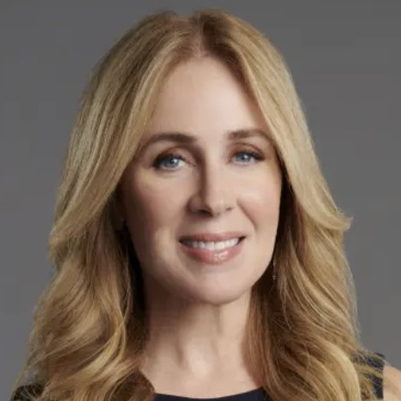
Many viewers know Becky Quick as the steady voice on CNBC’s “Squawk Box,” where she explains what’s happening on Wall Street and interviews the world’s top business leaders.
Now, she joins Mark Masselli and Margaret Flinter to share a very different story, one she lived privately for years while navigating her daughter’s rare genetic diagnosis.
Quick’s message is simple, and urgent: “The faster you can get a diagnosis, the better… I would have pushed harder for genetic testing earlier. The faster you find out, the faster you can connect to a community… and understand what that range of outcomes might look like.”
She’s also leveraging her visibility to raise awareness of rare diseases. Quick leads CNBC’s “Cures” initiative, which provides insights into the biggest stories impacting the rare disease community and highlights the research being done that will change the way we think about modern medicine for everyone.
(00:00)
[instrumental music plays]
Mark Masselli (00:04)
Our guest is known for delivering the news about the ups and downs of Wall Street, but now she's putting her
financial acumen to work on a new project, rare diseases.
Becky Quick (00:15)
The faster you can get a diagnosis, the better. And I understand, as a parent, that it's not what you want to hear.
We probably should have done genetic testing far earlier than we did. I'm not sure what was keeping me from
doing it. In some ways, you don't want to find out. If there was one thing I would do over, it's that I would've
pushed harder for genetic testing earlier.
Margaret Flinter (00:35)
Becky Quick is a CNBC anchor who's also reporting on the 30 million Americans who are affected by rare
diseases and the efforts to find cures.
Becky (00:45)
The faster you find out, the faster you can connect to a community and find out what the arc of this disease may
look like and what the range of this disease may look like. Not everybody is going to have the same reaction or
the same outcomes.
Margaret (01:01)
This is "Conversations on Health Care."
(01:03)
[instrumental music plays]
Mark (01:13)
Becky, welcome to "Conversations on Health Care."
Becky (01:17)
Thank you, Mark. Thank you, Margaret. It's great to see both of you.
Mark (01:19)
You have a very distinguished career in business journalism, and many in our audience know you as the co-
anchor. We wake up every morning to "Squawk Box" on CNBC. So, tell us about CNBC's "Cures" and its
focus. I would say it seems a bit unexpected for a business channel to be interested in rare diseases.
Becky (01:42)
Yeah, it is, and it isn't. And I will tell you, I came through this through a very personal journey with my family.
Our daughter, Kaylee, our youngest daughter, who's nine years old, has a rare genetic disease that she was
diagnosed with about six and a half years ago. And it's been a long journey for our family. We knew that there
were problems probably from the time she was six months old, but it took us a little over two years to actually
find a diagnosis. And then, like I said, it's been about six and a half years since then. And this is not a journey
that we've been very public about. First of all, it's devastating to get a diagnosis about your child. Second of all,
you're spending all of your time trying to figure out how to make sure she has the best possible life, to
potentially look for any cures or therapies that might help, to make sure that she's in the right school, that she's
getting the right therapies. It's pretty time-consuming. And just emotionally, it wasn't really something that I
could talk about while we were going through the beginning stages of it. It was just too much for me. So, when I
went to work, I kind of forgot about all that and set it to the side. But my husband, Matt, and I had been thinking
it over, and along the journey, we kind of realized that we were the lucky ones because we had access to
doctors, to hospitals. We had money that we could pay for a lot of the therapies and other things that so many
other families we've met along the way didn't have. And we just started thinking about it over the course of
years and trying to figure out what we might be able to do to help along the way. We kind of realized our
superpower was that we had a platform, and a pretty important platform, because we realized CNBC has exactly
the viewers that we need to reach. And those would be legislators, CEOs from pharma and biotech, investors, a
lot of the different groups, regulators too, who can really have an impact on what happens with rare disease.
Because we did learn along the way that rare disease is not rare at all. As you mentioned, there are 30 million
Americans that have some form of a rare disease or condition. There are 300 to 400 million people in the United
States that have a condition like that. And we started thinking about it, realizing, why don't we treat it more as a
unique grouping and illness, kind of like they do with cancer? The American Cancer Society looks to fight all
forms of cancer. Well, there are very specific needs for rare disease and therapies and treatments, but so many of
them, if you group them together, you could probably get more attention paid to them. You start realizing that
30 million Americans is almost one in 10 Americans. Right. And you realize that there's only one to two degrees
of separation between basically everybody you meet. And I will say, now that we've gone public with this, I
hear just about everyone's stories as soon as I meet them. There are connections back to this. And that's how I
think we can help identify the things that are in the way of getting to these potential cures and therapies and try
and move some of those mountains. Because right now, I will tell you, science is having an amazing time.
There's so much that's happening. Definitely. So much that's possible, not only because of AI, but also because
of other scientific developments that have been coming along the way, that we thought this is the perfect time,
and CNBC is the perfect audience for that. So, our bosses here have been incredibly supportive. Wonderful. Our
friends and teammates here have been incredibly supportive, and they've all gotten behind it.
Margaret (05:17)
Well, Becky, first, we want to thank you for sharing the story with us, for being willing to come on and speak of
it. It is so important to shine that light, so thank you for being here today. You spoke about things in the way,
and we'd love for you to elaborate a little bit. I know one of the goals of CNBC Cures is to identify those
roadblocks that you say are keeping scientific progress from patients. And we tend to jump to financial. Is it
financial? Is it regulatory? Is there so much competing in this space for work, too limited a research bandwidth?
Tell us what you're seeing and identifying as roadblocks.
Becky (05:56)
It is all of the above and then more. First of all, the scientific advances are happening faster than regulatory or
legislative bodies can kind of keep up with it. So, there are these new advances. We have to figure out what we
think is okay, what we think is not, and that's left to places like the FDA to determine exactly what it will take.
I'll tell you, for an ASO therapy, an oligonucleotide, you might be able to get something passed for a very small
patient group. But our thought is there should be kind of legislative or regulatory framework that would say if it
works in this group, then it's probably fair to say it works in this other very similar group within certain safety
guidelines. Because the idea of trying to do a phase one, phase two, phase three trial for groups of 15 or 25 or
100 or even 500 people, it's prohibitively expensive. If you can find one of these things that might work across
many of them set up a this tends to work in these type of neuro issues, and if you can do that without having to
reinvent the wheel every time, again, with the phase one, phase two, phase three. Which not only takes a ton of
money, it takes a ton of time to do all of those things. If we can find ways that you can group this and say,
"Okay, we believe that this is safe, and we're going to jump off from these endpoints." Of course, you want to
make sure you're not pushing things and putting patients in harm's way. But if we can find ways to do that, that's
what we're hoping to see happen. That's on the regulatory side of things. From the money side, yeah, there's
never enough money. We've talked to different people who, Stan Crooke, who works with n-Lorem now, which
is a not-for-profit. He first founded Ionis, which does all kinds of ASO therapies. Then he went to n-Lorem
because he realized that commercially he would not be able to make these drugs for very small patient
populations, but he knew how to mix it up, so he couldn't make it commercially viable. It costs him, he says,
about one and a half million dollars to save a life right now. If we can find ways to stretch that, he says he thinks
he can get it down to $750,000. So, there's the money aspect that comes from it. There's the idea in research that
often researchers don't want to share what they have learned, share their knowledge. Institutions may not want
to share what they have learned. Different drug companies may not want to share what they have learned. And
while it's tough to go at it at the drug company level, there is a way in philanthropy to say, "I'm going to fund
you, but only if you make this open source, basically and share with everyone." Yeah. And that's kind of a new
philanthropic thought process that's taking place in the rare disease community. So, there's lots of these different
things. The other thing we realized is that there's a lot that these small communities can learn from each other.
We shouldn't have to reinvent the wheel every time for every one of these patient advocacy groups either. I will
tell you something I've learned from the Angelman's community. When they were going through, they're still in,
I believe it's phase two testing at this point, but they're still in clinical trials for a drug that they have going
through. They ran into some problems with the very first one that they were doing during COVID, where some
of the patients, the children, couldn't walk. They wound up in the hospital because when they were getting these
injections to their spine, it did something so that they had problems moving. But the kids were getting better at
thinking and talking, and Angelman's kids never really talked before. So, the parents had this horrible dilemma.
And I've spoken with Allyson Berent, who is a parent. She's the chief scientific officer for FAST, the
Angelman's group, and she said, "It was this horrible situation to have to decide whether I wanted my child to be
able to talk or to walk." Okay. All of the parents ended up keeping their children in the study to continue to push
forward with it. They realized eventually that it was the dosage. They had to bring the dosage down- ... and that
they had to do a saline flush at the injection point Uh-huh and inject it when the kids were upside down,
inverted, so that it went in a different direction, I guess, down the spinal. I may be getting some of the science
wrong on this, but- ... basically, they inverted the kids, and it all worked. Sure Well, I'd like to make sure that
our kids in Syngap or any other disease don't have to do that same trial run. The more people who find out about
this information, the less likely that we are to repeat problems that directly affect our children and other patients
who are dealing with these things. That's where we're trying to bring together a community where we can share
these types of things and share knowledge, too.
Mark (10:27)
Well, and to that end, Becky, congratulations to you and CNBC, because last month you moderated the first
ever CNBC Cure Summit, and it really included a discussion about how interestingly scientific breakthroughs
for rare diseases community drive better outcomes for all of us. And I'm wondering if you could just highlight
some of the things you might have learned then.
Becky (10:51)
Yeah. There are, and it's escaping me at the moment, there are several studies where they figure if they can get
it, a study that works on these rare diseases, particularly with children who have early onset Alzheimer's, that
there could be ways, the things they learn in those early studies, that can help us with Alzheimer's patients writ
large. There are some rare diseases that mimic early onset Alzheimer's for children. If you can get at that, and
you have this very defined population, you know who they are, you can go after it. If you can find ways to
resolve that, they think that that will open the door to solve all of Alzheimer’s and really find better ways of
identifying people earlier and making sure that we can help them. Because the other thing you learn in rare
disease, that once there are organs that are damaged, whether it be the brain, the heart, the liver, whatever it may
be, it's hard to reverse the damage. You can slow the progression of the disease, but really early identification of
all these things is a huge key, too. Being able to find out who's going to eventually have symptoms. If you can
attack that earlier, you have a better chance of the patients being able to live a full life and to have use of and
functionality of their bodies that they wouldn't have otherwise.
Margaret (12:12)
Well, going back to the summit, which I'm sorry I only read about after it had happened, it really sounded like a
phenomenal meeting.
Mark (12:21)
It's on the YouTube channel.
Becky (12:22)
Thank you. And by the way, if you're interested in watching any of it, it's all archived on cnbc.com.
Margaret (12:27)
He just told me I could find it there. So, I will.
Becky (12:30)
Any of the summit. Anybody who's watching your podcast too you can watch any of the interviews. We're
making sure we archive them all. It's up for free. We want to make sure that we reach as many people who are
affected by this as possible.
Margaret (12:45)
Wonderful. Well, and I will do that. But I want to go back, if I can, to a minute to the funding reality and
certainly the philanthropies and particularly philanthropies driven by the experience that they've had are so
powerful. But we also have a federal role to this, right, through the National Institutes of Health. And certainly,
resources are always shifting. But where is the home for interest in rare diseases within the NIH? And do you
have champions there that are also trying to do this on the public level, or is this really kind of been abdicated to
the private community?
Becky (13:24)
Well, I will say rare tends to start in the private community. It's usually the parent advocacy groups that start
first because these are populations that are so small. Kaylee's Syngap population, Syngap1 is her disease, and
my daughter, and that population is just over 1,000 people in the world, not in the United States. I know of other
families that I've met along the way who there were five other patients when something happened. Maybe there
were 500 when their child was identified with the same disease. The first thing you do when you get a diagnosis
is you go online, and you look it up. When Kaylee was diagnosed, our neurologist gave us the test results and
admitted that she really didn't know that much about it and that we would probably know more by the end of the
weekend. That was a Friday. And by Saturday, we had identified the two parent groups that were looking into
this, had called them, had spoken with them. And so, we did know more about the disease by the end of the
weekend than our neurologist knew. And unfortunately, that's the case. There are plenty of grants that are given
by the NIH, and that's important, and I have heard from researchers that a lot of that money has been much more
difficult to come by over the last year, year and a half. They keep thinking they're getting to the point where
they're going to get more of that money out. That is definitely a choke point. But for rare disease in particular, it
tends to start with the parent advocacy groups. If you're lucky, you have a wealthy or high-profile family that
gets affected by this, and they help get the word out for those things. But look, a lot of these advocacy groups
are working on bake sales and bike-a-thons to try and raise money. And you need millions of dollars to get
things really started with researchers, which again, is why you want to find other diseases that are as similar to
yours as possible so that you can kind of clump together. There are researchers at UPenn now coordinated with
CHOP, the Children's Hospital of Philadelphia, who are working on Syngap and STXBP1, and they are both
neurological diseases. And again, our hope is that by trying to put together as many diseases as we can that have
similar profiles, we can try and solve or find therapies for those two diseases and then find others that are related
to it. Because I think the only way it works-- There are N-of-1 studies where you basically pay for one
individual patient, but if you really want to tackle rare disease, you have to find ways to link these many
diseases together and to cooperate.
Mark (16:03)
Margaret, in so many cases, the parents lead, and in this case, the government really needs to follow. Becky, in
the "Cures" documentary, you discussed the new law in Florida I was not familiar with, the Sunshine Genetics
Act. And I'm wondering if this could be a national model for identifying rare diseases, in particular for
newborns.
Becky (16:25)
Yeah. I certainly hope so. The Sunshine Genetics law in July was just signed into action by the governor there in
July, and what it does is offer an opt-in program for parents of newborns to say, "I would like to have my child's
whole genome sequenced." It's free if you opt into it. And they will search against hundreds of rare diseases that
might not show up immediately that might show up down the road. But they will let you know if your child tests
positive for any of these hundreds of rare diseases. Oh. It was brought about by a state legislator there, Adam
Anderson, and his family's journey as well. Adam and his wife, Bree, their son, Drew, was born, and everything
looked perfect. He was their third child. They had two daughters before Drew. And Adam will tell you he
thought their life was complete when Drew was born. But about six months or so in, they started noticing some
neurological problems. It took them a while to get a diagnosis, a couple of years. When they did, it was the
deadliest diagnosis, Tay-Sachs disease which is a debilitating disease that eventually takes your life. And that
was the case with Drew. He was only four years old when he passed away. Adam and his wife were devastated,
obviously. They had been living in New Jersey. They moved to Florida for business reasons, and then Adam
ended up running for state legislature, and he won. He was really focused on pro-business things. But when he
got into the legislature, more and more things started coming up about rare disease, and this was a project that
he spearheaded, kind of wrote down on the back of a napkin, what could we do? What would be helpful? And
again, that early intervention, finding out before the disease attacks your brain, your other organs, and does
irreversible damage, it's not a guarantee that you're going to be able to do something, but there are a lot of
things, like a ketogenic diet or others that can help if you're having seizures. So if you know about this before
the symptoms show up, you have a much better chance of being able to tackle it, of being able to do things to
prevent the onset or the speed of the onset of the disease that's coming, and to make sure that you can prep and
try and find any research that's possible. They're affiliated with USF, I think, the University of Southern Florida,
and the University of Miami. And they are kind of attacking this too, going after this to try and find whatever
genetic medical help that they can give along the way. So, for Florida, it's not only offering parents and families
this early information that can be super helpful, it's also trying to link that with advances in genetic medicine.
Right. And I think that's an ideal way to really get at what we should and could be doing nationwide. There are
places in like New York City, in Massachusetts, where they're also working on these things. But there's not a
nationwide program, and this program in Florida is probably the best blueprint that I've seen for any of this.
Mark (19:39)
Well, that's exciting.
Becky (19:40)
I'm interested in hearing more about Adam Anderson and his family.
Margaret (19:44)
We've been doing that for years-
Becky
We have a podcast ourselves called The Path and you can find that either on YouTube or on cnbc.com/cures or
on Apple Podcasts. But again, what we're trying to do with The Path is dig into some of the stories behind this.
Because when you can understand how the parents are feeling about these things, how the patients are feeling
about these then things, I think it sheds a lot more light on it.
Margaret (20:12)
I was going to say, the blueprint for newborn screening has been there for decades now for newborn metabolic
and inborn errors of metabolism. Makes perfect sense to extend it to the range of what we know. So, thank you
for sharing. We'll look into that more. Becky, your documentary included the story of KJ, the world's first
recipient of a personalized gene therapy treatment. Tell us about KJ and what this means for the future of
personalized gene therapy.
Becky (20:42)
Well, KJ's a pretty amazing little fella. I got to meet him down at CHOP and spend a little time with him. I tell
you, he is meeting milestones that they did not think would be possible. He's up and walking, he's talking, he's
doing all kinds of things. He has a disease that impacts-- The liver can't process the protein. And it's devastating,
and again, it leads to death if it's not addressed. The best you can hope for is a liver transplant, or that you could
hope for before baby KJ, but most children don't live long enough to be able to receive the transplant. I'm sorry,
it's kidney transplant, not liver, but most of them don't live long enough for that. The ammonia that builds up in
their body does unbelievable damage. They were able to get it together at CHOP when they had him come in.
They proposed it to his parents. They quickly, in a matter of months, put together a potential therapy for him.
Wow. And it seems to be working. There are questions about what happens five years from now. They are very
careful to say that they have not cured him. But for now, KJ is developing. He finally got to leave the hospital
after being in the hospital for more than 13 months from the time of birth, and it looks incredibly promising.
And if they can find a way that, again, it needs to be more like a factory, where if you can find a way to quickly
identify and knock out some of these therapies, and if the FDA goes along to approve some of these therapies to
say, "Yes, it worked here, so maybe it will work here and here," it's incredible. I did not think I would see
anything like this in the next five to maybe 10 years. I thought we were further away from the possibility of
what CHOP pulled off with this.
Mark (22:36)
You know, Becky, you have such an interesting perch. You explain the nuts and bolts of healthcare stocks in
your day job, and then you have the very personal experience with the sector involving your daughter. I'm
wondering what you tell investors about the need to invest in cures.
Becky (22:57)
Yeah. I don't want to sound self-serving, but look, the science is here and with it, again, even if you're starting
small, like I will tell you, I didn't use to think that you could possibly make a profit if you were talking about a
patient population of less than, I don't know, 100,000 maybe. But there are CEOs who now will tell you, you
can make a profit even if it's less than 5,000 patients. You can get to maybe 2,000. And again, if you start
finding them throughout the globe and you can identify them, and again, if you can create a platform that you
then launch other similar cures off of, it does make sense. And there are companies that are kind of building up
on this very idea at this point. Again, I didn't even think this was possible, but they will tell you it is. It's not just
philanthropy that you're doing by putting this to work. It's exciting. It's the potential to feel like you're doing
good while you're doing well. And again, the technology is changing so rapidly. That this is real now. This is
not just a plea for help. This is a, "Hey, this looks like an investable opportunity." And some of these
technologies are brand new, and you will see, I guess, a flash in the pan occasionally with some of these things,
but it's here, it's coming, and I think it's worth giving a close look, kicking the wheels on some of these new
technologies that these companies are employing.
Margaret (24:43)
Well, I have to believe that AI will play a big role in this, and I don't know enough to say more about it. But in
terms of speed to development, speeding of that pipeline, I'm sure we'll hear more about that. But there's also the
issue of repurposing medications that were developed for one condition, having relevance to another. And I
know you have a family affair going on there in working for a better future for these kids. Your brother Brad is
part of the team working on this project with you. And he posted an article about EveryCure. Tell us about
EveryCure and how it is using AI to seek new uses for existing drugs.
Becky (25:23)
Well, EveryCure-- And by the way, Brad Quick, my brother, has been phenomenal in helping get Cures
launched. He writes a weekly newsletter. We're 13 in now because we just launched in January. Every Friday,
he posts this newsletter. It's incredible to me how quickly Brad has gotten up to speed on so many of these
things. David Fajgenbaum is behind EveryCure, and he looked very closely. He had his own disease that he was
suffering from. He was able to eventually save himself, even though he came close to dying on multiple
occasions. He's a doctor. He was able to save himself by repurposing a drug that was already approved by the
FDA in dealing with his illness. And now he has EveryCure, and the thought process behind that is there are
probably a lot of other diseases that can be cured by medicines that are already approved by the FDA, which
makes it a much faster way. It's the fastest way that you can get approval for anything because it's already
proven to be safe. It's just for a different use. And this has kind of been the holy grail that's been out there for
decades. People have been trying to say, "What if there's a repurposing drug mill that you can do for any of
these diseases?" But it's really hard to come up with that. AI is changing that, because instead of doing what
would take, I don't know, 10 years to go through and try every compound and figure out how it would work on
different diseases, they can do that work in three days. So, shrinking the time needed. So, it's not so much
guesswork, right? So that you can have a real thought process that is pushed through and says, "This is a likely
candidate." To get to those likely candidates, that was the hard work of taking thousands of compounds against
thousands of diseases and trying to figure out if any of them, single-handedly or in combination with others,
could do that. If you can have AI speed through that process for you and find the most likely candidates, that
puts us far ahead in that situation. And honestly, repurposing of a drug is every parent's dream and hope. It's the
safest way you can do it. It's the quickest way you can do it. When we started looking for things for Kaylie, that
was certainly what we were hoping would happen first. Yeah. An ASO therapy has to be injected like a lumbar
injection in your back, and it has to happen every three to six months. Genetic therapies, gene therapies are
dangerous, have not been proven out yet in a lot of cases, and there's always a risk factor that comes with that.
So as a parent, if there's anything I would most like to see, it would be a drug that is repurposed to solve Syngap
or any of these diseases. And I think AI puts us a lot closer to that potential. It was the first thing I hoped for. It
seemed like the toughest, but now with AI, it might be a much more likely scenario.
Mark (28:07)
Becky, you mentioned the word parent, and maybe you could just talk to those 30 million Americans who face
this issue. As a mom, what should people be thinking about doing? You talked earlier about the advocacy role
that patients' parents play in this. Any advice for people who are listening in who know there's a problem with
one of their children?
Becky (28:31)
Yeah. I would say the faster you can get a diagnosis, the better. And I understand as a parent that it's not what
you want to hear. We probably should have done genetic testing far earlier than we did. I'm not sure what was
keeping me from doing it. In some ways, you don't want to find out. If there was one thing I would do over, it's
that I would have pushed harder for genetic testing earlier. Because again, the faster you find out, the faster you
can connect to a community and find out what the arc of this disease may look like and what the range of this
disease may look like. Not everybody is going to have the same reaction or the same outcomes, but it's great to
find out what the potential range of that is. The faster you can find a community that you are talking to about
what works in terms of therapies. Like ABA therapy has been really incredible for Caylee. You can talk to other
people to find out what works for them, what does not work for them. The faster you can get some help with
trying to get your child into supports at school, because the early years matter, and they matter a lot, and you
only have so many years before you will no longer have access to those services through the schools. So again,
you worry about, I don't want my kid getting branded as special needs or this or that if they're able to outgrow it.
Those were maybe foolish things I was thinking at the beginning. I wish I didn't take that extra time. I would say
the faster-- Knowledge is power, and the faster you find out, the better, because the more you can do to help
your child. And the other thing I would say is I know it feels like a really, really lonely path, but there are lots of
us who are out here, and we want to help however we can, and just know that you're not alone.
Margaret (30:15)
Well, that is a powerful message. And Becky, I just want to invite you, is there a common website that you
direct people who don't know where to start to, or a starting place for people who think something is wrong and
just aren't sure?
Becky (
There's a lot of places.
Margaret (30:31)
So, you talk to your pediatrician.
Becky (30:33)
It depends on what your disease is. The first thing that I did was Google Syngap1 and that immediately took me
to the parent advocacy groups, which can then kind of push you to other places. NORD is a very good place for
starting with some of these things, too. There's a lot of organizations, but I will tell you, a Google search was the
fastest thing that.
Mark (30:55)
We'll post some of the links after. Perfect.
Margaret (30:56)
Perfect. Absolutely. Well, Becky, we want to thank you for joining us and also thank you to our audience for
being here. Remember to subscribe to our videos on YouTube, find us on Facebook and X, and please share
your thoughts and your comments about this program. Take care and be well.
(31:14)
[instrumental music plays]
Margaret (31:17)
This copyrighted program is produced by "Conversations on Health Care" and cannot be reproduced or
retransmitted in whole or in part without the express written consent from Community Health Center, Inc. The
views expressed by guests are their own and they do not necessarily reflect the opinion of "Conversations on
Health Care" or its affiliated entities.
(31:38)
[instrumental music plays out]