How Health Care Makes the Climate-Health Connection
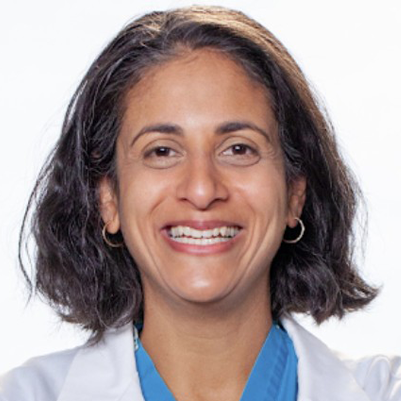
This past July was the warmest month on record across the contiguous United States. That’s giving Dr. Lisa Patel and her colleagues even more urgency in their climate change awareness work.
Dr. Patel is the executive director of the Medical Society Consortium on Climate and Health, which is focused on “mobilizing health voices for climate action.” But Dr. Patel and her colleagues recognize making the case requires thoughtful engagement.
“It’s not like your patients are going to come to you and say, ‘Teach me about climate change.’ What we need to do is infuse climate change into our counseling and guidance as it makes sense to do so.”
Co-hosts Mark Masselli and Margaret Flinter interview her on location at Aspen Ideas: Health, and discuss:
- How climate education can be incorporated into routine pediatric visits at two, four and six months
- Why rising temperatures are contributing to the spread of tick-borne diseases into regions where they were once uncommon
- How she approaches conversations with people who are skeptical about climate change
Click now for this very relevant conversation as the dog days of summer hit their stride.
Margaret Flinter (00:00)
Recorded on location at Aspen Ideas: Health in Aspen, Colorado.
(00:06)
[instrumental music plays]
Mark Masselli (00:11)
Well, Margaret, I think our viewers may wonder why we have this beautiful backdrop, and we're on location
here at Aspen Ideas: Health. And we're here to learn more about why major medical societies have pulled
together to say that climate change is the gre atest public health threat to the 21st century. And our guest here is
going to tell us why.
Dr. Lisa Patel (00:36)
It's not like your patients are going to come to you and say, "Teach me about climate change." What we need to
do is infuse climate change into our counseling and guidance, as it makes sense to do so.
Margaret (00:47)
Dr. Lisa Patel is the executive director of the Medical Society Consortium on Climate and Health and also
serves as clinical associate professor of pediatrics at Stanford University School of Medicine.
Dr. Patel (00:59)
I personall y, kinda like, “C ome for me. ” I'm here fighting for children. I'm here fighting for a livable future. So,
I'm just not going to shut up.
Margaret (01:10)
This is "Conversations on Healthcare."
Mark (01:23)
Well, Dr. Patel, welcome to "Conversations on Healthcare."
Dr. Patel (01:26)
Thank you so much for having me.
Mark (01:27)
And we loved your conversation yesterday. It was so informative. But tell us a little bit about the consortium,
why they've pulled together, why this is so important.
Dr. Patel (01:38)
So, the consortium started almost 10 years ago. We had long recognized, at least in the research, how climate
change was affecting health, and this was something that most of us did not receive in our medical training. And
there were two things. It was both t he impact on health, but also that we felt like the narrative around climate
change was missing the moment. Climate change is an environmental issue. But when we talk about it as an
environmental issue, it feels like it's a distant problem for a distant sp ecies. When we talk about it as a health
issue, it is both depolarizing, and it is deeply activating. So, for both of those reasons, the consortium started 10
years ago, and it has just grown exponentially since then.
Mark (02:23)
Tell a little bit about its goals and objectives. Is it -
Dr. Patel (02:26)
So , it is to place health at the center of Americans' understanding of climate change, and it's also to advocate for
policies that get us off fossil fuels and onto renewable energy.
Margaret (02:40)
Well, I understand, and this was good news, that the consortium recently received funding specifically to
strengthen your local organizing and collaboration efforts for your Climate and Health Equity Fellowship. I
heard you in your recent talk emphasize ho w important that local organizing was. Tell us what you're going to
do with that funding. What are your objectives, and what are the objectives for those fellows?
Dr. Patel (03:04)
Yes. So , we're facing two things. So , we do have some funding to do local work. This is thanks to the Kresge
Foundation that really understands how local a lot of these impacts are. We are, on the other hand, facing,
because of the climate that we're in, our Climate Health and Equity Fellowsh ip program that trains doctors
underrepresented in medicine, we've actually seen a contraction in that funding, unfortunately. Oh. And so, we
understand, there have been so many conversations at Aspen Ideas that how imp ortant it is, especially as we
think about health equity, that the physicians that are serving their communities look like their communities.
And yet all the political forces are working against that in this moment. So, this is to say we're still at it, and the
work that we're doing is places like Fresno, California, has some of the highest air pollution burden in the
country, and working with a physician that will be working there with local organizations to help raise the
profile for how climate change an d air pollution is affecting health.
Margaret (04:07)
Just always a challenge, right? People are in medical school or residency, and now you're saying local
organizing. Maybe give us an example. Do you have any from your prior fellows even of what kind of group
they go to and what they do to engage that group ? It is a sophisticated challenge sometimes to do that work.
Dr. Patel (04:29)
I'll give the example of Dr. Cheryl Holder. She's in Florida, and so she's started to work with midwives, actually.
And as you can imagine, Florida's a challenging place to do work on climate change, but a lot of the mothers
that they're working with are facing things like extreme heat. And we know that extreme heat is a driver for poor
birth outcomes. So, training midwives training doulas on what the threats are and how mothers can stay Very
interesting safe is extraordinarily important.
Margaret (04:57)
Great example. Thank you.
Mark (04:58)
I'm just pulling the thread on your statement about the political environment that we're in. We weren't always in
this, and we somehow lost our way in terms of bipartisanship. I go back to the 20th century. We have President
Roosevelt, who starts the US Fo rest Services. We have Nixon, who signs Who sets up the EPA. We have H.W.
Bush, who again, puts the cap and trade into effect about acid rain. How did we lose our way in terms of
bipartisanship, and how do we find our way back?
Dr. Patel (05:29)
I think there's a lot happening right now to try to divide Americans. When you look at the polling, guess what?
The majority of Americans want clean air. A majority of Americans want clean water. This is true across a lot of
issues, though. A majority of A mericans want gun control. A majority of Americans want access to reproductive
services. There's a real disconnect between the people that are in power right now and what Americans actually
want, and that, to me, is a longer conversation about where our de mocracy is. But when it comes specifically to
this issue, I will say a big part of this is the fossil fuel industry. They have borrowed from the playbook of the
tobacco industry, and so they have sown distrust. A most recent example is this whole debate th at happened
over gas stoves. There was a study that came out that showed that 13% of pediatric asthma cases in this country
could be attributed to gas stoves. As soon as the industry saw that, they sowed this entire culture war about, "Oh,
don't let the go vernment come for your gas stove." And that wasn't what we were talking about. But the industry
just jumped the moment they felt that they could face some pushback on use of their particular fuel.
Mark (06:43)
But they also picked up on that theme of smaller government, right? That they don't want big government
involved in your day - to - day work, and that somehow seems to resonate with people. And yet, you were talking
about examples of just local initiatives tha t are happening. They seem to be able to counter that.
Dr. Patel (07:00)
Well, I think what it actually was, and it gets back to our value premise, is that when we talk about climate
change and the burning of fossil fuels as a health issue, it is deeply resonant. So, if you can put a number and
say that burning gas in your home, 13% of pediatric asthma cases can be attributed to that, oh, that really hits
home, right? And so, I think that's why they came for it, is because they knew that health is a resonant issue.
Margaret (07:28)
Very personal. In your home.
Dr. Patel (07:29)
Very personal. Absolutely.
Margaret (07:32)
Well, Dr. Patel, you are a pediatrician, and you've made it clear that climate change is a pediatric health issue,
and you offer up that children are uniquely vulnerable to heat, to wildfire smoke, to infectious diseases, which
people don't always make tha t association, and other climate related hazards. And I wonder if you'd share with
our audience more of your insights, again, coming from that pediatric perspective, so important to parents. And
if there's somebody who's trusted in healthcare it's the pedi atrician caring for your children.
Dr. Patel (08:05)
And I'll just give some examples specifically of what I've seen in the hospital. And so, I've seen dehydrated
infants. I live in northern California. We don't have the same air conditioning coverage as you would have in
places in the South, for example. And so, infants, especially in the first week of life, are highly vulnerable to
periods of extreme heat. They just can't regulate their temperature the same way. Or I've seen families that are
trying to stretch their formula because the formula is so expensi ve. And when you dilute the formula that way,
that is also a risk for a different kind of dehydration in infants. So, we have to admit those infants and get them
rehydrated. I've cared for both athletes and outdoor workers who were outside in extreme heat that came in with
kidney damage. Now, in a young child or a teenager, that's easy to reverse, but emergency medicine physicians
will tell me they have outdoor workers that show up in frank kidney failure because they've taken hit after hit
after hit where they didn't get treatment, and now their kidneys are shot. During periods of wildfire smoke, we
estimate wildfire smoke to be 10 times as toxic as the regular air pollution we breathe. And that is because the
wildfires we're now seeing, Palisades is a grea t example. Cars go up in flames, batteries go up in flames
chemicals, and so that air pollution is much more toxic. Kids under the age of five, their airways are smaller,
and so a small amount of irritation in those smaller airways drives more respiratory trouble. And then there are
the mental health impacts. So, I'm a hospitalist, and so we have kids that come in on something called a 5150.
That means that they either tried to harm themselves or harm someone else. Often, they've been trying to harm
themselves, and they're placed on a psychiatric hold for three days. One of my physician colleagues who works
in the emergency room has started to put a number to how many of those kids are endorsing climate anxiety as
part of why they're there. And what I saw, o r what we experience, we don't have enough psychiatric beds in this
country. Those kids will sit in our emergency room for three days, which is the hold, and then at the end of it,
say, "I don't want to hurt myself anymore." And off they go with getting no ne of the services they need. So
those are just a few.
Margaret (10:19)
Wow. Those are pretty powerful. Do you want to make one comment maybe about the link to infectious
disease? Because I'm not sure parents have as much of an understanding of that.
Dr. Patel (10:28)
That's another one. So, we are seeing a spread of tick - borne disease. Ticks, their habitat is changing. And so,
what I'm hearing from pediatricians is that they never really had to learn how to treat things like Lyme. You
learn in medical school, but unless you're in a place with it, you don't really learn -
Margaret (10:46)
Like where we are.
Mark (10:47)
We're in Connecticut.
Dr. Patel (10:48)
Oh, yes. But the habitat is spreading, and so it's entering new places where you may not know that it's a threat.
But it is because the habitat is now in different places.
Mark (10:59)
I'm going to pull it out of the hospital, pull it back to primary care. And you say that pediatricians should be
trained on climate related health impact. What's that look like in an exam room? Margaret, we're involved in
Prescription for Play. Where we're at the primary care office educating families how to play together . What do
you have in a primary care office that might be analogous, that might help people explain how this impacts your
youngsters?
Dr. Patel (11:28)
I wish we were farther. There's so much more we need to do. One of the things we've been trying to do in
pediatrics is to -- It's not like your patients are going to come to you and say, "Teach me about climate change."
What we need to do is infuse climate change into our counseling and guidance, as it makes sense to do so. And
so, we, a colleague of mine, Becca Phillips Borne at Emory, she's put some thought into when you go for the
two - month visit or the four - month visit or the six - month visit, because par ents have to go for each of those.
Integrating … there's a checklist that you do that we all use called Bright Futures. Can we do a little bit of
climate education in each of those visits as it makes sense for why the parent came to you at that point in time?
And in pediatrics, that's what we would love to see, is to not create a whole visit around climate, but build
parents' efficacy to understand how the world is changing bit by bit as the child grows.
Margaret (12:28)
And that may be different from region to region and from season to season but having that as anticipatory
guidance makes a lot of sense.
Dr. Patel (12:36)
And I'll give you a really concrete example that I've started to do in my practice. A lot of my patients are on
Medicaid. Many of them need food assistance. And so, it has become my practice from spring until late
summer, to ask them when they go home, "Do you have access to air conditioning? Can you afford your air
conditioning bill?" And I've actually found two families where they answered that they didn't have air
conditioning, or they couldn't afford that bill. And as I mentioned, there's a higher risk of mortality in that first
week. And so, we work with social work to find them a safe place to be.
Margaret (13:09)
And Medicaid will cover that in many states, but I'm sure that's not universal and parents need to know to ask
for it because they may not associate newborns with the same issue as older...
Dr. Patel (13:17)
Medicaid probably does not cover your ability to stay somewhere else. We found them relatives to stay with.
Margaret (13:22)
Air conditioning.
Dr. Patel (13:23)
Oh, yes. In many states. There are some states, like Oregon, where things like climate benefits are starting to
show up. But they are the exception, not the norm.
Margaret (13:33)
Well, I want to talk about a recent piece you had that had a headline, certainly caught one's attention, "The EPA
Just Made Our Air Less Safe to Breathe." What did they do, and how did you come to that conclusion?
Dr. Patel (13:46)
So, the EPA has taken a number of actions over the last year and a half. When Administrator Zeldin came into
his position, he said that he was going to do a mass deregulation. And so many of the air quality protections that
we had put in place based on sci ence and based on tens of thousands, if not millions , of public comment said we
need to strengthen our air quality protection. The more research we have, the more we understand there's no
level of air pollution that is safe. But this administration has sai d that their priority is to protect industry profit
and not even to count the health or how our health will be damaged by deregulation. What I'm concerned about
by the series of actions they've taken is that a child born today can likely expect to breathe poorer air quality
than what we enjoyed. The Clean Air Act was a huge public health victory. Hundreds of thousands of lives
saved, and now we're erasing all of it. It's such a shame. It's the same with vaccines, right? Huge public health
victory, and we're essentially erasing all those lessons.
Mark (14:59)
I want to go back to the question we had earlier about bipartisanship, and I know that the Center for American
Progress collected information that showed that there were 123 members of Congress who sort of publicly
denied the scientific consensus about the environment. And again, trying to figure out whether that is something
that's about the facts or is about politics.
Dr. Patel (15:23)
It's about money. Yeah, again, it's who funds them to be in office, and the fossil fuel lobby has a lot of money.
And so , they will not go across a lobby that is willing to pay them as much as they get. That's what this is about.
So much of health is about money, who makes it and who doesn't.
Mark (15:43)
But I don't think you can have a conversation with a constituent where somebody says, "Boy, the weather keeps
on changing." If you're down South now, all of the floods that are happening, 20 inches in an hour or whatever, I
think people are noting, and you still think they're not listening to their constituents, they're more influenced by
the...
Dr. Patel (16:03)
Well, it's interesting. What I've found in my conversations with lawmakers, who might doubt or dismiss climate
change, we find other ways to talk about it. And so, I actually met with a staff member for a representative in
Arizona who wanted to abolish the EPA. So, I'm not sure, right? You would think that we don't have a place to
start, but he also deeply believes in the rights of the unborn child. And so, what I said to him was that fossil fuel
pollution crosses the placenta and enters the developing fetu s. We have found evidence of that pollution in a
developing fetus's brains, lungs, and liver.
Margaret (16:42)
That's powerful.
Dr. Patel (16:43)
That caught his attention.
Margaret (16:43)
That's powerful.
Dr. Patel (16:44)
Right? So, you have to find, there are just so many ways that the pollution that we've just dumped on our
beautiful Earth you've got to find the ways in. The other place that we found, especially people that work with
agriculture or with ranchers, water. Water acces s is a big deal. And we are seeing all of the precipitation and
water availability patterns change because of climate change. So just don't say climate change. Really bring it
down to the issue that matters.
Mark (17:14)
Well, we're here in Colorado, the Colorado River, which impacts all the way over to California is having an
enormous impact on all elements of p ublic life.
Dr. Patel (17:24)
But when you bring it really tangibly to the issues that we all care about and don't use the hot button words, you
can build that consensus. One more example on this point. I had a colleague go visit Josh Hawley's office. And
the staffers there were saying they are just loudly hearing from their constituents about data centers and all the
concern around data centers. And so, they were saying to my colleague, "Please give us the data on health. We
need to understand how this is affecting the health of our co nstituents, and we know how to help them." Right?
And so, when you talk in that common currency, the things we care about, we can actually move forward.
Margaret (18:07)
Well, Dr. Patel, one of your, I think, areas of national impact is through your service on the National Academy
of Medicine Collaborative for Decarbonizing Healthcare. We heard from Dr. Zhao and you yesterday about that.
Tell us, where's the responsibility going to lie here? We know what it's like to turn healthcare around on
anything. We say it takes 17 years to get a new idea, and we don't have 17 years. Is this going to be
organizationally driven, accreditation regulator driven? And what's the role for a pediatrician in practice like
yourself? What's the individual level there?
Dr. Patel (18:45)
And I think much like government at large, it's a little carrot and stick. You do a little bit of all of it. And so, part
of what we're trying to do is, as clinicians, you have to be board certified. And so, we are trying to work it into
board certification into the exams that all physicians have to take to just make Right this education that you have
to receive. So, from medical school through residency, through your board certification. It's not easy. To your
point, we've been at it for 10 years.
Margaret (19:16)
And recertification once you get certified.
Dr. Patel (19:18)
Correct. Because what we hear is, "Oh, there's already too much to pack in there. We can't pack in one more
thing." And so, what we need them to understand, this is not one more thing. This is the thing that is the public
health crisis of the 21st century. So, it's really past time that we have to prepare people for it. At the same time,
most physicians are getting their medical education credits, their CME, through conferences, through podcasts
lots of other ways. And so, we really need to start targeting the places that are the highest traffic and then move
out that way. And so, I've been lucky. Up2Date is a resource that a lot of physicians use. And so, getting
information into Up2Date has been important. Getting information, we actually have a column with Me dPage
Today, getting the information out through venues like MedPage Today. So, picking these high impact areas and
trying to make sure that they offer climate content.
Margaret (20:16)
And for individuals, that may change people's attitude, beliefs, and action. But what about organizational
change? Is there anything on the horizon? Are you advocating for the Joint Commission or for HRSA -- Well,
probably not HRSA at this point in time. Bu t any of the accrediting organizations to say, "Look, healthcare
organization, decarbonizing is part of your responsibility as a healthcare organization"?
Dr. Patel (20:39)
So full credit to the Joint Commission, they actually tried a few years ago. And they were going to mandate
certain sustainability criteria, and there was a block of hospitals that they heard loud and clear that if they were
forced, they would just go to a different accrediting body. And so, they made it optional. They built it in. But we
have some work to do there. And I think especially with the generation that's coming up that understands that
this is no longer optional I think we'll be in a different pl ace as the years move on.
Mark (21:14)
I want to get back to the concept of things that aren't easy.
Margaret (21:19)
It's all of them.
Mark (21:20)
Particularly as a scientist and as a physician taking public stands on environmental issues where you're maybe
being viewed as partisan. What are you hearing from your colleagues, and what are the sort of benefits of risk
and risk that people face when the y're out there speaking their mind?
Dr. Patel (21:38)
And this is where I think it's so important for allyship. There are certain people where you can speak out and the
risks to you are far less than my Black physician colleagues, for example. So, I personally, kind of , “C ome for
me. ” I'm here fighting for children. I'm here fighting for a livable future. So, I'm not just not going to shut up.
This is too important. There are also colleagues of mine I'm really grateful to at my institution at Stanford
Health Care. They cheer me on. And so, they're proud of the fact that I'm out there speaking out on these issues
because the language I use, again, is rooted in the values that we can all agree on. But to your point, there are
things happening in other places. I have colleagues in Houston who are afraid to talk ab out climate change
because they're afraid they're going to be fired. I have colleagues at other hospitals that are told that they can't
speak to media, can't so much as write an op - ed right now because they don't want the administration's gaze on
them. So yeah, it's tough. It's tough depending on what risks you yourself might be taking. And so, I would say,
for me at least, I'm in a context where I don't face those constraints. So, I'm out there.
Margaret (22:57)
Well, you're out there both on this national platform with all of your knowledge about climate change, but you
also continue to practice as a pediatrician which of course gives you tremendous credibility I think, both
nationally and personally. But I'm won dering, using your own institution as an example, and you've spoken so
positively about it, what's your experience with getting everybody else on board? It's from the maintenance
department to the clinical assistants, to the medical staff, the nursing staf f, the administrators. How do - How
many efforts or what are the insights that you've had, perhaps, of trying to mobilize understanding and action in
your own petri dishes, we would say of an institution?
Dr. Patel (23:39)
It has just blown me away, and I think especially because the sky turned orange for us in California in 2020. It
was really frightening. And we've dealt with wildfire after wildfire. And so, I would say in California, where I
am, there is an understanding that things are changing at a really rapid and scary pace. And so, when we first
made the case and our CEO decided to invest more in a sustainability office, actually a lot of it seemed to
organically rise up.
Margaret (24:11)
In a sustainability office within your institution.
Dr. Patel (24:13)
Within Stanford. And so, everybody was excited when we started to talk about, "Oh, the institution wants to
take on sustainability." It didn't really take a lot of convincing because people could see themselves in the work.
And three years down the line, after we've really fully funded a sustainability office, I went to a presentation
about where it was. And yeah, along every line, people were engaged and involved. Now we know from
research that people actually want their institutions to take on sustainabil ity, especially the younger generations
because it does, it feels like you're part of something bigger than yourself and that you can see yourself in
making the institution do better. And that's just something we all want to be a part of.
Mark (24:59)
Your history, your story is so inspiring. Maybe talk a little bit about, you started off as an environmental
scientist and then you moved your way over to as a physician. Does that give you more credibility in speaking
on these particular areas? But start off with your journey because I think our viewers would be interested in
knowing more about where you came from.
Dr. Patel (25:23)
So, I came out of college and decided I was going to do ecology and evolution. First, I was going to work on
saving tropical rainforests, and I got into that field work and sort of recognized that I wanted to do something
that was more service - oriented, bu t now I had this background in environmental science. So, I went and I
worked for the EPA, and there I worked very closely with the government of India, with the ministries there, on
specifically air and water quality. And that just really opened my eyes. I remember we were doing a New York
to Mumbai sharing project on childhood asthma, and so they took me to the pediatric ward in Mumbai for
children that were having asthma attacks. And then they took me to the gymnasium next to the hospital because
there w ere so many children suffering from asthma they couldn't fit within the hospital itself. And that was the
first time I came to recognize, I'm like, "What? This is crazy." The air is so polluted that children have this
disease from a very young age that the y're going to have to live with for a long time. So, from there, I realized
that, again, I wanted to do something more service - oriented, but I had that background in government. And so, I
went through my pediatrics training and came out the other side and started working on climate change. I didn't
really have a leadership position to begin with. There were none. But the more the health impacts of climate
change accelerated, the more organizations took it on, the more positions opened to do this kind of wor k.
Margaret (26:57)
Well, you spoke about Mumbai. Here in the United States, I know you're involved with an organization,
Undaunted K through 12 which advocates for climate - ready schools in the US. And there's been quite a bit of
conversation just in the last day or two I've heard about our missed opportunity during COVID to really
renovate our existing schools to be climate ready. Tell me what you're thinking about with the Undaunted K
through 12 part advocacy and education, but are you trying to make a push for that kind of organizing at the
local level with school systems as well?
Dr. Patel (27:31)
So, I should say I'm on their board. I'm a huge supporter for them, but it is them. They're the ones that are doing
this absolutely fantastic work.
Margaret (27:39)
And nationally ?
Dr. Patel (27:40)
I think their work right now has been really concentrated around California and Massachusetts. When the
Inflation Reduction Act passed and there were tax credits that schools could take advantage of, there was a
moment where they were working more widely a cross the country. There has been some pivoting with the
gutting of the Inflation Reduction Act under the big, beautiful bill where we once again had to reconsider. What
we need, we need a huge federal investment, and we saw some of it during the pandemic for HVAC systems.
That was a start. But it's really a drop in the bucket. Most school infrastructure relies on local funding, and it is
simply not enough. And so, what I constantly say is, my goodness, we need schools that are worthy of our
children, and we are so failing on that front. There's a school just two miles away from where we are in San
Francisco Unified where the teachers thought they smelled gas, and t hey were told it's not gas, it's just rats
decomposing in the walls. As though this is a legit imate reason. It turned out it was gas. And this, by the way,
was right when -
Margaret (28:50)
I don't know if that was the good news or the bad news.
Dr. Patel (28:52)
Well, So all the kids, they just got back in school after the pandemic, traumatized from the pandemic itself. And
then they have to evacuate the entire school because the school could explode from gas. This is insane. We're
the richest country in the world , and we can't guarantee a good school building for our children? To me it's a
huge policy failure.
Margaret (29:13)
A building worthy of our school children.
Mark (29:15)
Balance off the despair with hope. What do you see out there that gives you excitement?
Dr. Patel (29:19)
Oh, everyone who's activated. I won't even look at my inbox. I usually try to keep up with my inbox, but my
goodness, I get so many emails from students, doctors, nurses, all around the country who want to do
something. And I feel a great amount of privile ge that they reach out to me, and I'm like, "Okay, go here. Go
here. Go here," because there's so much we can do. Things like green spaces for children, so good for their
learning, so good for their socio - emotional development and hopeful. There are just s o many solutions.
Mark (29:58)
Thank you, Dr. Patel, for this engaging conversation. We'll continue to follow your work.
Dr. Patel (30:03)
Wonderful. Thank you so much for the opportunity.
(30:06)
[instrumental music plays]
Margaret (30:09)
This copyrighted program is produced by Conversations on Healthcare and cannot be reproduced or
retransmitted in whole or in part without the express written consent from Community Health Center, Inc. The
views expressed by guests are their own and they do not necessarily reflect the opinion of Conversations on
Healthcare or its affiliated entities.
(30:30)
[instrumental music plays out]