Here Comes the Sun — And Is Too Much Exposure a Worry?
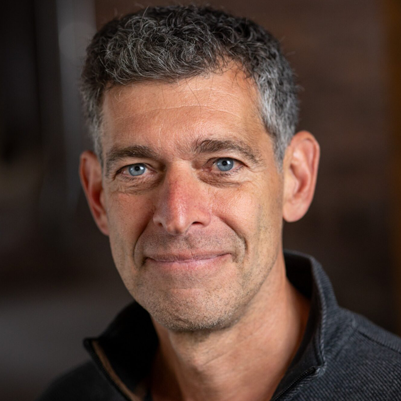
As we get ready to enjoy the Labor Day weekend, author Rowan Jacobsen is taking on dermatologists and the skin care industry. He explains that doctors have long told us to avoid sun exposure, in order to reduce rates of skin cancer. Yet the research indicates that moderate sun exposure leads to lower rates of many diseases, including heart attack, stroke, obesity, diabetes, dementia, depression, Parkinson’s, myopia, respiratory infections, certain cancers and autoimmune conditions.
Hosts Mark Masselli and Margaret Flinter talk to Jacobsen about his book “In Defense of Sunlight” and he explains his understanding of the science. They also get Jacobsen’s reaction to the statement from the American Academy of Dermatology, which says “many of the claims in this book are inadequately supported.”
(00:00)
[instrumental music plays]
Mark Masselli (00:04)
Have you had a good summer? Do you have the telltale sign of summer, a deep tan? You might be worried that
skin cancer is in your future. Our guest is here to explain why he thinks the fear is overblown.
Rowan Jacobsen (00:17)
In terms of mortality, skin cancer is actually a very, very small piece of the picture. Almost all of those cases of
skin cancer are relatively minor. They just need to be cut out by a doctor. They don't spread.
Margaret Flinter ( 00:31)
Rowan Jacobsen is the award - winning author of the book, "In Defense of Sunlight: The Surprising Science of
Sun Exposure." He's here to illuminate some common misunderstandings about the sun and our health.
Rowan ( 00:45)
Clearly, burns are bad, so just don't burn. But also, it's easy to think you're fine and then discover that you're a
little pink at the end of the day. So don't get anywhere close to burning seems to be better guidelines for me.
Basically, what it comes down to is don't swe at those little exposures, but any time you think you're going to be
out in the sun for an extended period, you would want to take all the usual precautions.
Margaret ( 01:10)
This is "Conversations on Health C are."
Mark ( 01:23)
Rowan Jacobsen, welcome to "Conversations on Health C are."
Rowan ( 01:27)
Thanks. It's so good to be here.
Mark ( 01:28)
Margaret, I asked our producers earlier, could we play "Here Comes the Sun" by The Beatles in the
background? Apparently, we don't have that in our budget.
Rowa n (01:38)
That's right. That might blow the budget, right ?
Mark (01:40)
Let's focus in on your book, which includes the fact that there are over five million cases of skin cancer each
year in the United States. That's more than all other types of cancers combined. So how can you defend
sunlight?
Rowan (01:54)
Yeah, good question. So yeah, there are five million cases of skin cancer per year. By far the most of any type
of cancer. But in terms of mortality, skin cancer is actually a very, very small piece of the picture. Almost all of
those cases of skin cancer are relatively minor. They just need to be cut out by a doctor. They don't spread. So
sometimes I think we have the sense that skin cancer is a major impact on public health and a major impact on
mo rtality, and it's not either of those things. So, it's very common, but it's almost always a minor procedure to
get rid of it.
Margaret (02:37)
Well, I thought it, I don't know, somewhere between interesting and amusing, you shared the story of a doctor
w ho congratulates the patient when he diagnoses them with basal cell carcinoma, which seemed a little bit
extreme. But I wanted to ask you to tell us, what is he trying to achieve with the congratulations?
Rowan (02:56)
So, this is one of those funny thing s where you look at the epidemiological studies, and you can see that people
who get diagnosed with basal cell carcinomas, which is the most common, that's probably responsible for three,
three and a half million of those cases. People who get diagnosed wi th BCCs have better health outcomes and
better longevity than people who don't get diagnosed with BCCs at the same age, which sounds crazy. And it
doesn't mean the BCC is actually good for you. What it means is that the people who tend to get BCCs tend to
be healthy people. They're getting those BCCs because they're out in the sun living a healthy lifestyle, and the
BCC doesn't negatively impact that health at all. So, it's an indicator that you're living a healthy lifestyle
strangely enough.
Mark (03:49)
Well, that's great. You also believe it makes no sense to recommend limiting sun exposure to lower rates of skin
cancer because doing so raises the rates of other, more problematic diseases. Tell us a little more here about this
research.
Rowan (04:07)
So , this is what scientists are starting to point to more and more and ask the question. All of that observational
data that shows that more sun exposure leads to higher rates of skin cancer also shows that it leads to lower rates
of other diseases that do a ctually have a much bigger impact on overall public health and mortality. So that
includes the big systemic cancers like lung cancer, breast cancer, colon cancer, and also includes cardiovascular
diseases, which are the number one killer in the US. So, hea rt attack, stroke, diabetes, atherosclerosis. Those are
responsible for I think upwards of a million deaths per year, while skin cancer is more like 89,000 deaths per
year. So, anything you can do to move the needle on cardiovascular disease and internal c ancers would be huge
in terms of public health. So that's why as the evidence that moderate sun exposure can reduce your risk of those
diseases, as that evidence has gotten stronger, doctors have started to ask whether we should be thinking about
the balan ce of the risks and rewards of a little bit of sun exposure.
Margaret (05:22)
Well, I think therein lies some of the challenge a little bit and a lot, right? Too much and too little. And we want
to be clear for our audience, there are risks. And for young people particularly, a Harvard study showed that
getting burned five or more times before the age of 20 doubles the risk of melanoma compared to those with no
such burns. So, I think the message has to be nuanced, presenting the risks, especially for all the people out there
who perhaps have excessive sun exposure and not a healthy dose of sun exposure. Is that right? How do we find
that balance? What is that balance in the message that you would think that people should be given?
Rowan (06:04)
Exactly. T hat is the question to ask, and I've asked a lot of the scientists that question, and you're exactly right.
Histories of sunburns are associated with significantly higher rates of melanoma, and histories of going to
tanning beds when you're young also asso ciated with higher rates of melanoma. So, it's clear that that type of
exposure, that type of intense exposure, does contribute to melanoma. There's nothing in the dataset that
indicates that what we think of as garden variety sun exposure, like the kind t hat you get when you're going
from your house to your car or when you're doing a little gardening. That isn't associated with higher rates of
melanoma. So, it looks like the dangers come from those intense exposures that your skin isn't ready for. So, if
y ou haven't been getting any sun and suddenly you go to a tanning bed and you get hit with all that UVA
radiation, or you go to Miami for a week and really burn yourself. Or even if you use sunblock, but you expose
your body to 10 or 12 hours a day of inten se sunshine and what's coming out of sort of a wintry northern
environment. That seems to be what really sets you up for trouble and what your cells can't handle. So, as you
say, Margaret, then you have to ask the question of how you manage that nuanced re commendation, like get a
little but not too much. And so yeah, like I said, I've asked scientists that question, and a lot of them have said to
me, well, clearly burns are bad, so just don't burn. But also, it's easy to think you're fine and then discover that
you're a little pink at the end of the day. So don't get anywhere close to burning seems to be better guidelines for
me. Basically, what it comes down to is don't sweat those little exposures. But any time you think you're going
to be out in the sun f or an extended period, you would want to take all the usual precautions.
Mark (08:05)
Rowan, I think there was some exciting front - page news. Researchers announced really some promising late -
stage results for a personalized cancer vaccine. I think it was a mixture of Keytruda and an RA combination to
prevent melanoma from returning or spreading. It seems like this is a real game changer for how we think about
the risk and benefits of sun exposure. What are your thoughts?
Rowan (08:31)
Yeah, that's such an interesting question. So, it does look like if this pans out, we're going to have melanoma on
the run a little bit. This was an mRNA vaccine. The challenge with melanoma, the reason it does become
invasive and can be hard to fight is b ecause it's very good at hiding from the immune system. Mm - hmm. And
so, then it can spread internally. But so, this mRNA vaccine basically Prevents it from hiding. So, what they
would do is for every individual case of melanoma, they would sequence the gen ome of the melanoma for that
individual patient and then design a bespoke mRNA vaccine for that patient that shows the immune system the
signatures of that melanoma, so then it's like, "Oh, I know where to find that," and then it goes through the body
and eliminates it. And so that will be a game changer on melanoma. And even before that, the checkpoint
inhibitors have really worked well with melanoma in particular. So, mortality for melanoma has actually been
declining since 2013. So, for about a dozen yea rs, deaths from melanoma have been going down, and deaths per
100,000 people have been going down pretty quickly, after they were kind of flat for a few decades before that.
So, it's actually becoming a less scary disease already, and this mRNA breakthroug h is probably going to make
it even more of a minor disease. So yeah, you're actually making the next connection that I haven't seen anyone
make in the media yet, which is that that might actually mean that if melanoma becomes not a huge deal to
manage, th at sun exposure is even less scary than I have been thinking it was. So, it'll be interesting to see how
that discussion plays out. But I will also say that I'm not sure anyone has wrapped their heads around how much
it's going to cost.
Mark (10:27)
Well, I was just going to say -
Rowan (10:28)
An mRNA vaccine for every single patient.
Mark (10:31)
That's going to be the $84,000 question of how much, because that's $84,000.
Margaret (10:39)
And we want to be all about prevention, right? It is a horrible diagnosis for people to get, and extremely
invasive of life and longevity and ability to carry on with their normal things. So, it comes - an effective
treatment comes way too far down the road relative to prevention, I think. But of course, we want effecti ve
treatment as well.
Rowan (11:01)
For sure. It's going to be like the last step, the last resort. But it'll be great if it's there as a successful last step fo r
people who would otherwise be dying.
Margaret (11:13)
Yep. Absolutely. Well, the FDA recently expanded its list of allowed sunscreen ingredients to include the
chemical compound bemotrizinol , if I'm saying it correctly. The Environmental Working Group advocates for
stricter sunscreen regulations, praise the F DA's move. From your point of view, is this good news? Any
concerns with that?
Rowan (11:34)
Yeah, I think this is a really good development, too. And I have seen that word pronounced every which way.
Including by the experts. Like, I think -
Margaret (11 :42)
Well, go ahead and give it your pronunciation. That's good. We'll have two on the table.
Rowan (11:45)
It seems like either be h - mo - triz - eh - nol or be e - mo - triz - eh - nol. But you can also just say BMT. Like, I see a lot of
people just saying BMT.
Margaret (11:53)
All right. That's the easy way out.
Rowan (11:54)
However you say it, it's been sort of like the leading ingredient in European sunscreens for quite a while now,
and it unquestionably works better than what we have here in the US. And tha t's because sunscreens are
regulated differently in the US than in Europe. Pretty much everywhere else in the world, they're a cosmetic, so
you don't have to go through a bunch of safety hoops to get your product on the market. In the US, sunscreens
are re gulated as an over - the - counter drug, so you have to do a lot of safety testing to get a new ingredient passed
by the FDA. And the companies haven't been willing to do that. It's very expensive, and there's some other
challenges. So, we're basically, here i n the US, we've been stuck with ingredients that are a generation behind
the rest of the world. Like, no new ingredients have been introduced here in over 20 years. So finally, the
company that makes bemotrizinol did go through all the safety testing. It c ost them, like, $19 million or
something. They got it cleared, and the reason that matters is because the ingredients that we've been using, the
chemical filters here in the US that we use, they don't block all the UVA wavelengths of light. So ultraviolet
light, which is what can trigger skin cancer, we divide it up into UVB and UVA, and we used to think only
UVB caused skin cancer, and all our old sunscreens block that completely. But they used to not block UVA at
all. Then, in the 1980s, early '90s, we re alized that UVA can indirectly cause skin cancer. So, we introduced
ingredients that blocked maybe 50% of it. But to this day, the sunscreen ingredients that we have do not block
more than 50, 60% of UVA, so they do let some UVA in still. And that's always been problematic, and we
haven't talked about it as much as probably we should have. Bemotrizinol blocks all the UVA. It blocks all the
light right up to the blue, the visible light. So that is going to be significantly better than what we've had so far.
And also, it seems to perform better in terms of how it's applied, the smoothness, the sort of invisibility of it. So
yeah, as soon as those sunscreens are on the market, which is going to be any day, I think September is when
they're going to start rollin g them out. I would say throw out your old stuff and get the new stuff because it
should make a difference.
Mark (14:25)
It's kind of interesting; the FDA is blocking sunscreen but allowing vaping. I think we heard that. It's kind of
weird. That's a whole other conversation.
Rowan (14:52)
Yeah, I dive into the history quite a bit in my book because it's so interesting, and it's interesting how we have
continued to flip on this subject. So, in the late 1800s, right around 1900, people began really thinking that the
sun was a panacea of sorts, that it could cure almost anything. Hmm. And that was because of two diseases that
were major scourges of Europe and the US in the late 1800s, and that is tuberculosis and rickets. And they were
both, in a sense, dise ases that arose with the Industrial Revolution, when everyone was moving from an agrarian
civilization where most people worked on farms, to an industrial civilization, where a lot of people were
working in factories and were living in tenement buildings i n cities, and the cities were choked in coal smog ,
c oal dust . So there were a lot of people who were suddenly getting almost no sunlight after getting a lot of
sunlight working as farmers. So, all the kids started getting rickets, which we know is a disea se that happens
when you're not exposed to the sun, and you can't make vitamin D in your body. That lack of vitamin D
prevents your bones from hardening up when you're a kid. So suddenly, all the kids in the Industrial Revolution
were getting rickets, and they figured out that sunlight could cure it because of vitamin D. That's how they
discovered vitamin D. And at the same time, tuberculosis was the absolute worst disease in the US and Europe.
And it's an infectious disease that can infect the lungs or the skin. But also, the concentration of cities in the
Industrial Revolution was allowing it to spread much more easily, and also the lack of sunlight, because sunlight
kills the bacterium, it turns out. So, a doctor named Nils Finson in Copenhagen discovered that and won the
Nobel Prize for it in 1903, and he started treating people with tuberculosis with concentrated sunlight. And so
then, the sanitariums up in the Alps picked up on that. And when people would go up to the sanitariums to cure
themselves of tuberculosis, they'd get the fresh air, but they'd also get light treatments. Even in winter, they'd be
outside getting their light treatments, and it seemed to work pretty well. So, then everyone sort of looked at
rickets, looked at tuberculosis, and bega n to think that the sun might cure everything. It might be like this source
of health. And the best doctors of the day were pretty much on board with sun treatments. So, you see through
the 1920s, this sun obsession taking hold in the US in particular, whe re people would just try to get as much sun
as they possibly could, and ultraviolet light in particular, to cure whatever their diseases were. And it was
probably helpful in certain ways, but they began thinking that even a burn was going to be good for th em. And
companies like GE began marketing ultraviolet lights for the home, so you could burn yourself in the comfort of
your own home without having to go to the beach. Oh. And then people started getting skin cancer 20 years
later, and it took a while for doctors to convince everyone that this thing that they'd been told was good for them
was actually bad for them in these excessive amounts. And it ended up being so hard to convince people To sort
of scare people away from that level of sun exposure. You g uys probably remember, I do. In the '70s, there was
some hardcore tanning culture out there with Johnson's Baby Oil and people getting also pretty fried at the
beach. Anyway, so having flipped to the sun is good, we had to really work hard to convince peop le that
actually the sun is bad, so then we flipped hard back in the bad direction. So now maybe we need to bring the
pendulum back a little ways closer to the middle.
Margaret (18:47)
Well, that's a great history lesson, and certainly remember from child hood people speaking of the sanitariums,
that great Uncle Joe or Aunt Mary had to go to get the treatment, which was really just light, sunlight, and good
food, and isolation, I guess so they didn't infect others. But now we've talked and hit a little bit on policy here,
and one that is kind of shocking to me was that the FDA earlier this year dropped a proposal to ban tanning
beds, which I thought was kind of a sure go, that that would happen for anyone under 18. I have to say, even
over 18 seems not a gre at idea. But under 18, I would've thought was a kind of a no controversy. Surprisingly
anything can be a controversy these days. But what are your thoughts on that? Were you surprised by that?
Rowan (19:39)
Well, I don't know what the politics are exactl y, and I think there's probably a lot of money at play. But yes,
many countries in Europe, I think, have bans or at least pushing for bans for kids. Yeah, if a kid can't smoke a
cigarette, probably a kid shouldn't be able to use a tanning booth either. But yeah, it's exactly the wrong
combination of rays with lots of UVA and almost no UVB. And UVB can actually help create vitamin D to
balance out some of the bad effects of UVA. But yes, I know some people who use tanning beds. I live in
Vermont, where the w inters are long and dark, and they are trying to self - medicate their way out of a problem,
which is the lack of vitamin D and various other deficiencies that the lack of light causes. And I get in a sense, a
tanning bed is the only option open to them, so they're instinctively going for it. But it's not the right solution to
the problem. So yeah, those need to be improved quite a bit. And there's a place, I think, for light - based
medicine to apply some of those deficiencies that you get in a really dark win ter environment. Right now, the
science in the tanning bed world is not up to that. So, yeah, it's something that people should definitely stay
away from for now.
Mark (21:03)
Margaret, you were talking about controversies, and Ro w an, this is not a surpri se to you, but the American
Academy of Dermatology has a statement about your book, and it says your writing, and quote, " …s eeks to
undermine long - established public health guidance aimed at preventing skin cancer. Many of the claims in the
book are inadeq uately supported by low - level evidence, a single supportive paper on the personal opinions of
one doctor. On the other hand, the science linking unprotected sun exposure to skin cancer, including
melanoma, is long - standing and well - established." That's the end of the quote. How do you respond?
Rowan (21:40)
Things are actually coming along fine. They basically do a version of that boilerplate statement every time an
article comes out saying maybe a little bit of sun is good for you. And I've seen variation s on the same letter
going back before my time to other magazines that put out those kind of pieces. They're actually coming along
on this, but they have to do it slowly. And actually, the whole dermatology field is going to be energized by this
whole sort of area we're entering, which I think of as light medicine, where - Mm ... the more you realize that
light affects the function of the body in all these different ways, and so that you can really sort of modulate the
function of the body in ways that can b e beneficial through light, and that skin is the mediator for all that. So
that means that dermatologists are going to be the ones to really lead this whole area of light therapy. So, they're
going to come along pretty well, but there's going to be some re sistance in the early stages. But it's often the
exact same studies that have been used to show that sun exposure raises the risk of skin cancer. It's the exact
same data set that shows that sun exposure reduces the rates of internal cancers and cardiovasc ular disease.
Mark (23:02)
Talk to us a little bit about light therapy. Is this a counter to vitamin D, or what's the light therapy?
Rowan (23:09)
So, it's an acute area of study now. Almost every different part of the solar spectrum is absorbed by different
molecules in the body, so has a different impact on the functioning of the body. And so, the solar spectrum
includes all of the visible waveleng ths, so all the colors, what we think of as the colors, but also the ultraviolet
light, which we can't see, and infrared light, which we can't see, which is on the other end of the spectrum. So
ultraviolet is the highest energy portion of the spectrum. The n you've got the visible light, so blue is the highest
energy part of the visible spectrum, but it's got less energy than ultraviolet. And then red is the lowest energy
part of the visible spectrum. But then you've got infrared, which is even lower than re d. All of those different
wavelengths penetrate the body to different depths and get absorbed by different molecules in the body, and
light is pure energy. So, when that energy gets absorbed by a molecule in the body, it changes the behavior of
that molecu le. It excites the electrons. That energy gets absorbed and changes the chemistry. So, it basically
changes metabolism. So, we now know that you can really modulate the metabolism of the entire organism,
including a human, through light, and that when you remove that sunlight that we used to be getting 12 hours a
day, you basically end up slowing metabolism. You clog up metabolism. The body doesn't make energy in its
mitochondria as quickly, and it doesn't make things like vitamin D as quickly, and it doesn 't make things like
nitric oxide, which is one of the main ways that blood pressure gets reduced and inflammation gets reduced. So
as scientists are making all these discoveries, they're realizing that shining different types of wavelengths at the
body can change behavior. So, you shine red light on parts of the body, especially infrared light, which
penetrates even deeper. You increase metabolism, you reduce blood glucose, you lower the rate of diabetes, and
you increase energy production. And so that's wh at's behind red light therapy, which actually dermatologists
have embraced very aggressively, even though the science on that is in its very early stages. So, in this case,
patients love it, right? So, they're not going to wait for the big clinical trials on that one. Thousands of
dermatology clinics now use red light therapy, and they should be because it looks pretty good, and there doesn't
seem to be any risk there. Different other wavelengths do dif ferent things. Blue light is very closely connected
to our circadian rhythms and how the body knows when to be active and when to sleep. And then ultraviolet is
also related to all that, and it's used to make nitric oxide, which lowers blood pressure, vita min D, which really
marshals the body's entire damage repair system. So, you need all of them in different amounts. And as we dial
that in and become more skilled at learning what this particular wavelength does or what that particular
wavelength does, a l ot of medicine is going to be administered via light energy rather than pharmaceuticals, I
think. So that's going to be a bud ding field, and dermatologists are going to be a big part of that.
Margaret (26:35)
Well, that's great and very interesting. And I wonder, this may be a little to the side of what your primary focus
is, but in the clinical world, and we're in primary care community health centers, the question about how often
should I see the dermatologist is really, how on earth can I possibly see a dermatologist? Where can I find a
dermatologist? How can I afford a dermatologist? And so, when we talk about skin cancer and the question we
started with about congratulations, it's a basal cell, meaning you're getting enough sun. The very sobering reali ty
is patients have all kinds of things that they don't know what they are, arrive in primary care where it may or
may not be clear, and yet there's a real dearth of dermatologists, and accessing them is difficult, and for
uninsured folks, it's often near impossible. We've converted to a system of e - consults with dermatologists to get
a high - level, high - quality image that can be sent to the dermatologist for interpretation. But I wonder, do you go
into this area at all about skin risk? And who helps you fig ure out whether what you have is serious or not
serious? In that case, preventing it in the first place is your only hope. But what are your thoughts on that? Do
you have any recommendations for that particular area of healthcare that's very fraught right now?
Rowan (28:01)
Like in terms of how to fix the healthcare system?
Margaret (28:04)
Yeah, there you go. We've got a minute or two left.
Rowan (28:09)
Yeah, definitely, there's no reason to not get your moles checked, right? So yeah, that's all to the good, to get it
checked, and anything that seems remotely suspicious, there's no reason not to get it removed. But yeah, access
is an issue, and I don't think I can solve that one.
Mark (28:29)
Let me get two quick ones in. One, why'd you decide to write this book, and what are you working on now?
What surprise is in stake for the listener here for your next chapter?
Rowan (28:40)
Thanks for asking. Well, yeah, so just the more I learned about the science behind all this and the more I
realized that ther e was probably no subject I could pick that had the potential to improve public health so much.
The beauty of sunlight is that it's free and talking about back to the access question - Access, right ... it's readily
accessible to almost everybody, for now a t least. So, the fact that it does look like it can really improve most
people's health in just small doses, and the only thing that's lacking is the information, the knowledge, it really
just seemed like, how can I not write the book? It was such an impor tant piece of information to get out there,
and it was struggling to get out there. It's basically you can follow for 20, 30 years how the people before me
keep discovering this, and it kind of pops up, and it looks like it's going to become a big thing, a nd then it just
gets squashed. And so that pattern had gone for a while, and I don't think it's going to get squashed this time. I
think that this era of light medicine really is taking off now. So, I felt like I had to write the book. And it's just
fascin ating stuff. And I was surprised when I first learned it all, and I guess something about my personality,
when I find out that some piece of conventional wisdom that I've just sort of unthinkingly absorbed is not the
full story, that's always exciting to m e. I always am excited when it turns out the world is different than I
thought it was, so I need to rediscover or relearn something. So, it was a fun one to dive into as well. Now, when
you're thinking about light and health, you're thinking a lot about en ergy, and so since then, I've really been
going down a rabbit hole on mitochondria, which are the little organelles in our cells that produce all of the
energy we use to do everything. And as we're getting better at looking at them, what they do, we're rea lizing
they are incredibly important to every aspect of being alive and that a lot of medicine, but even philosophy, is
going to change as we learn more about how essential mitochondria are to everything we do, including think.
So, I'm looking more at how energy goes from the sun to the planet to us through mitochondria and how energy
shapes systems rather than how molecules do it.
Margaret (31:08)
We'll look forward to speaking with you after that next book. And thank you, Rowan. We really want to thank
y ou for joining us today. To our audience, remember to subscribe to our videos on YouTube, find us on
Facebook and X, and also, please share your thoughts and your comments about this program. Take care and be
well.
(31:27)
[instrumental music plays]
Marg aret ( 31:30)
This copyrighted program is produced by Conversations on Healthcare and cannot be reproduced or
retransmitted in whole or in part without the express written consent from Community Health Center, Inc. The
views expressed by guests are their ow n, and they do not necessarily reflect the opinion of Conversations on
Healthcare or its affiliated entities.
(31: 52 )
[instrumental music plays out]