Dan Hawkins, Vice President for Federal, State and Public Affairs, National Association of Community Health Centers

T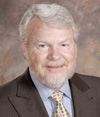 his week, Mark and Margaret speak with Dan Hawkins, Senior Vice President for Federal, State and Public Affairs at the National Association of Community Health Centers. Mr. Hawkins discusses how community health centers are poised to take on a majority of the newly-insured once the Affordable Care Act is fully implemented
(Music)
Mark Masselli: This is Conversations on Health Care. I am Mark Masselli.
Margaret Flinter: And I am Margaret Flinter.
Mark Masselli: Well Margaret, it's that time of the year, the most wonderful time
of the year, when we turn our thoughts to the holiday giving.
Margaret Flinter: And what better way to show that you care about community
radio than by making a pledge to WESU where we produce this show every
week bringing you thought leaders in health care reform and innovation from
around the globe.
Mark Masselli: Community radio is by the people, of the people, and for the
people, relying on volunteers for most of what they do. But running a radio
station 24 hours a day, seven days a week, 365 days a year isn’t cheap. So
equipment needs to be maintained. Some of the national programming costs
money and we need to keep the lights on in the building heated. All of that needs
your assistance.
Margaret Flinter: That’s right. And Mark, you know it never ceases to amaze me
how diverse our community really is, and this radio forum at WESU allows us to
hear all of these many voices. In addition to our own show on health reform and
innovation, you have international politics from an angle just not heard anywhere
else on that radio dial.
Mark Masselli: So do me a favor, pull over to the side of the road, write this
number down, (860) 685-7700 right now. Call us; give us your pledge.
Margaret Flinter: I appreciate that safety tip Mark asking people to pull over but
we do need your help to keep this rich programming. So please, when you pull
over, call (860) 685-7700 right now and pledge your support.
Mark Masselli: That is the number (860) 685-7700. It's the number to call. You
can pledge safely and securely online if you don’t want to give us a buzz, or go to
www.wesufm.org and the donation should pop right up.
Margaret Flinter: And any amount will do, no donation too small. But I do remind
you that for a pledge of $35 you can get a classic red and black long sleeved
WESU t-shirt just in time for the holidays.
Mark Masselli: Or pledge a little more and we will get you a hooded WESU
sweatshirt with a classic logo. Your generous pledge helps keep community
radio alive. And you have a great gift to wrap for the tree as well or (02:16
inaudible) season as well. So we don’t want to miss any opportunity for anybody
who is wanting to give. Call us right now at 685-7700.
Margaret Flinter: Remember, your support helps us to bring you great guests like
this week’s guest. Dan Hawkins is a Senior Vice-President for Policy at the
National Association of Community Health Centers.
Mark Masselli: Mr. Hawkins will discussing ways that community health centers
will play an integral role in the roll out of the Affordable Care Act which is
scheduled to roll out starting January 2014.
Margaret Flinter: And FactCheck.org’s Lori Robertson looks at yet another claim
about the Affordable Care Act that may not ring so true. But whatever the topic,
you can hear all of our shows by Googling CHC Radio.
Mark Masselli: And as always, if you have comments, please email us at
www.chcradio.com or find us on Facebook or Twitter; we would love to hear from
you.
Margaret Flinter: And one last time, don’t forget that number to pledge (860)
685-7700 or online at www.wesufm.org . It's safe, it's secure and it sure helps
keep this radio station alive.
Mark Masselli: That it does. And we will get to our interview with Dan Hawkins in
just a moment but first here is our producer, Marianne O'Hare, with this week’s
Headline News.
(Music)
Marianne O'Hare: I am Marianne O'Hare with these health care headlines. They
are calling it a game of political chicken, the wrangling and posturing underway
inside the Beltway, and what to do about the looming fiscal cliff. The President
sent $1.6 billion package to Congress for review which includes about $600
billion in spending cuts to things like Medicare and other aspects of the health
care law. Treasury Secretary Timothy Geithner is accusing the GOP leadership
of holding their proposed cuts to spending close to the west which past majority
leader John Boehner did nice. But there has to be tax reform in elimination of
loopholes across the board. What the GOP have refused to touch is proposed
tax increases on the wealthiest Americans. If all parties do not reach an
st
agreement before January 1 when the Bush era tax cuts expire and cuts in
spending to a number of programs kick in, the government will fall over the
proverbial cliff for work straight through Christmas holiday to avoid that reality.
Meanwhile, another cut goes into effect on the first of the year. Medicare
reimbursement formula drops back 28% on those Congress votes to extend the
rate into 2013, a scenario that's being played out year after year, leaving many
practices uncertain on the level of reimbursement to expect as they budget
ahead for the coming months.
The Supreme Court on Friday agreed to decide whether human genes can be
patented, a hotly contested issue with some broad practical and ethical
consequences for the future of gene-based medicine for millions of people
worldwide. The nation’s highest court in a brief order agreed to review a case
over whether Myriad Genetics, Inc., may patent two genes linked to hereditary
th
breast and ovarian cancer. In a 2:1 ruling on August 16 , the panel of the US
Federal Circuit Court of Appeals upheld the biotechnology company’s rights to
patent isolated genes that account for most inherited forms of two cancers. I am
Marianne O'Hare with these health care headlines.
Mark Masselli: We are speaking today with Dan Hawkins, Senior Vice President
of Federal, State and Public Affairs at NACH, the National Association of
Community Health Centers, representing the interest of the nation’s community
health centers which serve some 20 million Americans at over 8000 primary care
sites around the country. NACH leads legislative advocacy for community health
centers on Capitol Hill, organizes grassroots advocacy in local communities and
supports the mission of health centers through technical assistance and
research. Dan Hawkins, welcome back to Conversations on Health Care.
Dan Hawkins: Thank you Mark; it's a pleasure to be here.
Mark Masselli: Yeah, you were on the show almost two years ago when the
Affordable Care Act was just being signed into law, and since that time the
Affordable Care Act has withstood numerous political and legal challenges. It’s
really a bill that has nine lives. But remind our listeners Dan how the Affordable
Care Act strengthens this and relies on community health centers to further the
aims of the act.
Dan Hawkins: I think the two key factors that I think were most important in the
role that health centers played in that were number one coverage. We have all
understood for years that what every person needs for good health is insurance
coverage to make the care that they need affordable to them and a place that
they can go to, to get that care that is a committed sponsor really committed to
serving that individual with the highest possible quality. Those are the two things
we worked on most of all in the Affordable Care Act. I served on a workhorse
group that was appointed by may he rest in peace Senator Ted Kennedy to pull
together bipartisan thoughts on health reform. And in that group I argued for
extending Medicaid coverage to everyone up to 200% of the poverty level. Now I
didn’t win that argument but I did get them up from a much lower level that some
of the other representatives on that group were pushing for to the 138% level that
the Affordable Care Act extends Medicaid coverage to. The Medicaid for the low
income community is the best possible coverage because of the benefits and
services that it covers. So that was most important.
And then we argued that once these folks gain coverage they are going to need
a place to go, to get them healthy, keep them healthy, and the Affordable Care
Act included funds to expand health centers and to expand the National Health
Service Corps all of which would be essential to building care for those newly
insured and for the many millions who will remain uninsured even after reform.
Margaret Flinter: Dan, I am going to ask you a question that’s probably
challenging to answer in a few minutes but, for the sake of our listeners, so what
is a community health center anyway, the origin and history and what makes a
primary care organization a community health center? Could you do that for us?
Dan Hawkins: I have always said the community health centers have five basic
characteristics. First, every community health center is located in the high need
area. You won’t see them in suburbia; you will see them in the inner-city; you will
see them in rural communities; you will see them in places where there are
significant numbers of low income folks and folks who either rely on Medicaid or
other kinds of public coverage or are uninsured. Secondly, health centers offer
comprehensive health services. It's not just the medical care; there is also in
most health centers dental care and mental health services all working together
in a team-based atmosphere. There are services that help break down the
barriers to care like outreach and transportation and then there are services like
health education, nutrition education, counseling and referral. Number three, and
there are relatively few other providers that meet this feature in America today,
open to everyone regardless of ability to pay. It doesn’t matter if you have gold
plated Cadillac health insurance or no insurance at all, it doesn’t matter if you are
a billionaire or a pauper, health centers are open to you. Number four, and this is
one of the most unique features, health centers are governed by patient majority
community boards. These boards make decisions on things like the hours of
operation, the services to be offered, how those without insurance coverage to
what extent if any they will be asked to contribute although care is never denied
to anyone for inability to pay.
But these community boards -- health centers, health care in the most
phenomenal American tradition of the people, by the people, for the people. And
then finally, health centers are held to strict performance and accountability
standards by the federal government, by the board, by the patients and by
themselves. When you consider the entire cost of care for an individual over the
course of a year or two years or five years, that includes emergency room visits,
hospitalizations, including visits to the doctor or the dentist or what have you.
Studies have shown that the total cost of care for people served at health centers
is over $1200. It's more than $1200 a year lower for health center patients than it
is for those who go to other providers. The record shows that health center
patients have fewer hospitalizations, fewer emergency room visits, fewer
specialty care referrals because they are kept healthy and actually lower cost
prescription medications for example. By using generics and making sure that
individuals are getting all the medications that they need but no more, that’s why
health centers save $24 billion a year today for taxpayers and private payers
alike. And when we get to 40 million people in 2015, those savings will rise to
$50 billion a year.
Margaret Flinter: Well Dan, getting to $40 in 2015 obviously was very much on
the minds of our legislators as the Affordable Care Act was crafted, and to
respond to that, the Affordable Care earmarked $11 billion for community health
centers to expand their infrastructure. How successful has that initiative been,
and if you look across the country, what’s the progress that’s been made in
getting ready for that 2015 ramp up which is really already upon us, it’s just a
matter of degree?
Dan Hawkins: More than we had expected but less than we had hoped for. After
the act passed in 2010, the first part of that $11 billion of new funding became
available, and the federal government invited applications from communities that
didn’t have a health center today and also existing health centers that were going
to reach out to a community that they weren’t able to serve today because they
didn’t have the resources. More than 1800 communities came forth and provided
applications to expand care at health centers but then the less than we had
hoped kicked in; Congress took back a third of that money in 2011 before it even
could be spent, and as a result, only a tiny number at really about 200 of the
1800 applications were able to be funded. Now, things get better as long as
Congress doesn’t tinker with the program anymore. Although much has been
lost, the worse part is the time that it takes to setup a new health center or a new
health center site. It can’t be done overnight and so we have lost unfortunately
two critically important years as a result of the cutbacks that Congress had
ministered. And by the way, those cutbacks were not a target aimed at health
centers; these were the anti-Obamacare folks who wanted to take back some of
the money. But there is still over $2 billion in new funding that will become
available incrementally in this year and in the next two years to expand health
centers. And I am confident that if Congress doesn’t tinker with that, we will have
more than enough communities applying to expand their health centers, and
that’s going to be the key.
Mark Masselli: We are speaking today with Dan Hawkins, Senior Vice President
of Federal, State and Public Affairs at NACH, the National Association of
Community Health Centers, representing the interest of the nation’s community
health centers, which serves some 20 million Americans at over 8000 primary
care centers around the country. Dan, what are the threats that our nation will
face and health care will face as we look at the fiscal cliff and if we cannot
properly address it?
Dan Hawkins: The greatest threat that we face, I think everyone, most are in
general agreement that we have got to get our fiscal house in order. That means
we have got to reduce the deficit and there is only two ways to do that, to reduce
the level of spending or to increase the level of revenues. Both the Democrats
and Republicans, in Congress and in the White House have signaled a
willingness to come to the table and try to find some common ground gives us
great hope. The greatest threat we face though is that decisions are made in
haste, in broad swap across the board issues. We are on the cusp of the fiscal
cliff, the automatic sequester a trillion dollars in spending cuts that would be
triggered if Congress is unable to come to some alternative agreement on ways
to reduce the deficit. It is an across the board cut to defense spending and non-
defense spending, to health centers and public education, it's unthinking, it's
thoughtless and that can do great, great harm to the country, or if the alternative
also includes broad across the board cuts without looking carefully at what works
and what doesn’t. My great hope is that policymakers will be thoughtful as they
go through this. We pride ourselves on that bipartisan support and have worked
to both keep it and nurture it over the years, and I think we are proof positive that
you can do well by doing good.
Margaret Flinter: Dan, during the debates we heard a lot about Medicaid as an
entitlement and an area of significantly increased spending. And certainly
Medicaid is important to low income people and is important to health centers but
it's also very important to our inner-city hospitals, our academic medical centers,
what we call the disproportionate share hospitals, those that have a
disproportionate share of patients who are uninsured or underinsured. What do
you think will happen in this arena now? Can you put on your sort of forecasting
hat and answer the question, will political philosophy give way to a pragmatic
reality as people try and to respond to the needs of their own states?
Dan Hawkins: On the one hand, I can stand back and sit back and say that it
was understandable that some of the Republican governors would say no way no
how to the Medicaid expansion before the election. I think the savviest one said
well, we are looking at it carefully and we are going to be hesitant and reluctant
and it's going to take a while before we get to a decision. They were keeping
their powder dry. I believe though that even the ‘Hell, no’ republican governors
are now even at this moment rethinking their situation. The federal government
has said, if you expand Medicaid, we will cover a 100% of the cost for the first
three years and then we will decline over the next three years to 90% of the cost
but we will never fall below paying 90% of the cost. I have seen documents that
show that for all but literally two or three states expanding Medicaid will save the
states’ money out of their own state coffers.
Mark Masselli: Well Dan, I think you underscore an important aspect of the
Affordable Care Act in terms of how it's focused in on providing access to millions
of Americans. But it also is focused in on cultivating new models of care and
there has been growing interest in the Accountable Care Organizations and
patient-centered medical homes. Tell us how these models of care build on the
successes of community health centers.
Dan Hawkins: One, I love to say that the patient-centered medical home was
begun and advanced by a couple of individuals who cut their teeth as clinicians
at community health centers. And really when you look at what the patient-
centered medical home is all about where the system of care is totally focused on
the individual and on providing them the care they need not waiting until they get
sick to come see the doctor, patch them up and then send them away again until
the next time they are sick, but truly becoming a health care system rather than
sickness care system. Now they need to focus on quality improvement and on
patient-centeredness but I believe that’s part and parcel with the core of the
health center system. Accountable Care Organizations takes the concept of
patient-centered medical home one step further, one giant step further by moving
toward the development of integrated systems of care in which primary care,
specialty care, hospital care, even long-term nursing home care and services are
all integrated together in a seamless system.
I was pleased, I was out in Texas last month to learn that already community
health centers in Texas have led the formation of two Accountable Care
Organizations. And I know in other states, health centers are either joining with
or leading the formation of these integrated care delivery systems. Not long after
the Affordable Care Act passed, there was of course a flurry of activity around
Accountable Care Organizations. ACOs were the hottest topic going. What I
understood clearly even back then is whatever we call them, integrated care is
here to stay and that’s where health centers have perhaps the greatest challenge
because for so long we have been out on the frontlines in communities with few
or no other providers and not well integrated into the health care systems in our
communities. They literally have to change it by reaching out, forming alliances
and partnerships and affiliations and really truly become part of a community’s
integrated health care system.
Margaret Flinter: We have been speaking today with Dan Hawkins, Vice
President for Policy at the National Association of Community Health Centers.
NACH supports community health centers operating over 8,000 primary care
centers in all 50 states and providing health care to some 20 million Americans.
Dan, thank you so much joining us on Conversations on Health Care today.
Dan Hawkins: I am happy to do it.
(Music)
Mark Masselli: At Conversations on Health Care, we want our audience to be
truly in the know when it comes to the facts about health care reform and policy.
Lori Robertson is an award-winning journalist and managing editor of
FactCheck.org, a nonpartisan, nonprofit consumer advocate for voters that aim to
reduce the level of deception in U.S. politics. Lori, what have you got for us this
week?
Lori Robertson: Well, Mark and Margaret, we have seen some misconceptions
about waivers in the Affordable Care Act; we have seen claims that taxpayers
could apply for waivers or that some companies had received waivers from the
law. But the truth is that some companies have received temporary waivers
pertaining to just one provision of the law and these waivers expire in 2014. The
health care law gradually eliminates annual and lifetime caps on coverage under
insurance plans. So in 2014, plans can't have a monetary cap at all on benefits.
Right now though, more than 1,200 companies, mainly those with low income or
part-time employees have been granted waivers from this provision of the law by
the Department of Health and Human Services. So under the waiver these
companies, they tend to be fast-food chains like McDonald’s can continue to
provide bare-bones insurance plans; they are often called mini med plans to
some of their workers. But again, those waivers will expire in 2014. They affect
nearly four million people now. And that’s my fact check for this week. I am Lori
Robertson, Managing Editor of FactCheck.org.
Margaret Flinter: FactCheck.org is committed to factual accuracy from the
country’s major political players and is a project of the Annenberg Public Policy
Center at the University of Pennsylvania. If you have a fact, that you would like
checked, email us at www.chcradio.com . We will have FactCheck.org’s Lori
Robertson check it out for you here on Conversations on Health Care.
(Music)
Margaret Flinter: Each week, Conversations highlights a bright idea about how
to make wellness a part of our communities and everyday lives. Traumatic brain
injuries are suffered by an estimated three million athletes a year and at least
20% of active duty soldiers leading to effects that can linger for a lifetime. A
research team from Sandia National Laboratories and the University of New
Mexico had been on a four year mission to map and catalog the brain’s precise
response to blast waves from explosives as well as blows to the head, using a
supercomputer and a 3D model of an actual head in the hopes of providing the
most comprehensive data to (22:47 inaudible) who might then be able to build a
better helmet. Neurologist Dr. Corey Ford says it's not the kind of research you
could perform on living subjects.
Dr. Corey Ford: It's not something that you can use human subjects for and we
were not interested in animal models of traumatic brain injury. So we settled on
using a high speed supercomputer to model this process so that we could learn
something about the physics of blast waves and how they interact with the
human head in a virtual model.
Margaret Flinter: First, he said they had to catalog the property of all the
elements of the brain: skull, spinal column, gray matter fluids, then they
registered the effects of simulated blasts on each of these elements to determine
just what happens to the brain.
Dr. Corey Ford: So the shockwave hits the subject from whatever direction and
energy is transferred through the scalp and skull into the brain itself. And from
there, it sets up a wave pattern, sort of like dropping a pebble in a pond and the
waves move out and reflect off of the shore and back and forth. That reflection
inside the skull and the brain itself occurs over a matter of just a few
milliseconds.
Margaret Flinter: They have also been mapping the brains of GIs back from the
war theater who are suffering the effects of TBI to better understand the
physiology of the disorder.
Dr. Corey Ford: What we would also like to do is explore the possibility of maybe
studying a higher number of injured veterans, there are many thousands of them,
so we could get even a better understanding of what problems they have, where
in the brain those problems are located and get an even better idea of how that
correlates with what our modeling studies predict.
Margaret Flinter: They expect to openly share their data with the science and
design communities to facilitate the creation of better protective gear and better
treatment options for those suffering. Studying the precise causes of traumatic
brain injury that will lead to better designed protective gear to reduce the
incidence of such injuries in the future, now that’s a bright idea.
(Music)
Margaret Flinter: This is Conversations on Health Care. I am Margaret Flinter.
Mark Masselli: And I am Mark Masselli, peace and health.
Conversations on Health Care, broadcast from the campus of WESU at
Wesleyan University, streaming live at www.wesufm.org and brought to you by
the Community Health Center.