Yulun Wang, President of the American Telemedicine Association

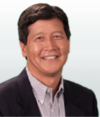 This week, hosts Mark Masselli and Margaret Flinter speak with Yulun Wang, Ph.D, President of the American Telemedicine Association, dedicated to the full integration of telemedicine within the health care system. An engineer with over 50 patents to his name, Dr. Wang is also Chairman and CEO of InTouch Health, a global leader in telehealth technologies
(Music)
Mark Masselli: This is Conversations on Healthcare. I am Mark Masselli.
Margaret Flinter: A nd I am Margaret Flinte r.
Mark Masselli: Well Margaret enrollment may not be over. Some reprieve is on the
th
way for Americans who failed to sign up fo r health coverage before the February 15
clues of open enrollment.
Margaret Flinter: Well that’s right Mark. The administration announced a plan that
would allow those who had not signed up for coverage to do so.
Mark Masselli: Then attacks penalty is automatically assessed and folks who remained
th
uninsured by February 15 .
Margaret Flinter: An d people will have to attest that they first became aware of the tax
penalty while they were preparing their taxes. They still have to pay the penalty for
r emaining uninsured last year but by gaining coverage this year they will avoid most of
the penalty for the remaining uninsured in 2015.
Mark Masselli: This is an extended open enrollment that really only applies to the folks
living in the 37 states that rely on the federal exchange. However, states that setup
their own exchanges can opt to extend their enrollment as well.
Margaret Flinter: And while the health laws find prentice continuing to be worked out we
turn our attention to the media developers who are transforming care on the side of
healthcare and technology. Our guest today is Dr. Yulun Wang who is the founder of in
touch health and he is also a President of the American Telemedicine Association.
Mark Masselli: Here is ov er 50 patents his n ame including the first FDA approved
surgical robot Aesop. He is since turned his attention to developing platforms for
clinicians to do virtual visits. His so called robot doc should be quite interesting.
Margaret Flinter: Absolutely. And Lori Robert son Managing Editor of FactCheck.org
will join us with another misstatements spoken about health policy in the public domain
and to no matter what the topic you can hear all of ou r show by going to chcradio.com.
Mark Masselli: And as always if you have c omments please email us at
[email protected] or find us on Facebook or @chcradio on Twitter. We would love
hearing from you.
Margaret Flinter: We will get to ou r interview with Dr. Yulun Wang in just a moment.
Mar k Masselli: But first here is our producer Marianne O’Hare with this week’s headline
news.
(Music)
Marianne O’Hare: I am Marianne O’Hare with these healthcare headlines. An d other
states are weighing on the decision by the Department of Health and Hum an Services
allowing extended open enrollment for the second round of insurance sign ups under
the Affordable Care Act. The administration announced folks in the 37 states covered
by the federal exchange will be able to still enroll for coverage for 2015 even though
th
open enrollment ended February 15 . There is now a new extended period from March
th th
15 to April 30 to gain coverage thus helping folks avoid tax penalties for their 2015
tax year. Now States like Kentucky have launched their own state exch anges are
considering allowing the same. Meanwhile as a Supreme Court regime on whether
language in the Affordable Care Act precludes folks buying insurance on the Federal
Exchange qualifying for tax subsidies the language originally stated folks only buy ing on
th e state exchanges would qualify. There is no well Plan B from opponents of the
healthcare law should the High Court repeal the basis for those subsidies. But 87% of
Americans who have purchased insurance on the exchanges received some sort of ta x
subsidy. Millions of Americans who have lose coverage if the Supreme Court rules
against upholding them. And the administration is also weighing in on employee
insurance plans that don’t cover hospital stays. Corporations employing largely low
wage wo rkers who now must be covered under the health law were selling employees
on cheap plans that offered no hospital benefits. The administration saying these plans
clearly don’t fulfill the minimum requirements under the Health Law and would not be
allowed as they would strap employees in subs - standard plans that would not cover
catastrophic care. Turns out there maybe some actual wisdom in those teeth after all
certainly finds stem cells found in a dental pulp of wisdom teeth are perfect incubators
for gro wing coronial cells. Researchers found the pulp cells could be coaxed in the
growing A utologous corneas to help prepare scarring from things like infection or other
eye disease and pediatric allergies have been on the rise in recent decades and
researches in Sweden may have found a contributing culprit. Babies raised in houses
where dishes were cleaned in dishwashers versus by hand had 50% higher rates of
allergies, eczema and other auto immune responses. Researches believed it has to do
with the growing trend hygiene hypothesis which assumes babies being raised in
developed countries are growing up too clean with sanitizers that limit normal child to
exposure to bacteria and pathogens thus inhibiting their natural immune system
development. I am Mariann e O’Hare with these healthcare headlines.
(Music)
Mark Masselli: And we are speaking today with Yulun Wang, PhD Chairman and CEO
of InTouch Health, a global leader in Telehealth technologies and support. Dr. Wang is
also a President Elect of the Am eric an Telemedicine Association, a non - profit
organization dedicated to the full integration of telem edicine into healthcare systems.
Mr. Wang is founder of Computer Motion Inc. which developed Aesop, the first FDA
cleared surgical robot. Mr. Wang has more t han a hundred patents his name. He
received his PhD in Electrical Engineering specializing in robots from the University of
California Santa Barbara. Dr. Wang welcome to Conversations on Healthcare.
Dr. Wang: Well thank you for having m e.
Mark Massell i: You know you have really been at the cutting edge of the innovation in
the healthcare space having created this first surgical robot approved by the FDA for
use in the country Aesop. I wonder if you could share with our listeners what you
learned from your early experiences and successes with health technologies we look at
as fast amount of technological innovations in healthcare today and the changes that
are abounding.
Dr. Wang: Well if we go all the way back to Aesop it was in the early 1990s. Wh at we
did was solving unmet need in a newly emerging field of surgery called minimal invasive
surgery or more specifically laparoscopic surgery through a little tiny incision as
opposed to a large incisions which had previously been the way surgeons worked and
by using little incisions they needed to insert a camera into the patient’s body that
needed to be held by something or somebody in having someone else hold your
camera was like someone else holding your eyes and so building a robotic arm which
held t he camera for the surgeon which was voice controlled directly by the surgeon we
actually gave the surgeon back direct control of their eyes which then improved the
quality of the procedure, the whole idea which has been kind of a guiding principle to my
ca reer over the last 25 years is trying to solve a problem which is a problem for the
user, a problem for the healthcare system as a whole and then a problem which
hopefully really brings benefit to society so you have to kind of overlap all of th ese
require ments simultaneously.
Margaret Flinter: Well Dr. Wang maybe for the benefit of our listeners you could talk a
little bit about how the robotic innovation in particular and again I think it’s a metaphor
for lots of other innovations has changed the way we train people, his assuring the new
generati on surgeons and do you have any metrics that illustrate the impact that the
robotic technology in particular has had on care, cost and outcomes.
Dr. Wang: So I have been involved in basically two different move ments, one is on the
surgical robot side and the second is on the telemedicine robot side and on the surgical
robot side where the whole idea of the surgical robots is to enable more complex
surgeries to be do ne minimally invasively. When you take a parti cular procedure from
an open procedure to a minimally invasive procedure using a robot there is a whole
learning cure so take the one which really took off for robotic surgical systems which is
via removing the prostate for men’s prostate cancer and so the training process of that
had to be done very, very carefully where there is a whole process of didactics
laboratory setting, a process of mentorship , again the surgeon learning a new
procedure but then having the benefit and a tool or robotic surgical sys tem because
without the robotic tool that transformation was actually not even possible on the
telemedicine side using what we call remote presence robots where we are bringing a
physician to the bed side of the patient from a far. The actual usage of the technology
is quite easy. They can learn how to use to tools in a matter of minutes or tens of
minutes oh but what has to happen is the whole workflow, the way a physician adjusts
his or her workflow in terms of how they go about their day changes and in fact the
healthcare system which is now deploying telemedicine they have to rethink about how
they are going to be interacting with their patients, in what venue and what are the
workflow in order to do that so for example one of the areas where we have d one a lot
of work is in Callistroke. The patient comes into the hospital which is perhaps a smaller
hospital doesn’t have an immediate access to a stroke neurologist. Now they page a
stroke neurologist at a tertiary hospital or a larger hospital who can beam in to a
telemedicine robot to help take care of that patient. That’s a whole workflow which did
not exist how that tertiary physician or sub - specialist interact s with the onsite
physicians. All have to be kind of rethought and retooled so that peopl e in a
collaborative way know how to approach the whole system of care.
Mark Masselli: So they certainly were seen people using their smartphone, conducting
with our provider and these are I think you have described them as not replacing the
physician or the provider but extenders so what else are you sort of like seeing distant
capabilities in diagnostic tools that I might carry on my iPhone and how’s that world
evolving?
Dr. Wang: The world is evolving very quickly and I will tell you it’s an incredib ly exciting
place to be where we are going from kind of a cottage industry of healthcare delivery to
where your local doc is the total range of healthcare services available to you as a
patient that’s changing where using a healthcare delivery system where virtualized care
in other words you have the capabilities of the world at large at your disposal is the way
things are happening so you got this aging population happening in the US and around
the world. You have got a continuing increasing of complexity of medicine. It turns out
there is about 200,000 medica l journal articles published a year. It turns out in 1970
there were about 10 different medical subspecialties. Today there are 150
endovascular neurosurgeons, neurological intensivists. These typ es of sub - specialties
didn’t even exist ten years ago. If you are a patient you would want access to the best
subspecialty that you could have so unevenly distributed quality of care and yet we want
to deliver high quality care consistently and lowering t he cost. Now the question is how
do we do that and it’s really through this kind of virtualized delivery of care that can
happen. One huge moment which allows this evolution, one is the mobile devices so
everybody is carrying around the second line which the mobile devices build on top is
the In ternet where a live interactions, real time interactions can be done all over the
world now because the bandwidth and the quality of the Internet is now there and then
furthermore the electronic digitization of hea lthcare information. So you can actually
virtualize the delivery of care and I think that over the next decade it’s going to
completely revolutionize how healthcare delivery happens.
Margaret Flinter: Well the pace of innovation has been breathtaking in this area of
virtualization of care and telemedicine and so innovation and speed and revolution on
one side and then the concrete wall they sometimes smack up against called regulation
and coverage which can really slowdown how we get these incredible inn ovations into
the hands and the care of people who needed so how is this going on the regulatory or
if I know we talked to the FDA about what app should be regulated versus not regulated
while ago, how are those developments coming?
Dr. Want: Well so you head up on one which we deal with all the times the FDA and the
FDA you know their mandate around regulating medical devices is consistent and will
stay I think the way it’s been for the last minute decade so when you build a medical
device as dictated by the FDA then it needs to be regulatory for example a stethoscope
is a medical device. If you turn an iPhone into a stethoscope it’s a medical device and
needs to be appropriately dealt with from a regulatory standpoint and it’s actually not
that difficul t in terms of understanding that line. The other big area of regulation is
HIPAA compliance in terms of privacy and protection in terms of patient information and
that bar is continually giving tighter and more rigorous quite honestly as it should
because I think the concerns about hacking and cyber security are also continually
going up not only in healthcare but across our society as a whole. The other area which
is important too is the whole areas of when can you practice and how is it legal to
practic e it and these are like things around licensor prudentially in privileging and this
area is actually kind of messy and quite honestly it’s probably going to stay messy but
this is way so my role – so I am actually the current president of the ATA American
Telemedicine Association and the ATA is really kind of the leading organization to drive
clarity and hopefully improvement in these areas prudentially in licensing privileging and
that’s at the state level and their state laws involved in addition to feder al laws and that’s
going to move at whatever the pace it continues to move but in general the legal
environment is moving in the direction supportive of more and more telemedicine kind of
interactions.
Mark Masselli: We are speaking to with Yulun Wang Ph D, Chairman and CEO of
InTough Health the global leader in telehealth technologies and support. Dr. Wang is
current president of the American Telemedicine Association, a non - profit organization
dedicated to promoting the full integration of telemedicine i nto the healthcare system
around the world. Do you have a little more into the work of the American Telemedicine
Association sounded like your focus had both state issues, federal issues, regulatory
issues tell us a little bit about the association?
Dr. Wang: Yeah the American Telemedicine Association is based in Washington DC.
It’s been in existence since 1993 so it’ s a little over 20 years old. It is the largest and
longest standing association in this field when telemedicine quite honestly has becom e
in vogue its inexistence for several reasons and one is to actually drive improvement
from our regulatory environment that we have actually been talking about provides a
forum by which people meet and discuss the issues around telemedicine and in fact th e
annual meeting is coming up in May this year in Los Angeles where there is something
like 500 presentations. There is also a large exhibit floor of 250 plus different
companies so if someone wants to really learn about telemedicine quickly that’s really
the best place to go. It builds standards and guidelines on how to perform telemedicine
safely and effectively for various applications and then as some of these new
methodologies of telemedicine are being pushed forward like direct consumer
telemedicine interactions where patients from perhaps their workplaces interacting with
the primary care physicians via a telemedicine interaction there is a new type of
accreditation process where companies offering this type of service are being
accredited by the 80 A in order to make sure that they comply with best practices.
Margaret Flinter: We are also trying to keep a global perspective and it’s can you tell us
for a moment what do you think the potential global health impact of these technologies
are?
Dr. Wan g: I think the opportunity for telemedicine in the global world is huge and
perhaps even mu ch more profound in some of these other markets than it is even is in
the United States because in the United States I think telemedicine is being driven not
only t o work on improving the quality of care but really working hard to reduce cost of
the delivery system. In much of the emerging markets people don’t even have access
to care and so using telemedicine is the only way they even have access to care and so
for example I was in a talk with one of our own people who are walk in our companies
who have story within the last couple of weeks in Bolivia where they brought in an
expert from Canada to help take care of a patient in the Bolivian Anes who have this
geneti c problem which nobody has been able to diagnose in Bolivia for his whole life
and so he is properly diagnosed from a Canadian subspecialist I mean it’s a life
changing thing for that child and the town at large it was a town of like 1500 people in
the Bol ivian Andes and so these are the types of things which are possible with
telemedicine in the world at large where there is just a large, large number of people
who don’t even have access to care where this can solve that problem.
Mark Masselli: We have b een speaking today with Yulun Wang PhD, Chairman and
CEO of InTouch Health, a global leader in Telehealth Teletchnologies and Support.
You can learn more about his work by going to intouchhealth.com or
AmericanTelemed.org. Yulun thank you so much for joi ning us on Conversations on
Healthcare today.
Dr. Wang: It’s a real pleasure and thanks for bringing me on your show.
(Music)
Mark Masselli: At Conversations on Healthcare we want our audience to be truly in the
know when it comes to the facts about H ealthcare Reform and Policy. Lori Robertson is
an award winning journalist and Managing Editor of FactCheck.Org a non - partisan, non -
profit consumer advocate for voters that aim to reduce the level of deception in US
politics. Lori what have you got for u s this week?
Lori Robertson: President Barack Obama says the Affordable Care Act is working “a
little better” than we anticipated. Based on the 11.4 million people who singed u p for
insurance on the exchanges during the recent open enrollment period, th at is better
than the administration anticipated but whereas been a Congressional Budget office
Projection. The administrations preliminary estimates are at 11.4 million either signed
up for or re - enrolled in private marketplace plans during that period. Obama says in the
White House city that, that’s great news and the Affordable Care Act is working a little
bit better than we anticipated. The Department of Health and Human Services told
reporters in November just before open enrollment began that it s a nticipated enrollment
will be 10.3 million and 11.2 million so 11.4 million is a little bit better than that but in
HHS analysis that the figure would end up being lower by years and as some people
wouldn’t pay premiums or would take other insurance. The analysis estimated that
between 9 million and 9.9 million would be the total for a marketplace enrollment in
2015. The administrations November analysis (inaudible 21:17) to the goal post saying
it would take longer than CBO estimated for marketplace enro llment to grow. The CBO
expects the major expansion of enrollment in the near future jumping to 21 million
people in 2016 and then 25 million in 2017. HHS said that kind of growth could happen
over 4 or 5 year instead and that’s my FactCheck for this wee k. I am Lori Robertson,
Managing Editor of FactCheck.Org.
Margaret Flinter: FactCheck.org is committed to factual accuracy from the country’s
major political players and is a project of the Anna Bird Public Policy Center at the
University of Pennsylvani a. If you have a fact that you would like checked Email us at
CHCradio.com. We will have FactCheck.org Lori Robertson check it out for you here on
Conversations on Healthcare.
(Music)
Mark Masselli: Each week conversations highlight a bright idea abou t how to make
wellness a part of our communities in everyday lives. Vin Lien Brown was a graduate
student in nutritional science at NYU. She came to un derstand the enormous
challenges of eating healthy foods while doing fieldwork with some of New York Ci ty’s
more impoverish populations and when it came time to do her thesis she thought why
not write a cookbook of health recipes aimed at the millions of Americans living on food
stands or snap stipends of $4 a day.
$4 a day is sort of a general rule of thu mb for around how much a person truly is
qualifying for food stamps would have to eat per day so we felt like that was a more
useful sort of explanation to explain like a burgeoning.
Mark Masselli: She learned like poverty was a serious issue the lack of access to
nutritious food was also contributing to obesity and poor health in many of these
families. So she conducted an extensive research on shopping and healthy cooking
techniques and crafted good and cheap. A cookbook aimed at not only teaching the se
families how to shop for affordable produce but how to get an entire family in a more
healthy way.
I really wanted to arm people with the ability to walk into a grocery store and say like
okay this is my sale. I can totally make something to (inaudibl e 23:34). I know how to
do that and in order to really get by on such a small amount of money you need to be
able to be adaptable.
Mark Masselli: Prosthesis were so well received. She launched a kick started
campaign to raise enough money to make the b ook available at soup kitchens women’ s
shelters in community health centers. And for every copy she sells she gives one free
copy to a school, a health center or an organization that reqested.
The idea is that this is a cookbook that needs to be put in t he pants and someone who
really can’t afford the cookbook so that’s what the idea of buy one give one came from
with sort of like there are people out there who are really excited about this issue and
have money to spend on it and who can appreciate that i f they can sort of help to
subsidize those who can’t.
Mark Masselli: Well a new version of her book comes out in June. She has made her
book available as a fee PDF download to anyone who wants it. Good and cheap, a
cookbook aimed at the food stand popu lation or anyone else on fixed income for that
matter helping to positively influence their diets, obesity and well - being. Now that’s a
bright idea.
(Music)
Margaret Flinter: This is Conversations on Healthcare. I am Margaret Flinter.
Mark Masselli: And I am Mark Masselli. Peace in health.
Conversations on Healthcare broadcast from the campus of WESU at Wesleyan
University , s treaming live at wesufm.org and brought to you by the Community Health
Center.