Henry J. Aaron, Senior Fellow at the Brookings Institution

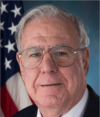 This week, hosts Mark Masselli and Margaret Flinter speak with Henry J. Aaron, the Bruce and Virginia MacLaury Senior Fellow in the Economic Studies program at the Brookings Institution. He analyzes the case before the Supreme Court, King versus Burwell, which challenges the legality of the tax subsidies under the Affordable Care Act, and the potential impact of the High Court’s decision.
( Music )
Mark Masselli: This is conversations on healthcare. I am Mark Masselli.
Margaret Flinter: And I am Margaret Flinter.
Mark Masselli: Well Margaret , it’s hard to believe it’s been 50 years since the march
from Selma to Montgomery Bloody Sunday a pivotal moment in the Civil Rights Moment
when peaceful marchers were brutally attacked by police while trying to cross the
famous Edmund Pettus Bridge .
Margaret Flinter: Well there have been so many struggles in the quest for equality s ince
Blo ody Sunday 50 years ago. We have made great strides but inequality still impacts
too many lives in this country and we see that impact of income equality and racial
disparity in all of our communities and certainly we have seen how it can just boil over in
places like Fergusson Missouri. Clearly the struggle continues.
Mark Masselli: As we know Margaret such disparities impact held so many studies
illustrate the last and often permitted impact of poverty on children through soci al
determinants such as poor housing and diet, unemployment and riskier communities all
are linked directly to poor health outcomes.
Margaret Flinter: Well that’s right but one thing has changed in recent years. The
Affordable Care Act has been responsible for millions of unin sured Americans gaining
coverage and as you know racial and ethnic minorities constitute the largest sector of
the uninsured population. So many Americans have gained access to coverage either
through Medicaid expansion or through the subsidized insurance and the exchanges all
of that happens since the passage of the law and I think we can say it’s made a
dramatic difference in many lives.
Mark Masselli: Indeed it has. We see it every day but the Healthcare Law continues to
run the gauntlet of challenges Margaret. The Affordable Care Act recently came up
before the Supreme Court for the second time in 3 years. The case King V. Burwell
such a challenge to legality of the part of the law governing tax subsidies.
Margaret Flinter: Well we are really looking forward to our guest today because he was
in the cour troom for those oral arguments. Henry J. A aron is a longtime health industry
analyst, economist and senior fellow in economic studies at the Brookings Institution
where he spent specializing in health economics for decades. He has got real insiders
analysis of the case and its potential to derail the popular t ax subsidies and some
opinions on what the possible impacts of that might be.
Mark Masselli: Lori Robertson stops by. She is always on the hunt for misstatements
spoken about health policy in the public domain.
Margaret Flinter: And no matter what the topic you can hear all of our shows by going
to chcradio.com.
Mark Masselli: And as always if you have comments please email us at
[email protected] or find us on Facebook or at chcradio on Twitter. We would love
hearing from you.
Margaret Flinter: We will get to our interview with Henry J. Aaron from the Brookings
Institution in just a moment.
Mark Masselli: But first here is our producer Marianne O’Hare with this week’s headline
news .
( Music )
Marianne O’Hare: I am Marianne O’Hare with these healthcare headlines. A fair
degree of uncertainly lingers in the wake of the most recent Supreme Court hearing on
the Affordable Care Act . States are looking to make contingency plans and what will
happen if the Supreme Courts rules in favor of the plaintiffs arguing the laws language
doesn’t support the use of tax subsidies for those purchasing insurance on the federal
exchanges in some 37 states. Mixed signals from the Supreme Court have states on
edge about the future of health insu rance subsidies for milli ons of Americans and a
summer decision from the justices leaves little time for backup planning. Many
governors especially republicans want the federal government to craft a contingency
plan and at least one governor in Pennsylvan ia is pursuing a state exchange which
would make sure his state was able to receive subsidies. During oral argument the
justices appeared divided to latest challenge to President Barack Obama’s law. The
opponents of the law argued that only residents in about a dozen states that setup their
own insurance markets could gain federal subsidies to help pay for premiums. The
case sets up an intriguing political backdrop for states like Florida and Texas both led by
republican governors who have been in those states now find themselves with the most
at stake with large numbers of enrollees who could take their anger out of the ballot box
if they lose coverage. Another milestone for “S ame S ex C ouples ” in this country
th
starting March 27 l egally married to “Same Sex Couples” will be able to take unpaid
time off to care for his spouse or sick family member even if they live in a state that
doesn’t recognize their marriage. The final rule issued by the Department of Labor
revises the definit ion of spouse in the family and Medical Leave Act to recognize legally
married to Same Sex Couples regardless of where they live part of that only couples
that lived in states recognizing same sex marriage could take advantage of the acts
benefits. Currently 37 states plus the D istrict of Columbia permit the same sex
marriages. A nd college and binge drinking, the two go hand in hand it seems average
to curb excessive drinking on campuses or often a challenge a study that bears that o ut.
The study looked at the potential impact of a Onetime Drinking Intervention Program
while drinking stopped temporarily the effects weren’t long lasting . Women students
had the best results. Male students living in fraternities were least likely to b e
influenced by Drinking Secession Programs. I am Marianne O’Hare with these
Healthcare Headlines.
( Music )
Mark Masselli: We are speaking today with an economist in Health Reform Expert Dr.
Henry J. Aaron the Bruce and Virginia MacLaury Senior Fellow in Economic Studies at
the Brookings Institution. Dr. Aaron was also the Vice President of the American
Economics Associations . Well he is the President of the Association of Public Policy
and Management. He has been a Guggenheim Fellow at Stanford or in his
Undergraduate Degree from UCLA and his Doctorate in Economics from Harvard.
Henry welcome to Conversations on Healthcare . For the past 3 years conversation has
all been around the Affordable Care Act in which you described as and I love this , a
catastrophic success. There continues to be a twist and turns in the road for health
reform and we just saw another one at the Su preme Court in King V. Burwell. I wonder
if you could help our listeners understand the premise of the suite and who are the
plaintiffs behind this challenge and what’s the basis of their argument?
Henry J. Aaron: Well the Affordable Care Act works by instituting a whole s et of
insurance market reforms the success of which hinges on having virtually everybody
who can enroll actually enroll. So if you want everybody to be in you have to provide
financial help to make the plan affordable. That’s just wi th the Affordable Care Act does
so it has tax credits so that’s the device by which the aid is given, they are refundable,
you get them even if you don’t owe tax. Those credits are to be paid to people who
enroll through hea lth insurance exchanges. Those health insurance exchanges can be
created by states but some states elected not to create the exchanges and to leave that
job to the Department of Health and Human Services. There are few places in the law
that says these tax credits can be paid to people who enroll in an exchange created by
a state. The Supreme Court decided to take one of those cases. The plaintiffs are four
people who are alleged to be effected by this provision and Burwell is the secretary of
Health and Human Service on beha lf of whom the Solicitor General of the United States
Donald Verrilli argued the government’ s case and the government’s position is yes
those words are in the law but if you read them within the larger context of the law what
they really mean is that s tate s can either setup exchanges themselves or they can in
effect use the Department of Health and Human Services as an agent to setup the
exchange for them but that in either case these are exchanges that were created by a
state which of those two interpretat ions of those few words it should endorse.
Margaret Flinter: Well Henry it does seem like a bit of a case of Déjà vu all over again.
It was 3 years ago when the Affordable Care Act is in the hands of the Supreme Court
with. Then ruling then appalled most of the provisions of the Affordable Care Act and
this outcome of King V. Burwell will also then affect millions of people who receive
s ubsidies for insurance coverage. What’s its stake for them? What ar e their options
going to be and is it a catastrophic failure instead of a catastrophic success?
Henry J. Aaron: Well the people who are affected by the Affordable Care Act are
individuals or employees in small businesses who purchase health insurance cov erage.
If the credits can’t be paid then a lot of people who are now receiving them will find that
health insurance is causing them a very great deal more than it does now and in
millions of cases insurance according to all estimates will be unaffordable and people
will elect not to buy it. Some people who lose these credits however probably would still
continue to buy insurance and you ask yourself who would they be?
Margaret Flinter: Right.
Henry J. Aaron: Well those would be the people who are really sick so then you are an
insurance company and all of a sudden your customers are much sicker on the average
than they were before so you have to raise your premiums and that means that not
providing these tax credits to low and moderate inc ome people would ramify throughout
the insurance market affecting even those who don’t get these credits. So everybody’s
premium just go up whether they were eligible for these subsidies or not everybody who
is buying insurance as an individual. The number of people without health insurance
would go up somewhere in the range of 7 to 9 million people which is a big hit.
Mark Masselli: Henry most Americans read about arguments at the Supreme Court and
a f ew get the kind of front row seat of the work since Supreme Court that you had
maybe you could tell our listeners about the sort of the team was assembled you talked
a little bit about the Solicitor General Donald Verrilli who is up the second time
defendi ng the administration and the secretary on this but maybe talk a little bit about
the Mica’s briefs that might have been filed in any of the other dynamics.
Henry J. Aaron: Well it’s exciting to be there. The justice has around promptly at 10
o’clock. The briefs presented of course by both the plaintiffs and by the government.
There were dozens maybe even scores of so called Mica’s briefs submitted by all kinds
of different groups including I have to do a little advertising here, one by a group of
econ omist that participated . There was a set of one particularly important brief
submitted by a group of attorneys general from various states who are very careful to
say that the case, the position being presented by the plaintiffs was not one that they
could endorse and that’s brings up what may turn to be a very important issue raised
early in the arguments by Justice Kennedy. You mentioned previously the fact that the
2012 case disallowed the mandate to extend Medicaid coverage s o Justice Kennedy’s
question was look if that wasn’t constitutional aren’t you Mr. Carvin arguing for king with
the plaintiffs and trying to justify something that’s even a more heavy handed use of
federal power so Justice Kennedy raised that as an issue. Were the court to accept that
line of reasoning then presumably the four liberal justices are going to vote that the
credits can be offered everywhere but then other justices would say yes they can be
offered everywhere but the reason they can be offered is that the federal government
doesn’t have the power to push the states as hard as this threat would imply.
Margaret Flinter: Henry I know you have a Brookings Report now on King V. Burwell
called Reading the tea leaves. They get into that and I unders tand Justice Ginsburg
jumped in almost immediately and challenged the credibility of the Plaintiff (inaudible
13:19) in bringing the case. Tell us more about the challenge. What was the challenge
and what was significant about the questions that Justice Ginsburg raised?
Henry J. Aaron: There were four plaintiffs. A couple of them seemed not to have either
low enough income or to be in a relevant category. Justice Ginsburg was raising the
question of whether the other two did as well then when Solicitor General Verrilli stood
up he began by addressing that question. He said do these four people are the eligible
for these credits? What this means is that if we and the justices decided that for one
reason or another they wo uld rather not decide this case at this time. They could turn to
the issue of standing say we really don’t know for sure and then at some point certainly
it would be next year. The issue would return to the Supreme Court. It would even be
later than tha t if the plaintiffs have standing. Now if they don’t then the case would
become mood.
Mark Masselli: We are speaking today with Dr. Henry J. Aaron Economist and Health
Reform expert at the Brookings Institution. He is a member of the Institute of Medic ine
and the American Academy of Arts and Sciences. Henry I want to divert a little so the
issue is really about a state run plan and I am wondering if a State like California were
to run the plans for the states that weren’t covered what are you hearing about options
here?
Henry J. Aaron: You are asking a question that every health policy person in the nation
is discussing and I think the consensus is if you can think of what might happen it
probably will happen , all kinds of different things. You just mentioned one that’s quite
interesting and important. A number of the states that decided not to run exchanges
well some did it for purely ideological reasons. They don’t like the reform, they don’t like
Preside nt Obama. They want to do anything with this law at all but in some other cases
states elected to let HHS setup the exchanges for them because I knew correctly that it
would be extremely difficult and so it has turned out to be . The republicans who have
opposed the bill could say well we will do this if we get something else that we really
would like. They might not be able to get it through Congress. All of this would h appen
in the latter half of this year during which it’s expected there are going to be some pretty
better negotiations over the budget and sequestration so all of this could get jumbled up
into a very big scrambled mess.
Margaret Flinter: Well Henry I like to cycle back to your observation of the healthcare
law as a success where we sit in Connecticut. The roll out of the exchange was pretty
successful, so successful that our executive director went off to Washington to run the
federal exchange.
Henry J. Aaron: And there are also part of Merilyn.
Margaret Flinter: That’s right which we were pretty happy about but it has been a
success on many levels in terms of accomplishing its goal so that’s reducing the
numbers of uninsured and improving access to care but at the same time there is so
much going on to transform carats off to fundamentally transform the way. We deliver
care and we hear the good news that the rate of growth in spending has slowed
considerably so maybe from the bird’s eye view of the economist the impact to the
Affordable Care Act on the slowing of the escalation of healthcare cost and the changes
in health system delivery or do you think those changes were underway with or without
the Affordable Care Act.
Henry J. Aaron: The slowdown in spending began before the Affordable Care Act was
inactive so one can’t sign that part of the slowdown to the ACA. Since the ACA has
taken effect the slowdown has continued which itself is new as you don’t expect
necessarily that the slowdown continues and definitely we had slowdowns in the past
tha t were short lived. We still don’t know for sure how long this one is going to live. The
acceleration of the growth of healthcare spending could accelerate. Economists
including us right here at Brookings disagree. My own view is that in a certain sens e
both the slowdown and the Affordable Care Act are the results of a change public
att itudes, by business, by insurers, by government r eally a title shift in attitudes towards
the growth of healthcare spending. Suddenly it has become distinctly on she to what
her pushup cause in larger sections of the public than in the past. There are changes in
organization , a factor that people don’t necessarily focus on much but could be
important. Increasingly doctors are female and women have been willing to practi ce in
settings that can be used to control the growth of spending more than man have been in
the past so I think there is a good chance that the slowdown will continue a great deal of
its stake because the growth of healthcare spending was expected to be t he principle
force driving budget deficit and if that slowdown continues the budget deficit problem
really strengths dramatically.
Mark Masselli: We have been speaking with Dr . Henry J. Aaron, Economist and Health
Reform Expert at the Brookings Institution. You can learn more about his work by going
to brookings.edu/expert/ aaronh. Henry thanks so much for joining us on Conversations
on Healthcare .
Henry J. Aaron: Thank you for having me.
( Music )
Mark Masselli: At Conversations on Healthcar e we want our audience to be truly in the
know when it comes to the facts about Healthcare Reform and Policy. Lori Robertson is
an award winning journalist and Managing Editor of FactCheck.Org a non - producing,
non - profit consumer advocate for voters that aim to reduce the level of deception in US
politics. Lori what have you got for us this week?
Lori Robertson: Is there a connection between illegal immigration and the recent
measles outbreak? That’s what representative Mel Brooks suggested but while i t is
difficult to pinpoint precise origins of disease outbreaks there is no evidence supporting
the link between the recent outbreaks and illegal immigration. In a ra dio interview
Brooks a republican from Alabama said that the immunization practices in the home
countries of immigrants who are living in the US illegally could be responsible for
outbreaks like the recent spread in measles. That outbreak includes most of the 102
cases in 14 states in the month of January. It is like ly that th e outbreak originated from
outside the US but the director of the CDCs National Center for Immunization and
Respiratory Diseases has said illegal immigration isn’t the likely culprit. Americans
returning from travel abroad or foreign could have brought me asles to Disney Land
Parks in California. The countries under investigation as a possible source includes
Indonesia, India and the United Arab Emirates. For part of 2014 the CDC was able to
pinpoint the origin for 280 cases of measles. It counted 45 direct importations to the
disease which included 40 US residents returning home and 5 foreign visitors. Only 3
of the transfers came from the America. As for countries vaccination rates back in the
1980s Central American Countries had low rates of measl es vaccination s but that’s no
longer the case. Since 2000 those countries rates for 1 year olds have been largely on
par with what have exceeded that of the Unite d States and that’s my FactCheck for this
week. I am Lori Robertson, Managing Editor of Fact Check.org.
Margaret Flinter: FactCheck.org is committed to factual accuracy from the country’s
major political players and is a project of the Anna Bird Public Policy C enter at the
University of Pennsylvania. If you have a fact that you would like checked E mail us at
CHCradio.com. We will have FactCheck.org Lori Robertson check it out for you here on
Conversations on Healthcare.
( Music )
Each week conversations highli ght a bright idea about how to make wellness a part of
our communities in everyday lives. When Kenneth Shinozuka was a young boy his
beloved grandfather was diagnosed with Alzheimer’s disease and he watched thus his
grandfather gradually became dependent on constant care by family caregivers. Many
Alzheimer’s patients who are given to wandering often at night when those caregivers
are sleeping and they can land in dangerou s sometimes in deadly situations.
And his wandering in particular caused my family a lot of stress. My aunt is primary
caregiver really struggled to stay awake at night keeping eye on him. I became really
concerned about my aunt’s well - being as well as my grandfather’s safety.
And when his own grandfather was found wandering on the freeway one night he set to
work. He thought what if I designed a sock with sensors that would trigger an alarm on
the caregiver’s phone when an Alzheimer’s patients fish at the floor.
I was looking after my grandfather and I saw him ste pping out of the bed. The moment
his foot landed on the floor I thought why don’t I put a pressure censor on the heel of his
foot? Once he stepped on to the floor and o ut of the bed the pressure sensor would
detect an increase in pressure caused by body weight and then wirelessly send an
audible to the caregiver’s Smartphone . That way my aunt could sleep much better at
night without having to worry about my grandfather.
First he needed to design the app that would send the signals to the caregivers
Smartphone and yep he says now there is an app for that.
Lastly, I had to code a Smartphone app that would essentially transform the caregiver ’ s
Smartphone into a remote monitor. For this I had to expand upon my knowledge of
coding with Java and S code.
He tested his sock for 6 months on his grandfather and it successfully signaled and alert
almost 500 times during that test period. A 100% success rate so he took his sock
sensors to a nursing for better testing and realized he needed to make a few more
adaptions.
So sensor data collected on a vast number of patients can be useful for improving
patient care and also leading to a care for the disease possibly.
Shinozuka’s device has since earned him the $50,000 scientific American Science in
action award and is g oing into full scale production soon. A thin coin sized sensor that’s
worn at the bottom of the foot transmits the message to caregiver’s via their
Smartphone and alerts them when a patients stands up, also alerted them to a
potentially dangerous situation for their loved one. Now that’s a bright idea.
( Music )
Margaret Flinter: This is Conversations on Healthcare. I am Margaret Flinter.
Mark Masselli: And I am Mark Masselli. Peace in health.
Conversations on Healthcare broadcast from the campus of WESU at Wesleyan
University.
Streaming live at wesufm.org and brought to you by the community health center.