Dr. C. Michael Gibson, Founder of the WikiDoc Foundation

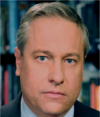 This week, hosts Mark Masselli and Margaret Flinter speak with Dr. C. Michael Gibson, interventional cardiologist and Founder and Chairman of the Board of the WikiDoc Foundation, the world’s largest open source textbook of medicine designed to make medical knowledge free and accessible to all.
(Music)
Mark Masselli: This is Conversations on Health Care. I am Mark Masselli.
Margaret Flinter: And I am Margaret Flinter.
Mark Masselli: Well Margaret, we are seeing a lot of growth in the sector of
telemedicine and telehealth of late, and incre asingly, it's the nation’s retailers
who are leading the way.
Margaret Flinter: The popular northeast grocery store chain Wegmans has just
announced an expansion of their virtual health visit program in which customers
can log on between 7:00 a.m. and 11 :00 p.m. for a visit with a board - certified
physician or psychologist, and they can do it through their tablet, their
smartphone or their computer . Wegmans’ leadership sees consumer telehealth
a s not only a great service for customers, but really the wave of the future and a
way to promote economy in health care spending.
Mark Masselli: This c omes on the heels of an announcement by Walgreens
Pharmacy to expand telehealth programs into 25 states. Walgreens’ leadership
touts the notion that the modern hea lth consumers taking the same ‘ anytime
anywhere ’ approach to the purchasing habits in the health care space is also
about the value as consumers becoming more aware of their health
expenditures.
Margaret Flinter: Well conversely, Mark, the health care es tablishment , that’s
moving forward a little more cautiously. At the recent meeting of the American
Medical Association, leadership decided to sh elve to a future da te a decision on
setting medical ethics standards in telemedicine.
Mark Masselli: But suff ice to say consumer pressure to engage in telehealth is
only going to increase moving forward, and it's bound to have a significant impact
on the health care delivery landscape. Meanwhile, we are not only seeing a
trend of consumers seeking care online, c linicians and medical students are
increasingly going online to advance their medical knowledge . Our guest today
is a thought leader in that arena.
Margaret Flinter: Well, Dr. C. Michael Gibson is the Founder and Chairman of
the Board of the no n - profit WikiDoc Foundation, the world’s largest open source
textbook of medicine, and he is aiming to make the world’s medical knowledge
open sourced and readily accessible to all interested people around the world.
Really quite amazing.
Mark Masselli: Lori Rob ertson, Managing Editor of FactCheck.org stop s by, but
no matter what the topic, you can hear all of our shows by going to
www.chcradio.com .
Margaret Flinter: And as always , if you have comments, e - mail us at
[email protected] , or find us on Facebook or Twitter because we love to hear
from you. Now, we will get to our interview with Dr. C. Michael Gibson in just a
moment.
Mark Masselli: But first , here’s our p roducer Mar ianne O’Hare with this week’s
Headline News .
(Music) Marianne O’Hare: I am Marianne O’Hare with these Health Care Headlines .
With the Supreme Court decision on the legality of the tax subsidies under the
Affordable Care Act weighing in the balance, the President says he will continue
to fight for the law that statistically has gained favor with the majority of Americans. And according to a recent Commonwealth Fund study , that
statement bears out . 86% of people who are currently i nsured through the
Aff ordable Care Act marketplace plans, or newly covered by Medicaid , are v e ry
or somewhat satisfied with their coverage . Nearly seven of 10 adults with new coverage have used it to get health care , many sa id they previously wouldn’t
have been able to afford that care in the past.
The administration is seeking to frame the narrative , in case justices rule in King
v. Burwell against the law ’ s federal subsidies, and millions indeed will be
anticipated to lose coverage should the subsidies be made illegal in 37 states.
One of the goals of the Affordable Care Act is to reduce the events of
rehospitalization within 30 days of being released, but as study shows, hospitals
are failing at that task for a simple lack of follow - up with the discharge d patient.
The stud y co - authored by the University of San Francisco showed about 8% of
the patients re turned within three days, more than previous estimates , a nd one in
five patients made a repeat visit over the next month.
And golf is reported ly the most actively engaged i n sport for adults into their
senior years , and it turns out it's really not a bad workout at all. Golf ers equipped
with Fit bits were analyzed for their overall steps taken and calories burned . It
turns out walking the course for an 18 - hole game brings t he average person to
the recommended 10,000 steps a day and beyond , burning about 2,000 calories
too. Problem is most Americans use a cart to get from te e to te e . Although
analysis of the cart users showed far fewer steps taken , about 2,800 steps, they
s till burned well over 1,000 calories.
I am Marianne O’Hare with these Health Care Headlines .
(Music)
Mark Masselli: W e are speaking today with Dr. C. Michael Gibson , Founder and
Chairman of the Board of the non - profit WikiDoc Foundation, the world’s la rgest
open source textbook of medicine. Dr. Gibson is an interventional cardiologist
and researcher who served as d irector of the Coronary Care Unit at Beth Israel
Hospital at Harvard Medical School, where he is also a professor. He created
the Academic Research Organization PERFUSE, and is Editor - in - Chief of the
Clinical Research News. He has also earned numerous awards and distinctions
including being named one of America’s top doctors by U.S. News & World
Report . He received his B.S., M.S., and M.D. from the University of Chicago . Dr.
Gibson, welcome to Conversations on Health Care .
Dr. C. Michael Gibson : Great. Well, thanks for having me on the show today.
Mark Masselli: Yeah . You know, we have a saying at our organization that
“Health care is a right and not a privilege, ” and as founder of WikiDoc, you seem
to be saying that access t o medical education is a right and not a privilege. And
you have certainly created the world’s largest open source textbook of medicine .
Can you tell our listene rs about the origin of this idea?
Dr. C. Michael Gibson : I think you are right that really access to up - to - date
medical education and content should also be a right , b ut unfortunately , so much
of that information is cloistered away or hidden away behind paywalls so that
only those who can pay can access the information. If you have something that
could help some one with a life threatening condition, why wouldn’t you be willing
to share it for free ? In United States , I think we have the perception that m any
health care providers are very well paid . That’s certainly not the case around the
world . There are countries out there where physician makes maybe $100 a
month, and the cost of access on the computer is say $500 a year. So they are
really locked ou t of getting up - to - date medical information . So we do serve an
international audience, and one of our goals is to assure that not just the U.S.,
but developing countries also have access to the same kinds of information.
Many young people who want to bec ome doctors have to pay $1,500 for a few
months of access to questions to help them prepare for those tests that allow
them to qualify to become a doctor, and we are about to release 18,000 free
questions that they can all use to prepare to take those exam inations. So we
want to make sure both patients and doctors and trainees, all of them, have
unfettered access to critical information.
Margaret Flinter: Well Dr. Gibson , it seems inevitable almost that you will come
up against some powerful forces and c ompanies that have proprietary control
over medical textbooks and research articles and the lik e . I wonder if you could
share with us a little bit about what you have called your copyleft approach to
gather ing and disseminating all of this information wri tten by others to counter the
copyright infringement or potential infringement issues.
Dr. C. Michael Gibson : Copyright began when we had the printing press.
Suddenly, you could make many thousands of copies of something , and the k ing
became very nervou s that “Oh my Gosh, what if someone says something bad
about the k ing. Now they have a way to distribute it very rapidly .” And they
decided they needed to give people the right to copy . That’s why it's called
copyright. Well after a while, parliament c onvinced the King of England for
instance, that you know, you have got to kind of loosen up on the censorship ,
a nd still , until recently, the people who owned the printing press owned the
content. Well now that we are in the Internet age and the cost of d istribution is
negligible, we now have very easy ways to distribute the content to millions of
people very simply and freely, and the copyleft doctrine says this, “You are able
to share that content, ” that’s the whole goal, “ as long as you give attribution to
the person who originally created the content.” So seeing on how angry I am
making everybody, I think I must --
Mark Masselli: You are doing a great job.
Margaret Flinter: Good measure.
Mark Masselli: You know, Margaret mentioned that the y are ra pidly changing
medical knowledge , and I think obviously you have an enormous task at WikiDoc
to keep timely information up, and I am wonder ing if you could tell our listeners
how you manage to do this open source editing on over 160,000 pages that you
have on WikiDoc . Illuminate us on how all pf th is gets managed on issues that
are obviously of vital importance to them.
Dr. C. Michael Gibson : Wikipedia is more of a general information source.
Sometimes it's a little too complicated for patients , and tha t’s why we branched
th
out to have WikiPatient which is written at an 8 grade level for patients. And
then we have WikiDoc which is for doctors which is written at least at a level of a
generalist if not a specialist. But for instance , with one disease , i t may have, I
don’t know , 15 - 20 chapters. So we talk about the pathophysiology as a chapter,
the diagnos i s, the treatment , you see how one disease can get multiplied into 15 -
20 micro chapters. Many thousands of those are drugs, and what we have done
i s w e have assembled a team of 20 people who just wrapped up the project of
going to the FDA labels , creating the content straight from verified credible
information . We also have content from the National Library of Medicine written
th
at the 8 grade level fo r patients , and drugs are one of the most widely looked up
things . So we have made a lot of efforts to make sure we have very credible
drug content.
On the disease side, I kind of divide the world into two phases. The first phase is
kind of building the Eiffel Tower and the second ph ase is painting it repeatedly,
and we are getting to the point where we have created the Eiffel Tower , world
experts and those around them to keep the content green or updated. So we are
about to complete the base content . It's taken 10 years . We have had 100 full -
time , they do nothing but work on this, full - time volunteers working with me here
in Boston , p eople making a million edits t o the content over those 10 years. We
review everything that every single person is work ing on , so that’s how we do all
that we can to assure that the content is accurate.
Margaret Flinter: You know, we have talked about the democratization of the
medical information and the democratization of access so the next, I guess, area
of democratiz ation is medical education . Can you share your vision for WikiDoc
and its role in this larger picture, and how you think this might disrupt in an
innovative way the status quo for both medical education and also even the
continuing medical education units that all health care professionals are required
to maintain overtime ?
Dr. C. Michael Gibson : Doctors learn by looking things up , b ut I think the main
way you learn is when you have a problem, you go and you use a search and
you look up everything relate d to that problem. We want to give doctors credit for
the time that they are spending researching and learning, and what we call micro
CME, or micro Continuing Medical Education . Why not give someone one
minute and 13 seconds of unbelievably intense time that they are looking
something up and learning as credit, and you build a bank where you say “ Dr.
Smith got one hour and 13 seconds today, three minutes and 43 seconds
tomorrow looking up topics, ” and that’s how you measure doctor’s engagement in
the con tinuing education process.
So we hope to shift away from CME to micro CME. Obviously on the larger issue
of education , kind of massive online education al efforts are gaining a lot of
momentum . And both my sons attended MIT . I know a lot of the content you
can get for free at MIT . I often wonder did he or the other ever go to class or
hopped online . I think you will see a growing movement in that regard s . But I do
think what you will end up p aying for in the future is more the piece of p aper , the
cert ificate , whereas hopefully the true content itself will hopefully be free .
Mark Masselli: We are speaking today with Dr. C. Michael Gibson, Founder and
Chairman of the Board of the non - profit WikiDoc Foundation . Dr. Gibson served
as the Director of the Coronary Care Unit at Beth Israel Hospital at Harvard
Medical School, where he is also a professor. Let’s just take a look at some of
the research being conducted in new ways across the spectrum . We are see ing
the rises in things like PatientsLikeMe and the Apple new ResearchKit . And you
have been conducting longitudinal studies on cardiac protocol in multiple
countries around the world, what kind of potential do you see from this increase
in patient engagement and new and improved data sharing technolog ies?
Dr. C. Michael Gibson: Well , I think the potential is massive . Sadly, every time
we do one of these trials that I lead at say 800 centers around the world, we have
to redesign the whole thing . We have to start all over again ; we have to create a
d atabase and that cost s $10,000 for every question that you want to ask , and it’s
millions of dollars just to design the study . The idea that we would be able to use
the same infrastructure over and over and over and over again is very , very
appealing beca use it's much more economical , and we do have th e s e registries
in different societies where the data is already being entered so we can tap into
it. All we need to do is then randomize someone to one treatment or the other . I
think the problem comes in w here you begin to have issues surrounding
governance , you know who owns this data , what’s the role of the patient in
deciding who is going to get randomized to what.
So it's going to be an interesting conversation . And then big data sounds very
attractiv e , but unless you do research in a way where you are asking a question
where you are randomizing people by chance to one strategy or the other, it
becomes very hard to make causal inferences about what’s going on. So big
data doesn’t mean that you get the right answer ; you can have unbelievable
certainty because of the numbers of people and reach the wrong conclusion . My
son works in genetics , in quantitative genetics and the P Value or the number of
zero e s that proceeds that final number has to be 50 dig its before they reach a
statistical conclusion because they are doing so many tests . So a great tool, but
it’s like a Ferrari , you got to know how to drive it.
Margaret Flinter: Well Dr. Gibson , you have been able to conduct hundreds of
global studies certainly with the support of the research community at Harvard .
Cardiovascular diseases are leading killer in this country and around the world .
What, in your estimation , are some of the more exciting potential breakthroughs
for treating cardiovascular disease?
Dr. C. Michael Gibson: Well , I have been really l ucky to participate in some of
the trials related to st e nts , the things that pop the arteries open and keep them
open, and the blood thinners, things that make your blood not clot , and that’s
been very rewarding over the past 20 - 30 years . We have improved mortality by
about 30% with all that we do now , compared to just 10 years ago. However,
putting a st e nt in or going on a blood thinner is a little bit like putting your seatbelt
on after you hav e had the car accident . There is already a problem when you
are having a st e nt put in . There is a new class of drugs called the PCSK9
inhibitors which dramatically lower your cholesterol levels down to the 30 - 50
range, bringing us back to where we were a s hunter - gatherers. So , lower bad
cholesterol will be more and more achievable . On the other hand , I am running a
trial where we are actually going to be infusing real true human good cholesterol .
The good cholesterol is like the dump trucks th at takeaw ay all the fat in your
arteries. Well, we are going to be giving people good cholesterol , good garbage
trucks and see if we can improve their outcomes dramatically . And then heart
failure , that’s another big area we need to work on.
Mark Masselli: Dr. Gibson , let’s talk about a word that seems to come up quite a
bit in your world , and that’s ‘ collaboration ’. And you say in the old days, the
(inaudible 18:27) medicine was to publish or perish , and the new mantra i s to
collaborate or perish . But tell ou r listeners how this new paradigm is altering the
landscape in medical education , the practice of medicine in general and perhaps
most especially i n accelerating the pace of research.
Dr. C. Michael Gibson: Well , it wasn’t too long ago that things worked like this .
Someone made an interesting observation , then they worked with industry to say
what if we made this mousetrap , what if we made this innovation, and the
industry said yes, let’s do that . And at a single hospital , they would deploy that
innovat ion like a st ent , and the guy at the single hospital would publish his
experience with that new technology . That is so 1990s . We have moved from
single center observation and trials now to multicenter and multinational trials,
because the numbers of pati ents that are required to really show benefits at this
point are very large , tens , twenties , thousands of patients . So, in order to make
bold claims, it requires a lot of bold data and lot of big data as we have just been
talking about from around the wor ld , and if you are going to try and enroll 20,000
pati e nts in a trial to answer a question . it takes a lot of collaboration.
Margaret Flinter: We have been speaking today with Dr. C. Michael Gibson,
Interventional Cardiologist, Founder and Chairman of Wi kiDoc , the world ’ s
largest open source textbook of medicine . You can learn more about his work by
following him on Twitter @CM ichael G ibson or going to www.wikidoc.org . Dr.
Gibson , thank you so much for joining us o n Conversations on Health Care
today.
Dr. C. Michael Gibson: Thanks for having me guys.
(Music) Mark Masselli: At Conversations on Health Care, we want our audience to be truly in the know when it comes to the facts about health care reform and policy .
Lori Robertson is an award - winning journalist and managing editor of
FactCheck.org, a nonpartisan, nonprofit consumer advocate for voters that aim to reduce the level of deception in U.S. politics. Lori, what have you got for us this week? Lori Robert son : President Obama made some misleading claims in a speech
boasting of the accomplishments of the Affordable Care Act . Let’s look at one of
them . Obama said that before the ACA was passed , 85% of Americans already
had health insurance, which is about right . He went on to say that those
Americans still got “a better deal” under the health care law , mentioning that
insurers can ’t deny people based on pre - existing conditions , can’t charge women
more than men, or put annual or lifetime caps on coverage . That’s all true, but
the new protections aren’t a better deal for everyone . Before the ACA, premiums
on the individual market , w h ere people buy their own insurance, could be
significantly lower for those who were young and healthy , not anymore. The
ACA d oesn’t allow insurers to vary rate s based on health status . The law also
requires a certain level of minimum benefit standards. That’s good news for
some , such as people with health conditions , that boosted their premium or
affected the coverage they cou ld get. Others now pay more as basic plans for
healthy folks are no longer available . With such major changes to h ow the
individual market is priced , th ere were going to be some who got better deals and
others who didn’t. Even Kathleen Sebelius , the For mer Health and Human
Services Secretary, acknowledged that before the exchange wa s launched. In
March 2013, she said that “Women would see lower cost , and men would pay
more . Older customers could see a lower premium , and younger ones could see
an increa se. ” And t hat’s my fact check for this week. I am Lori Robertson,
managing editor of FactCheck.org.
Margaret Flinter: FactCheck.org is committed to factual accuracy from the
country's major political players and is a project of the Annenberg Public Pol icy
Center at the University of Pennsylvania. If you have a fact that you would like
checked, email us at www.chcradio.com . We will have FactCheck.org's Lori
Robertson check it out for you here on Conversations on Health Care.
(Music) Mark Masselli: Each week , Conversations highlights a bright idea about how to
make wellness a part of our communities and everyday lives. Falling is a
common experience among the elderly , and that is not good news.
Drew Lakatos : If you are over 65 and you fall and have broken your hip, 25% of
them will die within 12 months. Another 25% will never be able to live independently , and a full 75% will never regain full mobility.
Mark Masselli: That statistic got former airbag execu tive Drew Lakatos thinking
what if you could apply the technology used in airbags to create wearable devices that protect a person from the impact of falling.
Drew Lakatos : So similar to the auto industry, our government has spent billions
in about two d ecades on fall prevention programs for the elderly . What I am
suggesting is we make that same strategic shift that the auto industry did and we begin focusing on intelligent protection of our elderly.
Mark Masselli: So they did their research and found a combination of accelerometers and other sensors on the band worn around the waist could deploy within six milliseconds of sensing an im minent fall, and protective bags
unf url around the hip joints before impact with the floor.
Drew Lakatos : With the ri ght technology , we can ensure that these people that
meet that inevitable and movable object , which is the floor , can not only survive
that accident , they can walk away.
Mark Masselli: He found ed ActiveProtect Technologies , and while his initial
focus wa s providing a significant barrier to devastating injury in adults, he has
additional potential markets as well.
Drew Lakatos : With this type of technology , we can protect against concussions ,
we can now protect (inaudible 24:22) patients ; we can protect our military
soldiers from IEDs.
Mark Masselli: A simple retooling of airbag technology in a wearable device th at
could greatly reduce the devastation of hip fractures leading to better health
outcomes and better quality of life , now that’s a bright idea .
(Music)
Margaret Flinter: This is Conversations on Health Care. I am Margaret Flinter.
Mark Masselli: And I am Mark Masselli, peace and health.
Conversations on Health Care, broadcast from the campus of WESU at
Wesleyan University, streaming live at www.wesufm.org and brought to you by
the Community Health Center.