Dr. Tom Frieden, Director of the Centers For Disease Control and Prevention

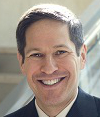 This week on Conversations on Health Care hosts Mark Masselli and Margaret Flinter speak with Dr. Tom Frieden, Director of the Centers for Disease Control and Prevention since 2009. Dr. Frieden discusses the most pressing challenges at the CDC including antibiotic-resistant infections, the opioid abuse epidemic and the recent Ebola epidemic as well as the efforts underway to combat these public health threats.
(Music)
Mark Masselli: This is Conversations on Healthcare. I am Mark Masselli.
Margaret Flinter: A nd I am Margaret Flinte r.
Mark Masselli: Well Margaret we are entering a new era of data mining in healthcare.
It’s a slow launch in many respects but in time access to all kinds of health data is going
to make consumers far better informed.
Margaret Flinter: Well the federal government has released a new five star rating and
home health agencies across the country and of the 9000 ranked only about 240
received five star ratings.
Mark Masselli: This guide is so important Margaret as we continue to see reliance on
home health agencies to monitoring care for loved ones.
Margaret Flinter: Well las t year Medicare’s spent about $18 billion on home care
services for some 3.4 million Americans and Mark I should know with 10,000 Americans
turning 65 everyday these numbers are just going to grow up.
Mark Masselli: And over a time this is going to provide a great opportunity to allow the
elderly to age in place.
Margaret Flinter: There are still some problems in home healthcare arena so this
ranking system I think will provide a better opportunity to hold agencies accountable for
the care they deliver and really recognize the outstanding providers.
Mark Masselli: You can find all of the relevant information on Medicare’s home
healthcare compare website and there are listings from all fifty states.
Margaret Flinte r: And our guest today has a job of ensuring the safety in health and
well - being of people living in all 50 states of the country. Dr. Tom Frieden is the
Director of the Centers for Disease Control and Prevention.
Mark Masselli: Dr. Tom Frieden is considered a ground breaking public health official.
Having initiate policies that have reduced tobacco consumption, harmful transfats in
food production and controlling epidemics like tuberculosis and Ebola.
Margaret Flinter: And of course Lori Roberts on will be stopping by. She is always on
the hunt for misstatements spoken about health policy in the public domain.
Mark Masselli: But no matter what the topic you can hear all of our shows by going to
chcradio.com.
Margaret Flinter: And as always if you have comments email us [email protected] or
find you on Facebook or Twitter because we love hearing from you.
Mark Masselli: And we will get a review from Dr. Tom Frieden in a moment but first
here is our producer Marianne O’Hare with this week’s headline news.
(Music) Marianne O’Hare: I am Marianne O’Hare with these healthcare headlines. Alaska has
become the latest state to capitulate to the healthcare law and expand Medicaid. The
state’s governor opting into the Medicaid expansion which is funded by the Federal
Government for the fi rst three year, against the objections of the Alaska legislature
independent governor Bill Walker decided he could no longer reject the government’s
offer of funding which will allow an estimated 42,000 Al askans to gain coverage through
the Medicaid expans ion. Obesity rates have raised among teens that’s nothing new but
there is something new about their perceptions of their condition. A recent study
showed well more teens they never are obese about 35% they are less likely to see
themselves as such which makes targeting the condition a tougher task for clinicians
attempting to persuade them of the need to shed pounds, turns out for many of the
population overweight is the normal and it’ s changed the perception of what a healthy
Body Mass Index looks like and bringing meals that go back to the grocery store maybe
good for the environment by maybe not so good for your waistline. Study of purchasing
habits of usable bag users shows they were more likely to also buy treats the findings
from Harvard Business S chool and the Duke School of Business analyze more than 2
million trips to a California supermarket. I think yes they feel more righteous about
buying organic and being more environmentally conscious so they unconsciously
reward themselves. And feeling frustrated at work well maybe you should sleep on it. A
study of healthy adult is not to test the efficacy of napping as a stress reducer, all
participants were given orders to several good night sleep than all were given task to
complete ta sk. They were designed to be impossible to finish. Some in a group were
ordered to watch (inaudible 03:55) Nature Programming to break their (inaudible 03:56)
meanwhile others were given an hour during which they had to nap. The nappers came
back to the task less easily frustrated and staying on average much longer on the task
then than the un - nappers. University of Michigan study a peers in the journal
personality and individual differences. I am Marianne O’Hare with this healthcare
headline.
Mark Ma sselli: We are speaking today with Dr. Tom Frieden Director of the US Center
for Disease Control and Prevention. Prior to that Dr. Frieden served as Commissioner
of the New York City Department of Health and Mental Hygiene under Mayor Michael
Bloomberg w here he launched ground breaking public health campaigns including a
successful tobacco control program. Dr. Frieden initiated a tuberculosis control
program which has saved an estimated 1.4 million lives. An internist in epidemiologist
Dr. Frieden recei ved his undergraduate degree from Oberlin College, his masters of
public health and medical degree from Columbia. Dr. Frieden welcome to
Conversations on Healthcare.
Dr. Tom Frieden: Great to join you. Thank you very much for having me.
th
Mark Masselli: You were appointed by President Obama in 2009, became the 16
st
Director of CDC to sort of confront the challenges of the 21 Century’s health threats.
Can you share with our listeners what you see as the biggest health threats we faced
today and what are the biggest hurdles we are facing confronting them?
Dr. Tom Frieden: One of them is drug resistant bacteria. We are seein g inexorable rise
in the proportion of bacteria that are resistant to some or in some cases all antibiotics
and that’s a real problem not just for people who have infections but for core medical
care. If you need a kidney transplant or a cancer chemothera py or even treatment for
arthritis all of those things are commonly complicated by infections and if we lose the
ability to treat common infections we can undermine much of modern medicine.
Another is reducing risks to the US that arise from around the wo rld. Drug resistant
bacteria are one but MERS, SARS, Ebola, HIV or the next HIV or others and we were
now increasing our ability to help other countries track threats and stop them before
they spread here. Tobacco continues to kill almost a half a millio n people in this country
each year. The opioid epidemic has increased the number of people its killing and we
can make so much more progress by doing simple things like making sure that blood
pressure and cholesterol are adequately treated.
Margaret Flinter: Well Dr. Frieden youth dote that we got to keep an eye on public
health if we are looking at the nation’s health and safety and you conceptually organized
st
this around four quadrants that underlie what will drive health and safety in the 21
century. What kind of technology and partnership is required to achieve the success
that we are seeking in combating this really very pressing public health problems?
Dr. Tom Frieden: We think of infectious diseases and non - infectious diseases and
those that arise in the US and those that arise globally and that delineates the four
quadrants so if you think about infections in the US we still have drug resistant bacteria,
HIV, Hepatitis C. Antibiotic resistance to something that we have been workin g across
government then across the public and private sectors to try to address there was a
Whitehouse Forum on this recently with more than 150 commitments, real commitments
from companies; from organizations it means better use of antibiotics. Antibiot ics have
both risks and benefits and you shouldn’t take them unless the benefits clearly outweigh
the risks.
Mark Masselli: You know you encountered this when you were a commissioner in New
York City during the dramatic increase in drug resistant tuberculosis infections and you
set out to tackle that health problem. You ran into Dr. (inaudible 07:50) and realized
you may have been looking at it from that perspective. Can you share with our listeners
a little more about the experience that you encountered in this change of strategy that
you came to?
Dr. Tom Frieden: I was by chance assigned to be the CDC assigned disease detective
for epidemic intelligence service officer in New York City from 1990 t o 1992. Drug
resistant bacteria was spreading rapidly particularly tuberculosis and it was spreading in
hospitals among HIV positive patients but also to healthcare workers, to prison guard
and this was a real crisis. There were two things that really he lped run it around. The
first was improving infection control in hospitals because too many hospitals were
allowing tuberculosis to spread and it wasn’t from patients who were diagnosed. The
second was as you mentioned Dr. (inaudible 08:43) intervention. He emphasized a key
point which is it’s not enough to focus on the care of individual patients though you have
to do that. You have to focus on how you are doing overall, be accountable for every
single patient who is diagnosed and that simple concept o f Dr. (inaudible 09:03)
pursued helped us control tuberculosis and drug resistant tuberculosis in New York City
and has saved more than $10 million lives around the world and that’s the kind of
concept we need to use throughout our entire healthcare system . We don’t do that
enough in healthcare.
Margaret Flinter: Right. Just want to spend one more moment because it is so
important on this issue of antibiotic resistance and because for such a huge public
threat I just don’t get the sense that the public has gotten sufficiently concerned about it.
What are the strategies to educate the public or to motivate the public to make a change
that contributes to reducing this threat of antibiotic resistance?
Dr. Tom Frieden: We had a terrific partnership with c onsumer reports and we see a
number of patient advocacy organizations. I don’t think we are seeing the beginning of
a huge change in our perspective on antibiotic use, understanding that we have to
preserve what we have where when we really need them it w on’t be available. We have
also seen tremendous differences in the rate of prescription around the US which
almost as threefold difference and the rate of antibiotic prescribing but we did see over
the past decade or so nearly 25% or 24% reduction in anti biotic for certain conditions so
we are seeing some things go in the right direction. This is something that everyone
has to be part of. Doctors also need to understand that, patients also need to
understand that demanding an antibiotic may not be demand ing the best treatment
maybe, demanding a treatment that could be harmful or ineffective.
Mark Masselli: We are speaking today with Dr. Tom Frieden, director of the US Center
st
for Disease Control and Prevention. Dr. Frieden let’s look at another one of those 21
century threats that caught the attention of the world community and that was the
deadly Ebola epidemic and take a look at the larger picture for of this nurse about the
global health academic and what does the CDC do in terms of helping strengt hen so
many countries who really aren’t prepared to manage these public health epidemics that
happen.
Dr. Tom Frieden: We are only as safest to weakest link in the world’s ability to find, stop
and prevent health threats. A tale of two outbreaks when th e Ebola hit Lagos Nigeria a
city of more than 20 million people at a crossroads for Nigeria and Africa because we
had a robust polio response system we were able to put 10 top epidemiologists in to the
field within a few days to re - deploy 40 Nigerian docto rs who were trained as disease
detectives to establish a incident management or control system run by an experienced
manager and although there was 19 secondary cases that team was able to create a
treatment in 14 days, identify about 800 contacts, do 19,000 home visits, establish
control system in two different cities when a patient fled to a city named (inaudible
12:13) and stopped the outbreak. Ebola could well have spread through much of
Nigeria and much of Africa and if that kind of system had bee n in place in the West
African countries the last year or nearly year and a half would have looked very, very
differently and it re - emphasizes our need to strengthen the weakest link with core public
help systems, what that means is laboratories to diagnos e new infections, response
capacity to rapidly go into a community, figure out what’s happening and stop it. It’s not
nearly as expensive as implementing an entire healthcare system but it tends to be
harder to get support for because it’s not so visible and when it’s successful its
particular invisible.
Margaret Flinter: Well Dr. Frieden there has been another public health crisis and that’s
just dramatic increase in the use of heroine in opioid addiction and in death by
overdose. Your department just released a dramatic report on this on the doubling of
overdose deaths in recent years from opioid abuse. You have made some
recommendations to the healthcare community which issued over 250 million
prescriptions for highly addictive opioids in recent year s and noting that, that has
contributed to the boom and heroin addiction is people seek to be able to replace those
drugs. What are some of the ideas that you find most promising in addressing this
really enormous public health problem?
Dr. Tom Frieden: We have got the balance wrong when it comes to prescription opioids
these are dangerous medication. They are highly addictive, take a few doses and you
can be addicted for life and they are highly dangerous. Take a few pills too many an d
you can stop breathing and die. It’s just horrific that we have lost 150,000 American
lives to prescription drug overdose in the past decade and there are very specific things
that can be done, first improve prescribing. Second, improve access to medic ally
assisted treatment and third work with law enforcement because we have to reduce the
supply of addictive drugs and that will red uce their utilization, understanding that if as a
physician I am about to prescribe a medication to someone who has never h ad opioid
before that’s a momentous decision and that should only be taken if the benefits clearly
outweigh the risks and for most chronic pain syndromes that’s not going to be the case.
Mark Masselli: Dr. Freiden you have spoken eloquently about changin g the structure of
society to encourage people to make healthier choices in two great examples of this
have been your efforts and New York City too reduce smoking and eliminate trans fat
consumption in commercially sold food and how the support of Mary Blo omberg in
those early efforts let’s talk a little bit about that combination if you will of public health
knowledge and political leadership, how important that is? Also want to talk a little more
about tobacco and I hope at some point you take a deep breath and look at the
implications that tobacco cessation program had in New York City. It’s still a very
d ifficult road to move.
Dr. Tom Frieden: There is sometimes a misconception that things are either individual
responsibility or they are social responsibility and a lot of things are both. Individuals
need to take responsibility for their health and soci ety needs to take responsibility for
making sure that if you just go with the flow and you do what is natural and what most
people do you will not get a preventable disease that might kill you early and cause a
great deal of suffering. With tobacco contro l what’s so striking is that we actually know
what to do? We know how to drive down tobacco use rates with public policies and we
know that government’s that have implemented tobacco control policies have
dramatically reduced the amount of tobacco use in society. Unfortunately, the tobacco
industry continues to come up with new ways to get kids evoked with that flavored
cigars or other ways of getting around regulations. Because nicotine is so addictive and
because at least 4 to 5 people just started smo king when they were kids but we know
that running hard hitting ads like the tips from former smoker campaign saves
thousands and thousands of lives and unfortunately in the Congressional and the house
proposal for the CDC budget. There is a massive cut pr oposed and CDC’s tobacco
control budget that would not allow us to run the TIPS campaign in the future. The
result of that would be thousands of preventable deaths of Americans but around the
world the Bloomberg Foundation has been able to promote tobacco control policies in a
way that will prevent more than 10 million deaths in the years to come so not only is
tobacco the leading preventable cause of death in this country and around the world but
it’s also the one we can do the most about.
Margaret Flinter: You know I wonder if I can turn our attention maybe to an area we
haven’t talked about is look at your background and education and training certainly the
incorporation of your master’s degree in public health figured prominently in the work
that you would then go on to do and as you look at the generation healthcare providers
coming of age and into our system what we see about our success and our work in
providing them with the kind of education and training in public health principles t hat it
would seem, I would think you might agree every provider of healthcare services needs
to have they are going to really be effective in primary care particularly but also in the
other specialties. Any thoughts on how you would restructure things if you could in
healthcare professional education and training ?
Dr. Tom Frieden: An epidemiologist is someone who loses sleep over denominator.
Primary care physicians would be much more effective if they think about at least their
entire patient panel and ideally the whole community that they live in. You need to think
about who hasn’t come back for a visit. You need to look at registry like focus on what
your impact has been and not be afraid to ask the tough questions, how much good did
I do, how many lives did I saved because by asking those questions and coming up with
a feedback loop that gives you the answers ideally every month or at least every quarter
you can rapidly improve outcomes and that will also drive primary care practiti oners to
working with the entire healthcare team making sure that you are making optimal use of
pharmacist, PA’s, nurse practitioners, nursing staff in the work that I have done in
tuberculosis for example we were able to get people with just a master’s degree trained
in h ow to monitor the effectiveness of tuberculosis treatment including what regimens
are used and because it was the only thing they did they were much more consistent
that doing that even then some of the pulmonologist specialist in New York City.
Similarly, when we helped New York City reduce tobacco use rates we had operators at
the 311 public information line learn how to follow a protocol and decide which over the
count er medications to provide for patients who were trying to quit smoking. So thinking
about your entire impact and using the entire team to maximize that impact are two
critically important things.
Mark Masselli: We have been speaking today with Dr. Tom F rieden, Director of the
Center for Disease Control and prevention. You can learn more about their work by
going to CDC.gov or by following Dr. Frieden on Twitter @drfriedencdc. Dr. Frieden
thank you so much for joining us on Conversations on Healthcare t oday.
Dr. Tom Frieden: Thank you. It’s a pleasure.
(Music)
Mark Masselli: At Conversations on Healthcare we want our audience to be truly in the
know when it comes to the facts about Healthcare Reform and Policy. Lori Robertson is
an award winning J ournalist and Managing Editor of factcheck.Org a non - partisan, non -
profit consumer advocate for voters that aim to reduce the level of deception in US
politics. Lori what have you got for us this week?
Lori Robertson: Law makers of both parties have made misleading plans about the
government interfering with women’s ability to get mammograms. The claimed stem
from new draft recommendations from the US Preventive Services taskforce an
independent volunteer panel of prim ary care physicians and experts in preventive
medicine. The taskforce examined peer reviewed evidence and makes
recommendations to help doctors and patients make decisions on preventive services.
The taskforces latest draft recommendations on mammography are virtually unchanged
from the 2009 recommendations. They recommend (inaudible 21:00) mammography
for women aged 50 to 74 who were not at high risk of breast cancer. For women age
40 to 49 the decision to have a mammogram “should be an individual one” and the
taskforce says there was insufficient evidence to evaluate benefits and harms for
women 75 and older. The recommendation for women in their 40s was controversial to
some law makers and cancer groups who recommended yearly mammograms. These
are s imply recommendations but there is a new wrinkle in how they impact the
affordable care act. The law ties the taskforces recommendation to requirements on
insurance companies to cover certain preventive services with no cost sharing. If the
draft recomme ndations become file insurers no longer would be required to cover
annual mammogram for free for women age 40 to 49, a requirement that went into
effect in 2010. That doesn’t mean that insurance companies wouldn’t cover
mammograms. The ACH requirements a re minimum standards and plenty of insurers
covered mammograms for 40 years old women before the ACA but with co - pay. Some
of the claims we have seen misplaced the blame for a change in insurance requirement
on the preventive services taskforce which does n’t issue any kind of insurance
mandate. Instead it was lawmakers who added a provision to the ACA tying the
taskforces future recommendations to coverage requirements in the law. That’s my
factcheck for this week. I am Lori Robertson, Managing editor o f factcheck.org.
Margaret Flinter: FactCheck.Org is committed to factual accuracy from the country’s
major pol itical players and is a project of the Anna Bird Public Policy Center at the
University of Pennsylvania. If you have a fact that you would like checked Email us at
CHCradio.com. We will have FactCheck.org Lori Robertson check it out for you here on
Conversations on Healthcare.
(Music)
Mark Masselli: Each week conversations highlight’s a bright idea about how to make
wellness a part of our communities in everyday lives. Of the 6.6 million births per year
in this country over half run unattended and among teens those rates are even higher.
Colorado ha s been conducting an experiment for several years to examine what might
happen if sexually active teens and poor women were offered the option of long - term
birth control such as IUDs or re - implants.
Dr. Larry Wolk: What was so striking the word of mouth amongst these young women
to each other and the network of support that was built to access this program through
these clinics and to help the tens of thousands of women over the course of the 4 to 5
years really they had to then result in these significan t decreases in unintended
pregnancies and abortion.
Mark Masselli: Dr. Larry Wolk, medical director of the Colorado Department of health
and environment. He says the results were nothing short of astounding.
Dr. Larry Wolk: The result in decrease is 4 0% plus or minus in both categories
pregnancy and abortion over these 4 to 5 years.
Mark Masselli: And the results showed there was a significant economic benefit to the
state as well.
Dr. Larry Wolk: We have seen a significant decrease in the number o f young moms
and kids applying for and needing public assistance.
Mark Masselli: And the incidence of sexually transmitted diseases has dropped in this
population as well. A free long - term contraception program offered to at risk teens and
women trying to avoid the economic hardship of unplanned pregnancies leading to a
number of positive health and economic outcomes for all involved. Now that’s a bright
idea.
(Music)
Margaret Flinter: This is Convers ations on Healthcare. I am Margaret Flinter.
Mark Masselli: And I am Mark Masselli. Peace in Health.
Conversations on Healthcare broadcast from the Campus of WESU at Wesleyan
University. Streaming live at wesufm.org and brought to you by the communit y health
center.