Katherine Baicker, Harvard School of Public Health

T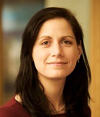 his week, hosts Mark Masselli and Margaret Flinter speak with Katherine Baicker, PhD, the C. Boyden Grey Professor of Health Economics at the T.H. Chan School of Public Health at Harvard. An expert on the health and economic impacts from gaining insurance coverage, she discusses her noted study of the Oregon Medicaid Experiment as well as the impact of the Medicaid Expansion under the Affordable Care Act.
Katherine Baicker
Mark Masselli: This is Conversations on Healthcare , I am Mark Masselli.
Margaret Flinter: And I am Margaret Flinter.
Mark Masselli: Well Margaret it's hard to believe six years have passed since the
President signed the Affordable Care Act into law tr uly has proven to be a watershed
moment for much needed reform of the American healthcare system.
Margaret Flinter: When the President signed the law in 2010 and estimated 50 million
Americans were uninsured, now 20 million Americans have gained coverage and that’s
a signature achievement. Of course the health reform journey continues but we note
the progress.
Mark Masselli: The uninsured rate for African Americans has dropped 53%, dropped
just under 30% for Hispanic population, many of those close to the poverty line gain ed
coverage under the Medicaid expansion portion of the law as well.
Margaret Flinter: The Supreme Court do not uphold [PH] the Medicaid expansion law
with the result that 20 states have yet to approve Medicaid expansion. And that leaves
many of their most vulnerable residents still uninsured and without access to care or the
resources to pay for it. That reminds of a comment that was made by Harvard S chool
o f Public Health , John Mc D onough “ B ecause of this people will die” .
Mark Masselli: And our guest today is one of Dr. McDonough’s Harvard colleagues ,
Katherine Baicker
Margaret Flinter: She is renowned health economist who has been analyzing data for
years on the impact of gaining health insurance coverage on health outcomes as well
as on reducing personal financial burdens.
Mark Masselli: Also we will be hearing from Lori Robertson, th e managing editor of
FactCheck.org , is always on the hunt for misstatements spoken about hea lth policy in
the public domain but no matter what the topic , you can hear all of our shows by going
to chcradio.com.
Margaret Flinter : And remember if you have comments , please email us at
[email protected] or find us on Facebook or Twitter because we love to hear from
you . Now we will get to our interview with Dr. Katherine Baicker in just a moment.
Katherine Baicker
Mark Masselli: But first here is our producer Marianne O'Hare with this week's headline
news.
(Music)
Marianne O'Hare: I am Marianne O'Hare with these healthcare headlines. On the sixth
anniversary of the signing of the Affordable Care Act one of the more contentious
aspects of the law found itself under review at the Supreme Court again , t he mandate
requiring all employers providing health coverage to offer birth control services as part
of that mandate and issue the controversial requirement that most health insurance
plans provide women with access to contraceptives at no additional out - o f - pocket cost.
Challengers say it's still violates a federal law protecting the free exercise of religion, the
Supreme Court still [ Inaudible 00:02:37 ] since the death of Antonin Scalia Supreme
Court observer say, the court seems evenly split.
An estimat ed 86 million Americans , about 1 in 3 adults are believed to be pre - diabetic
setting a stage for a tsunami of diabetes cases down the line . Health and Human
Services Secretary, Sylvia Mathews Burwell announced plans to expand a pilot program
launched at t he YMCA that puts at risk patients into diabetes prevention programs. The
program uses group meetings, exercise and diet counseling and other methods to help
pre - diabetics gain control of their condition and according to early results the program
appears to be working. It's the first prevention pilot program to become eligible for
expanded funding under Medicare.
The FDA is stepping up action in the wake of a rising tide of opioid addiction and
overdose deaths in this country. FDA issuing new rules for so called the Black Box
Warnings to be placed on all opioid labels about risk including risk for abuse, addiction
as well as overdose and death. Overdose is now the leading cause of accidental death
in this country with 47,000 opioid deaths reported in 20 14 alone.
And chocolate, the wonder drug it's been getting a lot of great praise [PH] lately as a
heart healthy, brain healthy super food according to , another recent study it may also be
a potent performance enhancer. A study just published in the Journal of the
International Society of Sports Medicine found that just a few days of ingesting dark
chocolate increase d the production of nitric oxide in cy cling athletes . Every athlete in
the study performed better after ingesting dark chocolate versus a control group eating
the white stuff. I am Marianne O'Hare with these healthcare headlines.
(Music)
Katherine Baicker
Mark Masselli: We are speaking today with Katherine Baicker, PhD and the C Boyden
Gray Professor of Health Economics and recent Chair of the Department of Health
Policy and Management at the Harvard T H Chan School of Public Health. Professor
Baicker serves as a Commissioner on the Medicare Payment Adviso ry Commission , as
Chair of the Massachusetts Group Insurance Commission and on the Congressional
Budget Office Panel of Health Advisers . Dr. Baicker’s work has been widely published
and she serves on the Editorial Boards of Health Affairs and the Journal of Health
Economics . She earned her BA from Yale and her PhD in economics from Harvard.
Professor Baicker, welcome to Conversations on Healthcare.
Katherine Baicker: Thank you for having me.
Mark Masselli: Well Katherine you have earn ed the reputation of being one of the
nation’s leading health economist and you focused much of your research on the effects
of health reform and we are six years out from the passage of the Affordable Care Act
and the impact of which you really spent a lo t of time focusing on. So maybe you could
share with our listeners how the ACA has lived up or fallen short of the expectations
both in terms of coverage as well as the economic impact on consumers.
Katherine Baicker: Sure. I think there were two main goals of health insurance and
healthcare reform. One was to expand coverage to people who didn’t have insurance
or didn’t have adequate access to care. And the second was to improve the value that
we get from the health care system as well as spending growth for both public programs
and for health insurance premiums for people buying it in private markets.
I think we have succeeded better on the first goal than we have to date on the second,
and that’s because the second goal is harder. As a profession we have a pretty good
idea about how to expand insurance for different populations but it's a problem that we
understand pretty well. Getting higher value out of the healthcare systems, stopping
spending a lot of money on things that don’t improve health while maintaining access to
life saving care, that is a much harder question and I don’t think we have the answer
yet.
Margaret Flinter: Well Katherine as an economist, of course your focus in on analyzing
cost benefit a nalysis of policy decision s that we make, and there are so many items
right now that drive the cost side of the equation I have been thinking about the,
certainly the ongoing Medicaid expansion debate but also the publ i c health crisis that
arrive on our ho rizons needing money for research on the zika virus or battling the
opioid crisis. We would really like to hear your thoughts as a member of the
Katherine Baicker
Congressional Budget Office Panel of Health Advisors this idea of intrinsic value and
how that comes into play when people are round the table in forming policy decisions.
Katherine Baicker: People like to say, well you can't put a price on health, as an
economist I can put a price on anything. And I think that it's important to put a price on
health because we have so many competing public policy priorities ; health, and food,
and housing, and education and transportation. So if you are not willing to think
carefully about, is this money creating the most good world by devoting it to healthcare,
I think you are going to end up with a really distorted use of resources.
And we see that when we think about spending on healthcare that produces very small
health benefit s at enormous cost. I think we haven’t wrestled [PH] carefully enough with
how we want to make those decisions. Those are very tough decisions to make but if
you are not willing to engage on what's the value that I am getting out of this healthca re
spending , there is no way to devote those resources to where they are doing the most
good.
It's much easier when you identify care that is not improving people’s health at all and
there is an alarming quantity of that, conceptually I think we all agree , t he much more
difficult ones are treatments that might extend patients’ lives by a matter of week at a
cost of millions of dollars and the human being in all of us, I think has the same reaction,
well of course you want to do whatever you can, but that m ay not be the right answer
when there are all sorts of other things you could use those resources for that would
improve people’s lives by more, and that’s the tradeoff .
Mark Masselli: Katherine, you gained quite of a bit of attention for a research stud y you
conducted, it was the so called Oregon Medicaid Experiment which offered uninsured
Oregonians a chance to win Medicaid coverage in a state wide lottery . And you had the
sort of perfect scenario for a randomized clinical trial with a control and the intervention
group, could you tell us what you studied in the Oregon experiment and why it was so
interesting and how you were able to mine it for such a rich datasets.
Katherine Baicker: This is I think one of the most important studies I have had the
o pportunity to work on. Oregon as you mentioned had a waiting list for its Medicaid
programs . And they decided that the most fair thing to do would be to draw names from
the waiting list by chance, and the most fair way to allocate the limited spots that was
available was by lottery. So it was born off necessity and scarce resources but it then
created this unprecedented opportunity to really assess the effect s of expanding
Medicaid on healthcare used , on financial wellbeing a whole range outcome. And that’s
because people who are on Medicaid and the uninsured look different in lots of ways,
Katherine Baicker
being poor or having a disabling health condition are both independently bad for your
health.
People on Medicai d have a higher mortality rate. It might be tempting to naively
conclude that Medicaid is killing them they have a mortality rate, what a terrible
program, but of course that’s not a valid conclusion from that fact pattern. People on
Medicaid have higher mortality rates for lots of other reasons . So with the Oregon
context we had this unprecedented opportunity to have an actual randomized control
group. You would never accept information about whether a drug worked or not without
a randomized control tr ial but we are frequently forced to do that for public policies
because there is no randomized control trial, but here, born out of necessity in Oregon
there was one. And so we were able to launch a massive data collection effort to study
the people who g ot Medicaid because of the lottery and the people who remained on
the lottery list but didn’t get access to the program . And I think we have found a lot of
interesting things people wouldn’t have expected.
Margaret Flinter: Well Katherine I am going to ask you to maybe stick with that because
I think the results were very fascinating and participants who got coverage reported
feeling healthier. There is a 30% improvement in self - assessment of mental health or
reduction of depression, coverage led to a g reat use of specialists in hospitals services
which actually increase the cost of care without markedly improving their health maybe
you could address some of these interesting findings, how do they inform your broader
understanding of the impact of gainin g coverage?
Katherine Baicker: I think we learned a lot about how health insurance affect healthcare
use, health and wellbeing from the study. As you noted, we saw a substantial increase
in healthcare use. When people gained access to Medicaid, they we nt to the doctor
more, they got more preventive care, they use more prescription medications. I think all
of those lined up with the expectations of policy makers and stakeholders part of the
goal of expanding insurance was to expand access to those servi ces a nd we also saw
an increase in hospitalization . On the other hand the population was probably
substantially underserved there were probably a lot of conditions that needed to be
addressed in the hospital and we saw a substantial increase in use for th ose kinds of
services.
The very surprising thing was that we also saw about a 40% increase in Emergency
Department use, and I don’t think was expected by most people, they had really hoped
that getting people access to primary care we would keep them out of the Emergency
Department and that maybe less surprising to economist, when insurance makes the
Emergency Department free, people go more often. They were more likely to go in
Katherine Baicker
situations we might think of a somewhat more discretionary, and once people h ad
insurance they were much likely to opt to go to the Emergency Department in those
circumstances.
The second set of findings was to think about financial well - beings, and that is under -
appreciated in my view. Insurance is supposed to get you access to care but it's also
supposed to keep you from getting evicted from your apartment because you paid your
hospital bill instead of your rent. And we saw it succeeding very well for new Medicaid
beneficiaries in those circumstances . There was a dramatic redu ction in bills being sent
to collection, the incidents of catastrophic out - of - pocket med i cal expenses vanished
when people had Medicaid relative to being uninsured.
But then the third set of outcomes that you pointed to is health outcomes and there is a
stories much more nuanced , we saw this big reduction in clinical measures of
depression there was a 30% drop in assessing people as having a clinical depressive
episod e when we interviewed them in person. And this is a dramatic improvement, the
physical health outcomes were a little more mixed, people reported being in much better
health but we didn’t detect improvement in things like cholesterol, diabetic blood sugar
control or high blood pressure. So our estimates [PH] were consistent with some
modest improvements in those measures but any changes in them were not big enough
to be statistically detectable in our sam p le.
Mark Masselli: We are speaking today with Kat herine Baicker, PhD and C Boyden
Professor of Health Economics and recent Chair of the Department of Health Policy and
Management at the Harvard T H Chan School of Public Health. You know Katherine I
was thinking as you were talking about the Oregon exper ience, that you have another
set of opportunities and many states have chosen not to opt into the Medicaid
expansion program, are you picking up similar types of dataset examples as you did in
the Oregon experience?
Katherine Baicker: It's harder to comp are across states. There is something different
about the states that are choosing to expand from those aren’t so it's not a perfect
apples to apples comparison. That said, I think that there is still a lot to learn by looking
at states that expand versu s those that don’t, before they expand versus afterwards. I
would love to see more information about, what's really working well in insurance
expansion and what works less well in terms of the type of insurance whether it's public
or private, how heavily managed it is, how far beyond the siloed walls of the healthcare
system it reaches. There are some really interesting experiments going on in some
states – Oregon included – looking at reaching out into the community to try to provide
Katherine Baicker
more flexible Medica id benefits or some states are experimenting with providing health
insurance on the exchange instead of Medicaid benefits.
One of the lessons that I think we learned from Oregon is that expanding a traditional
Medicaid managed care plan to a population with complicated healthcare needs, is
probably not sufficient to dramatically improve management of chronic conditions like
diabetes or high blood pressure. And I think that there is a lot less for us to learn about
the provider side of things and the ins urer side of things in terms of designing insurance
product s that really work for these populations.
Margaret Flinter: Well Katherine we all turn our eyes towards the state of
Massachusetts which has had new universal coverage for I think almost a decade now,
in the years following the passage of health reform usage and cost went up, but the
death rate actually dropped indicating some things were working, what can we learn
from the long view in Massachusetts still out - of - pocket cost is a big issue lot of people.
Katherine Baicker: Understanding the effect of a system wide expansion of health
insurance maybe very different from a narrow expansion because there maybe more of
a strain on capacity, there may not be enough primary care providers to go around
when you suddenly ensure millions of people across the country. But if the payment
system and incentives are right, their provider system can adjust to accommodate an
influx of new people and you raised the issue of co - pay nuance cost sharing can be an
im portant component of a sustainable healthcare system.
It has to be designed in a way to maintain access to high value care but to not spend a
lot of money on care of questionable value. But at the same time we do know that if
there is some cost sharing p eople will think twice about whether the care has enough
value for them. You can't expect me as a non - clinician to be able to make incredibly
nuance decisions about the best course of healthcare for me some kinds of preventive
care, some things that are o f questionable value that second MRI , antibiotics when they
are no t needed maybe they should come with high cost sharing so the patients are less
likely to use them. And higher income people are exposed to a little bit more cost
sharing and lower income p eople don’t face barriers to accessing high value care that
higher cost sharing might bring. I think that’s a necessary component of a sustainable
healthcare system .
Mark Masselli: We have a lot of corporation s who have been grappling with their high
co st healthcare and really trying to have them focusing on wellness, where do you see it
being effective where some incentive might be good for these larger problems that we
face?
Katherine Baicker
Katherine Baicker: Working adult spend you know eight or more hours a day in their
workplace and a lot of the behaviors that we are trying to help modify whether it's
smoking or exercise or healthy eating or even medication adherence . The place where
you are spending a lot of your time is going to have an important influence on your
ability to follow through on the best of intentions. So there is a good reason to think that
having employers as partners in promoting better health b ehavio rs could be really
valuable.
I think there is scanned evidence to date on how well they work. It's not that we know
they don’t work, we just don’t know because it's very hard again without randomized
control trial evidence to have a sense of whether it's ju st people who were already going
to invest in better health behaviors. So having much better evidence I think would
support both private investment and public investment in these kinds of activities. I am
leading another effort to try to develop randomiz ed control trial evidence on how well
these programs work and if we find evidence that we do, that’s a great public policy
tools to use and it could be use in terms of, and hopefully we will soon have evidence
about how well those might work.
Margaret Fli nter: We have been speaking today with Katherine Baicker the C Boyden
Gray Professor of Health Economics and Chair of the Department of Health Policy and
Management at the Harvard T H Chan School of Public Health . You can learn more
about Dr. Baicker and her team’s work by going to @HarvardChanSPH, Dr. Baicker
thank you so much for joining us on Conversations on Healthcare today.
Katherine Baicker: Thank you so much.
(Music)
Mark Masselli: At Conversations on Healthcare , we want our audience to be truly in the
know when it comes to the facts about healthcare reform and policy. Lori Robertson is
an award - winning journalist and managing editor of FactCheck.org , a nonpartisan,
nonprofit consumer advocate for voters that aim to reduce the level of deception in US
politics. Lori what have you got for us this week?
Lori Robertson: Alaska Sen ator, Lisa Murkowski says she opposes federal approval of
genetically engineered salmon “for the health of both consumers and fisheries. ” b ut
there is no scientific evidence that suggests GE salmon will pose a significant risk to
either.
Katherine Baicker
Scientists engineered GE salmon to grow faster than non - GE farm - raised salmon by
inserting genes from two other fish into the genome of an Atlantic salmo n. After these
changes , the GE salmon remained nutritionally and physiologically comparable to non -
GE salmon a ccording to Food and Drug Administration’s the scientific assessments .
The FDA approved GE salmon , marketed by AquaBounty Technologies in Nov ember
2015. The FDA says it can't establish with complete certainty the absolute
harmlessness of any substance so it defines safe to eat as “ a reasonable certainty in
the minds of competent scientists ”. To start the FDA says that the growth hormone, the
genetically engineered fish gains from genes from the Chin o ok salmon doesn’t pose a
risk to humans because it doesn’t bind to mammalian growth hormone receptors .
There are elevated levels of another hormone in GE salmon compared with non - GE
farm - raised sa lmon though the difference wasn’t statistically significant. The FDA also
found the nutritional profile of GE and non - GE salmon were similar. One difference was
slightly elevated levels of vitamin B6 . In extreme amounts vitamin B6 can be toxic.
In an a ddress to the senate Murkowski i mplied that GE salmon can't provide the omega -
3 fatty acids that are in wild species of salmon. But that the FDA found that the GE
salmon’s omega - 3, omega - 6 ratios were virtually identical to those of non - GE salmon.
The GE salmon won't rich supermarkets for at least a few years and the FDA has to
publish labeling guidelines before the salmon can be sold. And that’s my fact check for
this week , I am Lori Robertson , Managing Editor of FactCheck.org.
Margaret Flinter: FactCheck.org is committed to factual accuracy from the country's
major political players and is a project of the Annenberg Public Policy Center at the
University of Pennsylvania. If you have a fact, that you would like checked, email u s at
www.chcradio.com . We will have FactCheck.org's Lori Robertson check it out for you
here on Conversations on Healt hcare.
(Music)
Mark Masselli: Each week Conversations highlights a bright idea about how to make
wellness a part of our communities and everyday lives. Depression is extremely
common among adolescents in this country but it's often hard to differentiat e between
typically teen angst and a clinical condition that requires a more immediate intervention.
Suicide is the third leading cause of death among 10 to 24 year olds, a population that
almost ubiquitously uses texting as a form of communication .
Nanc y Lublin: So if you are someone who is in pain, you text us and the n the counselor
on the other side there are on screen that almost looks kind of like Facebook or Gmail .
Katherine Baicker
Mark Mas s elli: Nancy Lublin is Founder and CEO of Crisis Text Line an instant texting
service designed to encourage teens in crisis to reach out for help. All they have to do
is text the numbers 741 - 741.
Nancy Lublin: When messages come in with certain keywords in them , they
automatically get ta gged as high risk. So we don’t take them chronologically, if you are
at risk for suicide you are automatically bumped up in the queue and you are like code
red.
Mark Masselli: Since she founded Crisis Text the world has spread like wildfire. They
recei ve an average of 15,000 texts per day from kids experiencing everything from
typical teen dilemmas such as a fight with a boyfriend , to kids contemplating suicide
those in most danger are encouraged to take action through a series of channels .
Crisis Text Line, an instant age appropriate intervention, available free of charge and
24x7 to give kids in crisis a lifeline and lead them to help they need , now that’s a bright
idea.
(Music)
Marga ret Flinter: This is Conversations on Healthcare, I am Margaret Flinter.
Mark Masselli: And I am Mark Masselli, peace and health.
Conversations on Healthcare, broadcast from the campus of WESU at Wesleyan
University, streaming live at www.wesufm.org and brought to you by the Community
Health Center.