Aetna Foundation President Dr. Garth Graham Addresses Health Disparity Solutions

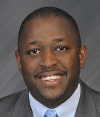 This week, hosts Mark Masselli and Margaret Flinter speak with Dr. Garth Graham, President of the Aetna Foundation which seeks to address health disparities and improve health outcomes. Dr. Graham, who served at the Department of Health and Human Services, discusses the Foundation’s partnerships aimed at reducing disparities, and the vital role that community health centers play in improving lives and outcomes.
Dr. Garth Graham – President of the Aetna Foundation
Mark Masselli: This is Conversation on Healthcare, I am Mark Masselli.
Margaret Flinter: And I am Margaret Flinter.
Mark Masselli: Well, Margaret all eyes were on the international stage last week
as leaders from the world’s top 20 economic powers gat hered to discuss a
variety of topics. And while there was much discussion surrounding the public
meeting between President Trump and Russian President Vladimir Putin , i t
overshadowed something new at these years G20 Summit. This was the first
time that g lobal health was put on the agenda.
Margaret Flinter: Well, that’s right Mark and while the world leaders were
ha shing out details about trade and security issues, the health ministers from all
the participating countries were meeting as well. There wer e high - level
discussions at the G20 Summit and everything from global efforts to battle
antibiotic resistance, but also improving emergency preparedness in the event of
new pandemic.
Mark Masselli: Margaret, since the Ebola epidemic, the World Health
Org anization has been working to launch an emergency preparedness fun to
allow a more rapid response to disease outbreaks. There was a delayed global
reaction to the Ebola crisis and it lead to thousands of deaths across the number
of largely African countri es the WHO took a lot of heat for that as well.
Margaret Flinter: They did and you know Mark another issue not so much,
always in the forefront of public consciousness, but a huge concern is antibiotic -
resistant and the threat it poses to global health . And that is going to require a
cohesive global action if we are going to reduce the threat of the spread of
infectious diseases that no longer respond to antibiotics. We are really just
seeing the tip of the iceberg there worldwide . So v ery good to see a concerted
effort on that front.
Mark Masselli: And here at home, there is another threat to health, Margaret,
racial disparities in this country have led to a significant lower life expectancy for
minority populations in this country. And our guest to day is the leading expert on
that topic.
Margaret Flinter: Dr. Garth Graham is President of the Aetna Foundation, the
philanthropic branch of Aetna which is focused on advancing better health for all
citizens as well as access to quality healthcare. He is a leading expert on health
disparit y and he led the first federal effort to combat the problem while serving at
HHS during the Obama administration. We look forward to hearing his views.
Mark Masselli: And Lori Robertson stops by she is the Managing Editor of
Factcheck.org. She is always on the hunt for misstatement spoken about health
Dr. Garth Graham – President of the Aetna Foundation
policy in the public domain. But, no matter what the topic you can hear all of our
shows by going to www.chcradio.com .
Margar et Flinter: And as always, you can hear all of our shows by going to
[email protected] or find us on Facebook or Twitter , w e would love to
hear from you. Now we will get you our interview with Dr. Garth Gr aham in just a
moment.
Mark Masselli: But first, here is our producer Marianne O’Hare with this week’s
Headline News.
[Music]
Marianne O’Hare: I am Marianne O’Hare with these Healthcare Headlines.
Several selections have been made for some of the nat ion’s leading health
institutions , Indiana State Health Commissioner, Dr. Jerome Adams has been
leading the fight against the spread of HIV and the opioid epidemic in his role as
top health official in that state. Now he has been tapped to be Surgeon Gene ral
of United States. Indiana was particularly hard hit by the HIV outbreak, tied
directly to the rising opioid crisis and the state’s initial refusal to provide clean
hypodermic needles to addicts in crisis.
Dr. Adams, an anesthesiologist convince d then - Governor Mike Pence, the
needle exchange was the best intervention to stop the spread of HIV and get
drug addicts into treatment. He has been lauded by addiction in public health
advocates a s someone who gets things done at the grassroots level. And he is
capable of navigating ideological hurdles, convincing those in power of the
importance of necessary interventions. If confirmed he replaces Dr. Vivek
Murthy, the U.S. Surgeon General appointed by President Obama and fired by
President Trump. Adams is a second official from Vice President Pence’s home
state of Indiana, to be elevate d to top healthcare positions in the country.
CMS administrator, Seema Verma crafted Indiana’s approach to health reform
prior to being appointed. And Dr. Brenda Fitzgerald has been tapped by HSS
Secretary Tom Price to have the Centers for Disease Control and Prevention.
Dr. Fitzgerald is a board certified OBGYN and served as the Commissioner of
the Department of Public Health for Georgia where she oversaw various state
pub lic health programs and directed the state ’ s 159 county health departments,
prior to that Dr. Fitzgerald worked as a healthcare policy advisor to House
Speaker Newt Gingrich.
Meanwhile when she does get to the CDC, she will have some tough tasks on
her ha nds including confronting the opioid crisis, now the leading cause of
accidental death in this country as the opioid crisis amps up and predictions
already overdose numbers for 2017 will exceed last year’s figures of more than
50,000.
Dr. Garth Graham – President of the Aetna Foundation
There is a bit of a silver lining , prescriptions are falling across the country,
according to a CDC report, from a peak in 2010 to a lower rate in 2015. Our
public health experts fear t he drop is not fast enough. The opioid prescribing rate
is still three times as high as it was in 1999. Meanwhile the nation’s governors
are conducting their annual summer meeting in Rhode Island, the opioid crisis is
going to play a prominent role in the agenda.
Kids may learn to play nice in the sandbox but the bacteria lurking there may
ha ve other ideas at least across the pond in Spain, a study of sandbox es around
Madrid showed higher levels of clostridium difficile in many playgrounds around
the city. The pathogen can cause diarrhea and in some cases severe colon
inflammation. Scientist found genetically different stran ds of the bacteria too,
including some that were resistant to several antibiotics. The authors say , it
could pose a real health risk to children exposed to the bacteria while playing.
th
And with the 4 of July, now behind us, some interesting insights on how to help
Fido get over the trauma and bang and the pop of fireworks which sen ds many a
pooch into terrors , n ow it turns out there could be a solution, medical marijuana .
T he use of it has been growing among humans trea ting everything from seizures
to chronic pain and anxiety . C ompounds using extractive marijuana known as
CBD a component of the plant gives the calming effect without the high.
Distributors and customers in places were medical marijuana is legally availa ble,
note that a number of pet owners have sworn by the results. But will they crave
more doggy treats later on. I am Marianne O’Hare with these Healthcare
Headlines.
[Music]
Mark Masselli: We are speaking today with Dr. Garth Graham, President of the
Aetna Foundation which is an independent philanthropic arm of Aetna, whose
mission is to promote wellness health and access to high quality healthcare for
everyone. Dr. Graham, previously served as the Deputy Assistant Secretary in
the U.S. Department of Health and Human Services where he also lead the
Office of Minority Health where he guided the development of the first federal
action plan to eliminate health disparities under the Obama administration.
He has served on a number of boards including the Institute of Medicines, Board
on Population Health and the World Health Organization ’ s Scientific Group on
Equity. Dr. Graham earned his medical degree from Yale School of Medicine
a nd Masters in Public Health from Yale School of Public Health. He comple ted
clinical training in cardiology at Massachusetts General Hospital and John’s
Hopkins. Dr. Graham, welcome back to Conversations on Healthcare.
Dr. Garth Graham: Thank you for having me and I need to have my mom hear
that introduction.
Dr. Garth Graham – President of the Aetna Foundation
[CROSS TALK]
Mark Masselli: We will send it to her absolutely. And you were back with us in
2011 and obviously, much has changed in the world the n , you were acting as the
Assistant Secretary at HHS where you oversaw the first federal action plan to
address the probl em of health disparities in this country, it was a difficult task
then and it continues to being now.
And you know we read recently a report in the journal of American Medical
Association that found that racial health disparities are responsible for a 20 year
spread in terms of overall life expectancy between African Americans and whites.
That’s just such a tragic number to hear. And I know you have spent a
considerable amount of time and energy really trying to focus on that issue and
narrow it down. A nd I wonder if you could just share with our listeners and talk
about this ongoing crisis in healthcare. And what you are doing now from the
Aetna’s foundation trying to narrow that gap, and eliminate it.
Dr. Garth Graham: So you know it’s been, it’s an interesting study that you just
mentioned -- another similar studies along those lines. That has really
emphasize d concepts of how important it is that where people live. And so that
study showed a 20 year life expectancy difference between different co unties in
the United States. And what’s interesting is there have been other studies that
have been done, some that were published in the last year as well, also in
general, again kind of underscoring the facts that you know where people live,
many times determine how long they live.
And so really what that has highlighted is will this issue around social
determinants of health, and the fact that there are all these things that go into our
health outcomes that occur outside the doctor’s office. So educat ion, hous ing, a
safe place to live , a nd you know the extent to which those things drive th ese
difference s in a life expectancy is really underscored by some of the data that
you just mentioned.
Margaret Flinter: Well, Dr. Graham, I think one of the thing s that has really made
a big impression on the public is the news that your zip code has more impact on
health outcomes than maybe even your own genetic code. And being a member
of an ethnic minority group adds another layer of health challenges statistic ally.
At the recent Aspen Festival of Ideas you highlighted the impact of social
determinants on life expectancy, by focusing on just one Boston area community
where folks living across the span of just a few miles along Boston Metro’s Red
Line are living vastly different health realities, can you share how that illustrates
the scope of the problem ? A nd if you can, talk about the challenge of tackling
th ese highly entrenched social determinants that seem to lead to such
disparities?
Dr. Garth Graham – President of the Aetna Foundation
Dr. Garth Graham: Yea h, so that was a stud y that was done at the Virginia, a
couple of years ago and really just showed that the life expectancy difference
from folks living in Back Bay, where the life expectancy was closer to 88, 89, 90
years. And then traveling down deeper into Roxbury which is again kind of along
the Red Line corner if you take the train and where the life expectancy was about
30 years. And you know some of us working on this issue when we kind of
compare life expectancy we look at where the country was, U nited States was a
hundred years ago in terms of life expectancy and that was around 1915. And so
we say that you know going from one part of the Red Line to the other, it’s like
going back a hundred years in time, in terms of how long and how well people
live. And that’s the Boston example is just an example because that’s replicated
in Chicago, in many other major cities and other place s across the United States.
And the real concept here is just again just underscoring how important that
factor of the zip code and location and all of the different things that impact
someone’s life, based on that location, particularly matters. And so the Boston
example, I can say before we say, you know you people fo lks are traveling a
hundred years back in time, but it really just shows that in many parts of our
country, our folks are living different realities, based on where they live.
Mark Masselli: You know we have a saying here at our health organization that
we are proud of what we have accomplish but we didn’ t get here on our own and
we can’t move forward alone. And I think you have always had a collaborative
spirit and you know certainly tackling health disparities requires incredible
amount of collaboration. I wonder if you again could sort of layout what the
coalition that you have been helping form around the country, this Health Equity
Leadership & Exchange Network or HELEN, which is a collaborative effort
between the National REACH Coalition and the Morehouse School of Medicines
and others, tell us abou t the role projects like HELEN play in addressing health
disparities?
Dr. Garth Graham: So partnerships across sectors are pivotal just by the nature
of the problem that I just described. And our goal with HELEN as well as other
activities that occur ac ross the country that are somewhat similar, is how to train
leaders w ho are in different disciplines, role and if one educate them around the
issue around health disparities. But also train and activate them to take on
ongoing local leadership roles.
And so HELEN is an outgrowth of the activities that have occurred under the
CDC REACH grant. And that’s a racial and equity grant, a major grant that CDC
had been funding for a number of years. And those grantees ha ve been doing a
lot of interesting work at the local level. And what we have decided to do was to
work with the folks Morehouse , to fund a leadership network within those
grantees as well as folks across the country. And the real lesson that we learned
here is just this idea of leadership. And we are going to need leadership a t all
Dr. Garth Graham – President of the Aetna Foundation
levels , both in the private sector, public sector, academia and other areas to be
able to tackle this problem appropriately.
Margaret Flinter: But Dr. Graham not only do we need those strong partnerships,
but we thi nk about this next generation and how we can help train them to be
more responsive to the needs of the diverse patient population. And the Aetna
Foundation Scholar Program is designed to promote diversity in the healthcare
workforce but you are also colla borating with AcademyHealth , which has a
unique program that’s aimed at engaging mHealth or mobile health technologies
to impact disparities. Tell us a little more about these programs?
Dr. Garth Graham: An AcademyHealth has been an organization that ha s really
worked to established down the concept of health services research, outcomes
of research which we need in order to be able to track some of these difference
in health disparities. To be able to look at what are the kinds of things are
impact ing p opulations. And so our goal with AcademyHealth was really to try to
build that core of academic leaders who would continue to not only do research
but are able to articulate the kinds of policy that would be needed to help to atta in
some of the disparitie s that we just articulated. And so the concept here much
like to HELEN is really you know how do you find the right group of partners, who
have the ability to reach other folks and be able to leverage that appropriately, to
build again this cadre of a new leadership, to tackle what is an old but
challenging problem.
Mark Masselli: We are speaking today with Dr. Garth Graham, President of the
Aetna Foundation, which is an independent philanthropic arm of Aetna whose
mission is to promote wellness, health and access to high quality healthcare for
everyone. Dr. Graham previously served as Deputy Assistant Secretary in the
U.S. Department of Health and Human Services. He also led the Office of
Minority Health.
You know I think Dr. Graham, the saying is tha t “you can’t fix what you can’t
measure” and I am excited about this new initiative that Aetna has announced
with the U.S. News & World Report. I think we all know U.S. News & World
Report is a sort of a global authority on health rankings. I think all o f us take a
look at it, best hospital, best children’s hospital and others. So in 2018, you have
got this new launch coming up with the Aetna Foundations, healthiest community
in U.S. News and it sounds like they are going to shine a light on innovative
p rograms . T alk to us a little bit about this and why you are so excited about it?
Dr. Garth Graham: Yeah I know, along the lines of everything we just discuss ed
in terms of how do you e levate and motivate and shine a light on the problem, so
that leaders can take action. And you know as you mentioned the U.S. News
being an authority in this concept of recognizing the good efforts, whether that
would be in the hospital arena or other. And really what we want to do is to look
at those cities and counties across the country that are addressing this issue of
Dr. Garth Graham – President of the Aetna Foundation
social determinants of health and trying to tackle it at a local level. And to be
able to recognize and honor them and have their kind of a shine the light on the
kind of examples that are occurring. S imilarly to what U. S. News has been able
to done to do with the hospitals and other sectors. And so again, I would say
along the same vein of how do we drive visibility, drive leadership and ultimately
improve outcomes by choosing partners who have that reach into different
sectors.
Margaret Flinter: Dr. Graham, you know that shining a spotlight on communities
and then empowering them to do a great work makes a huge difference. And I
think our listeners are probably asking, what does that mean? How do I, how my
community come together and what kinds of things m ight people be doing? Any
kind of roadmap or vision for communities that might be interested in this. And I
know so much of this in formed by all the work that you have done over the past
decade s. So we would love to hear a little more about that?
Dr. Garth Graham: Yeah, so you know it’s really looking at all of these kinds of
factors that build a healthy community. So looking and not just you know safe
places that people have to bike and to walk, but also looking at housing and
whether there is safe housing environmental exposure, things around to build
environment that we, many of us in this arena have been articulating for a long
time, as well as a community safety as I alluded to you earli er. And so all of
these things helped to build a health y community and a healthy individual within
those communities a nd that’s what we really want to highlight with this effort.
Mark Masselli: Well, certainly building healthy communities requires acces s to
healthcare. And there has been a lot of access that’s been provided since the
Affordable Care Act passed , its reach roughly 20 million Americans who have
gained coverage . And I wonder if you could walk through for our listeners what
you think, it’s done to address health disparities and what parts of the country
have been, maybe have not gained as much as others. And what happens to
racial and ethnic minorities if this Medicaid expansion or other supports might be
curtailed?
Dr. Garth Graham: Yeah , so you know, it’s really interesting, I have studied as
you have kind of alluded to the issue of health policy for a long time. And you
know we have seen evolution of health policy ever since, Lyndon Johnson’s
signed into law Medicaid and Medicare simul taneously back in Independence,
Missouri in 1960s. And so you know the goal I think that folks wrestle with on
both sides of the aisle, is this issue of how to improve the lives of Americans and
again w e have been wrestling with that for decades now, whil e also dealing with
the challenge of cost and quality of care.
And so I think as we see this evolve, I think we will see multiple iterations of
different proposals to deal with this that can tackle it from different angles. One
of the things is that we a lways like to sa y and I have always felt I have leaned
Dr. Garth Graham – President of the Aetna Foundation
through the years dealing with this particular kind of work is “all healthcare still is
local.” So regardless of the proposal strategy, we have to envision as how can
we make local community stronger? How can we make individuals within those
local communities have the capabilities to change their own destiny, to be able to
empower them to make the kinds of decisions like again, you know policies
where they can have safe exercise, safe walking as well as lower the incidents of
environmental pollutants and other things that impact health outcomes. And I
think if we keep the local community at the center of our varied efforts, we will
ultimately get to that goal.
Margaret Flinter: Well, you know wonder if I can ask you to speak to an area
that’s near and dear to our heart, certainly in the interface between the health of
the community and the health of the individual lie the community health centers,
which I know you are well familiar with and what’s yo ur sort of your sense of the
role both current and emerging that community health centers play in this
development of healthier communities. And I certainly, you know your comments
about safety as one of the factors is so much on all of our minds these da ys
between the opioid crisis and the risk it poses to the health and lives of patients
we care for and to the future of our communities, but just safety in general, such
a huge issue, any thoughts you have on the r o le of community health centers in
address ing this push for healthier communities?
Dr. Garth Graham: Yeah I think Community Health Centers, are really the
backbone of the primary care system for a number of communities . I will tell you
that, you know , w hen I first came to this country, I relied on Community Health
Centers heavily for my own care and then being able to work on it at a policy
level, was you know even that more rewarding. Integrally a part of the safety net
of many, many communities both in urban and rural populations. And I h ave
really enjoyed again this concept of bipartisan support in terms of their abilities to
reach communities at all different levels. And Community Health Centers
embody this concept that I was just alluding to, of building of local communities,
particularly by the fact that you know , we have, you have them a t the party , you
have community members as part of your board. And so you know that they are
integral part of that leadership network that I was alluding to, earlier. So and I
think most folks i f not al l folks who work s at [inaudible 22:00] think that
Community Health Centers are vital to this issue of tackling health disparities.
Mark Masselli: Well, that is a good to hear and again we have been speaking
today with Dr. Garth Graham, President of the A etna Foundation, which is
independent philanthropic arm of Aetna, whose mission is to promote wellness,
health and access to high - quality healthcare for everyone. You can learn more
about their work by going to www.aetna - foundation.org . Dr. Graham, thank you
for the work that you do at Aetna, the work that you have done for the United
States. And thank you for joining us on Conversations on Healthcare.
Dr. Garth Graham: Thank you for having me.
Dr. Garth Graham – President of the Aetna Foundation
[Music]
Mark Masselli: At Conversations on Healthcare we want our audience to be truly
in the know when it comes to the facts about healthcare reform and policy, Lori
Robertson is an award - winning journalist and Managing Editor of FactCheck.org,
a non - partisan, n onprofit consumer advocate for voters that aim to reduce the
level of deception in U.S. politics. Lori, what have you got for us this week?
Lori Robertson: Democratic Senator Chuck Schumer tweeted that premiums
would be 300% higher under the Senate Repu blican healthcare bill for a 64 year
old earning $56,800 in the year 2026 compared with current law. Republican
Senator John Barrasso said the bill “lowers” the rates for insurance, 30% a
couple years from now, both side of the Congressional Budget Office , whose
rights, they both are. On premiums there is something for both parties in the
nonpartisan, CBOs analysis of the Senate bill. Just like the Affordable Care Act
and the H ealth Republicans bill, the Senate legislation would affect premiums on
the in dividual market in different ways, depending on individual circumstances.
These claims concern a relatively small segment of the insurance market, the
individual market were those without employer’s plans or coverage through a
program like Medicaid by the ir own coverage. About 7% of Americans buy
individual market plans. And to the CBOs estimates are compared with current
law. So a decrease in a few years may still be an increase from what premiums
are right now. What does CBO expect to happen, it said the Senate bill would
increase average premiums in the individual market prior to 2020, and lower
average premiums after that, relative to current law.
Part of the decrease is due to the Senate bill using a less expensive benchmark
plan which would pay a smaller percentage of benefits then under current law.
What about the 64 - years old that Schumer mentioned? The bill allow s insurers
to charge older Americans five times as much as younger Americans for
premiums. The current ratio is 3:1. CBO estimated that a premium for a bronze
level plan for a 64 - year old in 2026 would be $3,100 more under the Senate bill
than current law that’s not including any tax credits. Another factor that would
affect what people pay out of pocket for premiums under the bill.
The Affordable Care Act provides tax credits to those earnings between 100%
and 400% of the federal poverty level. The Senate bill changes that to 0% to
350% and adjust the credits based on age for those earning above a 150%. So
that younger individual s pay less towards their premium. The Kaiser Family
Foundation has an interactive map on its websites where you can see how the
Senate bill could affect your premium, again if you buy your coverage on the
individual market. And that’s my factcheck for th is week. I am Lori Robertson,
Managing Editor of Factcheck.org.
Dr. Garth Graham – President of the Aetna Foundation
Margaret Flinter: FactCheck.org is committed to factual accuracy from the
country’s major political players and is a project of the Annenberg Public Policy
Center at the University of Penns ylvania. If you have a fact that you would like
checked, email us at www.chcradio.com , we will have FactCheck.org’s Lori
Robertson, check it out for you, here on Conversations on Healthcare.
Margaret Flinter: Each week conversations highlights a bright idea about how to
make wellness a part of our communities and everyday lives. At one point in the
early 2000s, Oklahoma City was one of the most obese cities in the nation. A
fact that was not lost on the City’s Ma yor Mick Cornett, who too his own shoe
grind , learned that he was in that group.
Mick Cornett: I finally decided I needed to lose weight and I knew I could
because I ha d done it so many times before. So I simply stopped eating as
much. I had always exe rcise d that really wasn’t the part of the equation that I
needed to work on, but I ha d been eating 3000 calories a day. And I cut it to
2000 calories a day and the weight came off, I lost about a pound a week for
about 40 weeks.
Margaret Flinter: A deci sion to lose weight led him to examine, what was
causing the high obesity rates of his city’s residents. And he learned that
developments since the 1970s, h ad we moved much of the city’s walkability in
favor of cars.
Mick Cornett: And I came to the conc lusion that we had built an incredible quality
of life. If you happen to be a car. But if you happen to be a person, you are
combatting the car seemingly at every turn .
Margaret Flinter: He took two approaches to the problem. He launch ed the OKC
Milli on program, inviting Oklahoma city residents to an ambitious weight loss
challenge, to lose a collective million pounds.
Mick Cornett: I decided that the first thing we needed to do was have a
conversation. And so on New Year’s Eve of 2007, I went to th e zoo and I stood
in front of the elephants and I said, “T his city is going on a diet. And we are
going to lose a million pounds. ”
Margaret Flinter: In addition to that challenge he urged city planners and
developers to improve the city’s walkability , f irst around the city’s dozens of
school zones and then throughout the entire city.
Mick Cornett: We added a new Central Park, 70 acres in size to be right
downtown in Oklahoma City. We are building a downtown streetcar to try and
help the walkability fo rmula for people who choose to live in the inner city and
help us create the density there. We are building Senior Health and Wellness
Centers throughout the community. We put some investments on the river that
Dr. Garth Graham – President of the Aetna Foundation
had originally been invested upon in, in th e original maps. And now we are
currently in the final stages of developing the finest venue in the world for the
sports of canoe, kayak and rolling. We have Olympic caliber events coming to
Oklahoma City and athletes from all over the world, moving in, along with inner
city programs, to get kids more engaged in these types of recreational activities
that are a little bit nontraditional.
We also with another initiative that was passed, are building hundreds of miles of
new sidewalks throughout the metro area. We are even going back into some
inner city situations where we had built neighborhoods, and we had built schools
but we had not connected the too. We had built libraries and we built
neighborhoods but we never really connected the two with any sor t of walkability.
Margaret Flinter: They launched a website, www.thiscityisgoingonadiet.com
were pounds lost were tiling miles, walked were tagged and health and weight
loss tips were offered around t he clock. Since he issued his challenge, a million
pounds have been lost and participants have walked or run, a collective 1.2
million miles. The average participant lost about 12 pounds, but when you factor
the tens of thousands who participated, what a significant public health
improvement in a relatively short period of time. The OKC Million program where
city leader took an entire population on a weight loss challenge, improving the
infrastructure, providing leadership and incentives to facilitate th at challenge.
And ultimately improving the health and impacting the obesity epidemic
throughout the city’s population in the process. Now that’s a bright idea.
Margaret Flinter: This is Conversations on Healthcare, I am Margaret Flinter.
Mark Masselli : And I am Mark Masselli, peace and health.
Conversations on Healthcare broadcast from the campus of WESU at Wesleyan
University, streaming live at wesufm.org and brought to you by the community
health center.