2026 Health Care Predictions: Do You Agree?
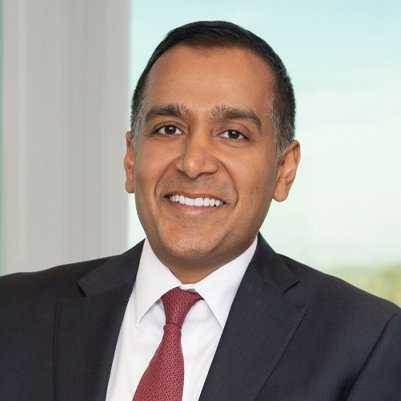
We’ve invited noted health care leader Dr. Sachin Jain back to “Conversations on Health Care” to share his predictions for the year after many came true last year.
👉 Click the interview to get his take on:
- Whether artificial intelligence’s growing influence in the health care sector could hit a road bump in 2026
- If the “Make America Healthy Again” initiative can build on its policy achievements to date
- Why the GLP-1 revolution could suffer setbacks in the next 12 months
Hosts Mark Masselli and Margaret Flinter also examine why his many fears about DOGE didn’t materialize and why he believes health equity efforts are bouncing back.
And, as we begin a new year, we have a new look! “Conversations on Health Care” is now part of the Moses/Weitzman Media Group. The show will continue to bring you top national thought leaders in public health, health policy and innovation and offer the same in-depth conversations that have been our hallmark for more than fifteen years.
Let us know what you think!
(00:00)
[instrumental music playing]
Mark Masselli (00:04)
What's on the horizon in 2026 for our country's healthcare system. We're inviting back an accomplished national
expert for his annual predictions about what he thinks will happen to healthcare policy in the next 12 months.
Dr. Sachin Jain (00:18)
I think there's good MAHA and there's bad MAHA, right? So, good MAHA is, you know, eat, eat right and
exercise more that and I think that there's a lot of wisdom to that perspective. And I, I do think, you know, we
primarily think of healthcare as sick care, and I think there's a recentering that's happening.
Margaret Flinter (00:36)
Our guest today is Dr. Sachin Jain. He's held top positions in the federal government and in the private sector,
and he's an adjunct professor of medicine at the Stanford University School of Medicine.
Dr. Jain (00:47)
There's a lot of positivity, you know, well-earned positivity around the GLP-1’s. And now we're hearing about
oral GLP-1’s that are going to be, you know, I think really significant for some of the major drug manufacturers
that are gonna make them easier, more accessible. As there's more competition, the price will go down. As the
price goes down, more people will take these drugs. But, you know, again, all you have to do is scan social
media for, you know, mentions of, you know, Wegovy, Mounjaro, and you find countless people or calling out,
you know, stomach pain or, you know, rebound obesity or, you know, some mental health issues. You just find,
you know, lots of different kind of potential safety signals.
Margaret (01:27)
And this is Conversations on Healthcare.
Mark (01:40)
Dr. Jain, welcome back to Conversations on Healthcare.
Dr. Jain (01:43)
Thank you so much. It's so great to be here. I was just thinking this is, my third time with you all. So…
Mark (01:48)
Absolutely.
Dr. Jain (01:49)
Really appreciate the opportunity.
Mark (01:51)
Well, we appreciate all this work.
Margaret (01:52)
No, no shortage of issues to talk about.
Mark (01:54)
You know, we really enjoyed your predictions last year and are glad to have you return, but we wanna start out
by asking you to tell us more about the secret sauce of how you develop your healthcare forecast, and what
factors do you consider?
Dr. Jain (2:09)
Well, it's a combination of tarot card reading, palmistry, crystal ball, and work. (Hosts laughing) But actually,
you know, some of it is just, you know, ear to the ground. you know, I'm, I'm deeply invested in healthcare my
whole career, have a lot of relationships, hear a lot of things. some of it is wishful thinking. Candidly, some of it
is things that I really want to see happen in the healthcare landscape. And, you know, some of it is just based on,
you know, my own prior experience and instinct, a view of how things are gonna play out. And, I would say,
you know, outta 10 predictions, usually seven over the last…
Mark (02:46)
Well, Margaret, he gets a, he gets a lot right. So, very, very impressed.
Dr. Jain (02:50)
Yeah. Seven, seven of ten two, two are kind of completely useless. And one is, you know, a 50/50. So here I am.
Margaret (02:57)
Well, we're interested in all of them, and then, then we'll see how it, it pans out. But I thought it was really
interesting that your top prediction for 2026 is that healthcare's artificial intelligence revolution, will hit speed
bumps. and you say this even as the US healthcare sector, reportedly leads nearly every other industry just in the
rate of adoption of ai. So, what, what leads you to that projection?
Dr. Jain (03:22)
Well, I think that there's, you know, kind of a hot air balloon that is carrying, AI adoption. And I think we've
kind of focused on some of the easy use cases like, scribes and scribing. And I think there's a- reality is, is that,
you know, the more complicated use cases are gonna come when we start to really redesign process. And we
really start to redesign how the healthcare system works. And the truth is, is that AI, every day of the week, is
gonna run into a lot of legacy process that was not really designed for purpose. And we see this in our own
organization at Scan, and we see it across the startup landscape where some of the work that you see is being
done by AI is being done with ai with some manual process in the background. And, you know, you're not
gonna hear that from many people because many people are invested in the outcome. The venture capitalists are
really betting big on AI right now. But if you get them, you know, and, and get them by themselves, and you're
having a quiet conversation with them, you know, a lot of them will say that many of these companies are gonna
be commodified, some of the big players are going to easily add functions and do so at zero marginal costs. So,
the, the, the ability to actually build a company in this space is going to be really challenged. And then, you
know, the reality is, is that we are still using a lot of computer systems that were built in the sixties and
seventies. And so, it's really hard to get the lifeblood that actually fuels ai, where is healthcare data into a format
where that data can be used to really improve care and improve processes. And I think we just dramatically
underestimate, the broken state of healthcare infrastructure and, and we'll need to build that infrastructure and
rebuild that infrastructure before we're able to take advantage of the large language models and the, the new
capabilities are existing. That said, every day I drop my jaw and say, holy cow, I can't believe you can do that.
So, this is one where I really hope I'm wrong, candidly, because I am just super impressed by some of the things
that are coming out, from some of the big players and also from some of the small players.
Mark (05:27)
You know, I was always wondered if, AI was gonna do a little like cellular technology did to eastern European
countries where we just leapfrogged over. we'll, we'll see if that happens here, sort of leapfrog over folks who
don't have the legacy systems who are starting out fresh. But that's…
Dr. Jain (05:45)
Well, mark, the thing I keep thinking about is, you know, I, I, I got, I'm one of the folks who got really tired
about all the healthcare analogies to Toyota that, you know, were pursued in the nineties and the early two
thousands, and the Toyota production system and lean, and a lot of that stuff was really misapplied. But I
actually think it's a really good analogy for what healthcare organizations have to do. Now, most people don't
know this, but Toyota was eight times less productive than US car manufacturers before they built a Toyota
production system. And, you know, they just copy and pasted what Americans were doing. They were gonna get
the exact same results. But what they actually did was they redesigned the entire chassis for how cars were
actually built. They went away from the assembly line to a completely different process. And I think that that's a
bit of what you're gonna see over the next couple of years. And you're gonna start to see some Toyotas of
healthcare in a way that we really haven't, even though we've been talking about it for 20 or 30 years. The other
piece is that if you study the history of Toyota is, is you have to realize how long it actually took for that
company to evolve. And for those in the industries that it touched to evolve, they didn't actually start out in
automobiles. They started out in the garment industry with hand looms. And it actually took 20 years for them
to build these new hand looms that were far more productive, than the original hand looms that they started
with. And so, again, I think it's easy to, to think that this is going to happen like in a blink of an eye. But I also
think the long arc of this is that we're gonna have a totally different healthcare system in 15 to 20 years. I really,
I actually do believe that.
Mark (07:17)
Well, thinking about different healthcare systems, the MAHA movement, the Make America Healthy Again,
movement, had a lot of wins last year, and you think they'll continue in 2026, and you believe it will grow,
quote, mainstream. what do you see happening?
Dr. Jain (07:31)
Well, I think it's tapping into something that's very deep in the American psyche, which is a growing distrust of
traditional healthcare, mostly because traditional healthcare isn't serving most people today. So, most people,
don't have a primary care doctor. If they do have a primary care doctor, they're waiting six or eight months. most
people really don't like taking take medicines. There's a deep dis distrust of the pharmaceutical industry, a deep
distrust of pharmaceutical benefit managers. And here comes a politician and a movement that says, don't take
drugs, change your lifestyle. You know, focus on some radical common sense as, as they might kind of define it.
And the interesting thing is, it's just a message that's really resonating, because I think most people feel really
underserved by traditional medicine and also feel like the certainty that we used to ascribe to medicine really
kind of blew up during COVID. Many people kinda realize that medicine is still a lot of art and not, not, not
fully a science. And so that creates room for people to shift and change the narrative. And I think that's what's
happening with MAHA right now as we speak.
Margaret (08:38)
Well, I think this is one of, in, in all seriousness, the most challenging areas, for us all, to grapple. So right now,
we have a, a really, very low percentage of kids, who've gotten the flu vaccine this year, and we're having this
record flu season with all that, comes with it, particularly hitting the adults, but also too, also kids with fatalities.
and a survey found that 83% of voters in the 35 most competitive US House districts actually say the benefit of
the MMR vaccine outweighs the risks, which would seem to be not such good news for MAHA in terms of
where the country is heading. Do you think there's a chance that supporters of that agenda will be facing
setbacks?
Dr. Jain (09:22)
Well, I think there's good MAHA and there's bad MAHA, right? So, good MAHA is, you know, eat, eat right
and exercise more. Yeah. and I think that there's a lot of wisdom to that perspective. And I, I do think, you
know, we primarily think of healthcare as sick care, and I think there's a recentering that's happening. So, I think
of that as being good. MAHA. Yeah. Bad MAHA is when, you know, we really kind of start to ignore evidence
and start to make decisions, policy decisions based on feeling as opposed to facts. And, you know, again, I don't
want to comment on any specific policy, but what I will say is that you do see in local governments, state
governments, you know, examples of officials who are kind of writing their own script, that are based on
feelings instead of facts. And I think we have to start to recenter around evidence and really ask for more
evidence in every single form, whether it's clinical trials, real world data, to really understand what's what, how
things work, what's better, what's worse, and really drive policy. I think the other piece that's really challenging
is that I think many people are rejecting coercion. They're rejecting coercion. And I think that that's at the heart
of it. It's not even that they're rejecting facts. They're rejecting the mandates. They're rejecting the belief that,
you know, an outside party should be able to tell you what you put in your body. and I have my own opinions
about this. I think, you know, and there is, there is a more communitarian view of it. We have to kind of think
about everyone, and not just ourselves as individuals, but I do think that some of what we're seeing is what
Robert Putnam called out 30 years ago, which is the decline of social capital. People don't care About. So,
people don't care about social fabric anymore. they, they care about themselves because they don't believe that
anyone else cares about them. And that's what we have to reverse more than anything is I think we have to really
see this as a call to action, to really rebuild the fabric of communities so that we see ourselves as being part of a
greater whole and being part of a greater whole comes with obligations, obligations to make sure that your
elderly grandparents, you know, don't run into people who are unvaccinated, who, you know, unwittingly
transmit the flu or other viruses to them. Again, that kind of sentiment has really shifted in really harmful ways.
and what I'd like to see is our politicians on, you know, both sides start to take on, you know, a more global
perspective that's more about unity, that's more about social fabric, that's more about connection, human
connection. and, and I think we can do that, but it's gonna take a little bit of time for us to correct our national
discourse right now.
Mark (12:08)
Well, I think in Putnam's book he also talks about the health of a community where there's high level of social
capital, you know, two items that we always talk about in these interviews. You talked on the first one…
Dr. Jain (12:19)
Hey Mark, can I, can I, can I say one? Can, can I, can I maybe interrupt for one second? I heard a fact the other
day that just like blew my mind, which is, you know, I work in the aging space and I, I didn't realize the county
level variation and life expectancy in our country that the highest life expectancy is in Breckenridge County or
the county in which Breckenridge is in Colorado, and it's like 90 plus years old, right? And then our lowest
expectancy is in a Florida county where there is a prison. and it's 64 years old. And when you think about that
level of variation that exists, you know, we, we we're not one country. We're not one society. And, you know,
you have a whole county where people don't even age into Medicare. I mean, it's, it's a little bit wild. And so,
again, I think these are the think facts that we have to talk about a little bit more, right? the healthcare disparities
that, that exist and really try to create, you know, a, a common Manhattan project around social connection and
social health. Well, I'm sorry to interrupt you.
Margaret (13:22)
No, we, we appreciate, we could go on many tangents, but we look at this in the potential years of life loss,
which is another way of looking at what you're talking about with expectancy within each state from one side of
the state to the next, within people of different backgrounds within the state. And I think you've said it really
beautifully about maybe replacing words like herd immunity with community values and caring for elders and
protecting the most vulnerable among us.
Mark (13:50)
Well, I wanted to shift to the second most talked about versus ai. You already asked that question. I wanna talk a
little bit about GLP-1 drugs, right? You say the GLP-1 revolution will continue, but there will be some research
news that really could give pause to the excitement. Wondering if you could share a little more about that.
Dr. Jain (14:06)
These are, you know, you know, you asked me how I come up with my predictions. You know, some of it is just
having seen these things before, and while I haven't, you know, we, we've never had a drug that is quite like, the
GLP-1’s. you know, I was at Merck, when Januvia, which is, which at the time was a real wonder drug for
diabetics, actually started to see some safety signals where there was concern that that Januvia use was con
linked to pancreatic cancer. those were ultimately, invalidated. But, you know, these safety signals do show up
in real world data. And researchers will write papers saying, oh, you know, we saw a patient with, you know, we
saw a series of patients who have rheumatoid arthritis that's associated with, you know, GLP-1 use. And all of a
sudden people will, will start to take pause. And I, I think, you know, there's the, there's a lot of positivity, you
know, well-earned positivity around the GLP-1’s. And now we're hearing about oral GLP-1’s that are going to
be, you know, I think really significant for some of the major drug manufacturers that are gonna make them
easier, more accessible. As there's more competition, the price will go down. As the price goes down, more
people will take these drugs. But, you know, again, all you have to do is scan social media for, you know,
mentions of, you know, Wegovy, Mounjaro, and you find countless people who are calling out, you know,
stomach pain or, you know, Reba rebound obesity or, you know, some mental health issues. You just find, you
know, lots of different kind of potential safety signals, some of which will get amplified as these drugs become
more and more material. And, you know, some of those are going to lead people to question whether this class
of drugs is, as good as we think it is. It's just a natural part of any drug life cycle, especially a wonder drug, like
Right. you know, like the GLP-1.
Mark (15:52)
Well, well, you saw, you saw the stock take a, a, a bounce down after it didn't have the impact on Alzheimer's
that they were hoping for a rush study, but nonetheless, impactful.
Margaret (16:03)
Yeah. Well, and, and the entire
Dr. Jain (16:05)
Part of what you do when you're at a drug company is you're always looking for more indications for your drug
because you have a, a window of patent exclusivity. So, you're, you're rushing to find as many applications as
you possibly can, and any signal is going to, is gonna create, you know, an even bigger market and a bigger
market and a bigger market. And, you know, with GLP-1’s, you know, frankly have seen nothing like it over the
course of my career. You know, people are talking about its use for addiction and alcoholism and, you know,
and obesity and a variety of other topics, you know, so it's, it's quite remarkable. And I think the, the end of this
story has not yet been written. I think we're in the fifth inning of the nine inning story. That's Sure. Yeah. but,
but the, the most exciting innings are, you know, for any of us who watched the last, you know, world Series, 6,
7, 8, 9, is when it really happens. So…
Margaret (16:53)
And it's been a great science lesson for the American public who speak more conversantly on the issues now
than I would ever have predicted people would in terms of where weight, where weight gain, obesity and weight
loss actually happened. you know, Dr. Jain, we often discuss Medicare Advantage on our program and hear
about the challenges that, patients sometimes have with coverage. But you've predicted that you think Medicare
Advantage is going to remain very popular despite its detractors or its haters. what gives you your confidence in
Medicare Advantage really holding strong as the sort of the coverage of choice for seniors?
Dr. Jain (17:30)
Here's the thing is, most people can't afford traditional Medicare with a supplemental benefit package. They just
can't. and Medicare Advan- you know, there's been failures to up update the traditional Medicare program to
make it affordable for folks. And so, you know, if you're a low or a middle income older adult in this country,
you know, Medicare Advantage is your only option. It really is, you, you kind of stack all the expenses
associated with it. If you're a married couple going into retirement, you can decide to spend an extra thousand
dollars a month on, you know, a traditional Medicare plus supplements, plus part D, plus A part B premium you
could be on, you know, an MA plan and you know, you're not even gonna use it most of the time because most
people are aging into Medicare pretty healthy. So, you know, I think it's gonna remain very, very popular. Do I
think that there's a lot of reform that's needed for the Medicare program? I absolutely do. I think, you know, we
should try to, to try to modernize the program, and modernize, you know, MA and fix ma. But I, I do think, by
and large, if you're a low to middle income senior MA is what you're gonna choose. It's, it's, you know, it's cost
prohibitive to do the alternative.
Mark (18:43)
Well, the advertisement market on that is so huge. I'm sure that's having a huge influence. You know, this past
year, Dr. Jain, we saw the Trump administration lead a retreat on health equity efforts, but you see it making a
comeback, sort of a, a resurgence 'cause you believe it's good business. but I'm wondering if leaders who
support health equity risk running afoul of Washington,
Dr. Jain (19:08)
Look, I, you know, I, I led a discussion over the past weekend and, and it was called, “Was Health Equity Just a
Hustle?” Because, the reality is, is that you saw lots of organizations in 2020 coming out of the pandemic, you
know, actually at the start of the Pandemic, plus, you know, the murder of George Floyd making big
commitments to health equity, acknowledging major healthcare disparities in this country, acknowledging major
challenges that, you know, lower income Americans are facing. And so, they made big commitments, and then
as soon as the politics changed, they fired their health equity officers, they defunded their health equity
programs. And it's almost like they said, just kidding. Hmm. Now, the interesting thing about this is that, you
know, it shows the broken state of American healthcare leadership, which for the most part kind of goes where
the wind blows. but it, the interesting reason why I think that these issues are going to continue to resurface is
because we have a, a cost crisis in American healthcare. And that cost crisis is disproportionately focused on,
you know, people who have these major disparities. I mean, people who have a higher incidence of kidney
disease, a higher incidence of E-S-R-D-A higher incidence of cardiovascular disease all cost the healthcare
system more. So, if you're going to focus on trying to lower total cost of care, deliver care more efficiently,
you're gonna have to focus on the populations where there is a cost burden and where there is a lot of challenge.
And so, I think, you know, these topics are gonna remain very salient even if the words are changing. and
personally, I don't think the words should change. I think the words are, are fine. They, they say what we mean
to say, and we do need to, really focus on populations where the traditional healthcare system doesn't
necessarily produce the same outcomes that it does for everyone else, and make some adaptations. But
unfortunately, I think health equity has gotten wrapped up in the DEI conversation, the DEI backlash. And the,
the two things are actually quite different. Health equity is just saying, “Hey, there's a group of patients in this
country for whom, you know, the healthcare system produces suboptimal outcomes vis-a-vis the rest of the
population.” And that's a gap from a moral perspective that we should want to close. And, you know, I, I think
if, if we let that sentiment go away, then we should all go home. We should all just walk, walk away from
health, the healthcare industry, we should all just go do something else. because in that way, we've really
abandoned healthcare should be for the most frail and most vulnerable. you, you know, if you're a, if you're an
ethical leader in healthcare, you should aim to take care of the people who really need you the most. And that's
what we're really talking about when I, when we talk about health equity.
Margaret (21:56)
Well, it's a midterm election year, as everybody knows, and that can spur legislative activity. I think you've
indicated that you think it's doubtful Congress will tackle big healthcare bills this year, but that maybe Dr. Oz
will lead the charge on introducing innovation. Tell us more about your thinking.
Dr. Jain (22:14)
Look, you look at the history of healthcare reform, you know, from FDR to Trump. And the reality is, is that
lots of people talk about it, but very few people actually do it. I'd like to make a plug for, you know, my friend
David Blumenthal, who, was my boss when I worked at, the Office of the National Coordinator. He has a book
that's coming out in a few months. and he recently relayed a conversation he had with President Obama about
why he pursued health reform. And it was his mother's experience, a difficult experience accessing healthcare,
throughout her life, but particularly towards the end of her life, which really inspired him and motivated him to
make a difference. And it really requires that level of conviction, even when all of Obama's advisors told him
not to pursue it said it was political suicide, he did it anyway. And it's gonna require that kind of conviction.
And I think right now we have a politics of convenience as opposed to a, a politics of, real ethical leadership.
And I think, you know, it's going to require that kind of ethical leader to push through that the, the, the malaise
around these issues. And, you know, it's totally possible that Dr. Oz is that person. I'm, I'm optimistic that he is,
he's a really smart guy. He's very knowledgeable. he's taken the time to really understand CMS; it's programs
and some of the big opportunities. but Droz has to work with a congress. And Congress is, not necessarily been
functional in the way that I, I think many of us think of, of, of functionality. So, I'm not, I'm not necessarily sure,
that we're gonna get the political momentum. Just remember, it was really a once in a lifetime event, once in a,
you know, for us to see through a set of very complicated circumstances right after Ted Kennedy passed away,
right. For, you know, the Affordable Care Act to get passed. So, these things don't happen easily. Right. I will
say, you know, there's more incremental healthcare reforms like the High Tech Act, which, you know, wired the
US healthcare system by providing federal incentive payments to doctors and hospitals, that I think will, will,
will be very meaningful. And if you actually look at the 50 million, do $50 billion of funds and, you know, that
are allocated towards rural health, rural- for rural health, Transformation may maybe, you know, maybe this
administration's massive contribution to US. Healthcare has already happened. It's gonna, you know, if, if we
can kind of see if those funds are used effectively and they're used well, maybe we can really strengthen the
rural health infrastructure. I do think AI is gonna help us enable, you know, stronger rural health, infrastructure.
A lot of healthcare, disparities are really driven by disparities in knowledge disparities in access to knowledge.
And I think it's one of the things I'm most excited about with AI is that, you know, we are closing the gaps
between, you know, the, the most brilliant and most knowledgeable and, you know, laypeople by putting tools
in their hands that actually ask them to get answers to, questions when they're posed intelligently. So, I'm, I'm
pretty optimistic about that piece of the story.
Mark (25:12)
Well, thank, thank you for reminding us of getting David Blumenthal back on the show. We've had 'em on
before, but I wanna talk about Congress. Have you, have you made any predictions of the, around the midterm
elections, or do you not stray out into that territory?
Dr. Jain (25:26)
You know, I, I, I don't, I don't stray into the politics. I, I like to stay more in, in policy. My crystal ball doesn't
extend that far. that would be a good question for David, actually.
Margaret (25:37)
We'll ask him. Well, it is amazing how quickly time can fly, and we don't need AI to tell us that. A year ago, I
think we were talking with you about Elon Musk and Doge, and anticipating, a big drive for efficiency and
budget cuts related to that efficiency. But I, I, I think the conclusion is they only reduced, ultimately a fraction
of what they aimed for. And largely it's out of this spotlight now. do you think they accomplished anything?
Was there an overreaction to their supposed impact? What's your sense?
Dr. Jain (26:10)
I think that this, cult- we do need a cultural revolution in healthcare that's about doing less with more. I think in
healthcare, our kind of standard kind of stump speech, particularly when we go to, to, to Congress and we, we
ask for, you know, we, we speak to legislators is we need, we need more, you know, 'cause we want to do more
with more. and the truth is, is that we know that we're reaching unsustainable levels of healthcare spending in
this country. And so, I do think the, you know, do's legacy may be that we're starting to ask the question, how do
we do more with less in a, in a more meaningful way? that's, you know, the most optimistic take on it. The, the
more pessimistic take on it was, it was, you know, we moved, we made a lot of noise, and we moved deck chairs
around. and so, you know, I, you know, time, time will really tell, I do think that there are opportunities for us to
improve efficiency and effectiveness of care delivery. But you have to know that most of that happens outside of
Washington. It actually happens out in the world. So…
Mark (27:16)
And, and for those people where it happens out in the world. I'm wondering just 'cause our time is close, you've
drawn, drawn up a set of what, 2026 healthcare leadership principles or resolutions. Maybe tell our audience a
little bit about those.
Dr. Jain (27:31)
Yeah, look, I, I think my fundamental belief is that healthcare has lost its ethical compass. I believe that we've
been in a period of gross ethical erosion. Many of us started out in healthcare wanting to make a difference,
wanting to leave things better than we found it. And, you know, some 15, 20 years in this industry, many of us
would say it's getting worse, not better. And I, I think the only way that's going to change is if we all start
speaking much more plainly about how things are. And I do believe that one of the major challenges in
healthcare is that there's forced toxic positivity. You know, we're, you go to most healthcare organizations, we're
saving lives. We're doing God's work; we're changing the world. The reality is, is that we're also bankrupting
people. You know, healthcare is the number one source of medical bankrupt of, of bankruptcy in the United
States. Pause and think about that. We are literally bankrupting people when they're accessing healthcare in
moments where they need us most. We're extracting from them. when you think about the number of medical
errors that are happening every day, the failure for people to be able to access care, we have in many cases,
normalize the abnormal. And so, I think the work that we have to do as healthcare leaders, as moral leaders, as
ethical leaders, is to start figuring out how do we actually name the problem so we can actually solve the
problem. But there's so much pressure on us to not name the problem. Those of us who lead healthcare
institutions. It's one of the reasons we launched a national advertising campaign. You mentioned, you know,
Medicare Advantage advertising scans, advertisement last year was health insurance is broken, scan sees it,
we're here to fix it. We're not saying we're perfect, actually. And that's very different. You know, normal
Medicare Advantage ads have people, you know, dancing on the beach talking about their $50, you know, you
know, part B rebate. We are a very different kind of company. And I, we're trying to model that, but I think we
more, we need more real talk in healthcare. And that's why I wrote those principles is to give folks a framework
and permission and a, and a document that they can use in their organizations to say, maybe we do need to show
up differently. 'Cause the truth is, is that so much of the cynicism that exists among the healthcare workforce,
the front lines of healthcare, and it's really well depicted on, you know, the show the pit is, is a function of the
gap between administrators and frontline workers. You know, folks who have this high level macro view that
doesn't take into account the frontline lived reality of the people who deliver the care and the people receiving
the care. And the only way we can actually make things better is if we start to say, you know what? It stinks.
Our organization stinks. We're not doing what we should be doing. And that's the first step to things getting
better. And I, I, I'm very optimistic about 2026. I don't know what happened. I must have taken my vitamins or
my Wheaties or whatever it is, but I woke up on 1 1 26 and I said, you know what, this is gonna be a great year.
And I wrote those resolutions with all the hope in the world that we can start to change the conversation in this
industry. 'Cause I, and I've seen it change. I've seen it starting to move in the right direction. And I feel, I feel
like, you know, this movement that needs to happen is starting to build.
Margaret (30:38)
Well, I wanna thank you for the clarity of your convictions, and your insight and for joining us again today on
our show, Dr. Jain. And thank you to our audience for being here. And please remember to subscribe to our
videos on YouTube, find us on Facebook and X and please share your thoughts and your comments about this
program. Take care and be well.
(30:58)
[instrumental music plays]
Margaret (31:01)
This copyrighted program is produced by conversations on healthcare and cannot be reproduced or remitted in
whole or in part without the express written consent from Community Health Center, Inc. The views expressed
by guests are their own, and they do not necessarily reflect the opinion of conversations on healthcare or its
affiliated entities.
(31:23)
[instrumental music plays out]