Is Parkinson’s Preventable? Our Guest Says Yes
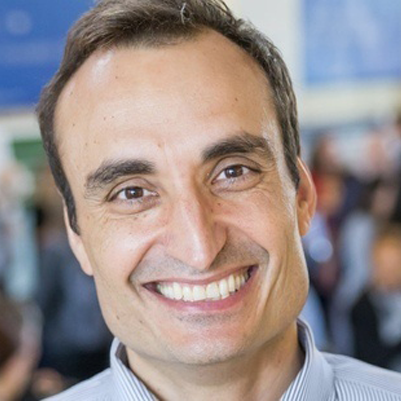
Renowned neurologist and researcher Dr. Ray Dorsey unequivocally writes that we’re “fueling the rise of Parkinson’s with continued and increased use of toxic chemicals that pollute our food, water, and air.” He co-authored the New York Times bestseller, “The Parkinson’s Plan: A New Path to Prevention and Treatment,” which explains that fewer than 15% of Parkinson’s disease cases are linked to genetics.
Parkinson’s disease is now the fastest-growing neurodegenerative condition in the world, affecting more than 1 million Americans.
Dr. Dorsey discusses evidence linking Parkinson’s risk to pesticides used on farms and golf courses, solvents used in dry cleaning, and long-term exposure to industrial chemicals. He also outlines why he believes Parkinson’s is not an inevitable consequence of aging and why prevention should be a national priority.
At the same time, this conversation addresses a key point of debate. Representatives from the chemical industry have pushed back on these conclusions, arguing there has been a rush to judgment and that some large studies do not support a causal link between specific chemicals and Parkinson’s disease. Dr. Dorsey responds directly, pointing to decades of toxicology data, animal studies, and historical evidence that he says warrants action now rather than further delay.
“I don’t think we’re rushing to judgment at all. A century of evidence is long enough. The real question is why safer alternatives were not introduced years ago,” says Dr. Dorsey.
Join “Conversations on Health Care” hosts Mark Masselli and Margaret Flinter to learn why Dr. Dorsey believes cleaning up our environment may be one of the most powerful public health tools we have right now.
And, as we begin a new year, we have a new look. “Conversations on Health Care” is now part of the Moses/Weitzman Media Group. The show will continue to bring you top national thought leaders in public health, health policy, and innovation, and offer the same in-depth conversations that have been our hallmark for more than 15 years.
(00:00)
[instrumental music plays]
Mark Masselli (00:04)
Is Parkinson's a preventable disease? And if it is, what should each of us do to avoid getting the co-author of a
provocative book is here to answer those questions.
Dr. Ray Dorsey (00:14)
And I think for people who have been diagnosed with Parkinson's, one of the first things they should be advised
to do to stop being exposed to chemicals in their food, water, and air that are likely contributing to the disease.
So, in the end of the book, on page 237, we give, readers the Parkinson's 25; 25 actions they can take in their
every everyday life to possibly slow the rate of progression, the disease.
Margaret Flinter (00:37)
Our guest is Dr. Ray Dorsey, a neurologist and a researcher. The book is titled “The Parkinson's Plan.”
Dr. Dorsey (00:45)
This is what trichloroethylene looks like. It's got a whopping six atoms, two carbons in black, one hydrogen
white, three chlorine atoms in blue. It's got a cousin named perchloroethylene that's still widely used. That one
report I saw was that 60 to 70% of dry cleaners in the United States still use perchloroethylene. In a twin study,
done by Dr. Scanner and her colleague Dr. Sam Goldman, they found about a 500% increased risk, for using,
Parkinson's disease among people who had, exposure to these, to these chemicals used in dry cleaning.
Margaret (01:19)
This is Conversations on Healthcare.
Mark (01:32)
Dr. Dorsey, welcome to Conversations on Healthcare.
Dr. Dorsey (01:35)
Thank you very much, Mark and Margaret. Everyone calls me Ray.
Margaret (01:38)
Okay, good.
Mark (01:38)
That's great. Well, let's start with an overview for our audience of Parkinson's, which is the world's fastest
growing neurodegenerative disease. It affects over 1 million Americans and is the 13th leading cause of death in
our country. Dr. Dorsey, what have healthcare providers typically thought causes Parkinson's disease?
Dr. Dorsey (02:00)
If you read the textbook, it says that Parkinson's disease and what I was taught in medical school, some function
of aging interactions between the gene and the environment, and maybe a word about pesticides. And I largely
think what I've been told, is wrong. I think the principle causes of Parkinson's disease, have little to do with
aging. If you put a mouth mouse in the laboratory and let it age, we will never spontaneously develop
Parkinson's disease. The only way that mouse will develop Parkinson's disease, if you manipulate its genes or
expose it to its, to expose it to toxic chemicals. And only less than 15% of Americans and less than 15% of
people worldwide genetic cause of genetic risk factor for the disease. So, the principle causes of Parkinson's
disease do not lie within us. They're not in our DNA; they're outside of us. They're in our environment,
chemicals in our food, chemicals in our water, and chemicals in our air.
Margaret (02:59)
Well, that takes us really, I think, to the heart of your work and our, interest in talking today, you're basically
saying point blank, Parkinson's is preventable, and that over 85% of patients with Parkinson's do not carry a
genetic cause, are risk factor. So preventable is a strong and, you know, a hopeful word. your confidence on this
comes from your research, current evidence. Tell us more.
Dr. Dorsey (03:27)
The confidence comes from a woman, Dr. Caroline Tanner, who, like me, is a Parkinson's specialist, but has a
PhD in epidemiology. And she quietly, diligently, has been telling us for 40 years that the principle causes of
poor Parkinson's disease are not genetics, but are environmental. And she's done that through a twin study in
1999 when she looked at the rates of Parkinson's disease among identical twins and compared it to paternal
twins. If something's very strongly genetic, it'll be much more common among for identical twins than it will be
shared, than among fraternal twins. But she found no difference, suggesting that the principle causes of
Parkinsons disease do not line our genes, but in our environment. And then she has, identified industrial risk
factors in China. She's shown that exposure to a pesti- a weed killer called Paraquat, is associated with 150%
increased risk of the disease among farmers. She showed that, veterans who served at Camp Lejeune, which
were, which was contaminated with a dry cleaning or degreasing chemical called trichloroethylene, have a 70%
increased risk of developing Parkinson's disease. And she's been telling this for 40 years, and we just haven't
been listening to her. and once I took, had the gift of a sabbatical in about 2018, I read a much of her work and I
came away wondering why I hadn't, why I hadn't been taught this and why I didn't know it. And, now that I've,
read it all and, you know, spoken to hundreds of people with Parkinson's and done our own research studies, I'm
increasingly convinced that for the vast majority of us, Parkinson's disease is a preventable disease.
Mark (05:04)
Well, I wanna pull the thread on the thought that it's chemical or environmental. You have a paper in the Journal
of the American Medical Association network. In in it you write that if you live within one to three miles of a
golf course, your increase your risk to Parkinson's dramatically. Why did you reach this conclusion? How did
you get there?
Dr. Dorsey (05:27)
Yeah, so the credit goes to my colleague Dr. Brittany Krzyzanowski, a, a geographer who now works at the
Atria Health and Research Institute with me and, Dr. Rodolfo Savica, a neurologist at the Mayo Clinic in
Rochester, Minnesota. And what they found was that individuals who live within a mile of a golf course and
golf courses can, can use up to 80 times as much pesticides per acre as farmland. The individuals who live
within a mile of a golf course have a 126% increased risk of developing Parkinson's disease. And they really
focused on the water supply, to these individuals. I get really concerned that people might be inhaling the
pesticides that are sprayed on golf courses, but nonetheless, the, the research showed that people living within a
mile of a golf course had more than a doubled risk, of Parkinson's disease. And this just adds to the evidence
that exposure to certain pesticides, including putting that sprayed on those sprayed on golf courses, those
sprayed on corn and soybean fields across the country are at high risk for developing the disease. It shouldn't be
that much of a surprise, given that many pesticides are designed to kill or damage the nervous system of insects.
And if you give someone a chemical that's, damaging the nervous system of insects, it shouldn't be surprised
that it might have onward effects on the nervous system of us.
Mark (06:50)
Is it the paraquat or is it a different chemical in the golf courses?
Dr. Dorsey
The golf courses that we didn't identify the specific chemicals, my understanding is that paraquat has been
banned to use, use them golf courses, although at that research looked back at people's exposure in 10 years
before diagnosis. Two pesticides that are commonly used on golf courses are concerning. One is called 2,4-D.
It's actually a component of Agent Orange, which separately has been linked, to Parkinson's disease. And
another there is, pesticide called chlorpyrifos widely sprayed on apple orchards and golf courses. The EPA
because of safety reasons, because it's been associated with the loss of 16 million IQ points among 26 million
American children banned it in 2021. but the manufacturer success to sue to overturn that ban, it's allowed,
again, depending on the state to be sprayed on apple orchards and I think on golf courses as well.
Mark (07:51)
Is there a disproportionate number of people with Parkinson's who are long-term golfers?
Dr. Dorsey (
That hasn’t been studied to my knowledge. There are actually three study studies that link green space workers,
people, landscapers, people who work on golf courses, to the disease. And our book, we tell the story of a, of a
young boy who lived next to the 13th hole, of a golf course in, in Charlotte, North Carolina, growing up as a
young teenager. He worked on the sodding squad repairing divots on the golf course at age 17, his parents were
telling him to sit up straight. He then develops a tremor in his left leg and is diagnosed with Parkinson's disease
at age 23. I, I just think if you look and you listen and you observe and you think, you really come to the
conclusion that indiscriminate use of pesticides, many of which are nerve toxins, are having profound
neurologic, profound impact on our brain, health and Parkinson's is just one example of diseases that is affecting
individuals.
Margaret (08:54)
Well, it's one example, but it is such a high frequency Right. disease at this point. And I wonder, if you could,
share with us how, how the government has responded, particularly to the fact that we have this kind of large,
very large cohort of people who, were at Camp Lejeune, high numbers of cases. Are we taking advantage of the
sad opportunity, to look at longitudinal studies, to look at treatment options? we have kind of a natural ability to
look at control groups, similar service people on different basis. What, what have we done with this, really
critical insight, into that high incidence at Camp Lejeune to try and further prevention and also treatment and,
and knowledge of the disorder?
Dr. Dorsey (09:41)
Yeah, I mean, so if, if Parkinson's is, is largely a manmade disease, then humans can end it. And diseases are not
permanent fixtures of human society diseases come and go. infectious diseases largely didn't come until about
10,000 years ago when we had the agrarian revolution that brought humans in close contact to one another. And
we now live in a world that's largely free of polio. We live in a world where, yellow fever and smallpox, you
know, smallpox doesn't exist. You have the fevers, really, rare. No one few people are dying of typist. so,
diseases aren't permanent fixtures. If we change our environment, we can get rid of these diseases. In 2024, the
EPA band, trichloroethylene and perchloroethylene, the chemicals that, contaminated the marine base Camp
Lejeune, if we do that and that band goes through, parts of it appear to have been frozen, in 2025. But if we put
that band through future generations cheer, because they're spared the indignities of Parkinson's disease, and
trichloroethylene is known to cause cancer, so we prevent people from ever getting, cancer. the EPA
administrator, Lee Zeldin, tweeted out about a couple weeks ago that the EPAs RE is reexamining the
authorization to use paraquat over 70 countries, including China, have banned this weed killer. But they, the
wheat killer is sprayed on farms throughout the United States and in increasing amounts. If the EPA indeed re
reexamines it and removes paraquat, we prevent future farmers, future people, people who simply live or work
near where Paraquat is sprayed likely from ever developing these terrible conditions, all within our control
Mark (11:25)
Well, I don't think there- Right. I don't think there's be a surprise that there's been pushback from the chemical
industry. Spokespeople say there's been a rush to judgment and that some large studies don't really back up your
contention. What, what's your response to their claim?
Dr. Dorsey (
Well, trichloroethylene has been around, since the 1920s. I think a century of causing cancer is long enough. I
don't think we're rushing anywhere. paraquat has been used in the United States, I think since 1963, 60 years, of
a weed killer that laboratory reproduces the features of Parkinson's disease, including tremor, that according to
the reporting from the guardian, a manufacturer of Paraquat had exposed three different mammals, mice, rats,
and rabbits to paraquat, and showed it reproduced the features of the disease, including tremor shaking a fall.
They did these experiments in the 1960s, 30 years before academics had done the same experiments. I don't
think we're rushing to judgment at all. I think we should be asking chemical companies, why haven't they, long
since, introduced SAC alternatives to prevent us from developing Parkinson's and cancer?
Margaret (12:38)
Well, Ray, let's, move on to what happens after an individual receives a Parkinson's diagnosis. your book, talks
about new treatments, ways to help people. Please take us through the approaches that are being used now.
Dr. Dorsey (12:53)
Yeah. So, if Parkinson's is due to chemicals in our environment, then perhaps the first thing that individuals who
have the disease, should do, is stop getting exposed to these chemicals. so as akin to a smoker who gets
diagnosed with lung cancer, what's the first thing the doctor's gonna tell 'em to do? Stop smoking. Stop. And
indeed, if you stop smoking, your progression of lung cancer decreases. And I think for people who have been
diagnosed with Parkinson's, one of the first things they should be advised to do is stop being exposed to
chemicals in their food, water, and air that are likely contributing to the disease. So, in the end of the book, on
page 237, we give, readers the Parkinson's 25; 25 actions they can take in their every everyday life to possibly
slow the rate of progression, the disease, wash your fruits and vegetables, even your organic ones with water,
and perhaps, a vegetable wash or a salt solution. Use an air purifier, add a water filter, to your faucet at home.
Check your well if you're drinking, if you're, if you get your water from a well. And these things also might
reduce the risk of ever developing the disease. So, there are a bunch of, action items that we give in the back of
the book. People can jump to it if they want the Reader's Digest version of the book, they can go to 2 37. Lots of
pictures and very short descriptions of actions people can take in their everyday life to slow the disease or, to
give their children and grandchildren lives free of this, terrible disease.
Mark (14:22)
Dr. Dorsey, Ray, I, I think our audience would be interested in your journey to becoming a Parkinson's
specialist. How, how did you find yourself, attracted to this, disease and, and the cause?
Dr. Dorsey (14:37)
Both my parents are psychiatrists, so I like to say I rebelled him. I became a neurologist, and then I had a
wonderful grandmother. And I've always enjoyed caring for older individuals. And in residency, during
neurological training, I, I found that individuals with Parkinson's disease, it's really based on listening to them,
observing them, and you could make them better. And then only later did I really find out what I think are the
underlying causes of the disease. And, I can't think of a greater duty, greater responsibility than a neurologist
has then to create a world without that disease. You know, my predecessors have created great world, largely
free of polio. I was speaking to Dr. Justin MacArthur, who's the chair of neurology at Johns Hopkins, and he's
been caring for people with neurological complications of HI for the last 30 years. And he says he might be
going out of business because the incidences of HIV, because we are preventing it and treating it effectively is at
its lowest level, 1990. Right. And neurological complications of the disease are increasingly rare. I think we can
create a world without, where Parkinson's disease is increasingly rare instead of increasingly common. I think
we can do the same thing for a LSI think we can do the same thing for Alzheimer's disease. I think we can do
the same thing for autism. we should just not delay. We should prevent these brain diseases now, and we should
prevent, we should slow the rate of progression, for these in individuals already affected today.
Margaret (16:08)
I'd like to, just sort of to use as an example, one thing from your, list there, to really convey to our listeners the
sense of, how broad these are. I think people actually have heard quite a bit about the, the golf course
phenomena and the, the pesticides. But you, have on your list even, dry cleaning. Most of us sooner or later, go
to the dry cleaners. What do we do when we receive the clothes back from the dry cleaner, that you think helps
protect us?
Dr. Dorsey (16:39)
Yeah. So, who knew? and so…
Margaret (16:42)
Not me.
Dr. Dorsey (16:44)
This is, this is what trichloroethylene looks like. It's got a whopping six atoms, two carbons in black, one
hydrogen white three, chlorine atoms in blue. It's got a cousin named Perchloroethylene that's still widely used.
That one report I saw, because that's 60 to 70% of dry cleaners in the United States still use perchloroethylene.
And a twin study, done by Dr. Tanner and her colleague, Dr. Sam Goldman. They found about a 500%
increased risk, for using, Parkinsons among people who had, exposure to these, to these chemicals using dry
cleaning. So, get a green dry cleaner, use a dry cleaner that does not use perchloroethylene called perk. And then
if you do use a dry cleaner and are using, getting exposed to perchloroethylene, take the bag off, your, dry
cleaning and let it air out perhaps in the garage, perhaps outside, because, you don't want the clean, dry, clean
clothes to be releasing the gas, into your home. And then you're breathing it in your closet, in your bedroom. and
the, like, we're just paying a really, really, really, really high price. so, our clothes don't shrink.
Margaret (17:55)
I would sort of, if I could just ask a quick follow up question. I would sort of suggest that a appropriate group to
study might be people who work in the dry cleaning industry. Have there been studies that really look at that
occupational group?
Dr. Dorsey (18:08)
Yeah, so there's been only, there's, to my knowledge, one, tiny study done in Denmark. And they looked at
various occupation, occupation, journalists, accountants, retail clerks, farmers, and the job occupation that they
found that had the highest risk developing, Parkinson's disease was female dry cleaning workers who had a
1500%, like 15 fold increased risk of developing, Parkinson's.
Mark (18:37)
You know, we've been talking about the causes of Parkinson. Are there any solutions out there? I know we've
had a lot of shows around CRISPR technology, and I'm wondering if you see anything on the horizon around
gene editing or gene therapy. Are, are, is there any hope for patients?
Dr. Dorsey (18:53)
Yeah, so there's lots of hopes. in chapters eight and, and nine of the book, my colleague and co-author, Dr.
Michael Oaken, takes us through what are the most promising treatments in the short term next five years,
midterm, five to 10 years, and long term. And that includes some, gene editing. It includes gene directed
therapies for about 15% of people who care. Genetic risk factor. Some of these things might also apply to
environmental causes. 'Cause it looks like the environmental causes of Parkinson's disease, and many ways
replicate the biology of the genetic forms of the disease. we also look at antibodies that could prevent the spread
of this misfolded protein that's present in Parkinson's disease. Just like we have antibodies to decrease, to clear
out the misfolded protein in Alzheimer's disease. Similar approaches might work for individuals with
Parkinson's disease, but I, I think in the United States, you know, and medical training is that we go from, we
want to go from disease to treatment. And what our book is really trying to do is go from disease to, cause if you
figure out what the cause of disease is, you can prevent people from ever getting it. We can't cure polio even
today. There are no polio treatment centers, in the United States. We just have a world without polio. And we've
done the same thing for yellow fever. We've done the same thing for smallpox. There's no cure for smallpox.
You just don't get small smallpox. No cure for measles. You just don't get measles. And I think you can do the
same, but you…
Mark (20:20)
You get a, you get a vaccine on those. Is there a vaccine?
Dr. Dorsey (20:24)
You get a vaccine. I'll give you another one: cancer of the scrotum. So, in the 17 hundreds, young men in their
twenties and thirties were, appearing before Pott, Percival Pott, a British surgeon. And he was resecting the scro-
the cancer, these tumors on the scrotum of these young men doing increasingly invasive surgeries. And
whatever he did, the cancer came back and they would die. And he was wondering what was causing, the cancer
of the scrotum. and then he listened. he listened to all these young men, and it turned out when they were young
boys, by eight, 10 years old, they had all worked as chimney suites in 18th century England, think Charles
Dickens. And they were using their small, flexible bodies to clean out the chimneys. And you can imagine the
chimneys field of carcinogens, soot that was getting into the, into the sac around their testes and causing cancer.
He figured this out. Eventually, Britain bans the use of young boys as chimney sweeps. And today you have a
better chance of getting struck by lightning than you do of getting cancer of the scrotum.
Margaret (21:36)
Well, Ray, I understand you've reviewed the Make America Healthy Again plan from Robert F. Kennedy Jr.
And you've, noted that you see some signs of optimism. Is that right? Comment on that.
Dr. Dorsey (21:49)
Yeah, you know, yeah. There are two reports that I'm aware of. It's a diagnostic report, you know, identified
pesticides as a contributor to the rise of chronic, conditions among children. I found in the course of writing this
book that we routinely spread pesticides, many of which are nerve toxins on kids' schools and playgrounds. And
we wonder why, one in 31, American children have autism. I think we could have the, the action plan could
have gone a lot farther, in terms of taking actions to ban these chemicals, to reduce their, use to find, safer
alternatives. So, I think there's, I think the MAHA movement, generally speaking, is right, that there is
something wrong about why one in 31 American children have autism, why Parkinson's is one of the world's
fastest growing brain diseases. Why one in three Americans who reach 85 will develop Alzheimer's disease.
These are all unnatural, consequences. These are not normal. these, these diseases, many of them are being in,
being driven by chemicals in our food, water, and air. We get rid of these chemicals in our food, water, and air.
We find safer alternatives. We use less. We create a world where these diseases are increasingly rare instead of
increasingly common.
Mark (23:06)
Well, let's continue the conversation about the federal government, because you're proposing that the
government spend $3 billion to tackle environmental causes, booster, research efforts, increase access to care
and invest in new treatment. Is that realistic? When we're seeing so many federal budgets cuts?
Dr. Dorsey (23:27)
So, the federal government is spending $25 billion a year in Medicare alone to care for the 1 million Americans
with Parkinson's disease. The cost of Medicare, of Parkinson diseases in terms of incremental healthcare costs,
is $25,000 per person. if we prevent 1% of Parkinson's disease, we save Medicare $25 billion. That's Medicare
alone. That's not counting the financial burden to families. Caregiver support, out of pocket expenditures, loss of
disability, the threats to, the threats to the budget are, are because we're seeing the rise of preventable diseases.
If we spend 1% of the money that we're spending on caring for people with Parkinsons disease on preventing
the disease, we create a world where these diseases are increasingly rare. Instead of increasingly common,
common, we reduce Medicare expenditures and we let people live longer, healthier, more productive lives.
Mark (24:21)
Have you had any conversations with the administration around this issue?
Dr. Dorsey (24:36)
No. You know, I, I reached, I've reached out to the EPA, a administrators, I think, for, you know, at least since
about 2020, if not before they been, and to many politicians, listen it, the people who wrote, the two individuals
who wrote the four to our book are Congressman Gus Bilirakis, whose brother, died from Parkinson's, whose
father has Parkinson's disease, Republican from Florida, and, Congresswoman Jennifer Wexton, who developed
a rare form of, Parkinson's, Parkinson's Parkinsonian disorder called PSP. And she was so disabled that she had
to re, step down and not run for reelection in 2024. This is a nonpartisan issue. this Parkinson's doesn't care if
you're a Republican or Democrat, quite frankly, doesn't care if you're a cap capitalist or a communist. this
disease is rising rapidly. It's rising in all parts of the United States, and it's rising, throughout the world,
especially in the areas of the world that are ongoing most rapid industrialization like India and China. If we take
action to prevent people from getting exposed to this disease, we create a world, that is likely what, 99.9% of
human history where Parkinson's was extraordinarily rare, only rare ancient descriptions, of the disease. It's only
in the last, the first major description of Parkinson's wasn't until 200 years ago, by Dr. Parkinson who said it, the
disease had not been classified in the medical literature. It like lung cancer is a new disease, and we can say
goodbye to these diseases. We can say goodbye to lung cancer by stopping smoking. We can say good to a lot of
lung cancer by stopping smoking. We can say goodbye to much of Parkinson's disease by cleaning up our
environment.
Margaret (26:09)
Well, Ray, sometimes, when there's a very, well-known figure from, from media, entertainment, politics with
the disease, that brings public attention to it. And I think, we had a researcher from the Michael J. Fox
Foundation, on our show, and Michael himself I understand, believes that his case was caused by chemical
exposure. How do, how do most patients react to your writing? Do you hear from patients saying, now I
understand, or, what's the, what's the response that you get when they hear about this?
Dr. Dorsey (26:45)
So, first of all, we should be- in the words of Michael J. Fox, “Parkinson sucks.” And it's really hard to bear the
burden, and it's really hard to be the face of disease. So, we should thank people like Michael J. Fox, right? Like
Brian Grant, like Davis Finney for their service and for Michael, in the case of Michael J. Fox, for 30 years of
being the face of the disease, because he brings attention to it, he's reduced the burden, of the disease for
millions of people across the world. I raised funds, for research. So, we should, we thank these public figures
when they do come forward. my inbox is filled every day. I got an email this morning, from connecting me to
someone who was a first responder at nine 11, a firefighter who developed Parkinson's disease, and, evidently
has friends and colleagues who also have, Parkinson's disease. we're doing a nationwide listening tour that's
taken us to 25 cities in 15 states. I met a woman in, South Dakota. Her job as a teenager was to raise a flag to tell
the crop duster where to spray the pesticides on farms. as a young girl, met a man in Dallas, Texas, who had the
same, job, met people in West Virginia who worked in chemical plant, but he worked in a, in a white collar job.
And then he own, he told me later, after hearing me talk that he'd love to degrease, cars and was likely using,
trichloroethylene as a teenager. you know, in the book we talk about Brian Grant, who is a 3-year-old boy at the
Marine Base Camp Lejeune, when his father, a Marine is stationed there and he's likely being exposed to these
chemicals. I think one thing that we're learning is that one this resonates, people are giving, I think answers to
what, what causes their disease, which let them take action to slow the rate of progression, lets them take action,
prevent their kids and grandkids from getting the disease. And if we know what the causes of disease is for those
who want to cure Parkinson's disease, the prerequisite to a medical cure is knowing it's caused. And if we know
what its causes are, we can more rad, readily, and faster developed treatments for, Parkinson's disease. The other
get, the other thing I'd like to emphasize is I think that the disease, the, the seeds of these diseases are planted
young. You don't develop lung cancer at age 60 'cause you start smoking cigarettes at 58. You develop lung
cancer at 60, 'cause you were likely smoking at age 20, I think. And many people that we've been listening to
that the seeds of the disease are planted early, sometimes in your twenties when like the Marines at Camp
Lejeune, or sometimes when you're a young child or even possible in your mother's womb.
Margaret (29:29)
Well, thank you, Dr. Dorsey, for joining us. Your book with co-author Dr. Michael Oaken is the Parkinson's
Plan. It's published by Public Affairs and we wanna thank our audience for being here. Just a reminder, please
be sure to subscribe to our videos on YouTube, find us on Facebook and x and please share your thoughts and
your comments about this program. Take care and be well.
Dr. Dorsey (29:53)
Thank you very much. If people have questions about Parkinson's disease, they can just email me at
[email protected], [email protected]. And the book is available, for purchase on Amazon or, or in your library or
wherever you like to get books.
Mark (30:09)
That's Wonderful.
Margaret (30:09)
Wonderful.
Mark (30:10)
Thank you for taking the time with us today.
Margaret (30:10)
thank you so much and thank you for your work.
(30:13)
[instrumental music plays]
(30:16)
This copyrighted program is produced by conversations on healthcare and cannot be reproduced or remitted in
whole or in part without the express written consent from Community Health Center, Inc. The views expressed
by guests are their own, and they do not necessarily reflect the opinion of conversations on healthcare or its
affiliated entities.
(30:38)
[instrumental music plays out]