Long COVID Latest: What are the Unique Patterns?
Six years after the pandemic began, millions are still living with Long COVID. New research shows why recovery looks so different from person to person.
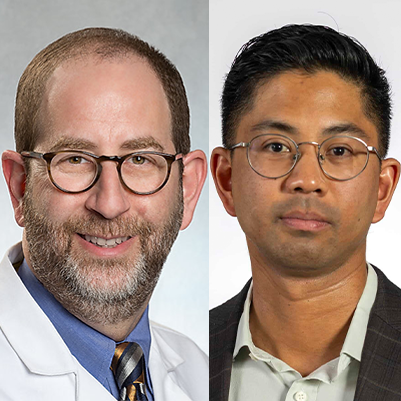
Dr. Bruce Levy and Tanayott Thaweethai, Ph.D., of Mass General Brigham, speak with hosts Mark Masselli and Margaret Flinter about their National Institutes of Health-funded RECOVER study published in Nature Communications.
Following patients from the time of infection, the team found eight distinct long COVID trajectories over 15 months.
“We identified these really unique patterns. There was a lot of variability. Some participants had consistently high and persistent symptom burden over time. Others oscillated around the threshold. And there were profiles where symptoms appeared to be getting worse over time,” says Thaweethai.
The outcomes confirm that Long COVID is not a single clinical experience. Patients with persistent high symptom burden were more often female and more likely to have been hospitalized during acute infection.
Understanding these trajectories is essential for designing effective clinical trials and targeting support services.
“If we have patients getting worse and others getting better, we need to understand that in order to design properly informed clinical trials,” says Dr. Levy.
The guests also push back on official denials of Long COVID’s existence and explain the status of current research funding.
(00:00)
[instrumental music plays]
Mark Masselli (00:04)
Six years past the start of the COVID pandemic, millions of people around the world are still experiencing long
COVID symptoms. Our guests are from Mass General Brigham, and they are on the cutting edge of the latest
research.
Tanayott Thaweethai (00:17)
We identified these really unique patterns, that really there was a lot of variability that, that we, we identified.
and so there were some participants who had a really consistently high and persistently high symptom burden
over time. there were some participants who had intermittently high symptom burden, meaning that their
symptoms kind of oscillated around the threshold of 11 for having long COVID.
Margaret Flinter (00:46)
Joining us today are Dr. Bruce Levy, the division chief of the Pulmonary and Critical Care Medical Division.
And Tanayott Thaweethai, the Associate Director of Biostatistics Research and Engagement. He earned his PhD
in that field from Harvard University.
Dr. Bruce Levy (01:01)
I think that, we have a relatively, and let's hope unique situation where we have so many people that have
developed long COVID that it gives us an opportunity to try to get to the bottom of this particular post-
infectious clinical syndrome.
Margaret (01:23)
And this is Conversations on Health Care.
Mark (01:35)
Well, Bruce and Tony, as we know you go by, welcome to Conversations on Health Care. You know, our
program is proud of its role in covering long COVID, and we're glad to have you to be part of our continuing
series. The National Institute of Health's Recovery Initiative funded your work. Bruce, I wonder if you can start
and ask you to explain the overall goals of the recovery work.
Dr. Levy (02:02)
Thank you. It's a really, it's a pleasure to be here with you, mark and Margaret. And, we're just delighted that
your focus, your program is focused on the many people suffering with, long COVID. So, thank you. So,
RECOVER is short for Researching COVID to Enhance Recovery, and it's an NIH funded study. And together
it's enrolled 30,000 or so people from across the nation, across the US. About 15,000 of those are adults. About
2000 plus are pregnant women. And, about 13,000 to 15,000 are children, or young adults. And, the work that,
RECOVER is doing is manyfold. It involves understanding, who's suffering, in a very patient centered way,
with long COVID, and then trying to understand what are risk factors for developing long COVID, what are
potential, mechanisms that are causing this condition, and hopefully try to best inform an, an approach to
treatment, for this. And there are several clinical trials actually, that have now begun as part of the recovery
initiative. So, everything from an enrollment and characterization of a very broad and diverse group of, of
individuals across the lifespan, who are, who have been infected with SARS-CoV-2 virus, and many of whom
have now developed symptoms of long COVID all the way through to underlying mechanisms, disease driving
mechanisms to ultimately novel therapeutic strategies.
Mark (03:59)
How, how old is the program? When did it commence?
Dr. Levy (04:04)
It commenced, it's about four to five years old at, at, at this point. Is that right, Tony?
Dr. Thaweethai (04:10)
Yes. The first patient was enrolled October, 2021.
Margaret (04:15)
Wow. So early, early on, we were, we were just marking the passage of time, since March of 2020, 2021 when
the vaccines, became available. And, you know, through all that, realizing we were really in for something
unique in our lifetimes. But I, first of all, we want to, just applaud the fact that you're including children, adults,
pregnant women, in this, incredibly important study. But I wonder if you could maybe share, more with us. I
know it would take hours to go into all the details about some of the protocols that you're following, following
our, you, comparing outcome in response to different medications. People have looked at exercise, they've
looked at, you know, behavioral interventions, they've looked at medication. Maybe you could just share a little
bit more with us. I think our listeners are really, deeply interested in this area.
Dr. Levy (05:10)
Tony is, one of the lead members of the data resource center for RECOVER. And, we could both speak to this,
but perhaps I should let Tony take the lead on that. 'Cause his team is really following all of these outcomes, for
the patients.
Dr. Thaweethai (05:27)
Yeah, I'd be happy to. So, so RECOVER is, is this large observational study, meaning that there is no
intervention that any of the participants are assigned to as part of RECOVER. The clinical trials that Bruce,
referred to earlier are recruiting from patients in RECOVER. And we've done a lot of work to characterize long
COVID in the RECOVER cohort, and to, in this paper that we'll talk about today, characterize longitudinal
trajectories of them. and so, studies are using RECOVER as a resource to find patients to study. But overall, the
participants in RECOVER are, so for, you know, people who are, being followed from the time that they enroll,
some of whom were followed from the time of their very first, infection. We call these the acute elite affected
infected participants, meaning that, they, we really have sort of unbiased look at their overall symptom
trajectory from the time that they enrolled. and so, we collect a lot of information in the adult and pediatric
studies of RECOVER relating to, symptom data that they, symptoms that they report. in the adult study, these,
symptoms are reported and recorded every three months from the time that they enroll into the study.
participants complete in-person assessments where they, are assessed. they, they receive numerous clinical
assessments to do things like in some cases, things like sit to stand tests that are related to things like
dysautonomia and other, o other conditions that may be related to things like chronic fatigue or, or things related
to potentially long COVID to understand if there's underlying biological mechanisms, that are, that may explain
why some participants are not getting better over time. and we also collect, you know, extensive data on things
like vaccination history, reinfection history, comorbidities, new onset comorbidities, preexisting ones. there are
lab assessments that are taken to see if there are any kind of clinical signatures of long COVID. and the list goes
on, including things like social determinants of health, and, you know, and as well as, you know, a record of the
different medications that, people are trying and other types of interventions and therapies that people are, are
trying. And so, again, because it's an observational study, we aren't exact, we aren't randomizing people to these
different assessments, but we are able to try and learn from whether, you know, people who are using particular
therapies are getting better, but we have to be very careful in the analysis of those data accounting for things like
confounding, indication bias and so on. So, there's, there's a ton of data that we're collecting as part of
RECOVER, and we expect it to be a really, rich resource really for years to come, as they're, you know, as we
try to answer them any questions around long COVID.
Dr. Levy (08:48)
So, if I could just add very briefly, for the listeners, there's basically three tiers of, of outcomes that we're
looking at. So, the survey instruments that Tony was referring to, really detailed battery of, of survey
instruments every three months. And some very, very basic, clinical testing, like blood tests, in, in tier one, in
tier two. And so, everybody gets that. A proportion of people also get a little bit more sophisticated, testing,
clinical testing in tier two. So, it might be like a chest x-ray and it non-invasive, but some additional clinical
testing. And then there's a smaller fraction of people who actually will get tier three testing, which would be
even more in, in invasive. And it might be something like a brain MRI or, a biopsy. So, we're really categorizing
everything from the patient's history, as Tony was mentioning, all the way- and, and their, their life
circumstances, social determinants of health, et cetera- all the way through to kind of more routine clinical
testing that gets even, more sophisticated in some patients.
Mark (10:06)
Well, it sounds like you're covering the water fund and collecting data. Dr. Vy, you and your team identified
patients with long COVID using the long COVID research Index. I wonder if you could tell our listeners about,
this symptom-based tool and how your colleagues developed it. Sure. Well, the, the lead author is Tony.
Dr. Levy (10:26)
So, I will briefly, tell you that it's, a research tool that is proven to be quite useful in providing some rigor,
scientific rigor around identifying people that are very likely to have long COVID, and to try to separate them
from people that are less likely to have long COVID. And it's, long COVID patients can suffer a range of like
over 200 symptoms. Many of them are non-specific. So, we needed some research tool to have, so we weren't
walking in quicksand so that we could have an anchor, to, in order to do scientific investigation. And so, in a
really elegant series of analysis, Tony and the team in the data resource center came up with the long COVID
research index, which is based on, the, a number of symptoms that patients can get, some of which were a little
more likely with long COVID. And then when you add them all up, that patient becomes very likely to have
long COVID. And so, there's a symptom score, there's a threshold, a score of 11, and Tony can go into a little bit
more detail if you like, but basically, it's a quantity of symptoms. Now, this is not to say that somebody,
somebody who has just one symptom but is really debilitated by it doesn't have long COVID. So, this is not a
clinical definition of long COVID. And so, there's some nuance there that, the investigators that are part of
RECOVER just needed to have some scientific rigor around these investigations that, that ensued. But Tony,
you may wanna say a little bit more about this.
Dr. Thaweethai (12:18)
Sure. Yeah, I, I mean, I think that was a, you know, a complete explanation of what it is, I think. so, it was
derived initially, by comparing people who did have a history of COVID versus people who didn't have a
history of COVID. and the idea was that the symptoms that really differentiated those individuals would be the
symptoms that are key indicators of long COVID. there were a lot of symptoms that are kind of non-specific, as
Bruce mentioned, things like depression and anxiety, which increased in, prevalence for everybody, whether
they got infected with COVID in the first couple of years of the pandemic or not. And so, our objective was to
identify these symptoms that were really distinguishing, that could really be the hallmarks of long COVID.
again, it's, not a tool intended for clinical diagnosis, but we found that it's really useful for research studies
because, if we were to just use a definition for long COVID that meant, you know, you just had at least one of a
list of 200 or more symptoms, most people would be classified as having long COVID, which we, and we know
like, which we, we don't want, which I think kind of undersells the severity of long COVID, that it is something
that, not, that is very uniquely affecting, affecting a unique group of people. so, we needed to develop a tool
that, to use some statistics, terminology was sufficiently sensitive and specific to ensure that we had, a label that
was rigorous enough that could be used for research. and this really has been the basis of a lot of different,
analyses that, we've been working on through RECOVER relating long COVID to, risk factors related to social
determinants of health. finding that people who are assigned female sex at birth are at higher risk of long
COVID, evaluating whether any, there are lab diagnostic criteria that can identify long c just so much research
that has been kind of enabled through the development of the long COVID research index. and there's also a
separate research index that's been available for pediatric populations that we've, we've developed knowing that
the symptoms of long COVID can look quite different in, you know, younger in adolescents compared to
younger children, compared to even infants who also can show signs of long COVID as well.
Margaret (14:58)
Well, that takes us, I think, and I think either of you, we'd be, really interested in, hearing more about the work
you did then with the trajectories index. So, you had the symptom checklist and, and then I assume some,
measure of going forward, how, what is, what do we see as things evolve? And either of you, if you could talk
about the, the long COVID eight trajectories that you, published in Nature Communications, we'd be really,
fascinated to hear that.
Dr. Levy (15:15)
Sure. Tony, you wanna start or you want me to?
Dr. Thaweethai (15:18)
Yeah, I'm happy to talk. So maybe I'll say a little bit about what the study was that we, did a little bit about, like
the, what we sought out to do. So, in RECOVER we were really interested in, again, charting the sort of natural
history of, the long COVID research index over time. And so, we identified, a group of around, 9,000, sorry,
around 4,000, participants who were infected around the time that they first enrolled into RECOVER. The idea
being that we would be able to follow them from the time of their first infection. So really like a prospective
study, where we are not just looking at individuals who may be in, wanted to enroll in RECOVER because they
were experiencing long COVID symptoms. but we were really focused on people who didn't know whether they
were going to develop long COVID or not and then see have really this unbiased look at what was going to
happen to them over time. So, in RECOVER, we have, symptom surveys that are completed every three months.
And so, we were able to calculate the long COVID research index, this quantitative measure, over the first 15
months of follow up from when these individuals, were first infected with COVID. And then we used, group-
based trajectory modeling in order to group them into these eight trajectories that we identified, where these, and
we identified these really unique patterns, that really, there was a lot of variability that, that we, we identified.
and so there were some participants who had a really consistently high and persistently high symptom burden
over time. there were some participants who had intermittently high symptom burden, meaning that their
symptoms kind of oscillated around the threshold of 11 for having long COVID. and then we identified two
patterns of symptoms that, were indicating that the LCRI or the long COVID Research Index was going down
over time, indicating that their symptoms appeared to be getting better and going away. but unfortunately there
were also two profiles where the symptoms appeared to be getting worse over time. this kind of late onset style
of profile of symptoms where they seem to not have very many symptoms early on, but then around 12 or 15
months, their symptoms started to appear, and then the rest of the participants had very minimal to low or no
symptom burden whatsoever, which was also very encouraging to see.
Mark (18:06)
Tony, I want to pick up on the thread of something you said earlier that patients exhibiting persistent and high
symptoms burden were, were more often female and more likely to have been hospitalized during an acute,
COVID infection. do we know more about why this is the case?
Dr. Thaweethai (18:26)
It's a good question. So I, first, I would say that it's a finding that has been kind of corroborated by a lot of the
other research that we've seen including out of RECOVER that, so I may, I, alluded to another paper that came
out, I think at the beginning of 2025 in, in JAMA Network Open, where we looked at, it was called Sex
Differences in Long COVID, where we found that, individuals who were, assigned female at birth were at
higher risk of developing long COVID after accounting for several, you know, pre-existing comorbidities, some,
social determinants of health, that there was still, this increased risk that was observed amongst, female
participants. So, it was really unsurprising to us that we saw, a higher rate of this really highly symptomatic long
COVID profile in that, in that group. I'm not a medical doctor or biologist, so I can't speak exactly to the
biological underpinnings of that. but it was something that it was quite consistent with other epidemiologic data
that that, that we've looked at. and then I think similarly with, the, those who were hospitalized, we know that,
other, other, research has corroborated this, that, individuals who experience really severe illness during the
acute phase of long COVID are also less likely to, make a full recovery over time and, and are more likely to see
have these, be highly symptomatic, in, in this long-term fashion.
Dr. Levy (20:05)
So, the biologic question is one that's still unanswered, I would say it's really an interesting question mark, but
we don't have complete answers to it related to the predilection for women to develop long COVID more often
than men after infection, for severity, it seems like long COVID as a clinical syndrome as not a specific
diagnosis. So, in other words, there could be multiple different disease driving mechanisms. And having had a
severe and hospitalized illness with your initial infection, puts you at risk for one or more of those. likely,
although not- still not completely proven disease driving mechanisms, the severity of the inflammatory
response, potentially some organ injury in the setting of, of severe illness, a higher inoculum of the virus leading
to more widespread virus in the body, and harder to clear entirely, development of blood clots, that have altered
blood vessel structure, and organ profusion. So, there are, there are multiple disease driving mechanisms that
could be perpetuated, when one starts off with a really severe infection. autoimmunity probably also plays a role
here. And in general, autoimmune illnesses are a little more common in women than, than men as a broad
generalization. But, again, the, the questions you ask are really kind of open research questions, and they're,
they're fascinating, because, it's probably yes, hand, there's probably multiple explanations. It's probably more of
a clinical syndrome than a, a specific, it's not like cystic fibrosis where there's a, a genetic mutation and it causes
a disease. This is likely to be multifactorial.
Margaret (22:14)
You know, I, was thinking as you spoke about our, our social groups, right? We all have social groups and I, I
think of mine and I think each of the trajectories are represented, right? Almost everybody had COVID. It seems
at some point, over the years and the range of just in, in my social circles, people who finally are seeming to get
better is the way they would describe it, finally have more energy, which is incredibly hopeful. Yeah. people
who have become disabled, for all practical purposes from the things that they did, people who weren't that sick
to begin with or, you know, it was relatively a short experience. And I, I wonder, and I, was chatting with Bruce
A. Little, or with, Tony a little bit about this before we started, the National Academy's, classification of
infection of chronic illness. is this ultimately, do you think long COVID becomes part of a family of conditions
for which treatment is symptomatic? We continue to try and learn more about it, but there's little likely to evolve
in the area of definitive cures or resolutions for people who are really affected by it. Do you have a take on that?
Dr. Levy (23:30)
Well, thank you for the question. I, I think that, we have a relatively, and let's hope unique situation where we
have so many people that have developed long COVID that it gives us an opportunity to try to get to the bottom
of this particular post-infectious clinical syndrome. We see post-infectious clinical syndromes in other scenarios,
chronic Lyme disease after Ebola or dengue, but it doesn't happen often enough for, I see doctors and scientists
to really kind of figure out how best to treat it. The unfortunate situation with long COVID could be turned into
a positive if we use this opportunity to identify directed targeted therapies. I, I personally am a glass half full
person, and that we're going to get to the bottom of this. The, it turns out that if you think about an inflammatory
response, even at, you know, like a pimple or if you get a cut, and an infection in your skin, there's an arc of
inflammation that occurs to try to heal and fight off that infection. And then there's a resolution of that,
inflammation. And it turns out that we're learning that resolution of inflammation is an active process. There's
specific, the body generates specific molecules and cellular functions to promote that resolution. It's not just a
passive release of the pro-inflammatory factors. And we're starting to learn that long COVID, which by its
nature is a defect or a deficiency, let's say, in the resolution of the infection, is characterized by some changes in
these natural, you know, pro resolving factors. And so, as we are learning about them, we can try to harness
those Healing and restorative Pathways To generate treatments where they didn't exist before. And the
unfortunate situation is that it takes some time to identify these mechanisms and then learn how to harness them
with novel therapeutics or lifestyle changes or what have you. So, we are working hard on that. As Tony
mentioned, and I alluded to before, RECOVER has already provided several insights that have led to new
therapeutic trials and, academic investigators even outside of RECOVER, have started, clinical therapeutic trials
for long COVID patients. And we need those answers.
Mark (26:28)
Well, let me just pull, pull up on the sort of capture that we're working hard and maybe ask you to describe a
little bit of two, two things. One, what the network looks like. I think we've had the head of the NYU COVID
Center and the Yale folks on as well. and then sort of a non-scientific question, to both of you. There are reports
that NIH has canceled over 45 long COVID pathobiology studies in, in a statement, the department has said,
COVID pandemic is over HHS will no longer waste billions of taxpayer dollars, on a non-existent pandemic
than Americans have moved on from years ago, which is obviously doesn't seem to be the case. So, one, what,
what's the network look like of other people like yourself who are re researching around the country? And then
what do you make of NI h's sort of denial here, of, of long COVID not to get you into trouble?
Dr. Levy (27:33)
Well, thank you very much. (laughing) So the clinical aspects of things are so very early on here at, at Brigham
and Women's Hospital, we started a COVID recovery center because it was becoming extremely clear that all
these patients as pulmonologists that we were caring for in the hospital and in the intensive care units, were
developing these long-term symptoms and sequela. And so, we needed a, a place to help treat them and try to
help take care of them and figure out what was going on. and we've seen now thousands of patients, and we get
about somewhere between 50 and a hundred new patient referrals every month, to the COVID recovery center.
And that's very similar to what's happening in New York and Yale and across really in many of the academic
medical centers across the country. there is, no clear singular approach to these patients. So, each center is doing
a little bit of, of things a little differently. there's some suggested approaches, mostly holistic and relate to
symptom-based control and, enrolling in clinical trials. And, there's support groups, and, there's some, physical
therapy and occupational therapy approaches, some of which have actually done quite nicely with our patients.
But there's been a need for centers of excellence, let's call them. Although, again, we don't have a singular way
to, to treat patients with long COVID. And patients take a big role in this, both in the research. They, they're
partners with the investigators in RECOVER, as our caregivers, but also in the clinical centers. They play a very
active role there, and we're very grateful for that. In terms of NIH support, what we've described is an enormous
investment that NIH has made in RECOVER and enormous. There's 200 plus sites across the nation that are,
that have enrolled patients and, over a thousand people that have been involved in in this. And, the NIH is
supporting, what they're calling cycle two, where we can follow, many of our patients with that. We've enrolled
into RECOVER cycle one, for another four years. 'Cause of the concern that they, people with long COVID
may be predisposed to the development of chronic, non-infectious diseases - diabetes, high blood pressure, heart
disease, et cetera, cancer - we want to be able to keep following our patients that we've characterized so deeply
for another four years. And NIH is investing in that. So, kudos to the NIH for, for the wisdom of doing that. We
have an enormous, number of, of data points from the electronic health record, from the surveys that have been
done from the clinical testing, we have biospecimens collected from all of these patients with an enormous
warehouse of Biospecimens that will enable, lots of ongoing research on RECOVER itself. And, and then there
are pathobiology, grants that are underway, across the nation. I'm participating in, in one of them myself, that
are funded by as part of the RECOVER initiative, NIH, funding. So, there's definitely been some ups and
downs. I would say that in terms of NIH support, but mostly it's up. And, I would say that our patient partners in
this effort and the caregivers of patients, have been remarkable, members of the team and are remarkable
advocates for public support. We still, that the trajectories that were part of this paper really tell us that people
have different lived experiences with long COVID. And for example, if we have patients getting worse and we
also have patients getting better, we need to understand that in order to do a properly informed clinical trial so
that we don't get misled by a result, for example. So, part of this is gonna help us inform who goes into what
clinical trial, and then also it's really important for public agencies, like who's debilitated and really needs
support, who, who, who needs disability, and social services support, those types of, of, public health initiatives
rely on the kind of data that RECOVER is generating.
Margaret (32:34)
Well, we want to thank you Bruce and Tony for joining us today and thank you to our audience for being here.
Just a reminder, be sure to subscribe to our videos on YouTube, find us on Facebook at x, and please share your
thoughts and your comments about this program. Take care and be well.
(32:51)
[instrumental music plays]
Margaret (32:54)
This copyrighted program is produced by Conversations on Health Care and cannot be reproduced or remitted in
whole or in part without the express written consent from Community Health Center, Inc. The views expressed
by guests are their own, and they do not necessarily reflect the opinion of Conversations on Health Care or its
affiliated entities.
(33:15)
[instrumental music plays out]