The New Yorker’s Dr. Khullar: Restoring Trust in CDC Could Take “Decades”
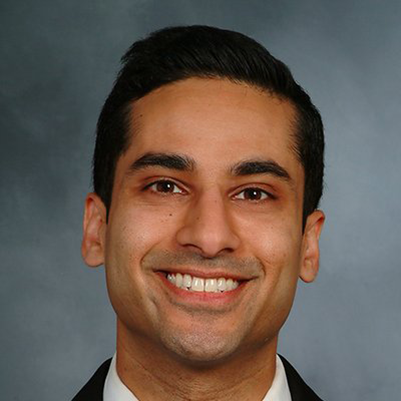
Over 1 million subscribers (and more online) read Dr. Dhruv Khullar’s insightful columns in The New Yorker and now our hosts are asking him the tough questions.
Mark Masselli and Margaret Flinter ask him about the Centers for Disease Control and Prevention. They note that just 8% of the public has faith in the agency’s vaccine guidelines and the search for a new director continues. Dr. Khullar says, “Parts of the government that have traditionally been apolitical or nonpartisan at least are increasingly becoming infected with politics.” He also explains that people identifying as Republicans haven’t gained faith in the CDC where Democrats have lost it. “Trust is broken in a moment, and it takes years, sometimes even decades, to restore.”
Dr. Khullar also shares his secrets for writing his columns. “I do often start with an idea that I want to convey, but a lot of the work … is, how do I tell this in a way that someone who might not be expert in this area or might not even be interested in this area happens to pick it up and want to read the whole thing?”
(00:00)
[instrumental music plays]
Mark Masselli (00:04)
Our guest is known as one of the youngest and brightest rising stars in medical journalism. You may have read
or seen his thought-provoking analysis in the biggest healthcare issues facing us right now.
Dr. Dhruv Khullar (00:16)
One of the things that I'm always thinking about, and actually learning a lot from other writers at "The New
Yorker," and editors is, how do you make a topic that might be a little bit abstract or wonky, how do you make
that compelling to a general audience? And part of that has to do with finding the right characters to tell that
story through, thinking about the narrative, how you structure a piece over a few thousand words such that it has
a sense of movement.
Margaret Flinter (00:41)
Joining us is Dr. Dhruv Khullar. He is a contributing writer at "The New Yorker" who's also a practicing
physician and an associate director of the Cornell Health Policy Center.
Dr. Khullar (00:51)
I do often start with an idea that I want to convey, but a lot of the work over the course of reporting and writing
the piece is finding, how do I tell this in a way that someone who might not be expert in this area or might not
even be interested in this area happens to pick it up and want to read the whole thing? And so, a lot of the work
that I'm doing is thinking about that narrative aspect of a story.
Margaret (01:14)
This is "Conversations on Healthcare."
Mark (01:27)
Well, Dr. Khullar, welcome to "Conversations on Healthcare."
Dr. Khullar (01:31)
Thanks so much for having me. It's a pleasure.
Mark (01:33)
Yeah. You recently wrote a column in "The New Yorker" about what you refer to as the undermining of the
CDC, and there's a lot going on here. We've got the secretary who said the CDC has sort of lost its way. We've
seen the vaccine policy changes. We've seen the mass firing and layoffs happening. We also know that OMB
has them in their line of sight, and then you have states like the West Health Alliance, West Coast Alliance,
coming together. This is a pretty big battlefield. Maybe you can give us your overview of what's been going on.
Dr. Khullar (02:13)
Sure. So, I think, fundamentally, one of the challenges has been that parts of the government that have
traditionally been apolitical, or non-partisan at least, are increasingly becoming infected with politics, and that's,
I think, what I'm trying to draw attention to here, is a lot of these decisions that should be guided by the best
available science. We know that science will change over time, and recommendations won't necessarily be the
same this year as they are five years from now. But this idea that we should use ideological preferences to guide
the way that we're helping Americans understand things about their health, I think that is what a lot of people
are concerned about, myself included.
Mark (02:54)
You know, it's a long road from where they are right now. About 8% of the public has faith in the CDC around
vaccine guidelines. That's a pretty big drop. How do they restore credibility to the important work that they're
doing?
Dr. Khullar (03:11)
Well, that's right. We've heard a lot about trying to restore trust to the CDC and other parts of the federal public
health bureaucracy, and unfortunately, over this past year, we've gone in just the opposite direction. So, you
could easily have imagined a situation in which there was kind of a one-to-one substitution of people who are on
one side of the political spectrum going to the other side of the political spectrum and now trusting these
agencies. But we haven't seen that. We've seen a decrease of trust in the CDC and other parts of the federal
government, and I think that's very concerning. Restoring trust is a long process. Trust is broken in a moment,
and it takes years, sometimes even decades, to restore. But I think it comes back to this idea of, again, using
science, using the best available evidence, trying to get partisan politics out of these parts of the government to
the extent possible. That includes both people on the left and people on the right. When people, the general
public, are aware that a lot of the decisions that are coming out are not necessarily guided by scientists or public
health officials, doctors, people who have devoted their careers to trying to maintain people's health, I think
that's when they start to look even more skeptically at what's coming out of these public health agencies.
Margaret (04:25)
Well, one of the things I appreciate about your writing, Dr. Khullar, is you go from the 50,000-foot policy issues
and the global issues right down to sort of specific issues that we're looking at that are a big part of health and
healthcare in the United States. Today, we'll probably do quite a bit of that traveling, that distance today. Right.
So, one thing we were curious about, obviously there's a lot of medical advancements. Certainly, the advent of
the GLP drugs for weight management and their use in chronic illnesses was one of the great, probably success
stories we would say, of recent years. But you've also looked at their potential role in substance misuse, and
that, of course, is a gigantic concern for the health of the country. Tell us what data you're seeing that you think
is promising or offers some hope for new treatments.
Dr. Khullar (05:19)
Well, this is so exciting. These drugs that were initially developed as diabetes treatments, over time, it became
clear that they were very effective at generating large amounts of weight loss. And not just weight loss, but
associated health improvements, whether it's cardiovascular disease or reduced risk of stroke or liver
dysfunction. And so, we've known these, kind of, more physical ailments that we've often been talking about.
But increasingly, in part because of all these reports that are coming out of people who are on these medications,
are saying, "We don't feel like drinking as much as we used to," or, "We have fewer cravings for opioids."
Scientists over the past few years have started studying this in rigorous trials and randomized controlled trials,
and that evidence is starting to come and become very favorable to the effects of GLP-1 medications like
semaglutide or tirzepatide on the effect of treating alcohol use disorder and maybe even opioid use disorder.
Scientists are still trying to figure out why this might be the case. It seems like maybe part of the answer comes
down to what's called the reward system in the brain, something called the mesolimbic dopamine system, where
we all get a hit of dopamine in response to things like alcohol or cocaine, but even things like shopping or social
media or gambling. And so, this has created a lot of excitement around the idea that maybe there's kind of
almost a universal lock-and-key model here, where you're able to influence the reward mechanism in such a way
that people are able to have more control over some of these desires that they want to get more control over.
Now, I should state that this is not by any means a foregone conclusion. There's still a lot of work to be done. I
think there's the risk of potential negative side effects with some of these medications. You can envision if it's
turning down the excitement or the pleasure you get from certain things, maybe that goes too far in some people,
and they experience depression or anhedonia. And of course, for a lot of people, addiction of all sort is a lifelong
problem, and a lot of people, unfortunately, end up coming off these medications within months or years of
starting them. And so, of course, the drug is not going to work if you're not able to take it. And so, there's still a
number of caveats, but I'm really excited about the potential for these drugs to treat addiction.
Margaret (07:39)
And can I just ask a follow-up question? Is this an area, again, at the federal level, as Mark was referencing,
what is the role of CDC and NIH in these large societally impacting health issues? Are you seeing a concomitant
interest in funding the research to come to some of the answers we need?
Dr. Khullar (07:58)
There has been. Some of these studies that I've talked about have been NIH-funded studies that have been
supported by the government and are now showing pretty promising results. I think going forward, one of the
key challenges with it will be how do you get as many people access to these medications as possible if they
want to be on these medications, of course. They're currently extremely expensive, even after some of the
rebates that are given to pharmaceutical companies. But at the end of the day, if people aren't able to access a
very promising medicine, it's not going to have the types of effects that we hope to have at a society-wide level.
Mark (08:35)
Margaret, when we were at Aspen Ideas: Health, we interviewed the director of the National Institute of Drug
Abuse, and this is a top priority for her about addiction, really doing the science and the rigor associated with
that. And so, we'll look forward to those studies because they have a potential for profound impact. Of course,
this would not be an interview, you would not feel you were interviewed if you did not ask an AI question. Of
course. Obligatory. And I want to maybe put a little different twist on it. We often discuss the growing role of
artificial intelligence in healthcare, and you've asked the provocative question, if AI diagnoses patients, what are
doctors for if AI can diagnose patients? I want to take us back to 2007 in June. Steve Jobs introduces the iPhone,
which really revolutionized healthcare in many ways. And it had sort of that hockey stick moment that
happened. And I'm wondering, as you think about AI in your answer today, and if you look back, that is a
parallel. Do you think we really know how effective AI will be and how transformational it will be, not
dissimilar to the iPhone?
Dr. Khullar (09:52)
I think it's going to be an incredible event, both for doctors who will have the world's knowledge about any
medical problem at their fingertips, and not just the knowledge, but the ability to apply the latest evidence and
bring it to bear for the patient in front of you. But also, as a way to expand access for patients who might not
currently have access to medical providers in the way that they would want to. And so, I think it's going to be a
huge advance. It's already becoming part of the way that medical care is being delivered. But I think there's a lot
of caveats that come with that as well. I don't think it's going to be a smooth road from here on out. I do worry a
lot about kind of turning over our agency to some of these models while knowing that they are not infallible. A
lot of the output of these models depends on the input that you give them. And so, we still need to make sure
that we're training doctors in a way that they're able to manipulate and think critically about information and use
these types of models as mostly a second opinion and not a kind of substitute for their own reasoning. And
patients should be aware that although these models often give you a very confident response, it's a very fluent
response. It sounds like a persuasive response. Often it is guiding you in the right direction, but not always. And
sometimes that can be quite dangerous. I have had experiences in my own practice where people have told me
that they went to an AI model that either suggested the wrong diagnosis or told them that they didn't need to see
a doctor, when in fact it was really important that they saw a doctor. And so, when I talk about the tremendous
potential of these technologies, I think over the course of years and potentially a decade, we will get to a point
where it's incorporated in the system. We understand how to use these tools effectively. But I don't want to put
the cart before the horse and say that somehow, we should be replacing the interaction that doctors and patients
are having today.
Margaret (11:53)
I'm personally not worried about any of our healthcare teams being replaced. We need more people. Not
replacing them.
Dr. Khullar (12:00)
Yeah.
Margaret (12:01)
But I do-
Dr. Khullar (12:01)
Well, one of the-
Margaret (12:03)
Go ahead
Dr. Khullar (12:03)
One of the things that people have talked about is the idea that there aren't enough doctors and there aren't
enough clinicians, and can we expand the use of these technologies to take the people that we have and have
them care for many more people? And so, there is that potential idea that maybe they can be a force expander,
where you're able to reach more people than you are today.
Margaret (12:24)
Right. And I think probably along those same lines, for all the health education materials any of us in our
institutions ever produced over the years for patients, most of which I have to charitably say ends up somewhere
on the bottom of somebody's shelf, we never really figured out how do you get people to dig deep into these
materials. It seems to me it's a whole different story. However, it's being presented, people welcome it. People
read it. People read it and bring it in and talk to their healthcare provider about it. Are you seeing it in your
practice or that of your colleagues as an enhancement to visits? That people at least coming in knowing more
about what this condition is that I'm worried about, knowing more about their meds or their own responses. Has
there been a spinoff value separate from does it replace, because I don't think it does, the healthcare folks?
Dr. Khullar (13:17)
Sure. Absolutely. We've had some version of this for several decades now with the internet and Dr. Google and
so on, where people had access to information in the way that they didn't before. But I think that's much more
powerful today than it was in the past, because people can get information about their specific situation- ... in a
way that they weren't able to before. Correct And so some of the conversations you're able to have are at a
higher level now because many people are coming in with a baseline knowledge of their medical condition,
about how the literature or what the information that's out there relates to them. I've also had people who end up
talking to a chatbot about the encounter that they had in the hospital or in the clinic, and so some patients have
even recorded their encounters with clinicians or at least taken the information that they got from the clinician
and asked them. "I was told that I have heart failure. What does that mean? What's the prognosis like?" And you
can go back and forth with a chatbot in a way that you can't necessarily with a human 24 hours a day and at any
level of health literacy and in any language, and I think that's a real advance.
Mark (14:22)
Margaret, we've been talking with people about rural health and the importance of rural health, and doctor, you
know that the federal government has put about $50 billion out into America and really focused it on rural areas.
We know that some folks in the administration are thinking that AI will be very influential there. What are your
thoughts? Because as you look across the counties, 92% of the rural counties in America are medically
underserved areas. So, you have places where you simply can't access healthcare, and there's been some
diminution of the support for rural hospitals and the like. What's the role there? And again, there's a present
problem today in terms of delivering care. Do you see a role there for AI to play?
Dr. Khullar (15:13)
Absolutely. This is not a new problem, of course. Rural parts of the country have been underserved for decades
now, and we've not been able to make substantial advances in terms of providing access to care in the way that
we would have wanted to. I saw a stat recently that something like half of US counties don't have a single
psychiatrist in them, and so people aren't able to get their mental health needs met. And so, it's not surprising
that people are trying to understand whether these technologies can fill some of the gaps that are longstanding
and have been quite intractable. And so, I do think AI has a lot of potential to make care more efficient, make
care more accessible, potentially over time, make care less expensive than it is today. And not just improve
access to care but also reduce some of the burdens that people have when they're trying to access care, whether
that's challenges with their insurer or getting an appointment, or any number of other challenges that make
healthcare not as seamless as it should be. I think that will be true across the country, but I think it'll be
particularly important in areas that are underserved, like rural communities.
Margaret (16:29)
You know, I'd like to sort of put you a little bit on the spot maybe, but you can speak generally about this, not
just your own situation. There's so much being written right now and published about our healthcare systems
with a level of attention to their ownership, their structure, the private equity versus the public, and the degree to
which they may put priorities ahead of first and foremost do no harm and do what's right in the interest of the
patients. Tell us about your system or other systems that you've seen that seem to have negotiated this balance.
We know they all need to survive and have their business models, but how do you make sure that the healthcare
priorities, the rights and responsibilities of the providers as well as the patients are being addressed?
Dr. Khullar (17:13)
Well, there's been a lot of concern over the past few decades when we think about the corporatization of
healthcare and consolidation of healthcare, and how medicine has become more of a business than it was in the
past. There were always, of course, elements of the need to keep your practice open and to make a certain
amount of revenue, but that seems to have become more of a dominant force over the past several decades in the
way that it wasn't in the past. And part of that has to do with ownership. As you mentioned, there's a lot more
corporate ownership of healthcare systems than there was in the past. But part of it has to do with kind of a
mentality that even nonprofit systems often are acting as if they are for-profit entities and kind of the
corporatization of healthcare more broadly. I saw a quote recently that people often talk about this idea of if you
don't have a margin, you're not able to advocate for your mission. But if you lose sight of your mission, you
don't really need the margin anymore because you're not delivering on the type of care to the people that need it
in your system. And so, I think part of it has to do with advocacy. Clinicians, physicians, patients, other
organizations, making sure that particularly egregious examples of profiteering are legislated away. But part of
it also has to do with a cultural shift, both within systems but also in the broader community. When you get to a
place where health systems, hospitals are recognized once again as pillars of their community, they are often the
biggest employer in a lot of towns and cities. And part of that, with that comes, I think, a certain type of
responsibility where you are giving back to the community that you are trying to serve. And so, this is all a kind
of a long-winded way of saying that the mission of a lot of health systems has drifted away, primarily from
providing the best possible care to the people in their community, to these other objectives.
Mark (19:14)
Well, I want to get back to the corporate side of medicine. But before then, and Margaret wasn't going to put
you on the spot, I'm going to put you on the spot. Is it true you're a "Pitt-head?" That you love this show?
Dr. Khullar (19:26)
I am. I am. I love "The Pitt."
Mark (19:28)
You fall in the category of... Tell us why-
Margaret (19:31)
I wouldn’t have asked.
Mark (19:32)
... doctors, nurses, everybody is so enthralled with this. It really resonates with them. So, tell us your addiction
here.
Dr. Khullar (19:43)
Absolutely. So many people probably have heard of "The Pitt," the show on HBO, an Emmy award-winning
show. And I think the reason it has resonated both with doctors and with the general public is that everyone can
see part of their experience in this show. Whether you are a family member or a patient or a nurse or a doctor, it
captures the reality of modern medicine in a way that I think few shows have been able to. So, in my own
writing over the past few years, I have tried to focus on all sorts of issues, whether it's climate change in health
or corporatization in healthcare or caregiver burdens, AI in medicine, as we've talked about. And somehow the
show is able to incorporate all those discussions and transform it into really good and interesting television. And
I think that's the magic of the show, is that it stays true to kind of the technical aspects of medicine, but more
importantly, it stays true to the emotional aspects of what it's like to deliver and receive care today. And so, I've
loved the show. I've recommended it to everyone that I know and had a chance to write about it a couple of
weeks ago as well.
Margaret (20:55)
Well, I think we ought to have a show like that for primary care and show people a day in the life of primary
care in a community health center. I think it would be just as gripping and-
Dr. Khullar (21:05)
Right.
Margaret (21:05)
... we can get you to write a review.
Dr. Khullar (21:07)
Have to get Noah Wiley on that one next.
Margaret (21:10)
That's right. Well, Dr. Khullar, changing topics, you've spoken about the dangers of ultra-processed food in the
American diet, and this is kind of a front and center topic right now. Nationally, nutrition has never had so much
attention, and that's a great thing. It's a concern certainly of Secretary Robert Kennedy Jr. But the food industry
says, "Don't judge food by the processing level. Judge it by the nutrition labels." How do you respond to a
statement like that? I'm not even sure what they mean exactly, but what do you think of that as a perspective?
Dr. Khullar (21:04)
Well, this is an area where I think it is so great that we have a renewed focus on our food supply and the
nutrition that people have access to. Because as you know, nutrition is such a vital part of health and longevity
generally. And so, the fact that we have a toxic food environment, I think is one of the reasons that we struggle
with chronic disease at the levels that we do. So, I'm really glad that there's a new focus on nutrition, and part of
that discussion is ultra-processed foods. And so, most of the food that we ate historically was minimally
processed. It might have had a few additives, maybe salt and pepper and olive oil, and you process it, you cook
it in a pretty minimal way. But ultra-processed food really refers to food that you couldn't cook in your home,
whether because you don't have the types of supplies, these industrial supplies, where you process food in a
certain way that's unnatural, or the ingredients themselves are synthetic or unnatural in some way. And so, I
think the critics of the idea have a point in that ultra-processed food is an enormous category. Everything from
canned kidney beans to gummy bears can fall into this category. And so, we do need to be a little bit judicious in
how we talk about it. But I do think it's a good overall heuristic to think about how much of my diet is coming
from these types of foods that will be very difficult, if not impossible, to cook in my own kitchen. And I think
that's a good way to think about the food that you're eating. Now, I think we need a little bit of both. We need to
understand the processing of foods, but also the nutritional content of those foods. So, a delicious chocolate chip
cookie, you can make it in your own home, but that doesn't mean you should eat it all day, even though it's not
technically ultra-processed, potentially. And by the same token, there are some ultra-processed foods, some let's
say whole grain breads, technically are ultra-processed because they have one preservative or ingredient that
allows them to have a longer shelf life. And so, there is the danger of talking about this in kind of a general way,
but as a kind of heuristic to think about how much of my diet is coming from this type of food or that type of
food, I think it's really valuable.
Mark (23:55)
You know, Margaret-
Margaret (23:55)
It's a great perspective. Could I cook it? Not that I will. But could I cook it in my own home?
Dr. Khullar (23:59)
Right. Could one cook it? Yes.
Mark (24:02)
When I was listening to Dr. Khullar's answer about "The Pitt" and the magic that was there, I was thinking about
your secret sauce because- that you bring to your writing, because we tend to think of the New Yorker as being
a home for pieces of art and culture and politics. I'm just wondering, how do you make your articles so
appealing to subscribers who perhaps didn't sign up to read about health policy?
Dr. Khullar (24:26)
Right. Well, one of the things that I'm always thinking about and actually learning a lot from other writers at the
New Yorker, and editors is how do you make a topic that might be a little bit abstract or wonky, how do you
make that compelling to a general audience? And part of that has to do with finding the right characters to tell
that story through, thinking about the narrative, how you structure a piece over a few thousand words such that it
has a sense of movement. But I'm always trying to find a way to tell a good story and have people learn a little
bit of science or medicine along the way, as opposed to vice versa. I do often start with an idea that I want to
convey, but a lot of the work over the course of reporting and writing the piece is finding how do I tell this in a
way that someone who might not be expert in this area or might not even be interested in this area happens to
pick it up and want to read the whole thing. And so, a lot of the work that I'm doing is kind of thinking about
that narrative aspect of a story.
Margaret (25:27)
Now, I wonder if I could ask you to look a little forward into the future with our upcoming generations of
healthcare professionals. Everybody, really, physicians, nurses, nurse practitioners, psychologists. Are you
engaged in training the next generation to be thinking about these issues, educating people about the broader
societal policy issues that we need to consider in whatever setting you're in? And I do think there's a bit of a
renewed interest on the part of everybody in healthcare to understand why are things the way they are. So, tell
us what you're doing vis-a-vis the next generation.
Dr. Khullar (26:04)
Sure. So, I have the opportunity to work with residents and medical students when I'm working in the hospital.
And of course, the primary thing that we're doing is caring for patients. And what I want to do is make sure that
the patients in front of us are getting the best possible care. Sure. But part of what I'm trying to instruct as well is
that even to get people to think about the issues that surround medicine, that influence the type of care that we
can or we cannot deliver. Increasingly, part of that has to do with technology, of course, AI is on everyone's
mind. But social factors, economic factors, political factors, all these things end up finding their way into the
hospital one way or another. And I think some of the frustration that people have experienced when they're
practicing medicine is more and more of the agency of how- Right ... we can deliver care to people has been
taken away from doctors and other clinicians. And so, in order to start to change that, I think we need to be more
aware of those things, be more involved with them. That might take the form of just being active on social
media for someone, or running for office for someone else, or doing health services research. It might be any
number of things. But I think the more that we can get people to think about the world, not just within the four
walls of the hospital or the clinic, but outside of it, I think the better.
Mark (27:24)
Let me just, one quick question, a magic wand question. What would you do if you had a magic wand? One
thing you would change about healthcare.
Dr. Khullar (27:34)
I think a lot of the challenges that people experience, both on the patient or clinician side, is around staffing.
And so, if there's one thing that I could do, I think it would be around workforce, getting more people trained.
We have a situation where there are twice as many applicants to medical school as there are slots. And if even
10% or 20% more of those slots were made available through medical schools and residency programs, that
would go a long way to some of the pressures that people are feeling when they're trying to deliver or access
care. And so, I think for me, a lot of it comes down to workforce issues, and not just, of course, the quantity of
the workforce, but also their experience. We've had a rise in burnout over the past decade, a rise in turnover,
people leaving the practice of medicine for these reasons. And so, for me, as a clinician, but also someone who
interacts with other healthcare professionals and sees how some of these burdens accumulate to make the
practice of medicine less rewarding than it otherwise could be, it all comes back to workforce.
Margaret (
I think that is a great note for us to end on. I want to thank you, Dr. Khullar, for joining us. And thank you to our
audience for being here. Remember, be sure to subscribe to our videos on YouTube, find us on Facebook and X,
and share your thoughts and comments about this program. Take care and be well.
(28:56)
[instrumental music plays]
Margaret (29:00)
This copyrighted program is produced by Conversations on Healthcare and cannot be reproduced or
retransmitted in whole or in part without the express written consent from Community Health Center, Inc. The
views expressed by guests are their own, and they do not necessarily reflect the opinion of Conversations on
Healthcare or its affiliated entities.
(29:21)
[instrumental music plays out]