Insights & Inspiration: Building the Community Health Center’s Next Chapter
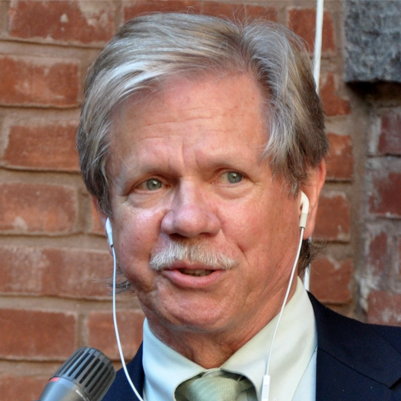
As America celebrates its 250th birthday, it’s important to highlight what makes the country unique. Here’s an example: A group of concerned people set out over 50 years ago to build the community health center movement. Matt Vinikas is among the pioneers who poured his intellect and passion into what has evolved into the Community Health Center, Inc. and later the Moses/Weitzman Health System, America’s first health system dedicated to primary care for underserved populations.
Matt explains the humble origins of the efforts and provides inspiration for the next generation of those working to ensure “health care is a right, not a privilege.” This life-long commitment has taken him far and wide as a leader and advocate for the movement.
Matt tells hosts Mark Masselli and Margaret Flinter that “the part that really excites me is doing community development within an organization…getting a group of people, working together, sharing a vision, becoming passionate about achieving a goal.”
Mark Masselli (00:04) Margaret, for the past 16 years on Conversations on Healthcare, we've brought together top thought leaders in public health, health policy, and innovation for in-depth conversation. Recently, we started to highlight the generation of leaders from early in the beginning of the community health center movement.
Matt Vinikas (00:23) I don't know. It's what organizing was all about at the time. Finding resources and really pursuing a vision.
Margaret Flinter (00:33) Matt Vinikas has witnessed some of the biggest evolutions as a small community health center evolved into the Moses/Weitzman Health System, America's first health system dedicated to primary care for underserved populations.
Matt (00:48) The part that really excites me is doing community development within an organization. Getting a group of people working together, sharing a vision, becoming passionate about achieving a goal.
Margaret (01:06) This is Conversations on Health Care.
Mark (01:19) Matthias, thank you for joining us on Conversations on Health Care.
Matt (01:24) It's really an honor. Thank you, guys, for inviting me. 16 years of wonderful-- I can't believe it's gone on so long, but it really feels like an honor to be here and be part of the group that, I don't know, that you've interviewed over all these years. You had some wonderful folks on.
Mark (01:46) Matt, I've had a front-row seat to watch your career, and not that I knew him, but Matt reminds me of Johnny Appleseed. You've really been able to-- And Johnny Appleseed was somebody who planted whole seeds. He didn't graft onto trees, though I would say Matt's done a little bit of both whole seed development, organic development, and also putting new elements onto healthcare initiatives. And I think about it, not only here at the community health center, but then off to Preston County in West Virginia then back up to Massachusetts for Neighborhood Health Plan, and then Senior Whole Health, and then back with us out in Colorado and the Midwest doing e-consults. I'm wondering if that sort of mirrors up to how you think about your career. Maybe not exactly as Johnny Appleseed, but you've been really helping cultivate new ideas in healthcare delivery in so many different ways and in different parts of the country.
Matt (02:58) It's funny, Mark. I do think of myself that way as a kind of a Johnny Appleseed-type motif, I guess, since kind of moving around. I have a shelf life as a, I don't know, a CEO or something. I'd rather be in the operational position and do startups. It's really what I'm excited about. And I was thinking about preparing for this in a way about that transition over time. But of course, getting my start really at the health center back however many years ago now, 50-some years, and then moving down to West Virginia. But what I learned in West Virginia, that it was such a difference between the kinds of work that has to be done in Connecticut and the kind of work that has to be done in West Virginia or the Appalachians. In the Appalachians, there's no healthcare system. It's really interesting. In working in the more urban areas, whether that was Boston or really in Connecticut, you have wonderful healthcare systems, really. But the thing is that that healthcare systems don't take care of everybody. In West Virginia and the Appalachians more generally, there's no systems out there. So, the job is trying to create a system that's going to bring health to people. And so that's what I got very interested in. So, I moved to Boston then to really work with the community health centers up in Massachusetts to help put together a healthcare plan, a system from soup to nuts, I guess. And then the same with Senior Whole Health. It was a natural progression in a sense because we worked, of course, with a lot of Medicaid folks, and Senior Whole Health really specialized in the duals, so the folks that were both on Medicaid and Medicare. And these were folks who-- They're poor people who got old. It's the same population that we've been dealing with, I guess, for 50-some years in the health center movement. But those issues of dental and nutrition and access to care and so on They only start to accumulate and show themselves pretty strongly by the time people are ready for Medicare. Yeah, so it's been an exciting adventure.
Margaret (06:18) Well, Matt, I tease sometimes that wherever I go in the United States and meet people and talk about the community health center, I often meet alums of Wesleyan who say, "I started that health center. I helped get that health center started." I always say, "Well, thank you very much." You're actually one of those Wesleyan students that did become involved very early on. You were a student when we were first in that second-floor apartment on College Street that we talk about. Do you remember what it was about that project that pulled you in? There was a lot going on in that period of time, but something pulled you into this particular project. Tell us about that, your origin story with the community health center movement and this community health center that's now part of Moses/Weitzman. Mat (07:06) Yeah. Well, my origin story, I think, starts earlier. I was part of a commune in western Pennsylvania. It was called the Oz Commune, where a group of hippies, California hippies, moved to western Pennsylvania, rural, whatever. It was shocking to people. And we actually got to the point where we became a tourist attraction- ... for the local population in western Pennsylvania. Seriously, people would come out, and they would stand in a semicircle around at the farm and watch us. And I somehow decided at the time that the-- I made a decision then that my life had to be for service. It was the people didn't understand each other. It wasn't that we were different, that we had different goals or purposes or desires in life for a good life and to be happy and so on. And so, I took the opportunity when I came back to Middletown. I was a conscientious objector, and so it was during the drug craze, I guess, whatever you call it, in the '60s. And so, we started, actually, Mark and I worked together with a few other folks from Wesleyan in the community to start a crisis center. And our theory at the crisis center was that we actually got money from the Law Enforcement Assistance Administration, was that people didn't have enough good things to do. And so, if you give us the money, we'll find good things for people to do, and that will keep them off of drugs. And so, we did a lot of stuff back then from printing press, so people could print stuff, to running concerts, to food cooperative, that type of work. And then Mark really wanted to do work on the, specifically with the healthcare piece. And so, the organization, it was called TOUCH. This crisis center really felt also that that was a great thing to work on, and so we helped support that. And Mark really took over that project, and we all worked together as a team on everything, whether it was the food cooperative or the printing press or running a concert at Powder Hill. And so, I got involved working at that point in time, and the rest is history, I guess. Mark (10:17) Matt, I want to go back to this origin that Margaret was talking about to TOUCH. It's the early 1970s. We're sort of in a ramshackle building, and as you said, we made a lot of things happen. Free clothing store, free library, printing press, a lot of initiatives going on. And then the health center is shut down because our hallways are an inch too narrow, and we move up to Main Street. And we're coming up on the 50th anniversary of a really important event in the history of the health center. We had renovated the first floor of a very dilapidated building and found ourselves many days waking up with the fire department knocking on our door saying, "There's eight feet of water in your basement." And the entire renovation that we had done had gone for naught. But a third wheel and a very good friend of ours, John Hickenlooper, who went on not to stay as we did in healthcare but went on to politics out in Denver as mayor and then governor and now as United States senator. We realized there was a problem that we needed to fix if the health center was going to survive, which was to buy the building. And the health center had no money, and the three of us chipped in, and on July 26th, 50 years ago, Hilda's was purchased. And you played a role because you had to invest money in it. Again, we were sort of social entrepreneurs, but sort of talk about the importance for you of making that happen, because without your assistance, we just simply couldn't have owned our own facility and therefore control our destiny. Matt (12:04) That's amazing. Well, the positive sign of all that, if you remember, Mark, was that the largest source of income for quite a number of years was insurance payments. So, the health center on the first floor got repainted and re-equipped and so on all the time, but you're right. Yeah, that was exciting. It was the only option, it seems. So, I actually approached my dad, because I certainly had not a lot of money. And I think- Mark (12:37) We all did. Matt (12:38) ... I ended up putting in $10,000 Which I borrowed from my dad, and then, of course, I remember going through all the renovations and that kind of stuff. It was really an exciting time. I was there, then I left the health center to head off to West Virginia in '76. And so, I had those years of, I guess, between '72 when the health center really opened there on Main Street and watched it grow into the whole building. I don't know what to say about it. It was really an exciting time. It made me... I don't know. It's what organizing is all about at the time. Finding resources and really pursuing a vision- Mark (13:37) I should just note- Matt (13:38) …with as much passion as you could bring. Mark (13:41) ... just for our audience, that you and John and I all donated back our shares to the health center over the years as the health center was able to grow and take care of itself. But your leadership in that was so important. And particularly because you were heading off somewhere else, you wanted to, again, plant that seed so that the health center would continue to grow, and we're so appreciative of that. Margaret (14:09) I think we should give a prize to anybody in the audience who can answer the question, who is Hilda? Which I don't think I fully understood for years to come. Matt (14:18) That's a good one. Yeah. Margaret (14:20) It's a trivia question for people who are connoisseurs of the health center. But Matt, there were so many challenges over the years, and then there were opportunities. And I think one of the hallmarks of the community health center as a dynamic organization and now all of the affiliates of Moses/Weitzman Health System is there's a pretty high proportion of people who return over time and come back and spend periods of time, go off, do wonderful, exciting things, and then come back. And I was doing a little bit of reminiscing in preparation for today, and I reminded Mark of a moment around 1990 when you reappeared on the scene, and as was classic in that period of time, a whole crew of us stayed up all night long in the Hilda building, writing the first Healthcare for the Homeless grant under the McKinney Act. And I remember that as metaphor for the way you could come back in, you would dive into a issue of current great importance, such as homelessness, with new opportunities, and pull together a group of people and go to work on it. And that characterized so many of your innovations and interventions with the health center. What's the project that stands out in your mind the most over the years that you really got excited about and worked on with us? Matt (15:45) It's funny, the project that, going back to my operational roots, that I really got excited about was redoing... Try to remember. Well, the health center, as it grew, really spread out into a lot of different locations in Connecticut. And each one of those locations had its own IT system or its own billing system and really, well, medical records at that point in time, of course, were all paper. But that was an exciting time for me to come in and spend quite a bit of time, right around 2000, I guess, in that period. And working with a team right across the entire community health center system, from all different locations, whether it's New Britain or Meriden or New London and so on, to build a team that was... We had to renumber the entire medical record system and create a system and people that knew how to run that system. It's amazing that you guys are still using that system, I think- ... the first day at the time. Margaret (17:08) It's evolved. It’s evolved. Matt (17:11) Oh, right. No, absolutely. Well, that was part of the thing. It was so exciting because in those days, we did a lot of the programming ourselves to do the data transition and the interoperability that was necessary and so on. And, of course, that's all way past me these days, but it was the ability to... We talk about community organizers and so think about the health center. The health center is not only, well, the health center, but a real whole range of services for the community, for the community of Middletown and the community of Connecticut, really. Whether those are a dance hall or school-based clinics and ... parks and a greenhouse going up that was on. But for me, the part that really excites me is doing community development within an organization. Getting a group of people working together, sharing a vision, becoming passionate about achieving a goal, whether that's a clinical goal or, in this case, in particular, was a, I don't know, kind of an organizational goal. But the teamwork that is involved was absolutely amazing. I thought about that too, like running-- when I was the director of the Meriden site, and the ability to work every day with a group of people and just come together over a period of time and develop a community. That's the type of community-building that I enjoy more than going into some place and saying, "I've got my community organizer, let's all get together and, I don't know, do something at that level." I'd rather almost go in with an organization, develop a community of people that are aligned with each other and care for each other, and care for the mission. Mark (19:41) I think the three of us know the secret sauce for our health center, but for community health centers all across the country is the community board. And over the years, we've evolved, but two pillars of our history are Lilian Reba Moses and Jerry Weitzman, who you knew both well. And Margaret knows this, that every few years, people will come back, say, "I don't recognize the place, been gone for a while.” And one of the new features of who we are is the Moses/Weitzman Health System, really dedicated to two of them who are-- the health system's really focused in on developing a primary healthcare system that's not hospital-based. Nothing about hospitals except primary care needs more oxygen, needs more people vibrant about it. Yeah. But we couldn't be where we are without standing on the shoulders of Reba and Jerry. Maybe just some reflections that you have of them. I feel like they're in the room with us now. They both obviously passed, but they were strong influences. I don't want to use a New York Knicks analogy here. Oh, go ahead. Okay, thanks. But somehow in our basketball team somehow in our basketball team, we all of a sudden got Jalen Brunson, and that's how I feel about having Reba and Jerry. They were way above our reach, but they somehow decided that this is the place where they were going to put their mark down. They had faith and perseverance. And we're honored. Matt (21:30) Yeah. I don't know if I could say that any better at all, Mark. They were such important mentors, not in how to build a health center so much as much as life or how to think about things, how to be, how to interact with other people, how to help other people, support other people. And they were part of that community that was-- The health center, you raised it earlier, Margaret, about how amazing the community health center is, and it's been a long time, 50 years of innovation and creativity, and people are drawn to that. And it hasn't gotten stiff; is the way I think about it. A lot of organizations, they get that old, they get institutionalized, and that hasn't happened with the community health center. It's a testament to you guys. And I think that that's Jerry and Reba, I think were... I don't know what to say. They were people that were loving and supportive and made the whole thing happen. The fact that now there's this Moses/Weitzman Health System is just wonderful. It's an incredible thing, in that it's the research and development arm in a way, and that it's not only the community health center as such that it's supporting now, but the programs like you mentioned, the e-consults or NEMA, and the trainee program, and the residency program for nurse practitioners is absolutely amazing. How that's grown and developed and so on. It's the kind of innovation and caring, I think, that Reba and Jerry brought to the organization and that you guys have honored spectacularly. And the naming the organization after them, it I don't know. But it's really heartwarming for me. Matt (24:06) Well, you channel a lot of their enthusiasm. Jerry used to walk in and say, "Hey, gang, I have an idea." Right? Or somebody else proposed an idea and was always up for trying it. Matt, one of the things that I have really admired about your work over the years, and I think some of this may have started in West Virginia, but it transferred to Boston and working with us, was you were way ahead of the curve in thinking about other models of care. In thinking about what we called managed care back in the day, and that transition to value-based care. You started a company up in Boston, really saw where things were going with Medicare in particular, and I wonder if you want to muse on how well we've delivered on that promise in healthcare of value-based care, as in creating true value for people in the healthcare system, and especially for special populations. Are you optimistic that we have gone in the right direction, or have the forces that play counter to that intervened too much? Matt (25:22) Boy, that's a tough one. I want to be clear about one thing. You guys, a few weeks ago, interviewed a guy named Craig Robinson, a friend of mine- Margaret (25:35) Yes. West Virginia. Matt (25:36) ... a person I organized with in West Virginia, and he was talking about the influence of the MWA, the miners. And the union built much of the infrastructure healthcare throughout the Appalachian region. One of the things that is not said very often, and were really my early mentors, and where the vision, I think more came from than somehow evolved out of my head, was that the union had a system. They built this system, and then if you were associated with the union, you used the system. There was no fee-for-service involved in it for the union members and families, pension folks, so on. That's part of the reason I ended up in West Virginia. There was a strike. The healthcare benefit went back to the operators, and the whole system of this, they called the list. You're on the list; you could use the system. But there were some wonderful people who really were delivering great healthcare then. And so, it was part of this thing of realizing that it's not just primary care, it's a system. You need a system, whether it's hospitals and specialists and social workers and jewelers and midwives and dentists and behavioral health. And you need to provide that whole system. So, when I saw the opportunity to do that, and there was a lot of activity, and people were kind of moving toward that model. It's tough because the fact of the matter is, what we were able to demonstrate, particularly with a neighborhood health plan, we were one of the first, if not the first Medicaid HMO that worked with the community health centers where they were the board. The Mass League actually owned the health center or the health plan, the neighborhood health plan. But it became pretty obvious you could make-- We demonstrated you could make money, or you could live. And so, the profit makers kind of came in on it, and that balance of profit-taking which I just don't think it has a place in healthcare, but it's an ongoing battle. When I got to Senior Whole Health, I really felt that was kind of the epitome. We were early. We were, again, one of the first, what they call now a SCO, or a senior care organization, or a SNF, I guess, a special needs population. We were a model for that, and it worked. It really worked. It was really exciting to me. We had care managers and a nursing staff who were in touch with our members all the time, making sure they had everything they needed, whether it was the ramps to get the house or air conditioning in the summer, and so on. But we also discovered a lot of things about how to make people well and work. And so that's evolved now into this value-based care. I do think that there's a lot of the value, yes, the value-based care. I don't think the model is there yet. But I do think that there has to be some- A conscious effort, and system that can monitor and enforce quality, and align the financial incentives with the quality incentives. I mean, the fee-for-service system, oof, well, it's become pretty commonplace, I mean, but it was the sicker you are, the more money the system makes. The more lab, the more hospital days, et cetera. Mark (30:36) Matt, let me get in one last question. You've seen the whole flow of the federal government from when we started with Jimmy Carter, the failed attempt as he was leaving his administration to try to fund lots of health centers that died on the vine. You had a Ronald Reagan coming in who tried to block grant health centers. You had a George W. Bush, too, who surprised everybody and was a big fan of community health centers. Today you have a different administration. We see these ebbs and flows. What's your advice to people who are early on in their careers thinking about, am I going to survive these times? What do I need? What's the internal resilience I need to continue to make sure that healthcare is a right and not a privilege, and that their time served, hopefully, is strengthened by the outcomes that we get, but more importantly about the internal values that they have. Any guiding principles for people new coming into the healthcare world, that they should hold dearly? Matt (31:58) Oh, my goodness. Yeah, I'm not sure that I'm wise enough, Mark, to be able to really address that question in any meaningful way. I think it takes passion about believing that healthcare is a right and it takes dedication to be able to make that happen, find the opportunities to make that happen. I'm kind of hopeful that maybe some of this rural health money that's being spread all over the country will help with that. I don't know about, I'm not deep enough in the actual system anymore to tell that's gonna work. I was definitely concerned, again, listening to Craig Robinson a couple weeks ago about this idea of, well, we'll provide transportation, they have all these good services, and Craig was making the point was, "Hey, we're about bringing healthcare to people, not trying to get them to us." I don't know how to answer that, Mark. I think you and Margaret might be actually in better places. You're a mentor to a lot of people, including me, about how to make this happen. It's a miracle that the Community Health Center has remained so vibrant and innovative, and creative all these years. And I think it's really a testament. I think that part of the thing is to identify those mentors, places like the health center, and just start doing it. Volunteer or get into it or go get a job. I don't know. I don't have any great advice. I do think that there's a lot of room yet to explore in the healthcare system, a lot of places that we could still go. I think that's- And I'm excited to see what'll happen, but I don't know where it goes. Margaret (34:27) That's a good note to end on. We don't know where it goes. We're glad to be able to keep traveling this path with you. And Matt, we want to thank you for joining us today, for your absolute commitment to healthcare as a right and not a privilege, and for your continuing belief that we can make things better. And we want to invite our audience to subscribe to our videos on YouTube, find us on Facebook and X, and please also share your thoughts and your comments about this program. Take care and be well. (34:56) [instrumental music plays] Margaret (34:59) This copyrighted program is produced by Conversations on Healthcare and cannot be reproduced or retransmitted in whole or in part without the express written consent from Community Health Center, Inc. The views expressed by guests are their own, and they do not necessarily reflect the opinion of Conversations on Healthcare or its affiliated entities. (35:21) [instrumental music plays out]