How Dr. Céline Gounder Reports the Stories Shaping Our Health
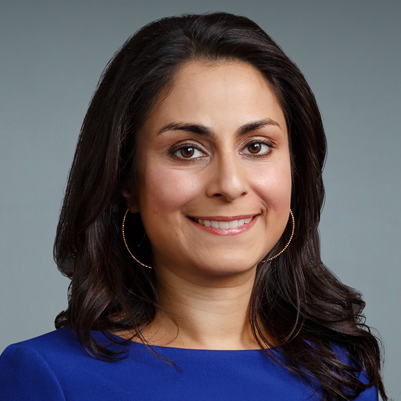
When there’s a breaking health story, millions of people turn to CBS News medical correspondent Dr. Céline Gounder for her insights. Now, we’re learning about Dr. Gounder’s unique story, which includes co-founding International Health Group, which connects health care providers with opportunities to serve disadvantaged people around the world.
On the news beat, Dr. Gounder has covered COVID, the Ebola outbreak, efforts to extend life and how humans benefit from “healthy buildings.”
She points out to hosts Mark Masselli and Margaret Flinter that viewers had declining trust in science even before the pandemic. She says they were asking, “How does science actually deliver something that helps you day to day? And I think this ties into a lot of the frustration with ‘Big Pharma.’ Is research leading to medical advancements but can I even afford them? Can I access them?”
Dr. Gounder is also editor-at-large for public health at KFF Health News and is a clinical associate professor of medicine and infectious diseases at New York University’s Grossman School of Medicine. Learn more from this special conversation, recorded on location at Aspen Ideas: Health.
Margaret Flinter (00:0 1 )
Recorded on location at Aspen Ideas: Health in Aspen, Colorado.
(00:08)
[instrumental music plays]
Mark Masselli (00:12)
Well, Margaret, we're live at Aspen Ideas: Health.
Margaret (00:15)
Again.
Mark (00:15)
This is a beautiful location. Always good to be here. And I think many of our viewers will recognize Dr. Celine
Gounder, who is a CBS medical correspondent. And we're looking forward to sort of going behind the scenes of
how health news sort of gets created, and som e of your thoughts about that as well.
Dr. Céline Gounder (00:34)
The question I always get is: do we , here , need to worry about it? Because people have PTSD from COVID and
they're like, "Oh, is Ebola going to be our next pandemic?" So, I just want to cle ar the slate with that first. Ebola
is not going to be a pandemic.
Margaret (00:47)
Dr. Gounder is also editor - at - large for public health at KFF Health News, and a clinical professor of medicine
and infectious diseases at New York University's Grossman Sc hool of Medicine.
Dr. Gounder (00:59)
I think there's also a longer arc here that precedes the pandemic, which is to say, how does science actually
deliver something that helps you day to day? And I think this ties into a lot of the frustration with Big P harma,
where is research leading to medical advancements, but can I even afford them? Can I access them?
Margaret (01:22)
And this is 'Conversations on Health Care.'
Mark (01:34)
Well, Dr. Gounder, welcome again. Welcome back, actually. We're glad to hav e you. And we're talking about
the work that you do at CBS and KFF. And at the same time, we had so many conversations with people about
the distrust they're having of science. I wonder how you're sort of handling that, how you manage it on your day
to day , because we know that the public, post - pandemic, I think, has really lost trust in medical science.
Dr. Gounder (02:05)
I think a big part of that was feeling not listened to during the pandemic and what their concerns were. And
depending on your age group, your vulnerabilities, your concerns, your number one concern during the
pandemic may have been different for some peop le than for others, right? For an older person or an
immunocompromised person, they may have been much more worried about COVID. A younger person who's
struggling to make ends meet; their kids are not able to go to school. That's a different set of concern s, right? So,
I think a big part of it was not feeling like they were at the table to make decisions. But I think there's also a
longer arc here that precedes the pandemic, which is to say, how does science actually deliver something that
helps you day to day? And I think this ties into a lot of the frustration with Big Pharma, where is research
leading to medical advancements, but can I even afford them? Can I access them? And so, when a lot of people
can't afford and access medical care, those advancement s don't really mean anything to them. And so, I think as
long as our health system continues to be as dysfunctional as it is it's gonna be very hard to turn around that trust
problem.
Margaret (03:25)
Well, there's the health system, and then there's the whole country's psyche at any given moment in time and
you referenced the COVID pandemic. I think you've noted that we need to be thinking about preparing for the
next pandemic, and I wonder what your thoughts are on how we do it better the next time. How do you think we
are or are not preparing? And what would you have the country do based on your experience and expertise?
Dr. Gounder (03:51)
We had a saying during the early days, 2021, when we were trying to roll out vaccines, and vaccines on shelves
are meaningless. Vaccines in arms are what you need. And so, I think at the same time as we need funding to
help us develop the countermeasures, including but not limited to vaccines for the next pandemic, you also need
to be getting people on board so that t hey will accept those things, whatever they are. We also had some huge
opportunities during the pandemic with funding for schools and improving school infrastructure, in particular,
HVAC systems. Doesn't sound very sexy. But that actually is really importa nt, not just for pandemics, but for
asthma prevention. Some of that's related to wildfire smoke, increasing temperatures. If you want your kids in
school, actually having air conditioning so they can be in the classroom on a hot day. Really important. And a
lot of school systems missed the boat on that. There was the funding, but they used it for other things that were
maybe more... HVAC, you don't see it. And so unfortunately, we missed some really important opportunities to
improve -
Margaret (05:02)
That might have allowed us to keep the schools open .
Dr. Gounder (05:04)
Exactl y.
Margaret (05:05)
…the next time.
Dr. Gounder (05:05)
Exactly. Or during a wildfire right nearby. Because that can have huge geographic impacts even if you're not
right there. Keep schools open during the next pandemic. And so, I think some of that spending was very
shortsighted.
Mark (05:19)
We caught your great interview last night with Zeke Emanuel who we've had on our show as well, and his new
book, "Eat Your Ice Cream." Sh ameless plug. He had ice cream there. I don't know if you get that when you buy
one of his books. But there's a lot of conversation going on about longevity, and increasingly we're seeing it. I've
been particularly surprised about how much money is being i nvested by very wealthy people about longevity,
but I think everybody, outside of Zeke, wants to live past 75. That was apparently something, a controversial
article that he wrote a while ago. But what's your sense about this whole movement that's going on about
longevity?
Dr. Gounder (05:59)
To me, longevity is a very clever rebranding and marketing of preventive medicine. Preventive health And so if
you look at what Zeke highlighted in his book, number one was actually social connection. But also, diet,
exercise, sleep. Really basic things that we have talked about for decades with our patients. But I think
longevity, the way we're seeing it packaged and marketed now, is how do you monetize those things? But that
was actually something I brought up on sta ge with Zeke was, well, if social connection is the number one thing,
the question's going to be how do you monetize it? Because frankly, that is what's going to happen in the
longevity field, and it's going to be monetized in a way that it is not accessib le and affordable to most people.
And so, this is the problem I have with that longevity conversation, is it's not translating to population health
impact.
Mark (06:57)
And we've seen Robert Putnam, “ Bowling Alone ” , talk about the -
Dr. Gounder (06:59)
I have written with Putnam .
Mark (07:01)
Okay. Wonderful. He's absolutely one of our heroes. And really talks about the health of the community is
measured really by the connectivity that gets made.
Dr. Gounder (07:12)
Civic relationships. You have differe nt kinds of what he calls, social capital. So, you have bonding social
capital, which is your closest connections in your family, maybe direct neighbors. You have bridging social
capital, which is actually the most valuable . Which is a cross - difference. An d that is an area where we are
extremely poor. But that is where you can have the biggest impact, actually, on social connection.
Margaret (07:36)
And so many things we could do to change that, from our built environments to our social connections. But
be fore we get off the topic of longevity, and I really like to always turn it back towards the kids and young
people, we're really curious to hear your thoughts on the Blue Zones. Fact or fiction? In theory, all the things
that we just talked about are makin g certain parts of the world, certain societies, is it more likely to live a long
time? Is it really the same things that you just talked about, about good lifestyle, social connection? Is there
anything unique about the Blue Zones?
Dr. Gounder (08:09)
I think it's really how do you… is it possible to even engineer ? That kind of social connection, that community?
How much of it is cultural? To what degree does socioeconomics get in the way of that or not? And we saw a lot
of mutual aid during the pandemic, actually. And so sometimes in low - income communities, out of necessity,
people have to come together and help each other out. So, in some ways it might be counterintuitive. Lower -
income communities may be richer sometimes in in social connection.
Margare t (08:40)
Are they rural versus urban? That's also a question that's been on my mind. We tend to think of these zones as,
oh, they're probably agrarian, clean air. Grow your own food. But most people are living in the cities in the
United States. What's yo ur thought on that?
Dr. Gounder (08:54)
So as somebody who's a New Yorker I think there are a lot of myths -
Margaret (08:58)
Are you in a Blue Zone?
Dr. Gounder (08:59)
... about New York. And in fact, I live in a building of, like, 20 apartments, in th e Chelsea area. I know all of my
neighbors. When I had a personal loss, my husband passed away, the entire building chipped in to help out in all
kinds of ways. And I have not had that kind of community in other places I've lived, and I've lived all over t he
country. In New York, you have a lot of micro - communities where within a couple - block radius, you can have
most of your life, and you get to know the trainers at the gym, the grocery store people the wine store.
Margaret (09:35)
So, myth one is the anonymity of the city.
Dr. Gounder (09:37)
It is not.
Margaret (09:38)
It is not.
Dr. Gounder (09:39)
It is not. I have the restaurant I go to, my neighborhood place. The bartender knows exactly what I want when I
walk in. I mean, it's -
Mark (09:47)
Sw eet. That is sweet.
Dr. Gounder (09:48)
Isn't that great? They just bring it to the table. Yeah, it is not like that at all.
Mark (09:54)
No, that's great. You're moderating a panel, Healthy Buildings, Healthy Lives with one of our favorite people,
Dr. J oe Allen. I remember during the pandemic, we had him on, and I think we were all anxious about traveling,
and he said, "If you're flying in an airplane, wear a mask while you get on the plane, till they get up to altitude
and then you're fine." There's no problem because it changes -
Dr. Gounder (10:18)
The ventilation.
Mark (10:19)
…eight or 10 times. You only need it to change two times, the air change. But he was so insightful. But you've
been thinking a lot about healthy buildings and the value that the y provide to our communities. And there's a
real problem, I think maybe it was mentioned last night, that there wasn't enough investment. We had a lot of
money available, but it never was orchestrated to schools and other places. Talk to us a little bit ab out what
you're seeing and hearing about.
Dr. Gounder (10:45)
So, Joe and I actually wrote a piece during the pandemic, published in The Hill, and talking about how we had a
once - in - a - generation opportunity to improve infrastructure in schools, the HVAC s ystems I was alluding to.
And we've seen how it impacts children's ability to pay attention in class, to learn, to not have an asthma attack
so that they're not in school. And so, I think it is really unfortunate that some of that money... And I understand
why. Schools want to show quick impact. They want the parents to see, "Here's what we got for you." And some
of that might have been with tutors, some of that might have been with school lunches, some of that. But
unfortunately, all of those interventions are short - term. And investing in school infrastructure in the way I'm
talking about, that's a long - term investment that has an impact over decades, really, afterwards, assuming you
have proper maintenance of it. So, I do think that was a huge, missed oppo rtunity.
Margaret (11:48)
And not one that's likely to get corrected in our current environment but it doesn't mean we shouldn't keep
advocating for it in all of our communities.
Dr. Gounder (11:58)
Well, and there's a lot you can do at the local level. So even if it doesn't come from the federal government ,
school systems locally, at the county, the state level, school district level, that's where actually a lot of the power
resides anyway. And so, making those decisions, we're going to do this regardles s, I think there's a lot that can
be still done.
Margaret (12:21)
Well, we've lived through pandemics, and then we have epidemics. And you, in your career, as a physician, and
ourselves in primary care and community health certainly had almost two decades , I would count it, of the
opioid epidemic. And the crisis, the deaths, and the morbidity that resulted from that. Some think that we've
gotten to the other side of that. I have to say, I kind of agree with that -
Dr. Gounder (12:47)
It's peaked .
Margaret (12:48)
... to some degree.
Dr. Gounder (12:49)
It's peaked, but that doesn't mean it's over.
Margaret (12:51)
And we've got new things coming in like fentanyl to worry us. What are you seeing in your work both at KFF
and then also in your work as a ph ysician?
Dr. Gounder (13:03)
Well, fentanyl, I think of as, so you had the opioid pain pills -
Margaret (13:08)
Prescription drugs .
Dr. Gounder (13:09)
... prescription drugs. That, to me, I think of as the '90s, early 2000s. Then you start to have peopl e switching to
heroin, then it's fentanyl.
Margaret (13:17)
When we stop prescribing it.
Dr. Gounder (13:19)
Exactly. So, you have 1.0, 2.0, 3.0 is fentanyl, and now we're into 4.0 which is synthetic opioids, things like
xylazine and so on. And that is actually so much harder to combat because they can keep tweaking the
molecules. So, what is legal or illegal? How easily can you detect it? Me, as a clinician in the hospital, is it
something I can even test for? And know what they're on and then know this is what I need to use to treat them.
So, it's actually getting harder. And also, what you're seeing is a drug route through China where these things are
manufactured through Mexico, through the cartels, and up into the US, or sometimes directly from China to the
US. And because these drugs are so potent, it's not like trying to stop the transport of heroin, which is much
bulki er volume.
Margaret (14:14)
You see bags tucked away in the back of that truck or whatever vehicle.
Dr. Gounder (14:17)
Whereas here, it's minuscule amounts. And so, it's very hard to detect. And so, I do think the supply matters, but
I think supply - orie nted approaches are going to be increasingly weakened. And then you really have to focus on
the demand. And so how do you address the demand side? Why are people using drugs? That's where we really
need to focus more because I think we're just going to hav e more impact there.
Margaret (14:49)
And seeing great tragedies already, young people and adults.
Mark (14:54)
Talking about another crisis that's facing the globe, and you've traveled to Africa I think Guinea, to report on
Ebola. And we're seeing reall y an incredible outbreak. I think there was a big story in today's Times about
potentially by August, 20,000 cases happening of Ebola. Talk to us a little bit about it. There's no vaccination
immunization available for Ebola. What do you see on the horizon right now? The government stopped its
funding in Africa. This is potentially a worldwide crisis.
Dr. Gounder (15:27)
So, the question I always get is, do we , here , need to worry about it? Because people have PTSD from COVID,
and they're like, "Oh, is Ebola going to be our next pandemic?" So, I just want to clear the slate with that first.
Ebola is not going to be a pandemic. Pandemic means global or worldwide. Epide mic is a regional issue. I think
this will remain a regional issue in Central and potentially East Africa. But that still matters. So, you could still
have sporadic cases end up elsewhere. I don't think it'll go beyond that. But in addition, it has real im pact on the
economy of these areas. So, for example, the DRC, where this outbreak is centered currently, is an area where
there's a lot of mining. It's not just gold mining, which is where a lot of the media attention has been, but it's on
other things lik e cobalt and other rare minerals that are used in all kinds of tech. So, your cellphone, EVs all
kinds of consumer technology. And so just as we've seen the impact of the conflict with Iran and the Strait of
Hormuz impacting oil and prices at the gas pump, if you have issues with the mining in that area where those
resources are not getting to the US or to manufacturers, you could see consumer products, the price of those,
also go up. So unfortunately, I don't think people always care about the thousands of people who will be dying
of Ebola. That is the sad truth. But they do care what their iPhone costs.
Mark (17:02)
It doesn't spread because people die so quickly of it. Is that -
Dr. Gounder (17:05)
That's part of it. So, they die so quickly. And once you become symptomatic, you cannot transmit until you are
symptomatic which is very different from COVID where you had pre - symptomatic spread, right? And also, it's
just a much less infectious virus. COVID is airborne. Ebola is not airborne. You have to come into contact with
the bodily fluids. So, because it's transmitted through different routes, mechanisms, it's just a lot harder to
spread. Now, having said all of that, I was an Ebola aid worker during the West African outbreak in Guinea, and
what really co ncerns me, disturbs me, is that we have not learned from those lessons. And we have not learned
from those lessons both in terms of our federal response, so instead we got rid of USAID, put it through the
woodchipper to quote somebody. And the Ebola respon se teams were part of that. We have not really restored
those things. And also, we lost a tremendous amount of trust in those very communities on the ground when we
pulled out. And so, there's that piece of it, and then there's also t he distrust on the gro und for a whole host of
reasons, but one that we saw talked about in West Africa also was Ebola business. What is meant by that? What
they see are humanitarian workers coming in with lots of resources to address the Ebola epidemic. But they ask,
"Why are t hose resources not coming into our local economy?" "Why aren't you hiring and buying local?" "And
why is it you only come when it's Ebola, but not when it's our children dying from malaria or malnutrition?"
"Why don't you care when our women are dying in c hildbirth?" Well, their answer is, "Because you're making
money off of Ebola, and you only care because you're worried it might come to the US." And so, to them, their
needs are so much more immediate, frankly, than Ebola, that they are focused on those ot her needs. And go
back to what I was saying about COVID, again, the needs of a parent who, maybe it's a single mom who has her
kids in school, her immediate need is to put food on the table, to pay the rent, and she cannot have her kids at
home because she can't do that. Right? And so, it's a similar situation here, where the people on the ground in
the DRC and, to a lesser degree, Uganda, their immediate needs are different. And if you're not addressing those
immediate needs, they're not going to trust you , and they're going to push back.
Mark (19:44)
How much room is there in the space of news to allow that type of view to be put through to the general
population?
Dr. Gounder (19:54)
There is space, but there's not always the desire. Those are two different things. And I have been concerned that
instead of drawing the parallels, which is actually not... These people are not superstitious. But we hear
conversations about superstition, witchcraft, this is why they don't want to take the measures to pr event Ebola or
to come in for testing. It's just like ivermectin. It's just like people saying there are microchips in your vaccine.
Were we superstitious? Conspiracy theories arise because people actually have a real reason not to trust and you
have to go to that. And so, I think this was a missed opportunity, at least so far, to have people understand what
is really driving the pushback.
Margaret (20:44)
Well, I can't help but think that one of the differences that the removal of the USAID staff made was that they
were on the ground for a long period of time and knew the people in the community. When something arrives
when you're already in place, very different than when someone's swooping in.
Dr. Gounder (20:58)
When you have the relationships .
Margar et (20:59)
When there's a relationship. But I'm going to stay on the epidemic thing for a little bit. Your infectious disease.
This one's not infectious to the best of our knowledge, and that's the obesity epidemic. And I think there isn't a
person left in -
Dr. Gounder (21:13)
Well, I actually would disagree -
Margaret (21:14)
Oh, do you? Okay .
Dr. Gounder (21:14)
... in terms of whether it's infectious.
Margaret (21:16)
Oh, good. Do tell.
Dr. Gounder (21:18)
Because behaviors are infectious. And if you think about why you eat what you eat -
Margaret (21:25)
They're contagious anyway .
Dr. Gounder (21:28)
You eat what you eat in part because of how you were raised. What you were taught to eat. Your comfort foods
are very much what you ate as a child.
Margaret (21:36)
Zeke Emanuel talked about his cheesecake.
Dr. Gounder (21:38)
Yes, yes. Although it's only every three or four months.
Mark (21:41)
Every three or four months.
Dr. Gounder (21:44)
Right? But yeah, you have these comfort foods from child hood, and then what you eat is also what you and your
spouse eat together, what you and your friends eat together. Right? If your friend is looking at you like, "Why
are you ordering a salad? Why aren't you just having the barbecue or the burger like the r est of us?" You're
going to feel self - conscious, right? And so, there's a reason that the best predictor of your health in the US is
your zip code, and it is partly a function of those social networks and how they impact on your health.
Margaret (22:15)
V ery interesting. All Let's go to the epidemic of obesity. Then I'm going to stay with that phrase. You've spoken
about an area that I have not really heard addressed at all. And that is Ozempic and pregnancy. And obviously,
we have a crisis of maternal mor tality and morbidity in this country as well. I have not heard the evidence for
Ozempic having an impact on this. I think it would be great to share with our listeners what is the information
on this.
Mark (22:45)
Your Substack that you wrote about it.
D r. Gounder (22:47)
So, I want to be very cautious. It is not recommended that Ozempic or any GLP - 1s be taken during pregnancy.
So, the limited data we have now is on women who were taking these medications and then got pregnant. And
so, they didn't realize right away. And so based on limited numbers of women, it did not seem to cause any
issues in terms of birth defects, miscarriages, but we don't have the numbers to say for sure is it safe to do or not.
And no one is going to do a randomized placebo contro lled trial in pregnant women with these medications.
And so, we are going to have to wait until there's more of this kind of data, where it's like women accidentally
get pregnant while on them and we collect more and more, and so eventually we'll have enou gh to be able to
say, "Okay, now we can feel confident it's safe or not safe to use." But I agree with you because if you look at
what are the causes of maternal mortality, it used to be conditions like hemorrhage during childbirth, sepsis.
Those are not t he big killers now. Hypertension. Hypertension, cardiovascular disease, obesity related. That's
what's driving maternal mortality now. And so, yes, I think we urgently need answers to whether these
medications are safe. And it's safe for the mother, for th e pregnancy. But also, we need longer - term data on what
is the impact on the baby. We know if the mother has obesity, diabetes during pregnancy, not only are there
issues around the time of birth for mother and child, but also longer - term for the child.
M argaret (24:29)
The whole postpart al year.
Dr. Gounder (24:30)
Well, postpartum, but also the child's metabolism moving forward. And so, will GLP - 1s help with that, hurt
that? We just don't know the answers to some of those things.
Margaret (24:40)
Great. Well, thank you for clarifying that. That's an important one.
Mark (24:43)
And before we get to the AI question, and we wouldn't be journalists if we didn't ask an AI question, I do want
to get back to Bridging Capital and the fact that you're a New Yorker. And I want to make everybody, as a sort
of non - sequitur, I want to make e verybody jealous. We spent time with Jalen Brunson's mother last night, and -
Margaret (25:00)
Which was wonderful .
Mark (25:01)
... absolutely great. But thinking about just back to what we were talking about, Putnam, that experience for
New York was the healthiest thing.
Dr. Gounder (25:09)
It was amazing. And I was there, was it game three?
Margaret (25:11)
I saw you. No.
Dr. Gounder (25:14)
Not at the game, actually.
Margaret (25:14)
I was watching.
Dr. Gounder (25:15)
Not at the game.
Margaret (25:16)
The parties in the neighborhoods.
Dr. Gounder (25:17)
But I was diagonal to where the mayor, Mamdani, was watching the game at a restaurant, and I was out with
friends, and it was in the Village. And the party just blew up out into the street. And we were out until two in the
morning with random strangers celebrating, and that is a great example of Bridging Capital. That's The World
Cup. And the celebrations around the World Cup. Another great example of that. People don't know each other
at all bu t have this shared passion and this collective joy. It's amazing.
Margaret (25:52)
Well, when we speak about social connection, if you saw the looks of joy on the faces of so many people, I don't
think there was anyone who wasn't making a connection. You heard a lot of, "This is what the city needs." Yes.
But it really was that we feeling that was so apparent. So, I don't think we can ask the Knicks to do it again next
year. Perhaps. We can ask, I'm not sure. But I do think it was a lesson for everybody an d what it feels like to
have people come together, so that was great. I know we don't have a lot of time, but I'd like to ask you to talk
about the work you did creating the International Health Group. I think you did that while you were still in
medical s chool. And what came of that? Has it transitioned to something else? And have you continued that
kind of international support?
Dr. Gounder (26:35)
Yeah, that's interesting. I haven't thought about that in a very long time. Yeah, so I was in medical schoo l and
had already started doing work in global health. At that time, we called it international health. And so, I had
been doing work in Brazil, in the favelas in Rio, on finding tuberculosis cases among people who had HIV, who
are at a higher risk. And th en, so that was during my master's in public health. And then went to medical school
and wanted to be able to continue doing that kind of work. And I did, actually, with the folks at Hopkins I had
started working with. But also felt the need that there wer e other students who wanted those kinds of
opportunities, and how could we develop some of those? Me, in particular, having had the opportunity to do it, I
had some sense of what that should look like for a student, right? And so, at the time, Bill Gates S r. was a regent
at the University of Washington, and my friend, Dr Helene Gayle, who had been head of HIV, TB, and STDs at
the CDC, was also at the Gates Foundation. And so, I met with Helene, I met with Bill Gates Sr, and asked,
could we get some funding to help support a student group? That eventually evolved. So, the student group got
started. We started to have students being sent overseas. But around the same time, there was interest in how do
we build out global health at the University of Washington. And eventually, that student group got absorbed by
the Department of Global Health. And so, it does continue in another form. Oh, great. In a more institutionalized
form, actually.
Margaret (28:15)
Wonderful. So, is it just medical students? Is it healt h profession students across the board?
Dr. Gounder (28:19)
Yeah, it's through the public health school. So, anyone who wants to be involved.
Margaret (28:22)
Perfect. Congratulations.
Mark (28:24)
Well, Dr Celine Gounder, thank you so much. This is a g reat conversation. We'll get to an AI question the next
time we get to you. But we really appreciate it. Thank you for keeping us so informed. And to our audience, you
can find us on Facebook, YouTube. We really appreciate you.
(28:40)
[instrumental music plays]
Margaret (28:43)
This copyrighted program is produced by Conversations on Healthcare and cannot be reproduced or
retransmitted in whole or in part without the express written consent from Community Health Center, Inc. The
views expressed by guests are their own, and they do not necessarily reflect the opinion of Conversations on
Healthcare or its affiliated entities.
(29:04)
[instrumental music plays out]