Who Are the Health Influencers Influencing? New Research Explains
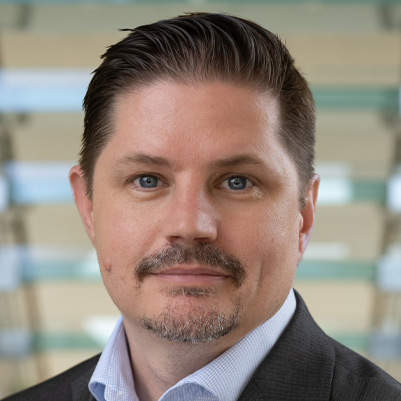
Some people are turning to TikTok and Instagram before seeing or even going to health care providers. Who are these online influencers and who is looking at their content? Pew Research Center identified 6,828 individuals with at least 100,000 followers on YouTube, TikTok or Instagram that regularly post about health and wellness and analyzed their social media profiles. They paired this analysis with two surveys of U.S. adults that asked about their experiences with health and wellness influencers. Some of the key findings include:
- Four-in-ten U.S. adults – and half of those under the age of 50 – say they ever get health and wellness information from social media influencers or podcasts
- About 4 in 10 of these influencers describe themselves as health care professionals; coaches and entrepreneurs are almost as common
Co-hosts Mark Masselli and Margaret Flinter discuss the findings with Galen Stocking, the associate director of research on the Science and Society Team at Pew Research Center. Click now to understand the implications of this shift in how people get information about their health and well-being.
Margaret Flinter (00:00)
Recorded on location at Aspen Ideas: Health in Aspen, Colorado.
(07:00)
[instrumental music plays]
Mark Masselli (00:11)
Margaret, I was surprised to hear that the US wellness industry now generates $2 trillion in revenue. That's the
same number that we spend on Medicaid and Medicare in a year. So that was interesting. And online influencers
are driving a lot of that interest, of course, but who are these health and wellness influencers, and how skeptical
are Americans of th eir advice?
Galen Stocking (00:34)
It means that the majority of health and wellness influencers don't have that medical training, don't have that
medical background. So, they instead are promoting themselves for either what they can do, like they can be a
coach for people, or what they've done in terms of being an entrepreneur and creating this product in the health
or other space.
Margaret (00:55)
Well, we're going to learn about this because our guest today is Galen Stocking. Galen is the Associate Dir ector
of Research on the Science and Society team at Pew Research Center, and Pew has just released a new poll
about health and wellness social media influencers.
Galen (01:11)
We ask ed audiences what they actually remember hearing about and how different that is from the information
they get from their healthcare providers. And about one in five say it's actually extremely or very different from
what they get. But twice that amount say it's not at all different or not too different.
Margaret (01:27)
This is "Conversations on Health C are."
Margaret (01:39)
Welcome, Galen.
Galen (01:40)
Thank you for having me. I'm really excited to have this conversation.
Mark (01:43)
We are so glad to be here. We're at Aspen Ideas: Health, and we're having a very enjoy able time. Lots of good
communication going on. You did a great session today.
Galen (01:52)
Thank you.
Mark (01:53)
Very informative.
Margaret (01:54)
Absolutely.
Mark (01:55)
And to that point, you have new research about health and wellness influencers who are on social media and
local podcasts. But before that, why did Pew take this on, and who funded it?
Galen (02:07)
Well, all of our funding tends to come from the Pew Charitable Trusts. They're our primary funder. Some of our
research has other funding, but the Charitable Trusts are by far our primary funder. But the reason why we
looked at this is because we, as an institution, are guided by this idea of essentially holding up a mirror to
society and showing them what people think. So tha t's why we make everything that we -- All our research is
freely available to the public and is really focused on people's attitudes and their behavior around how the world
is changing, how they're getting information how they're responding to different thi ngs. So, we have a few
different lines of research that we are focused on that led to this study. One long line of research is how people
are learning about new things in the changing information environments. Another line of research that comes
out of tha t is the role that social media and, in turn, influencers play in that. We released a report in 2024 on
news influencers that this really builds upon, that shifts the focus away from news to health and wellness
influencers. And that draws on a separate lin e of research that we have that's looking at people's personal health
and their attitudes about their health, their behavior, and what they're doing. I think all of that comes together in
this report.
Mark (03:30)
Galen, tell us a little bit about the rol e you play at the trust.
Galen (03:35)
At the Pew Research Center?
Mark (03:36)
Pew Research Center.
Galen (03:37)
So, I have been there for a little over 10 years now. My background is in what we now call data science. My
PhD in political science, and specifically on political communication and how people learn about the
environment around them. And so, I've used that background and that training to do a whole line of survey
research and also research on what people are learning about online, what onlin e sources are saying about news
or health or other information. And that comes together. So, I helped lead this project with an incredible team
that contributed to the knowledge side of what health information is and what we need to be asking about.
Survey researchers and data scientists that all worked together to get to the point that we have here.
Mark (04:32)
How big was the survey sample?
Galen (04:34)
So, we did two different waves. So, two different times that we put the survey out in the field with different
questions. Each one was about 5,000 US adults, representative survey, all in our internal American Trends
Panel.
Margaret (04:49)
Well, Galen, I'm really curious, and this came up in the discussions of a session that I was at today, about h ow
the health and wellness influencers on social media are describing or communicating or vetting themselves, if
you will, to the people coming to their sites in terms of their credentials. Is it traditional credentials they're
putting out there? Lived exp erience? Tell us about that. What's the mix?
Galen (05:14)
Yeah. So, for context here, we looked at 6,800 health and wellness influencers that had at least 100,000
followers on any of Instagram, TikTok, or YouTube. And so that was our sample.
Margaret (0 5:27)
Self - described health and wellness influencer -
Galen (05:29)
Well, so we -
Margaret (05:29)
... or is that a category now?
Galen (05:30)
It is n’t a category. We had to figure this out on our own. So, we had to do keyword searches about health topic s,
wellness topics, see who came up, vet them. We started with lists of, I think, 40,000 influencers, whittled that
down, made sure they were regularly talking about health or wellness. And then from that, we got to about
6,800. And so, what we did then, o nce we had that sample, and we said, "Okay, here is the universe of health
and wellness influencers on social media or podcasts." And basically, everyone who had a podcast also met that
threshold on social media. Once we had that sample, we then looked at their bios on social media or any
external websites they have. So, a lot of people have used sites like Linktree to give a little more context about
who they are, link to their website, and things like that. So, we included that information there. And so, from
there, we wanted to see how they were presenting themselves. Now, in our survey research, we've shown that
people are looking for a lot of professional qualities in their health information sources. They want people who
have a lot of medical expertise , they have medical training. They want people who are transparent about any
conflicts of interest they might have. And they also want people who are easy to understand. So, we wanted to
see how many people actually had that medical training and talked abo ut the medical training. We assume that
people who have that medical training, they're going to talk about it. And if they don't, well, we didn't do
background research on all of them, but we just looked at what was in their bio. In part, that's because if you are
a consumer and you get a video or a post and you're like, "Oh, who's this?" You look at them, you click through
to their profile page, that's really all the information you're going to get. You're very unlikely to go and do a
Google search for the m. So, we wanted to mimic that experience. And so, what we found, and that was a long
windup to what we found -
Margaret (07:24)
No, tha t's good.
Galen (07:25)
What we found is that about four in 10 are some kind of healthcare provider. So, everything fro m doctors and
nurses to chiropractors to massage therapists, physical therapists, dieticians, nutritionists, social workers, all of
that fits into that broad healthcare provider category. But when we think about a healthcare provider, I think if
you're a l ayperson, you tend to think just about doctors and nurses, and that was about 17% of that broad
influencer sample. Now, what that means, too, is not just that doctors and nurses are about one in five of health
and wellness influencers, but it means that th e majority of health and wellness influencers don't have that
medical training, don't have that medical background. So, they instead are promoting themselves for either what
they can do, like they can be a coach for people, or what they've done in terms of being an entrepreneur and
creating this product in the health or other space. Or drawing, as you mentioned, on their lived experience, when
they have gone on a weight loss journey, and they can help you go on yours. Or they have some kind of medical
condi tion, and they deal with it in their everyday life, and they're explaining these things and reaching out to
people who also have those kinds of medical conditions.
Mark (08:45)
Can I assume that they offer different types of information than healthcare providers do?
Galen (08:53)
We haven't yet looked at what the influencers themselves are saying. Instead, what we have now is we've looked
at, we asked audiences what they actually remember hearing about and how different that is from the
information they get from their healthcare providers. And about one in five say it's actually extremely or very
different from what they get. But twice that amount say it's not at all different or not too different.
Mark (09:17)
Really?
Galen (09:18)
Yeah. And then the rest are in the middle. So around 60% are in the middle, I believe. So, what that's saying is
that for most people, it's a little complementary to what they're getting from healthcare providers. And you can
imagine, and we don't necessar ily know what all these things are, but you can imagine you might not go to your
doctor for every single bit of health information you might need. You might not go to your doctor if you want to
say, "Oh, I want to try this new diet," or, "I want to try thi s new fitness routine." In fact, fitness and weight loss
were the top two topics that people said they tend to see. But you might go to a doctor for more serious things.
So that difference, that lack of difference for most people, suggests that it's more c omplementary than replacing
doctors entirely. And indeed, 85% of the public says that they are getting health information from doctors at
least sometimes. And that's more than any other health info source we asked about.
Margaret (10:13)
So, you're descri bing really a very large study, actually, when you talk about the 40,000 influencers, I think you
used that figure earlier.
Mark (10:22)
Came down to 60.
Galen (10:23)
Came down to 60. Yeah. Yeah.
Margaret (10:26)
Consumes a lot of resources to do this kind of research and do it carefully. And Pew has a great reputation, so
we know that you're taking the research seriously. I'm really curious, what drove somebody at Pew to say, "This
is something important for us to look at"? What was convincing to the people who make the decision to allocate
the resources? Because we all know there's no shortage of things to look at these days in health and society, and
that's really your approach, right? What is important in science and health and society. So, share wi th us a little
bit about what was the compelling argument. What did you see going on in the country that made you say, "We
need to understand this"?
Galen (11:04)
Well, I think part of it started with having, I also conducted the news influencer study in 2024. And seeing right
around the 2024 election, when that election was largely, and after the post - election, people talked a lot about
how this was the influencer election. And we really started studying right around that time, right after the
election co ncluded. And we saw the importance that news influencers were playing in that capacity, in that
topical space. And we also saw just how prevalent wellness actually is as something that's important to people,
and that this is a source for information for pe ople. And so, we wanted to really put some numbers on that and
really to be able to say, like, "Oh, 40% of Americans said they're getting health and wellness information from
influencers." I mean, that's an important backstop point to say and understand ab out -
Margaret (11:59)
That's a force in society.
Galen (12:01)
Right.
Margaret (12:01)
At that level. Yeah.
Galen (12:02)
That this is something that's driving people's healthcare decisions, their consumer decisions in the health and
wellness space, and we want to be able to put that marker down and be able to continue to follow that as part of
our research.
Mark (12:14)
And I assume as technology changes, you'll continue to measure the impact that it's having, right? Because
we've had social media s ince the iPhone, we've seen this enormous jump. But I am interested in one sort of
element here, and we know a lot of people who are older who've been influenced by fraudulent calls, right?
People calling up and selling them something that they shouldn't h ave had. And yet, you found in your poll that
older people were more skeptical about the information they were receiving versus younger people, which is
sort of the reverse of our own experience. Which is that you can pitch older people something that they shouldn't
be sending you money for. But in this case, it seemed to be the reverse.
Galen (13:06)
Well, I think one element here is that younger people are more likely to be getting information from health and
wellness influencers in the first place. And those numbers for people under 50 is around 50%. For 65 plus, I
don't recall right, exactly, but it was in the 20 to 30% range. So pretty large gap there. The other point I would
point to in a separate study, when we asked about how difficult it is to unde rstand or to know what to trust when
you're getting health information, not just from health and wellness influencers, but from anybody. Right.
Younger people had more difficulty understanding what to trust than older people. And some of that goes with
exp erience and also the sources that they use. And of course, younger people, as I just said, are more likely to be
getting information from health and wellness influencers.
Mark (13:58)
They're not sitting around at 6:00 watching the nightly news.
Galen (14:02)
I don't know many who are. Maybe they are.
Margaret (14:04)
Is there still nightly news at 6:00?
Mark (14:07)
People are still buying commercials for it.
Margaret (14:09)
I'm curious, in doing the research, did you interview people who use social media, or were you watching the
trends mostly based on data? Who were you interviewing?
Galen (14:18)
So, it was a representative survey, but we weren't personally interviewing. It wasn't qualitative research in that
capacity. We also, when we look ed at the influencers themselves, it was all just looking at their bios and their
posts. We weren't doing a lot of outreach. So, it doesn't mean that we didn't talk to a lot of experts in advance,
too, and some influencers - Yeah ... to try to understand th e space a little better as we were designing our
questions and building out our hypotheses of what we expected to see.
Margaret (14:45)
My reason for asking is it's one thing to go to a site, read, listen, understand, and then another to take action,
righ t? To follow the advice or the recommendation or mimic the story. Did you get any sense that this is
actionable data that people are getting, or actionable ideas and advice that they're getting?
Galen (15:05)
Well, I can point to how much people say it ha s impacted their health. So, 54% of those who are getting this
information say that it's helped them better understand their own health. So -
Margaret (15:17)
That's impressive .
Galen (15:18)
... there's something that's happening there.
Margaret (15:19)
54%, that's a large number of people. Yeah.
Galen (15:20)
There's some kind of education and learning happening.
Margaret (15:22)
Clarifying maybe of what they've heard someplace else.
Galen (15:24)
Right. Or maybe something they didn't necessarily know they had, or a symptom that they didn't think was
anything but might be something, or maybe is nothing, right? Yeah. So, giving that better clarity around that,
that is happening for a large share of t he people who are getting it. A small share, about 12%, say that they're
more confused about their own health. So, there's a negative side there as well. But we also want to see about
the emotional reaction, because it's one thing to understand your health and another thing to feel good about that
understanding, right? You might learn that you have some condition that you didn't know you had, or that you're
not taking care of yourself and that you need to do better. And so, we asked people if that informati on was
making them more or less worried about their own health. And we found that it's roughly equal shares. 22% say
less worried, 26% say more worried. But digging into the age data, again, we see a really interesting trend where
among ages 18 to 29, it's 36% say more worried. So, it's leading to more negative impact in terms of emotional
mental health among the youngest age group.
Mark (16:32)
That's fascinating. We're here at Aspen Ideas: Health. You were on a panel earlier today discussing the wellness
economy. Tell us what sort of tenor and tone you had a couple of folks up on stage there with sort of different
viewpoints, but -
Margaret (16:49)
It was great
Mark (16:50)
... yeah. It was a great conversation.
Margaret (16:50)
Very interesting convers ation to follow.
Galen (16:53)
Yeah. I think it's really interesting to look at the different viewpoints that each of them were coming with from a
journalism perspective. All of them had some kind of journalism background, and they're on the ground as an
influencer. I think one of the most compelling things that I heard one of them say was that you need six seconds.
You only get six seconds to capture somebody's attention, right? As someone who's scrolling through their
social media feed. And I think what' s interesting is that when we tie it back to our data and we look at what we
asked, what we found, two - thirds of people who are getting health and wellness information are getting it
because they happen to come across it. Now, that's different from when yo u're getting health information from
virtually any other source. You don't happen across health information from your doctor. You go to the doctor
because you're sick, and you say, "Doctor, I'm sick. What can I do?" You're seeking it out. Same thing if you go
to WebMD or something like that, you're seeking out that information. But because you're on social media just
as a boredom or whatever other reason, and the algorithm gives you what it thinks you're interested in, you're
just happening to get that info rmation. That's an entirely different dynamic than that seeking out information
dynamic.
Mark (18:06)
I was telling Margaret earlier, I spent too long hovering over mountain goats climbing up mountains. That's
everything in my feed. So, I can imagine if it's a health issue, you're getting all sorts of information back and
forth. Any sort of commercial application out of the work that you do is -
Galen (18:25)
We are a non - profit. We don't seek to monetize any of this work. It's all about trying to help the public
understand the world around them, and their own views.
Margaret (18:39)
Fascinating topic. We could keep you here for a long time. Now I'm really curious about the folks that are using
it, and your sample size, and the work that we do in healthcare, we take care of very diverse populations, age,
gender, sex, sexual orientation, country of origin, language spoken, all of these things, and of course different
health statuses. Do you have a sense of how heterogeneous or homogeneous the people who are using the
influencers platforms are? And how diverse are the influencers themselves? Is there something for everybody,
finding somebody they can relate to? Tell us a little bit about that.
Galen (19:19)
Yeah. That's -
Margaret (19:19)
Asking a lot of your research, of course, but we're very curious about all this.
Galen (19:24)
That is a great question. So, in terms of the audience and who composes that audience, we did find some racial
differences, racial and ethnic differences, where Black, Hispanic, and especially Asian adults are more likely to
be getting health and wellness information than White adults. There's a very small gender gap, I think four or
five percentage points, where women are more likely. And it's interesting to hea r the discussion today where it
was focused largely on the impact of wellness on women. But we also made sure to include the men who are
doing workout videos and things like that, because that is a large part of this wellness space as well. And so, I
think because we included that, we got up to, I think it's 48, 53 or 40, 52 is the gap between men and women.
Margaret (20:17)
I was surprised by that. Somehow, I assumed falsely, and that's what happens with assumptions, it would be far
more female.
Galen (20 :24)
We do see that gender gap with the influencers themselves. Two thirds are women and a third are men, but the
audiences, we didn't see that as much. We also saw, and I think this is really telling to what the people you work
with, we saw a pretty large , I think a 15 percentage points, gap between the insured and the uninsured. The
uninsured are much more likely, or not much, but they're more likely to be getting health and wellness
information from influencers than the insured are.
Margaret (20:54)
Int eresting. And do you have a hypothesis about that? I can jump to a conclusion but are you not at the
hypothesis stage yet?
Galen (21:01)
We don't have any causal linkages between that, but we do know that the uninsured are less likely to say they're
getti ng -
Margaret (21:09)
Routine primary care.
Galen (21:11)
... information from a healthcare provider. Yeah, they're less likely to get their annual checkup and things like
that. In terms of the demographics of the influencers, we did not do that part. It' s incredibly difficult to
determine that. And so, we did not do that. But one thing we did find is that 21% of audiences, one of the major
reasons why they get health and wellness information from influencers is because they want to get that
information fr om someone who has a similar background or shares their beliefs. And so that points to that
people are looking for people like them who have some of their same experiences, maybe the same medical
condition, maybe similar identity.
Margaret (21:51)
Sure. T hat's a common one, I would think.
Mark (21:54)
Walk us back to when you were collecting information about news. What did you do after the report? What
other analysis got done about the data you found? Or was it done by independent groups or groups in
con junction with your group?
Galen (22:09)
So, we did a few follow - up studies. We looked at, and I don't remember all the numbers off the top of my head,
but we looked at the support or criticism of Biden or Harris or Trump. There's some really interesting things in
there that I don't really feel confident enough because I haven't looked in for two years. We also looked at
different social media sites than we had initially because Bluesky had just popped up, so we did an analysis of
that. And then we essenti ally make our data, to the extent that we can, publicly available. And so, I know that
other researchers have started to use that. For this data set, this report, we've made our data set of who these
health and wellness influencers are publicly available, and that's linked in the report itself.
Mark (22:58)
Who they are. They know that you were -
Galen (23:02)
They could look it up, yes.
Mark (23:04)
Yeah. And that's all publicly available?
Galen (23:06)
Yeah. Well, in the news influencers report, we did n't have as many resources as we did for this report. So, we
actually only looked at 500 news influencers out of a sample of 2,500. So, we initially uncovered about 2,500
that met all those criteria -
Mark (23:23)
Versus the 6,800 for this group .
Galen (2 3:25)
Yeah. And we found 6,800 influencers, and we were able to look at all 6,800. For news influencers, we took a
sample of 500.
Mark (23:30)
And we can take a look at the list as well -
Galen (23:34)
And that list of 500 is available.
Margaret (23:36)
I thought one of the interesting lines of discussion, and not surprising this morning, was the degree to which
influencers are presenting or marketing products. The degree to which, if they are marketing products, that
there's a transparency there. If they are partnering on behalf of another corporation, is all that disclosed? What
did you find in your review of that, and how important was it to the users? Maybe not so important, maybe very
important.
Galen (24:04)
Yeah. So, we're still doing that research. That is a big undertaking.
Margaret (24:08)
We'll have to have a second conversation about this.
Galen (24:10)
Yes. We have several projects lined up around that, including what the influencers themselves are talking abo ut.
What kinds of authority sources they're drawing upon, or are they looking at studies or medical research, or their
own experiences? And we're doing a little bit more of that, and that's more looking at the post level and the
individual posts that they' re putting up. We've collected about 500,000 posts that we're in the process of
analyzing for that. And part of that research is also looking at the products that they're promoting, not the
individual brands, but the kinds of products.
Margaret (24:44)
Th e categories. Yeah.
Galen (24:45)
Yeah. And the extent to which they're disclosing it. That's all in the pipeline. We're still working on it. And one
thing that I can say at this point is we initially thought we could just look at how many have the ad tag or a
sponsor tag, and we realized pretty quickly that that wasn't going to be sufficient, that we need to go beyond that
because for many reasons, sometimes it's done in different ways. Sometimes the partnerships are mentioned in
different ways, sometimes they're not disclosed, and sometimes it's not a partnership and they're just mentioning
a product. And so, we want to be able to speak to that broader set of practices instead of just that. Down the
road, not ready for it yet.
Mark (25:27)
Well, how long is that road in terms of the additional analysis of the work that you'll be doing?
Galen (25:35)
Yeah. For that news influencers study, we continued drawing on that data for probably about eight months.
Mark (25:44)
That was when it was fresh, right?
Galen (25:46)
When it was fresh, yeah. And then we did follow - up surveys last year, but we didn't do the influencer level
analysis. For this, I would expect it to be a similar kind of timeline, but I don't want to put any promises around
that when we have all this out.
Margaret (26:03)
Not a scripted question, but you've got my curiosity really aroused. I'm wondering, has the public health
community figured out that of all the public health messages we've been trying to get out to people for eternity
and to different groups, that taking on the role of influencer or getting people to take on the role of influencer
might be a better strategy than the traditional approaches to education, outreach, getting materials, electronic or
otherwise, in people's hands? Have you gotten any sense of that, that organizations who are designed to try to
get people to influence their health lifestyle in a positive direction have taken roles in this environment?
Galen (26:44)
Yeah, I wish I had an answer for that. I don't kno w. But I can point to the fact that one in five of these
influencers are doctors or nurses. That shows that there's at least some interest on the part of those individuals.
Margaret (26:58)
That this is a viable mechanism to get messages out there.
Gale n (27:01)
Right. And they're amassing followings. They have at least 100,000 followers, some of these influencers.
Mark (27:06)
Well, I think you're absolutely right. Thinking about, is that a new role within the health organizations to really
designate p eople who are good communicators, who also can relate to different population groups? That that
should be an additional role into delivering care. In fact, that is a way of delivering health information, which is
delivering care.
Margaret (27:25)
Which wo uld be an important finding for Pew, given its sort of mission, right?
Galen (27:30)
Yeah, and I think that's one of the reasons why we share all of our data and all our findings publicly, because we
want to enable anyone to do additional research and follow - up and use it to try to make things better. I think one
caveat for all this, I would say is we ask people A whole set of questions about what behaviors or what kind of
actions they should be taking to make their health better. Things like getting en ough sleep, exercising regularly,
managing their stress, and the vast majority said all of these were extremely important. And I don't think you'll
be surprised that very few said they're doing extremely well at this. Yeah. So, there's real challenges - Yea h ... on
the part of the public to actually getting to that healthy point. Right. Life is hectic. Yeah. There's a lot of things
going on. Things are stressful. It's very difficult, even with the best messengers, to... And not to be a downer
here.
Mark (28 :27)
COVID’s still in the rear - view mirror.
Margaret (28:27)
But this may be a step, right? This may be a step.
Galen (28:31)
It could be. Yeah.
Margaret (28:32)
People have their own timing, and I think very much in your own hands is different. I know we don't have a lot
more time, but just maybe tell us a little bit about the Science and Society team. What's the domain or the reason
for being? And I know we'll give you the short answer maybe at this point because I know we're running out of
time, but j ust tell us a little bit about that.
Galen (28:52)
So, at Pew, we have some topically focused teams. We have a team on news information, which I spend a lot of
time on, a team looking at religion and politics and social trends, family life, all sorts of different global trends.
On the Science and Society team, we're mostly interested in the effects of technological change, scientific
change, and the public's attitudes and trust in different sources. So, we have whole lines of research around
climate chan ge and energy. We put a report out about that in the last few weeks that showed people were
becoming more pessimistic about the ability to avoid the worst effects of climate change. We have a whole line
of research about trust in science, which has shown t hat trust in scientists hasn't rebounded fully from the pre -
COVID era, though it has gone up. And this health line of research. Oh, and then also a whole line of research
around AI and people's attitudes toward AI. At the beginning of this year, we publish ed a post about people's
attitudes toward data centers and their awareness of data centers and their concerns about them, and we're
continuing to follow up on that. And so, we like to look at how all these things intersect. We're starting a project
on the role of AI in health, in healthcare, and people's attitudes toward that. But a lot of this research is about
how the public is responding to these things and what they are thinking.
Margaret (30:22)
Very important.
Mark (30:23)
Well, Galen , we want to th ank you so much. Thank the Pew Research Center for all the work that they do, and
we'll continue to follow your work.
(30:31)
[instrumental music plays]
Margaret (30:34)
This copyrighted program is produced by Conversations on Healthcare and cannot be re produced or
retransmitted in whole or in part without the express written consent from Community Health Center, Inc. The
views expressed by guests are their own, and they do not necessarily reflect the opinion of Conversations on
Healthcare or its affiliat ed entities.
(30:56)
[instrumental music plays out]