Dr. Reed Tuckson: Health’s Truth Evangelist on MMR, COVID & Flu Vaccines
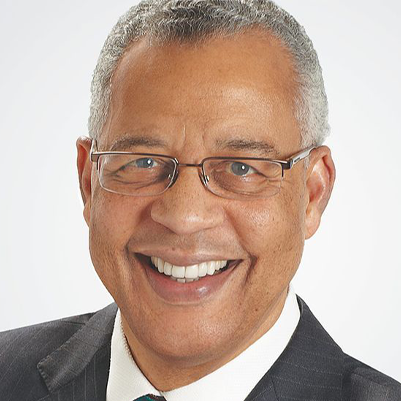
“I’m quite frankly, flabbergasted…”
That’s the reaction of Dr. Reed Tuckson to the White House’s recent decision on childhood vaccines. An Executive Order has called for separating the measles, mumps and rubella vaccine into three different single-disease shots and giving all childhood immunizations at separate appointments when possible.
Tuckson is the co-founder of both the Black Coalition Against COVID and the Coalition for Trust in Health and Science.
“This effort, on top of other efforts, deliberately tried to make it difficult for us to have the American child vaccinated against preventable illnesses…illnesses that are serious in their consequences, including and up to death.”
Tuckson’s remedy is for patients to take their questions to their health care provider and for those providers to listen and provide evidence-based answers. He stresses that now is the best time to get the flu and COVID vaccines, especially because the flu season last year was unusually severe and ranked among the worst in decades.
Tuckson also talks to hosts Mark Masselli and Margaret Flinter about the latest insights into how to effectively communicate about diagnosing and treating Long COVID.
(00:00)
[instrumental music plays]
Mark Masselli (00:04)
The flu season last year was unusually severe and ranked among the worst in decades. How are health advocates
working to ensure people understand the flu vaccine and the COVID vaccine save lives, and that now is the time
to get both?
Dr. Reed Tuckson ( 00:19)
The first and most important advice is to be able to get reputable, trusted, evidence - based information from
sources that actually provide trustworthy evidence - based information. People need t o educate themselves about
what they should do, the scientific basis of what they should do for themselves, their families, and their
communities. And so, it really begins there.
Margaret Flinter ( 00:41)
Dr. Reed Tuckson is at the center of efforts to bui ld trust in health and science during the vaccination season. He
trained and practiced in internal medicine, for many decades has played a leading role in health policy and
advocacy, and he's the co - founder of both the Black Coalition Against COVID and the Coalition for Trust in
Health and Science.
Dr. Tuckson ( 01:02)
This effort, on top of other efforts, deliberately trying to make it difficult for us to have the American child
vaccinated against preventable illnesses, illnesses that are serious in their consequences, including and up to
death.
Margaret ( 01:17)
This is "Conversations on Health C are."
Mark ( 01:30)
Well, Dr. Tuckson, welcome to "Conversations on Health C are."
Dr. Tuckson ( 01:33)
Thank you so much. Great to be with you and with your audien ce.
Mark ( 01:36)
Oh, that's great. President Trump, as you probably know, recently signed an executive order that calls for
separating the measles, mumps, and rubella vaccine into three different single disease shots and giving all
childhood immunizations at separate appointments when possible. Tell us what your reaction is to that.
Dr. Tuckson (01:55)
Well, I'm quite frankly flabbergasted. This effort, on top of other efforts, deliberately trying to make it difficult
for us to have the American child vac cinated against preventable illnesses, illnesses that are serious in their
consequences, including and up to death. It is inevitable that the parents, especially poor folks who have a
difficult time with transportation, who are going to have to come back t o the pediatrician's office multiple times
to be able to receive the recommended panel of vaccines that are required for them by age, deliberately and
well - thought - out schedules of vaccination, I would add. But now it would be much more difficult for peopl e as
they struggle. And I'm very worried about those who are marginalized, who have a difficult time getting around.
Can you imagine the mother with two small children who has to catch the bus, maybe transfer once or twice to
get to their pediatrician's or wherever, and then have to come back over and over again? Can you imagine the
impact it's going to have on the pediatrician's office as they try to schedule all of this when they should be doing
other things? This should be a normal, easily managed activi ty, and now it's going to be complex. And then
finally, what particularly concerns me is, it is another log on an already unacceptably heavy load of creating
doubt in the American population about the effectiveness and the safety and the appropriateness of vaccines. So,
in every way possible, if anyone deliberately tried to harm America's children, you couldn't ask for someone to
have a better agenda if that was what your goal is. And it is just simply tragic.
Margaret (03:40)
Well, thanks for those comments, and we would also imagine that with all the focus on measles, people haven't
even talked about mumps and rubella, so there'd be a huge amount of education to put forth in that effort as
well. We certainly have those concern s. But Dr. Tuckson, you're also the co - founder of the Black Coalition
Against COVID. And we know that now comes the season, the best time to get your COVID and your flu shots.
What's your advice now to people, and particularly to the Black community, about the importance of this?
Dr. Tuckson (04:13)
The first and most important advice is to be able to get reputable, trusted, evidence - based information from
sources that actually provide trustworthy evidence - based information. People need to educate themselv es about
what they should do, the scientific basis of what they should do for themselves, their families, and their
communities. And so, it really begins there. So, I'm urging everyone, but particularly the Black community, to
be in contact with their prim ary care provider and talk to them honestly about their concerns, what they have
heard that makes them worry, and have a real conversation as the way to proceed. I think it is important that
people are able to express their doubts now that there are so man y. Be able to do that. Secondly, with the flu
shot in particular, let's make sure we get the flu shot early on. And this is a pretty straightforward activity. We
know that the flu shots each year are updated to be as close to as possible, dialed in for the particular strain of
flu in any particular year. We know from gazillions of people who have gotten their flu shot how safe this is.
When it comes to COVID, that is a conversation you really want to have with your docs now. Now that we are
not in a pandemi c situation, and now that this is not the kind of a situation where if I get this disease, I can so
easily pass it on to others. We don't have that level of community spread that rises to the moral obligation of
each individual protecting another person. T his is now where we're focusing on how do we protect the
individual. And whether or not you are in a category that would cause you to be recommended for that COVID
shot, then you want to do that. Clearly, if you are a senior, clearly, if you're someone who has an
immunocompromising condition, either because of their disease or because of the medications that they are
taking, you really want to make sure you're talking to your clinician about that. And the last thing I'll say, Mark
and Margaret, on this is t hat what really, I think that people are not paying enough attention to, but I am, are the
number of people who have long COVID syndromes. There are just an extraordinary number of people who are
living with the secondary consequences of having contracted COVID. And so, again, I really want people to go
to see their health provider and get real good advice as to your particular health status, your particular level of
risk. And then together, you and the clinician make the risk - based decision as to whether o r not you proceed.
Mark (06:51)
Well, that's such great advice for all of us. Thank you so much. And maybe also just to pull the thread on that,
what lessons and insights can you share from the coalition's work with Black Americans that are, as you just
w alked through, important for all of us in healthcare to understand?
Dr. Tuckson (07:08)
I think the one thing that we in healthcare, and people like me who communicate about health, have really
learned from the COVID experience is how important it is to t ake the time and listen to what other people are
saying. Listen to the patients' concerns, listen to the community's issues, and make sure that we're in very close
partnership, not just on COVID, but in fact previous to COVID, outside of an epidemic. But t he normal course
of how we conduct health in America really needs to be one of much closer relationships between the health
apparatus, the health ecosystem, and American communities and American people. I think that we realize now
that we are co - creating t he future of health with America, and that whatever was the past, you can't put the genie
back in the bottle to an envisioned past. We are now in a completely unclear future. And so, we're co - creating
that future with the American people. For the Black com munity, we have learned that it is exceedingly possible
for us to organize the Black community and cause people to be able to have access to really trustworthy
information. For the first time in history, the Black America closed a disparities gap in health care, and that was
through primary series COVID vaccines. We caught white America in the number of people that got COVID
vaccines, and that is having come from 50 yards behind with an anvil on our back. But we as a community, our
fraternities, our sororiti es, our social organizations, our community and faith - based organizations, our churches,
all came together with Black health professionals in a joint effort to get this done. But here's the other thing that
clearly, I learned. I learned that while I'm glad that the Black community closed the disparities gap with white
America, but I don't like winning a race when the other guy trips. And part of the reason that we closed that gap,
in addition to all the wonderful organizing that we in the Black community di d to save our own lives, is that
many in the white community really found themselves under the spell of really terrible false information. And
that caused them to experience low levels of vaccination and caused them to have suffered the health
consequences as a result. And that has then made me understand that the issues of misinformation and distrust in
healthcare, which were so long the province of Black America because of the Tuskegee Syphilis Study
conducted by the US Public Health Service, by the chall enges with the Henrietta Lacks experience with her
genetic - based biology, and so many other elements that were insults. Now we realize That same level of
mistrust is in all of America. And so now the fight for helping people to regain trust and have access to
evidence - based, reliable, science - based information with which to make personally appropriate choices and
decisions for themselves, their families, and their communities, that is now an American issue, not just a Black
issue.
Dr. Tuckson (10:12)
Well , we spoke a few months ago about long COVID, and one of the things we've noted with our show, we've
had researchers and scientists and clinicians speaking to the issue of long COVID a few times. Those shows get
a disproportionate amount of attention. Ther e is a lot of interest out there because so many people have been
profoundly affected. But one of the studies I understand show that Black patients are 6% less likely to receive an
official long COVID diagnosis than white patients, and I wondered, what's y our perspective on this? Is this a
diagnostic disparity that we're seeing where the care is not there, or the symptoms are not being considered as
carefully? What's your thought on that?
Dr. Tuckson (11:00)
It's an interesting question. I would take one s tep even more back from the way you framed it, and it's this. The
real dilemma with long COVID is what is long COVID? And its various manifestations are quite variable, quite
broad, and it makes a diagnosis somewhat difficult. It's nonspecific in many ways . Someone who has long
COVID, you can't say, "Oh, therefore you must have this, this, this, and this." No. You can have all manner of
presentation, and so the diagnostic dilemma is challenging in and of itself. And then there is the level of which
this lon g COVID experience, how the level of expression of it, how debilitating is it? And how long does it last?
Many people, it may last a month, weeks, three months, six months. I know others, tragically, who have been
living with this for years, and will unfor tunately live with it for years. So, I think it is a major diagnostic
dilemma. That being said, it comes back to the premise of your question, Margaret, and that is that many times
African Americans do not have access to the same quality and sustained and personalized care that other
Americans may have. It may be that the clinicians may tend to trivialize nonspecific complaints in African
Americans as opposed to treating those same nonspecific complaints with a little more rigor in other
populations. That's a common challenge that we have in America that we're working through. And so, I think for
all of those reasons, it is very likely that those numbers could in fact be true. But the bottom line here is that at
the end of the day, we all have to do a better job of diagnosing and hopefully, before long, finding much better
therapeutic interventions for some of these very unusual but very debilitating secondary consequences. Let's be
clear, though, as we tie this back to the original question before this one w as, hey, if you're at a high risk level
for getting COVID, get vaccinated. Let's don't worry about the long COVID.
Mark (13:10)
And just sort of speaking about the issues of making sure that we provide the Black community with great care,
community healt h centers, which we're involved in here in our state. We run the largest one, but all across the
country, very committed to making sure that all populations, but the Black population in particular, are getting
good access to good care. And everybody can al ways improve the system of care that they have in the country,
so important -
Dr. Tuckson
Let me just say this: I really want to applaud you for what you are doing and being a partner with community -
based health centers. These centers are still undervalued in so many ways throughout our states and our nation.
And I think that the notion of the beauty of community health centers, one of the major parts of the beauty of
them, is that they're community boarded. That the people who live in the community themsel ves are taking
responsibility and accountability for helping to strategically design, helping to execute, and helping to monitor
the success of these kinds of programs. When I mentioned earlier, and I was very specific and energized about
this, is that we' re going to have to recreate and co - create the future of health with the American people. That's
with individuals, but it is also with communities. And so, the community health center movement is an essential
link in that chain.
Margaret (14:44)
Thank you .
Mark (14:45)
Absolutely. Appreciate it.
Margaret (14:46)
And come visit.
Mark (14:48)
Also, Doctor, I know you know this, but the Food and Drug Administration approved the new type of flu
vaccine for adults age 50 and older. It really relies on mRNA technology. We've recently seen that in the news
on the melanoma trials that just came out very successful. But tell us, do you recommend it?
Dr. Tuckson (15:10)
I support the FDA decision. I think it is important. And the thing, though, that I think what I'm actually happy
about is that there are parts of our country that have been very virulent in their opposition to what they call, and
to what is known as mRNA vaccines. It has been like, in fact, some places in school, in places they're not even
allowed to talk about mRNA as an entity. And so, I'm so glad, and I, by the way, serve on the Reagan - Udall
Foundation for the FDA, and so I've watched the FDA issues very carefully. And I'm just pleased that mRNA
initiatives have not been ruled out of appropriate ness. It was an insane thing to think that we can -- God has
created all of these fantastic things about being a human being. Our biology, the genetics of our biology. I mean,
my goodness, who in the world can say to God, "Excuse me, but we're ruling out yo ur creation of mRNA
enzymes." I mean, come on. Really?
Margaret (16:17)
Well, Dr. Tuckson, the Coalition for Trust in Health and Science is made up of over 100 diverse national
organizations. And your efforts, of course, include challenging false informat ion. Tell us about your strategies.
How are you doing this, and especially, what is working?
Dr. Tuckson (16:39)
Well, I was lucky enough to be in the spearheading of this movement of the Coalition for Trust in Health and
Science, and it came directly out of this experience that we talked about at the beginning of the show, of seeing
the level of mistrust and disinformation that was affecting the white community, as well as the Black, as well as
Hispanic, and Native American, and realizing this is an Ameri can issue. And so, I sort of said to myself, "Given
that this is an existential crisis facing every health professional and the oath that they have taken, it is an
existential threat for every mission statement of every health - concerned organization that t his has to be dealt
with. This is the core of what we do and what we are." That especially important relationship between the
patient or the consumer or the community resident and the healthcare professional or healthcare system. Those
are sanctimoniously important ethical, moral responsibilities. And so, we asked ourselves the question, is it
possible to bring together the entire health ecosystem for the first time in history end to end? To my surprise,
and for a moment my horror, because we did it without any money or staff, but a very dedicated board of roll -
up - your - sleeve people, the answer is yes. It is possible to do that. And in fact, almost immediately, 50
organizations joined, and now we're up to 100 and still growing and growing and growing. Here's the point
we're trying to make. We want to be in partnership, the entire health ecosystem, in partnership with the
American people so that people will have access to trustworthy, evidence - based information upon which, and
this is the key, to make personal ly appropriate choices and decisions for themselves, their families, and the
communities in which they live. And I emphasize personally appropriate. We're not involved in trying to dictate
high - handedly from on high down into people. We know people are str uggling. And people have choices they
have to make based on their value system. The communities have choices to make based on community values.
And we have, of course, people need to be able to rely on trustworthy information, which unfortunately is
challe nged today. And so, at the end of the day, we have been focusing in on this moment Right now, there are
hundreds of thousands of health workers touching millions of Americans. This moment, whether you're
involved in enrolling someone in a research clinical trial, whether you are the care manager for a medical group,
whether you are a hospital discharge planner, whether you are a public health worker in Missoula, Montana,
getting ready to prepare for a community meeting in the neighborhood, whether you are a physician or a nurse
or other nutrition counselor working with an individual patient, all of those encounters have got to be trust -
enhancing encounters and definitely not trust - eroding encounters. And so, we're educating the ecosystem. How
do you learn to listen better? How do you learn to communicate with people who think differently than you?
We're trying to learn how do we make sure that we are, in the ecosystem, do not have conflicts of interest that
would cause the American people to look at us with c oncern. So, we're teaching, we're educating, we're
advocating, we're cleaning up any of the bad stuff that we may have had, and that we need to sweep out the
corners and make sure that we're as pure as we can possibly be. We're doing all the things. Is it working? Yes.
We do know at least that at this stage that the ecosystem is receptive, that people want... I am so proud to be a
physician. I'm so proud to be a member of multiple different health organizations across the spectrum. I know
the people that I work with, and I've been working with for 50 years. I know their values. I know why they went
into these businesses and took these jobs. And so, I'm very proud of, but we have to be in constant learning,
constant improvement, and then we have to take a constant level of development of expertise and refinement as
we then go out and have conversations with, and service to, the American people.
Mark (20:46)
Well, what a great clarion call for how to build trust, reconnect with the American people, and develop trust. So,
I'm a healthcare worker. I'm in Missoula, Montana. I'm hearing you talk now. How do I connect? I'm not
connected to the larger health ecosystem, but I'm a worker in the health system. How do they reach out to your
organization, or how can they start? How can we get it back to an individual level that they're helping cultivate
this in their home community, wherever it might be in the 50 states and territories?
Dr. Tuckson (21:20)
Well, first of all, the first thing I would like to do is just hug those people and thank them for their service,
because can you imagine any harder job than being that person? By the way, I use that example of in Missoula,
Montana, is because I remember talking to a public health worker in a town like that, and how dangerous it was
for them as their neighbors attacked her verbally and threatened her physically during the COVID pandemic. So
those are really warri or people. But the way I would do it is, number one, I would go to the National Association
of County and City Health Officials, NACCHO, which is their home for most of them, or the American Public
Health Association, to them. Both of those are members, ac tive members, of the Coalition for Trust in Health in
Science. In addition, they would also go to our website. Just put in their Google search "Coalition for Trust in
Health in Science," it will pop right up. And they will get information there. But the ma in thing is that we're
pumping all of this through our member organizations and so go to their NACCHO or go to APHA. They'll find
there the help they need.
Mark (22:31)
Perfect.
Margaret (22:32)
You know, I have one more question I'd like you to comment on. One thing about the days of COVID was the
supplies, the vaccines, the immunizations were readily available without cost. Our organization gave 800,000
COVID vaccines through drive - through clinics all over the state of Connecticut, and money was not a b arrier,
not for education, not for access. Anybody who could line up in one of those six lanes could or come into any
one of a number of locations. This isn't true now. With either COVID or the flu vaccine, it's not readily
available. There's been a real s hift in our ability to treat this as we always should with public health issues, right,
that affect everybody with 100% availability. And I wonder if your coalition is tackling that dimension of this.
That certainly plays out along social and economic line s as well.
Dr. Tuckson (23:27)
We're not attacking it directly, only because we have a reasonably limited bandwidth, and we can't take on
everything. But I want to underscore the fact that we see what you're saying as being very important, and so we
are partnering. And so, in our member ship, our members are doing those things. And including organizations
like the Infectious Disease Prevention Network has been very helpful, particularly in the area of getting and
trying to protect the legal opportunity for childhood vaccines availability in the state legislatures. By the way, I
don't know if you've noticed, but all across America, state legislators are trying to dismantle the mandates for
kids to be immunized from these diseases. And so, but I'm also noticing that a great success is happen ing across
the country in turning back those attacks. But so, we do have members that are doing that and thank you for
raising it. And that's one of the great beauties of having 100 organizations. We have the organizations within our
family that are doing those different pieces of the work, and so we're very happy to shine a spotlight on those
kinds of organizations.
Mark (24:41)
Margaret, I think most Americans would hope that the COVID pandemic was in our rearview mirror, but the
reality is, the next pan demic is always around the corner. And I'm just wondering, as you think through what we
just experienced, would we be ready for the next pandemic in terms of the public messaging and
communication, or what more could we be doing?
Dr. Tuckson (25:07)
This is a serious and sobering question, and I think we have to just be really clear. We cannot be Pollyannish. I
am a very positive guy. I'm an optimistic guy. However, I'm realistic. And my realism tells me that if there was
another pandemic now, we would be in extraordinary difficulty at every level. Number one, nobody would
believe anyone who said there was a threat. I mean, not anyone, but many people, what I'm saying is that there
would be great doubt on the veracity of whatever anyone says about we should be concerned. We are not
prepared from an ability to have trustworthy information from trustworthy sources that would dominate the
national conversation. I think the folks that are in power now are not folks that would eagerly take on this
challenge, and they certainly would not be well trusted. And so that's going to be a real problem. Third is going
to be the resources and the economics as we touched on a moment ago. I'm very worried as to where those
monies and resources would come from, and particularl y the money at the community level. Community - based
infrastructure, which is really where so much of the work has to occur. And those grants for supporting
community infrastructure have been rolled back, nonexistent in places, and states are not able to ba ckfill that
because they've got their own problems with Medicaid and so many other issues that they're dealing with. And
so, I'm very concerned about the infrastructure of support. We are not well prepared. And then finally, we do not
have the early survei llance systems that we used to have because we've withdrawn from these international
bodies where first alerts are being discovered. We're not participating actively in there. The reason we were able
to identify the COVID challenge so early and be able to find vaccines that could treat it, as you both well know,
was because we had an early warning on this stuff by participating with other countries. So, this America first
business, which seems to be this isolationist, acts as if airplanes did not exist, act s as if people do not cross
borders easily. And so, I would just say to you that I'm particularly concerned. Having said that, because I am an
optimistic person, simply because we say that there is an overwhelming problem does not make me want to go
and hi de. What it really does is to get me more energized and get back up there, and let's keep working hard.
Margaret (27:37)
Well, Dr. T uckson , and I can't help but ask, given that the phrase I hear now is that all of us in healthcare give a
second opinion b ecause AI already gave the first opinion to our patients. Have you asked Claude or ChatGPT
what it recommends relative to the COVID vaccine and the flu vaccine? And do you think that we can count on
people getting some kind of balanced information if they' re using AI as a source of information?
Dr. Tuckson (28:07)
The AI tools are, I must admit, very good, and I use those tools quite a lot. However, let me put a caveat here. I
just did an editorial not too long ago for one of the major medical journals res ponding in this editorial to an
article that said that how easy it is without any programming experience to go into the ChatGPT store and
program the tools there to deliberately make a false article that looks, for all intents and purposes, as a legitimate
scientific publication. Charts, graphs, medical lingo, all of that. It is so easy to do that. When you combine that
with the movement of what people are calling citizen scientists, where I make my own choices and my own
decisions based on what I read and without expert curation, that becomes, on one hand, great that people are
involved. We want people to be involved. But outside of expert curation, you don't know the veracity of what
you are reading. And so, I'm very concerned about overall, the social med ia movement that is a wild, wild west,
unregulated, unguided by any sort of, again, legitimate curators. However, when we look at things like the
ChatGPT and Claude, they do certainly provide a great deal of important information. Now, you can continue to
query it and ask it questions that would allow that same research to bring up all the negative stuff, all the
incorrect stuff. And so, you've got to be very careful how you phrase what you put into those tools. So, on one
hand, social media and the new too ls that we have available will be helpful. On the other hand, they're going to
be very harmful. What will be the balance? That is to be decided. I come back to my original point. We, in the
healthcare ecosystem, have got to co - create the future of health w ith the American people and our communities.
Margaret (30:09)
Good note to end on.
Mark (30:10)
Absolutely.
Margaret (30:11)
Thank you, Dr. Tuckson. We really appreciate you being with us today. And remember, for our audience,
subscribe to our videos o n YouTube, find us on Facebook and X, and please share your thoughts and your
comments about this program. Take care and be well.
(30:27)
[instrumental music plays]
Margaret (30:30)
This copyrighted program is produced by Conversations on Healthcare and cannot be reproduced or
retransmitted in whole or in part without the express written consent from Community Health Center, Inc. The
views expressed by guests are their own, and they do not necessarily reflect the opinion of Conversations on
Healthcare or its affiliated entities.
(30:51)
[instrumental music plays out]