This week, hosts Mark Masselli and Margaret Flinter speak with Ted Robertson, Managing Director of Ideas42, a non-profit design firm that applies the disciplines of behavioral economics and behavioral design to develop scalable solutions to transform systems in health care, government, civic and corporate entities. Mr. Reynolds discusses their recent report for the Commonwealth Fund that explores the potential for transforming health care by applying behavioral economics principals and deploying behavioral design teams.
Conversations on Health Care hostsMark Masselli andMargaret Flinter discuss an important and possibly confusing topic–blockchain technology and health care.
What is It?
Though it sounds more like relating to DNA strands or chemical analysis, blockchain is actually a way to structure and secure information.
While principles were initially applied to the financial world such as Bitcoin, it has many applications for many diverse industries, including healthcare.
In reality, blockchain is “an open, distributed ledger that can record transactions between two parties efficiently and in a verifiable and permanent way,” according to The Harvard Business Review.
What Does it Mean for Patents?
Blockchain is Poised to Disrupt Health Care: Listen to CHC’s Mark Masselli and Dr. Samir Damani
It’s easy to see healthcare is drowning in data of all sorts. From patient records, complex insurance billing, clinical trials, medical research and more, medicine is complex.
It lets patients self-govern their personal health records.
The technology address the current lack of adaptable in the health system.
Provides a way to reward patients for behavior changes leading to better chronic care self-management.
Have less admin time for doctors so they can spend more time on patient care.
Even better sharing of research results to facilitate new drug and treatment therapies for disease.
Electronic and Secure Sharing
One major improvement is in electronic medical records, Mark Masselli and Margaret Flinter of Community Health Centerconcedes.
Specifically, blockchain allows patients’ records to be securely viewed by any provider who needs it. This saves time, money and duplication in procedures, streamlines the process, avoids confusion and sometimes helps in life-threatening issues to share health information across many different providers.
The goal is to give patients and their providers easy access to their entire medical history across all providers they have ever seen.
Reduce Counterfeit Drugs
Bblockchains could help new drug development by streamlining patient results and share them quickly. Also, it could help stop counterfeit drugs.
Better Management
Blockchain could help with medical fraud.This caused more than $30 million in losses in the US, and blockchain could help minimize loses. It could reduce admin costs for billing by stopping the need for complex third party data or security systems, making the process of sharing information much more efficient.
Medical Research
Clinical trials for patients and implementing new treatments include extremely detailed procedures. There is no way to process all this data that is generated and recorded in many disparate systems–doctor’s offices, hospitals, patients, drug companies, labs. Blockchains could help “linking” all this together.
Health Care Security
Finally, Mark Masselli, Margaret Flinter and Dr. Samir Damani realize millions of patient records are invaded or hacked yearly. In the era of Smart Speakers, the Internet of Things, and of course IPads, etc., there are numerous opportunities for security breaches. Blockchain solutions potentially can keep health data secure while connecting to medical devices safely.
Listen to Mark Masselli, Margaret Flinter and Dr. Samir Damani
Mark Masselli and Margaret Flinter of the Community Health Center and Dr.Samir Damani of MintHealth discuss how blockchain technology will impact health care.
This week, hosts Mark Masselli and Margaret Flinter speak with health journalist and author Mary Otto about her book, “Teeth: The Story of Beauty, Inequality, and the Struggle for Oral Health in America” which she explores the huge gap in access to dental care in this country. She examines the sometimes deadly consequences for those lacking access to care, and solutions that could help alleviate the nation’s unmet oral health needs.
This week, hosts Mark Masselli and Margaret Flinter speak with Keith Boone, “Interoperability Guru” at GE Health Care. Mr. Boone discusses his work developing standards for health information technology as a board member at HL7 International, and how HL7’s new FHIR standards, as well as growth of Accountable Care Organizations, will accelerate the pace of interoperability in health care.
This week, hosts Mark Masselli and Margaret Flinter speak with Dr. Robert Zarr, pediatrician at Unity Health in Washington, DC and founder of the ParkRx movement, which seeks to help patients achieve optimal health by prescribing the use local park spaces. Dr. Zarr discusses the science behind the movement and the development of a national data base for clinicians around the country to prescribe park time for improved mental health, physical well being and reduced obesity rates among their patients.
Dr. Leana Wen is a rising star in the national Public Health arena – and just appeared with President Obama at the national Addiction Summit in Atlanta before joining us on Conversations on Health Care. If you’re interested in innovative approaches to the opioid crisis, please listen to this week’s interview!! This week, hosts Mark Masselli and Margaret Flinter speak with Dr. Leana Wen, Commissioner of Health for the City of Baltimore. Dr. Wen, an emergency room physician and author of When Doctors Don’t Listen: How to Avoid Misdiagnoses and Unnecessary Tests, discusses her innovative approaches to tackling Baltimore’s most pressing public health issues such as poverty, violent crime and the opioid crisis.
To provide the best experiences, we use technologies like cookies to store and/or access device information. Consenting to these technologies will allow us to process data such as browsing behavior or unique IDs on this site. Not consenting or withdrawing consent, may adversely affect certain features and functions.
Functional
Always active
The technical storage or access is strictly necessary for the legitimate purpose of enabling the use of a specific service explicitly requested by the subscriber or user, or for the sole purpose of carrying out the transmission of a communication over an electronic communications network.
Preferences
The technical storage or access is necessary for the legitimate purpose of storing preferences that are not requested by the subscriber or user.
Statistics
The technical storage or access that is used exclusively for statistical purposes.The technical storage or access that is used exclusively for anonymous statistical purposes. Without a subpoena, voluntary compliance on the part of your Internet Service Provider, or additional records from a third party, information stored or retrieved for this purpose alone cannot usually be used to identify you.
Marketing
The technical storage or access is required to create user profiles to send advertising, or to track the user on a website or across several websites for similar marketing purposes.
 his week, hosts Mark Masselli and Margaret Flinter speak with Ted Robertson, Managing Director of Ideas42, a non-profit design firm that applies the disciplines of behavioral economics and behavioral design to develop scalable solutions to transform systems in health care, government, civic and corporate entities. Mr. Reynolds discusses their recent report for the Commonwealth Fund that explores the potential for transforming health care by applying behavioral economics principals and deploying behavioral design teams.


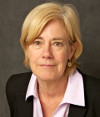 This week, hosts Mark Masselli and Margaret Flinter speak with health journalist and author
 This week, hosts Mark Masselli and Margaret Flinter speak with

 Dr. Leana Wen is a rising star in the national Public Health arena – and just appeared with President Obama at the national Addiction Summit in Atlanta before joining us on Conversations on Health Care. If you’re interested in innovative approaches to the opioid crisis, please listen to this week’s interview!! This week, hosts Mark Masselli and Margaret Flinter speak with